
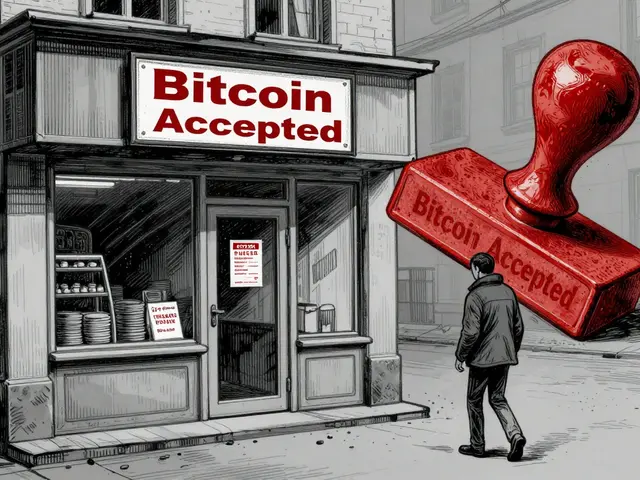
Imagine you are a small business owner in Moscow or a freelancer in St. Petersburg. You want to pay for office supplies or send money to a client using Bitcoin or USDT. It sounds simple enough, right? In most of the world, this is standard practice. But in Russia, that single transaction could land you in serious legal trouble. The short answer is: crypto payments for everyday goods and services inside Russia are strictly prohibited.
However, the reality on the ground is much messier than a simple "yes" or "no." While the government bans domestic spending, it quietly allows companies to use digital assets for international trade under a special experimental program. This dual system creates a confusing landscape where owning crypto is fine, but spending it locally is illegal-and starting in 2026, very expensive if caught.
The Core Rule: Rubles Only for Domestic Transactions
To understand the current situation, we have to look at the fundamental law governing money in Russia. The Federal Law "On Digital Financial Assets" (DFA Law), which took full effect in 2021, draws a hard line between ownership and usage. Here is the distinction you need to keep in mind:
- Owning Crypto: Legal. Russian citizens can hold Bitcoin, Ethereum, or stablecoins in their wallets without fear of prosecution for mere possession.
- Spending Crypto Locally: Illegal. Using any cryptocurrency as a means of payment for goods, services, or debt repayment within the Russian Federation is prohibited by Article 8 of the Civil Code. The only legal tender is the Russian ruble.
This rule exists because the Central Bank of Russia views cryptocurrencies as a threat to monetary sovereignty. They argue that if people start paying for groceries with Bitcoin, the value of the ruble could destabilize. Consequently, the Central Bank has consistently pushed for strict enforcement, treating digital assets more like volatile investment instruments than actual currency.
So, if you walk into a shop in Yekaterinburg and try to scan a QR code to pay in Litecoin, the cashier is legally required to refuse you. If they accept it anyway, both parties are breaking the law. This prohibition applies to everything from buying coffee to paying rent or settling invoices between two Russian companies.
The Exception: The Experimental Legal Regime (ELR)
If domestic spending is banned, why do headlines often mention Russian companies using crypto? The answer lies in the Experimental Legal Regime (ELR).
Launched in late 2021, the ELR is a sandbox environment designed specifically to help Russian businesses navigate Western sanctions. After the invasion of Ukraine in 2022, many Russian firms were cut off from SWIFT and traditional banking channels. The ELR provides a narrow legal pathway for these companies to conduct international settlements using cryptocurrency.
Here is how it works:
- International Settlements Only: A Russian company can use crypto to pay foreign suppliers or receive payments from foreign clients. This bypasses blocked bank accounts.
- Strict Eligibility: Not every business can join. Companies must be registered in specific regions like Moscow, St. Petersburg, Kaliningrad, or Skolkovo Innovation Center.
- Licensed Intermediaries: Transactions must go through licensed crypto exchanges or custodians approved by the Central Bank.
By 2025, the volume of crypto-facilitated trade under this regime had reached an estimated 1 trillion rubles. This shows that while ordinary citizens cannot buy bread with crypto, major importers and exporters rely on it heavily to keep the economy moving. However, this privilege does not extend to individual consumers or local retail transactions.
New 2026 Fines: What Happens If You Break the Rules?
For years, the ban on domestic crypto payments existed largely on paper. Enforcement was spotty, and penalties were vague. That changes in 2026. New legislation, championed by Anatoly Aksakov, head of the State Duma's financial market committee, introduces concrete financial punishments for violators.
The goal is to close regulatory loopholes that allowed shadow transactions to flourish. Under the new draft laws taking effect in 2026, the consequences for using crypto as a domestic payment method are severe:
| Violator Type | Fine Amount | Additional Consequence |
|---|---|---|
| Individuals | 100,000 - 200,000 RUB | Confiscation of the crypto used |
| Legal Entities (Companies) | 700,000 - 1,000,000 RUB | Confiscation of the crypto used |
Note that the confiscation clause is critical. It’s not just about paying a ticket; the state takes the digital asset itself. For a company trying to move large sums, losing the principal amount plus facing a million-ruble fine makes unauthorized crypto usage economically unviable. These fines target what experts call "shadow transactions," particularly those attempting to circumvent capital controls or hide income from tax authorities.

Tax Obligations: Reporting Your Holdings
Avoiding payment fines is only half the battle. Even if you never spend your crypto domestically, you still owe taxes on it. The Russian Federal Tax Service (FTS) has become increasingly sophisticated in tracking digital assets. Since 2021, individuals have been required to report all cryptocurrency-related income.
You must file a declaration showing your crypto holdings and transactions by April 30 of each year for the previous calendar year. Taxes are due by July 15. The taxable events include:
- Profit from selling crypto for rubles or other fiat currencies.
- Rewards from mining operations.
- Yields from staking or lending protocols.
- Airdrops received as free tokens.
- Sales of Non-Fungible Tokens (NFTs).
All values must be converted to rubles at the official exchange rate on the day of the transaction. Failure to report is risky. If you fail to declare transactions totaling 45 million rubles or more over two of the past three years, you face criminal liability. This can result in fines up to 2 million rubles, forced labor for up to five years, or imprisonment for 18 months to five years. Even smaller undeclared amounts trigger administrative fines of 50,000 rubles plus 40% of the unpaid tax.
The FTS uses automated systems to cross-reference data from banks, payment processors, and even blockchain explorers. They can detect when a user moves funds from an exchange to a personal wallet, flagging potential unreported income. So, keeping meticulous records isn't just good advice; it's a legal necessity.
Impact on Adoption and Market Reality
Despite these strict rules, Russians love crypto. According to the Russian Association of Cryptoeconomics, Artificial Intelligence, and Blockchain, the number of users in the country has grown by 15% annually since 2021. The total market value of crypto held by Russians exceeds $40 billion.
Why the disconnect between law and behavior? Sanctions. When traditional banking channels froze, crypto became a lifeline. People needed a way to save value outside the ruble and move money across borders. This demand drove Russia’s ranking in Chainalysis’s Global Adoption Index. However, in 2025, Russia dropped to the bottom of the top 10 list after previously ranking 7th. This decline reflects the growing friction caused by stricter regulations and the lack of local, centralized exchanges.
Without domestic exchanges, citizens rely on foreign platforms like Binance (before its exit) or Bybit, often using peer-to-peer (P2P) markets to convert rubles to crypto. This process is cumbersome and carries risks of frozen bank cards if merchants flag suspicious transfers. Lawmakers have urged the Central Bank to license domestic exchanges to bring this activity into the light, but the Central Bank remains hesitant, fearing it would legitimize the very payment methods they seek to ban.

Future Outlook: Will Things Change?
The regulatory landscape in Russia is dynamic. On one side, you have the Central Bank, led by Elvira Nabiullina, advocating for a complete ban on crypto payments to protect the ruble. On the other side, figures like Ivan Chebeskov, Deputy Head of the Treasury, argue for a comprehensive national strategy that leverages crypto to boost the economy.
The Finance Ministry has recently called for widening investor access to digital assets, suggesting that future policies might liberalize certain aspects of the market. The success of the ELR in facilitating international trade gives proponents of deregulation ammunition to argue that crypto is essential for Russia’s economic survival under sanctions.
However, for the average person, the immediate future looks restrictive. The 2026 fines signal a crackdown, not a relaxation. Expect tighter monitoring of P2P transactions and stricter reporting requirements. The government wants to ensure that crypto remains a tool for international business and investment, not a replacement for the ruble in your daily life.
Practical Tips for Navigating the System
If you are living in or doing business with Russia, here is how to stay compliant:
- Keep Domestic Spending in Rubles: Use Mir cards or cash for local purchases. Do not attempt to pay vendors directly with crypto unless they are part of the ELR and handling an international contract.
- Document Everything: Save screenshots of trades, receipts from exchanges, and conversion rates. You will need these for tax filings.
- Use Licensed Platforms: When converting rubles to crypto, use reputable P2P platforms or foreign exchanges that comply with KYC (Know Your Customer) norms to reduce the risk of bank card blocks.
- File Taxes Early: Don’t wait until April. Prepare your declarations in January to avoid last-minute errors and heavy penalties.
- Monitor Legislative Updates: The laws are changing rapidly. Follow updates from the Central Bank and the State Duma’s financial committee to stay ahead of new restrictions.
Can I buy groceries with Bitcoin in Russia?
No. As of 2026, using Bitcoin or any other cryptocurrency to pay for goods and services within Russia is illegal. The only legal tender is the Russian ruble. Violating this rule can result in fines of up to 200,000 rubles for individuals and the confiscation of the crypto used.
Is it legal to own cryptocurrency in Russia?
Yes, owning cryptocurrency is legal for Russian citizens. You can hold, mine, and trade digital assets. However, you must report your holdings and profits to the tax authorities. The restriction applies specifically to using crypto as a payment method for domestic transactions.
What is the Experimental Legal Regime (ELR)?
The ELR is a special framework that allows eligible Russian companies to use cryptocurrency for international settlements. It was created to help businesses bypass sanctions and conduct trade with foreign partners. Ordinary citizens and local domestic transactions are excluded from this regime.
How much tax do I pay on crypto profits in Russia?
You pay personal income tax on the profit from your crypto activities. The standard rate is 13% for residents earning up to 5 million rubles per year, and 15% for earnings above that threshold. Mining and trading are exempt from VAT, but all income must be declared in rubles.
Will the ban on crypto payments be lifted soon?
It is unlikely in the near term. The Central Bank of Russia strongly opposes allowing crypto payments domestically to protect the ruble. While some government officials advocate for broader adoption, the introduction of strict fines in 2026 suggests the current restrictive policy will remain in place for now.

so its illegal to pay with btc but legal to hold it? that makes no sense at all lol why do they even allow you to have it if you cant use it for anything real like buying coffee or whatever. feels like a trap just so the gov can tax you when you sell it back to rubles. also 200k ruble fine is crazy for just trying to pay for office supplies. i mean who has that much cash lying around anyway. this whole thing seems designed to make life hard for normal people while big companies use the ELR loophole to get rich. typical russian bureaucracy doing what it does best confusing everyone. i bet half the small businesses are just ignoring this and taking crypto under the table because they have no choice left with sanctions. honestly its kinda funny how they ban it but then let exporters use it freely. double standards much. maybe next year they will ban holding it too just to be consistent. 🤷♂️
You guys need to stay positive about this! It's actually a great opportunity to learn more about financial regulations and global economics. Understanding these rules helps us become better informed citizens. Let's support each other in navigating these complex systems. Knowledge is power after all! 💪
This is absolutely disgusting behavior by the Russian government. They are stealing from their own people while pretending to protect the economy. The moral decay is evident in every single paragraph of this article. How can anyone trust a system that confiscates your property without due process? It is shameful. Truly shameful. 😡
confiscation is key here. not just fines. lose the coins too. brutal. 😬
One must ponder the philosophical implications of a currency that exists only in the realm of data yet holds such tangible weight in the eyes of the law. Is money merely a social construct, or does the state’s decree imbue it with an ontological reality that transcends its digital nature? The dichotomy between ownership and usage suggests a deeper existential crisis within the monetary system itself. Perhaps we are witnessing the birth pangs of a new economic paradigm where value is decoupled from physical presence. It is quite fascinating, really.
Hey there! Look on the bright side, folks! This situation highlights the incredible resilience of the human spirit and our ability to adapt to changing times. Even with strict rules, people find ways to connect and trade. It shows how culture evolves through technology. Let's keep an open mind and appreciate the diversity of economic models around the world. We are all learning together! 🌟
I'm just sitting here watching the chaos unfold from afar. It's like a slow-motion car crash but with blockchain instead of metal. The irony of banning crypto payments while relying on them for international trade is just deliciously absurd. I suppose we'll see how long it takes before the black market becomes the main market. Pretty wild stuff indeed.
look at the paradigm shift happening here. the central bank is basically trying to control the narrative of value. but value is subjective right? so when they say ruble is the only legal tender they are imposing a hegemonic structure on decentralized truth. it is a boundary crossing of sorts into the private sphere of individual choice. why should the state dictate how i exchange value? it is intrusive and fundamentally flawed logic. the elr is just a fig leaf for corporate greed. wake up sheeple.
Actually, you're all missing the point. The fines are specifically targeted at shadow transactions to prevent capital flight. It's not about oppression; it's about macroeconomic stability. If everyone paid in Bitcoin, the ruble would collapse overnight. That's basic economics 101. Also, the tax reporting requirements are standard for any asset class in developed nations. Stop whining and file your taxes correctly. :)
they want to control everything. the central bank is part of the globalist agenda to track every move you make. crypto was supposed to be freedom but now its just another tool for surveillance. dont trust the government. they lie. always. the fines are just a way to crush dissent. stay woke. 👁️