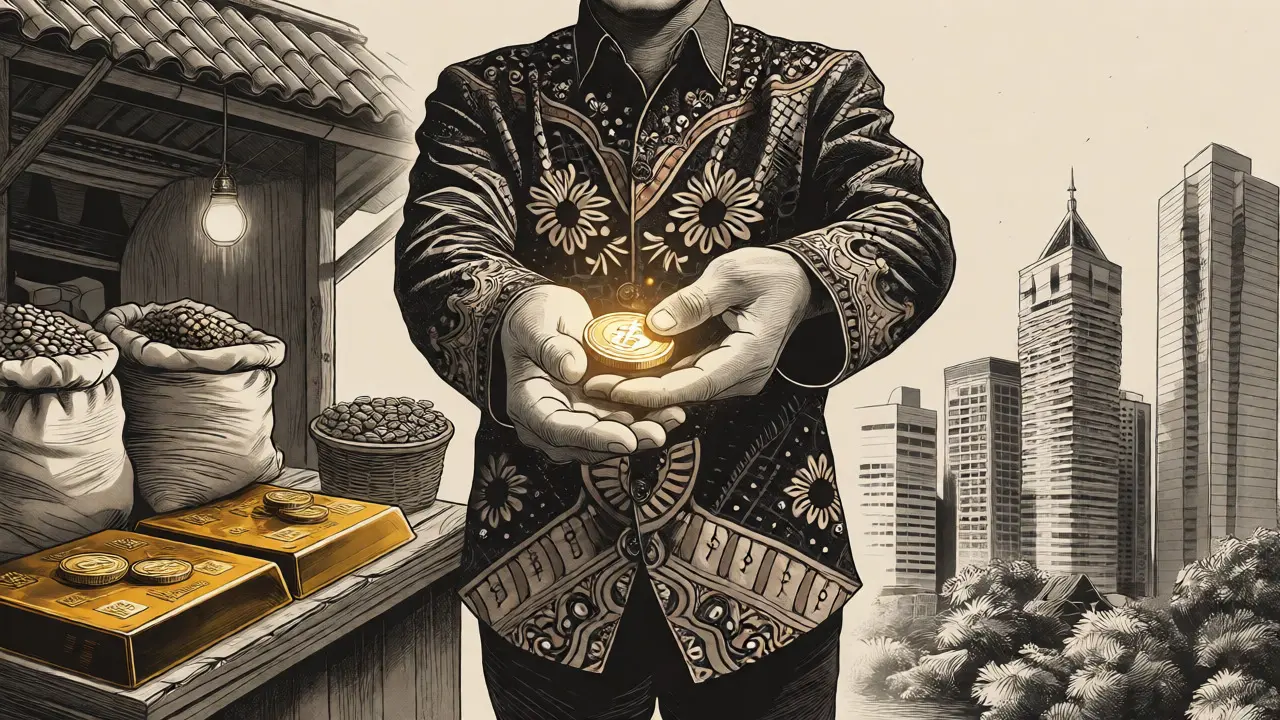
For years, if you wanted to trade Bitcoin in Jakarta, you dealt with Bappebti, the commodity watchdog. But as of January 10, 2025, that era is officially over. The regulatory baton has passed to the OJK (Financial Services Authority), marking a seismic shift in how Indonesia treats digital assets. This isn't just a paperwork shuffle; it’s a fundamental reclassification from "commodity" to "financial instrument." If you’re an investor, a local exchange operator, or just curious about why your crypto app suddenly asks for different compliance checks, understanding this transition is non-negotiable.
The End of the Commodity Era
Let’s be clear about what changed. Under Bappebti’s watch, which lasted until early 2025, cryptocurrencies were legally defined as commodities-similar to gold, coffee, or palm oil. You traded them on physical markets regulated by the Indonesian Commodity Futures Trading Supervisory Body. This framework relied heavily on regulations like Bappebti Regulation No. 8/2021 and its amendments. It worked, sort of. By mid-2023, Bappebti had approved over 500 tradable tokens, including heavyweights like Bitcoin, Ethereum, and Solana.
But treating crypto like soybeans didn’t quite fit the reality of blockchain technology. The P2SK Law (Law No. 4 of 2023) was the catalyst for change. This legislation mandated the transfer of oversight to OJK, recognizing that crypto behaves more like securities than physical goods. On December 31, 2024, Government Regulation No. 49 formalized this handover. The actual switch flipped on January 10, 2025, during a ceremony in Jakarta attended by key figures from Bappebti, Bank Indonesia, and OJK. This wasn't a hostile takeover; it was a strategic realignment to bring crypto into the mainstream financial fold.
Why OJK? The Logic Behind the Switch
You might wonder, why move away from a system that was already generating billions in transaction volume? In 2023 alone, Indonesia recorded over 17 million crypto investors and IDR 300 trillion in transactions. That number ballooned to over IDR 650 trillion in 2024. Bappebti did solid work establishing infrastructure, including clearing houses and storage managers. However, their expertise lay in physical goods, not complex financial derivatives.
OJK brings a different toolkit. As the regulator for banks and capital markets, OJK understands risk management, anti-money laundering (AML) protocols, and consumer protection in ways a commodity agency never could. Legal experts at firms like SSEK point out that this move aligns Indonesia with global standards where crypto is increasingly viewed through a financial lens. It’s no longer just about trading a token; it’s about integrating digital assets into the country’s broader economic architecture.
This shift also introduces a dual-regulatory structure. While OJK handles the trading and service aspects, Bank Indonesia retains authority over payment systems. Think of it as a division of labor: OJK watches the market conduct, while BI ensures the money moving through those channels remains stable and secure.

New Rules of the Game: OJK Regulation 27/2024
The new playbook is outlined in OJK Regulation No. 27 of 2024, titled "Implementation of Trading in Digital Financial Assets." This document replaces the old Bappebti guidelines. The most critical change here is terminology. Crypto is now classified as a "digital financial asset." This sounds semantic, but it has legal teeth. It means exchanges must comply with stricter capital requirements, reporting standards, and operational audits similar to stock brokers.
Here is how the landscape looks under the new regime compared to the old one:
| Feature | Bappebti Era (Pre-Jan 2025) | OJK Era (Post-Jan 2025) |
|---|---|---|
| Legal Classification | Commodity (Physical Market) | Digital Financial Asset |
| Primary Regulator | Bappebti (Ministry of Trade) | OJK (Financial Services Authority) |
| Key Regulation | Regulation No. 8/2021 & No. 13/2022 | OJK Regulation No. 27/2024 |
| Focus Area | Physical trading, listing approval | Financial services, investor protection, AML |
| Infrastructure Role | Exchange, Clearing House, Storage Manager | Digital Financial Asset Traders (DFATs) |
Notice the term "Digital Financial Asset Traders." This is the new designation for licensed exchanges. Existing licenses issued by Bappebti remain valid during the transition, preventing market chaos. You don’t need to re-register immediately, but exchanges must prepare for OJK’s more rigorous audit standards. The goal is continuity without compromising on the upgraded safety net.
What This Means for Investors and Exchanges
If you’re a retail investor, your day-to-day experience might feel similar. You still buy and sell via apps like Indodax or Tokocrypto. But behind the scenes, the stakes are higher. OJK’s involvement signals that these platforms are being treated with the same seriousness as traditional banks. Expect fewer "wild west" moments. Scam projects will face tougher hurdles to get listed because OJK applies stricter due diligence than Bappebti ever did.
For exchange operators, the burden shifts from merely getting a token whitelisted to proving robust financial health. You need better cybersecurity, clearer disclosure documents, and faster incident reporting. The Digital Financial Innovation (DFI) framework encourages innovation, but only within guardrails. If you want to offer DeFi products or NFTs, you can’t just launch and pray. You need to demonstrate how these fit into the regulated financial ecosystem.
International players looking to enter Indonesia should take note. The clarity provided by OJK makes the market more attractive to institutional investors who previously hesitated due to regulatory ambiguity. However, the barrier to entry is higher. You can’t just drop a whitepaper and start selling. You need a license, local presence, and compliance teams fluent in Indonesian financial law.
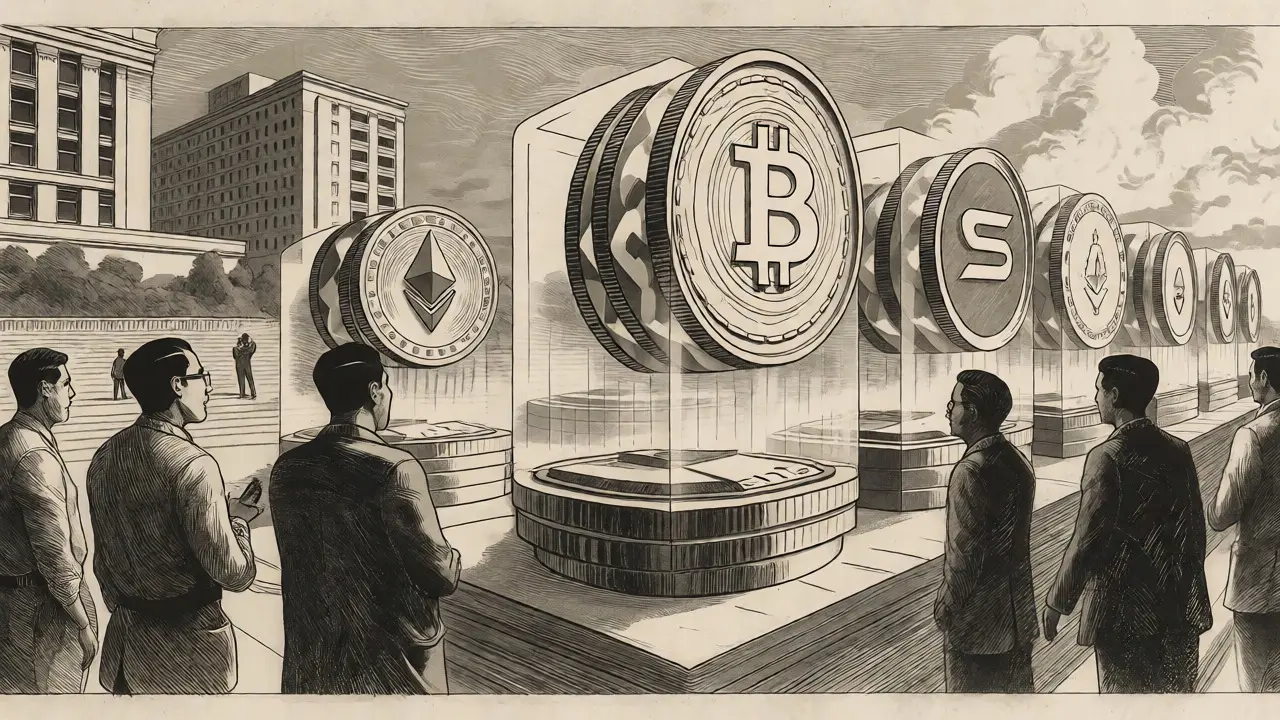
Challenges in the Transition Period
No major regulatory overhaul happens without friction. One immediate challenge is the cultural shift within the industry. For years, startups operated with a mindset borrowed from Silicon Valley: move fast, break things. OJK doesn’t like broken things. They prefer stability. Some smaller exchanges may struggle to meet the new capital adequacy ratios, potentially leading to consolidation in the market.
Another hurdle is coordination. With Bank Indonesia handling payments and OJK handling trading, there’s a risk of overlapping mandates. Early stages of implementation require tight communication between these bodies to avoid creating blind spots where assets fall through the cracks. Industry observers from Kusuma Law Firm have highlighted that successful integration depends on how well these two regulators collaborate on issues like stablecoin reserves and cross-border settlements.
Looking Ahead: Indonesia’s Crypto Future
As we sit in late September 2026, the dust has mostly settled. Indonesia has maintained its status as one of Southeast Asia’s largest crypto markets. The move to OJK hasn’t stifled growth; instead, it has professionalized it. We’re seeing more institutional adoption, with pension funds and insurance companies exploring crypto exposure now that the regulatory home is clear.
The future likely holds further refinements. OJK is expected to release specific guidelines for Decentralized Finance (DeFi) and Non-Fungible Tokens (NFTs), areas that were somewhat gray under Bappebti. The emphasis will remain on balancing innovation with consumer protection. If you’re building in this space, keep an eye on OJK’s official announcements-they are setting the pace for how digital assets integrate into Indonesia’s economy.
Is my existing Bappebti license still valid?
Yes, existing licenses, registrations, and approvals granted by Bappebti remain valid during the transition period. However, holders must eventually comply with OJK's updated requirements and reporting standards as outlined in OJK Regulation No. 27 of 2024.
Why did Indonesia move crypto regulation from Bappebti to OJK?
The shift was mandated by the P2SK Law (Law No. 4 of 2023). It reflects a strategic decision to classify crypto as a financial service rather than a commodity, allowing for stronger investor protections, better AML enforcement, and alignment with global financial standards.
What is the role of Bank Indonesia in the new framework?
While OJK oversees crypto trading, offering, and settlement, Bank Indonesia (BI) retains authority over the payment system aspects of digital assets. This creates a dual-regulatory structure ensuring both market integrity and monetary stability.
How many cryptocurrencies were approved under Bappebti?
By June 2023, Bappebti had recognized approximately 501 cryptocurrencies for trading, including major assets like Bitcoin, Ethereum, and Solana. These assets continue to be tradable under the new OJK framework.
Does the new regulation affect NFTs and DeFi?
Currently, the primary focus is on crypto assets as financial instruments. Specific detailed guidelines for NFTs and DeFi are expected to evolve under OJK's Digital Financial Innovation initiatives, providing clearer rules for these emerging sectors in the coming years.
Finally! It is about time someone admitted that treating Bitcoin like palm oil was absolute nonsense. I have been screaming this from the rooftops for years while everyone else was busy pretending Bappebti knew what they were doing with digital assets. This shift to OJK is exactly what we needed in emerging markets, and frankly, it makes me furious that it took until 2025 to get here. The commodity classification was a bureaucratic disaster that stifled real innovation and confused investors who thought they were buying financial instruments but were legally holding commodities. Now, with proper financial oversight, maybe we can stop seeing these ridiculous scams that slipped through the cracks because no one was checking the actual financial health of the exchanges. Good riddance to the old system.
The distinction between physical commodities and digital securities has always been clear to those with basic economic literacy. Indonesia merely corrected a long-standing error in judgment.
You think this is just about regulation?? You are missing the bigger picture!!! This is about control... pure and simple!!! Bank Indonesia keeping the payment rails while OJK takes the trading floor?? That is a classic divide-and-conquer strategy designed to keep the central banks in charge of the money supply while allowing Wall Street-style predators to feast on retail investors!!! They want us to trade so they can tax the volatility and monitor every single transaction for 'compliance' which really means surveillance!!! Do not believe the hype that this is for our protection... it is for their power!!!
Everyone is celebrating this as if it's some great victory for freedom or efficiency, but let's be honest: it's just more bureaucracy. We swapped one set of incompetent regulators for another set of bankers who don't understand blockchain any better than the commodity guys did. Now instead of dealing with people who know coffee beans, we deal with people who know stocks, but neither group actually gets decentralized tech. It’s just reshuffling deck chairs on the Titanic. The market will consolidate, small players will die, and the big banks will eat up the profits. Congrats on making crypto look like traditional finance, which is the opposite of why anyone got into it in the first place.
Oh, wow. Just wow. Another layer of 'protection' added by people who probably still use paper checks. How delightful that we now have to prove our 'financial health' to sell a token, as if my personal solvency matters when I buy a meme coin at 3 AM. It’s charming, really, how the government thinks they can regulate code with spreadsheets. But sure, let’s all pretend this isn’t just a way to make sure every single dollar flowing through the system is tracked, taxed, and terrified into submission. Because nothing says 'decentralized future' like needing a license from a guy in a suit who has never touched a private key. Truly inspiring stuff.
I appreciate the clarity this brings to the industry, even if the transition is tough. Stability often comes at the cost of speed, but for many users, safety feels more important right now.
It is morally imperative that we protect the vulnerable from predatory schemes. For too long, the unregulated nature of these digital assets allowed charlatans to exploit the poor and the inexperienced under the guise of 'innovation.' Moving oversight to OJK ensures that ethical standards are upheld and that consumers are not misled by false promises of wealth without risk. We must hold these institutions accountable for their fiduciary duties. A society that fails to regulate its financial instruments is a society that tolerates exploitation. This change is not just administrative; it is an ethical necessity.
This article demonstrates a fundamental misunderstanding of regulatory frameworks. One cannot simply compare a commodity exchange to a financial services authority as if they are interchangeable entities. The legal implications of reclassifying an asset from goods to securities are profound and carry significant tax and liability consequences that the author glosses over with simplistic analogies. Furthermore, the assertion that this aligns Indonesia with global standards ignores the unique cultural and economic context of Southeast Asian markets. Proper analysis requires a deeper engagement with the statutory language rather than surface-level observations about 'seismic shifts.' The tone is overly optimistic and lacks the critical rigor expected of serious financial commentary.
To add to the discussion on compliance, it is worth noting that OJK Regulation No. 27/2024 specifically mandates enhanced Know Your Customer (KYC) protocols that go beyond simple identity verification. Exchanges must now implement ongoing monitoring systems that track transaction patterns for anomalies consistent with money laundering typologies defined by FATF standards. This creates a higher operational burden but significantly reduces the risk of illicit fund flows entering the local economy. Additionally, the requirement for segregated client accounts ensures that customer assets are protected from exchange insolvency, a feature that was inconsistently enforced under the previous regime. These technical details are crucial for understanding the practical impact on daily operations.
Good summary. The dual-regulatory structure seems like the most logical step forward given the complexities involved.