
When the crypto market crashes hard-Bitcoin dropping 60%, altcoins bleeding out, everyone on Twitter saying "it’s over"-you might feel like the bottom is here. But is it really? Or are you just caught in the middle of the worst panic before things get even worse? Recognizing a true bear market bottom isn’t about guessing. It’s about spotting patterns that have repeated across multiple cycles, in Bitcoin, Ethereum, and the broader blockchain ecosystem.
What a Bear Market Bottom Actually Looks Like
A bear market bottom isn’t a single day when prices bounce back. It’s the point where selling pressure finally runs out. Buyers step in-not because they’re optimistic, but because the assets are so cheap that even cautious investors start buying. In crypto, this often happens after a 70%+ drop from the previous all-time high. The 2022 crash saw Bitcoin fall from $69,000 to under $15,500. That wasn’t just a correction. That was a full bear market. The key is recognizing when the market stops falling because nobody’s left to sell. That’s when the bottom forms. But how do you know you’re not just catching a falling knife?Sign #1: Earnings and On-Chain Activity Stop Deteriorating
In traditional markets, corporate earnings tell you if companies are still healthy. In crypto, you look at on-chain metrics. Are miners still profitable? Are DeFi protocols still seeing volume? Are smart contract interactions rising? After the 2022 crash, Bitcoin hash rate dropped sharply. Miners shut down rigs because electricity costs exceeded revenue. But by early 2023, hash rate stabilized and then started climbing again. That wasn’t random. It meant miners were confident enough to reinvest. That’s a signal: the underlying network is still functioning. The fundamentals aren’t broken. Same with Ethereum. After the Merge, transaction volume and active addresses dipped hard. But by mid-2023, daily active addresses bounced back to 80% of pre-crash levels-even as prices stayed low. That’s a sign of real demand, not speculation.Sign #2: Sentiment Hits Absolute Zero
The worst bear market bottoms don’t happen when people are scared. They happen when people don’t care anymore. In late 2022, Reddit threads about crypto were full of anger. YouTube crypto influencers were gone. Twitter was quiet. Even the most hardcore HODLers stopped talking. That’s not fear. That’s apathy. And apathy is the real bottom. Look at the Crypto Fear & Greed Index. When it hits 10 or lower for more than three weeks in a row, you’re in the zone. In 2018, it hit 5. In 2022, it hit 7. Both times, the market turned around within 60 days. When nobody’s talking about crypto, that’s when smart money starts buying quietly.Sign #3: Volume Spikes on Small Price Rises
Technical indicators don’t work alone. But when you see volume surge on a 5% price bump after months of flatlining, that’s a red flag-because it’s not retail investors. It’s institutions. In 2023, Bitcoin rose $2,000 in a week after trading between $16,000 and $18,000 for 14 weeks. Volume jumped 300%. That wasn’t FOMO. That was accumulation. Big wallets started moving in. Whale addresses increased their holdings by 12% in a single month. That’s not random. That’s strategy. Watch for this: small upward moves with high volume, followed by consolidation. Not a breakout. Not a rally. Just steady buying. That’s the accumulation phase. It’s quiet. It’s boring. And it’s the most reliable sign you’re near the bottom.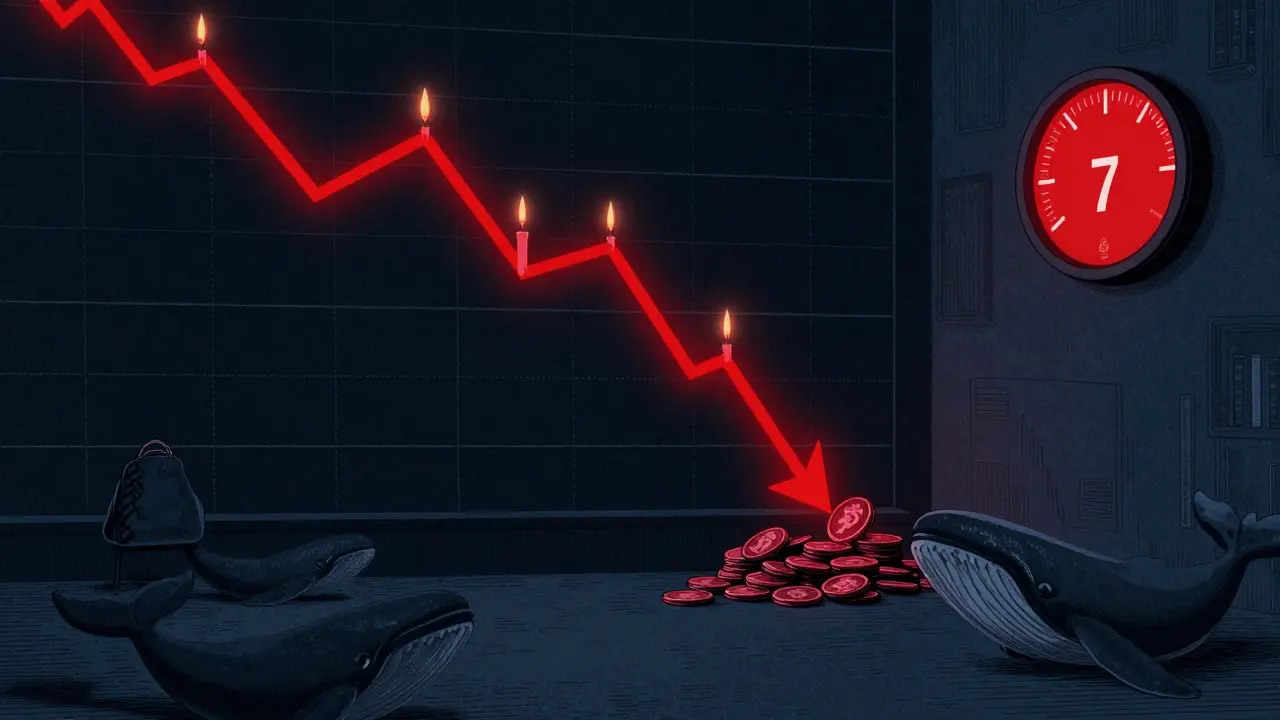
Sign #4: Valuations Are at Historical Lows
In 2022, Bitcoin’s market cap to total value locked (MCTVL) ratio hit 1.8x. That’s the lowest it’s ever been since 2016. In 2018, it was 2.1x. In 2015, it was 1.9x. When Bitcoin’s market cap is barely 2x the total value locked in DeFi and staking, you’re not overvalued. You’re undervalued. Same with Ethereum. In 2023, its price-to-transaction ratio hit 0.03-down from 0.12 in 2021. That means each dollar of on-chain activity was worth 4x more in 2021 than in 2023. That’s not a bubble. That’s a discount. Don’t buy because it’s cheap. Buy because the metrics show the asset is priced for collapse, not growth. And if the network is still active, that’s your signal.Sign #5: Macro Conditions Start Improving
Crypto doesn’t live in a vacuum. When the Fed stops hiking rates, when inflation cools, when the yield curve starts flattening-crypto reacts. Fast. In late 2022, the 10-year Treasury yield was at 4.25%. By mid-2023, it dropped to 3.8%. The dollar index fell 8% in the same period. That’s not coincidence. Lower rates mean cheaper money. And cheaper money flows into risk assets-especially crypto. Also watch government policy. In 2023, the U.S. Treasury started clarifying tax rules for staking and DeFi. The SEC stopped suing every crypto project on sight. Regulatory clarity = reduced fear. Fear drives bear markets. Clarity helps end them.Sign #6: Multiple Chains Show Signs of Recovery
Don’t just look at Bitcoin. Look at Solana, Avalanche, Polygon, Arbitrum. Are they all sinking together? Or is one holding up? In 2022, Bitcoin and Ethereum both crashed. But Solana’s daily active addresses stayed flat while its price dropped. That meant users weren’t leaving. They were waiting. By early 2023, Solana’s volume bounced back first. That was a leading indicator. When multiple blockchains show signs of recovery-rising transaction volume, stable or growing user counts, increasing developer activity-you’re not seeing a temporary bounce. You’re seeing a structural shift.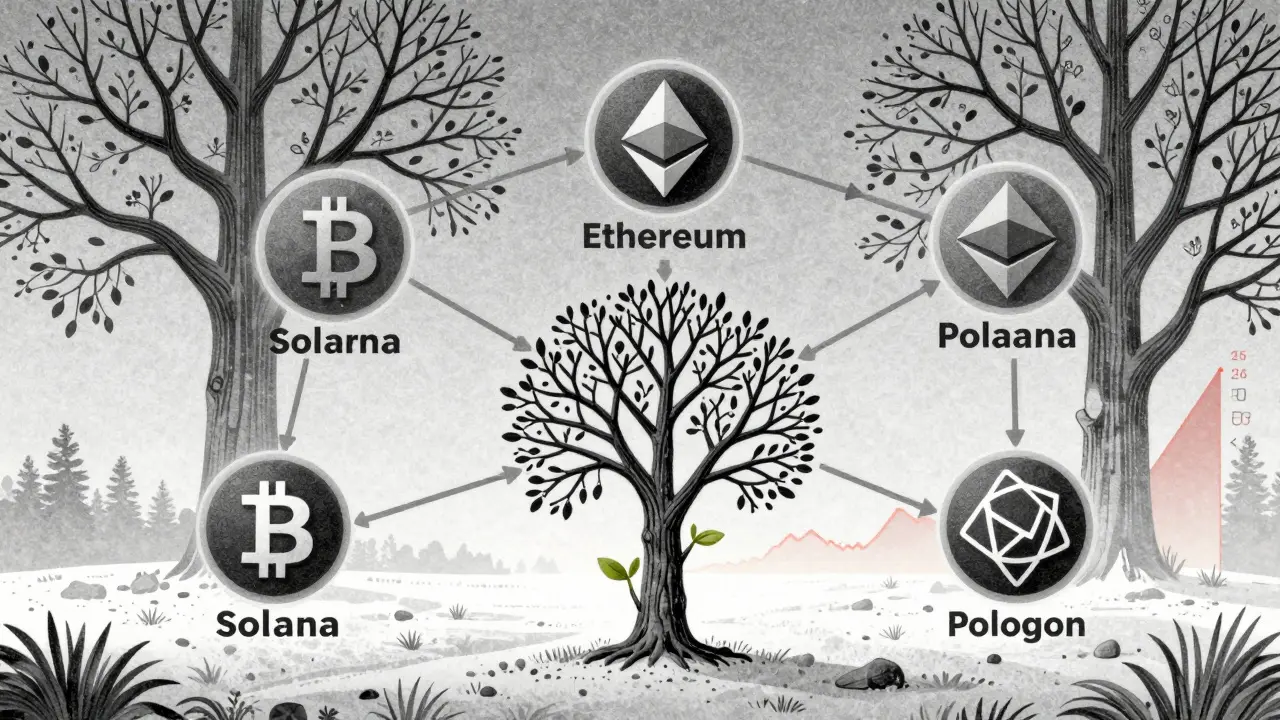
What Doesn’t Work
You’ll hear people say: "I bought at the bottom!" But most of them didn’t. They bought on a 10% rally and called it the bottom. Then it dropped 20% more. Don’t trust:- One indicator alone
- YouTube gurus promising "guaranteed bottoms"
- Short-term price spikes
- News headlines saying "crypto rebound begins"
How to Confirm You’re at the Bottom
Here’s the checklist:- Price has dropped 60%+ from the peak
- Crypto Fear & Greed Index has been below 10 for 3+ weeks
- On-chain activity (transactions, active addresses) has stabilized or started rising
- Hash rate or staking volume has stopped declining
- Volume spikes on small price gains (not big rallies)
- Valuation metrics (MCTVL, P/T ratio) are at 5-year lows
- Macro conditions: Fed pauses hikes, dollar weakens, yield curve flattens
- At least 3 major blockchains show signs of recovery
What to Do Next
Don’t go all-in. Don’t buy the dip in a panic. Start small. Dollar-cost average. Buy 5% of your intended position now. Wait two weeks. If the market holds, buy another 5%. Repeat. Keep your cash ready. The bottom doesn’t mean the rally starts tomorrow. It means the worst is over. The real rally often begins 3-6 months later. And remember: no one has ever called the exact bottom. But those who stayed calm, watched the data, and bought slowly made the most money.Final Thought
Bear markets aren’t about losing. They’re about learning who’s really in it for the long haul. The ones who panic-sell lose. The ones who wait for confirmation? They’re the ones who end up holding the next 10x asset. The bottom isn’t a moment. It’s a process. And if you’re watching the right signals, you’ll know when it’s here.How long does a crypto bear market bottom usually take to form?
There’s no fixed timeline, but most crypto bear market bottoms form over 3 to 9 months. The selling pressure needs time to exhaust. In 2018, Bitcoin spent 6 months trading sideways between $3,000 and $4,000 before breaking out. In 2022, it took 7 months from the peak to the bottom, then another 2 months of consolidation before the rally began. Patience is key-rushing in too early often leads to buying into another drop.
Can a bear market bottom happen without Bitcoin recovering first?
Rarely. Bitcoin is the market leader and sets the tone for the entire crypto space. Altcoins usually follow Bitcoin’s lead with a lag of 1-3 months. If Bitcoin is still falling, altcoins are likely to keep dropping too. That’s why investors watch Bitcoin’s price action and on-chain metrics first. Once Bitcoin stabilizes and starts accumulating, altcoins often follow. Don’t chase altcoins until Bitcoin shows clear signs of recovery.
Is it safe to invest during a bear market bottom?
It’s not about safety-it’s about strategy. No one can guarantee a bottom. But if you use a disciplined approach-like dollar-cost averaging, focusing on projects with real usage, and only investing what you can afford to lose-you’re not gambling. You’re positioning. Many of today’s top crypto projects were bought during bear market bottoms. The key is avoiding hype and sticking to fundamentals: active users, transaction volume, and team credibility.
Do regulatory changes affect bear market bottoms?
Yes, significantly. Regulatory uncertainty fuels fear, and fear keeps markets down. When regulators start providing clarity-like the U.S. SEC approving Bitcoin ETFs in 2024 or the EU implementing MiCA rules-it reduces fear and brings institutional money back. That’s often the final trigger that turns a bottom into a rally. Watch for regulatory shifts as a leading indicator, not a reaction.
What’s the biggest mistake people make when trying to find the bottom?
The biggest mistake is trying to time the exact low. No one does it consistently. Instead, people buy too early, get scared by the next 15% drop, and sell at a loss. The smarter move is to wait for confirmation-multiple indicators aligning-and then buy in stages. You don’t need to catch the bottom. You just need to be in before the rally starts.
How do I know if a project is still viable during a bear market?
Look at on-chain data, not price. Is the protocol still being used? Are developers still pushing updates? Is the community active? Projects like Uniswap and Chainlink survived the 2022 crash because they had real usage, even when prices were down. If a project has zero transactions, no new code commits, and a silent community-it’s probably not worth buying, no matter how cheap it looks.
Should I sell my crypto if I think we’re not at the bottom yet?
Only if you need the cash or can’t sleep at night. Otherwise, history shows that selling during a bear market locks in losses. Most crypto investors who held through 2018 and 2022 saw their portfolios recover and grow 3-5x within 18-24 months. Selling because you’re scared is emotional. Holding because the data says the worst is over is strategic.

Everyone’s overcomplicating this. Bottoms aren’t found-they’re felt. When your ex stops texting, that’s the moment you know it’s over. Same with crypto. When the noise dies, the smart money moves in. No indicators needed. Just gut. And yeah, I’ve been wrong before-but not this time.
so like… if bitcoin’s at 15k and no one’s talking about it anymore… that’s the bottom? kinda makes sense. i just bought a little bit last week and felt dumb. now i feel like a genius. or a fool. idk. but hey, at least i’m not scrolling twitter anymore.
Oh wow, a 12-page essay on how to spot a bottom… and not one mention of how most people lose money trying to catch it. Classic. You know what’s more reliable than on-chain metrics? Not putting your rent money into a coin that dropped 70% because some guy on Reddit said ‘it’s undervalued.’ Just saying.
I’ve lived in three countries and seen three crypto cycles. The pattern’s always the same: panic → silence → quiet buying → then everyone suddenly remembers they own crypto. The real signal? Not price. Not volume. It’s when your uncle stops asking if you’re still in crypto. That’s the moment you start buying. Not before.
This article reads like a LinkedIn post written by a guy who got fired from a hedge fund in 2019. You don’t need ‘on-chain metrics’ to know the bottom. You need discipline. And a damn spreadsheet. Not some guru’s checklist. If you’re waiting for ‘confirmation,’ you’re already too late. The bottom isn’t a math problem-it’s a test of character. And most people fail.
Let me be clear: the idea that a bottom forms over 3–9 months is a myth perpetuated by people who refuse to accept volatility. In 2015, the bottom took 11 days. In 2020, it was 17. The market doesn’t care about your timeline. It doesn’t care about your ‘metrics.’ It cares about liquidity, macro shifts, and the psychological exhaustion of sellers. You’re overanalyzing. The bottom isn’t a puzzle-it’s a collapse. And when it happens, you’ll know because the entire ecosystem stops screaming and starts breathing.
When I saw Bitcoin drop below $16k in 2022, I cried. Not because I lost money. But because I realized how much I’d tied my identity to it. That’s the real bottom-not the price, but the moment you stop believing crypto is your ticket out. Then… you start buying. Not because you think it’ll go up. But because you finally let go. And that’s when the magic happens.
Just buy a little every week. No stress. No charts. No FOMO. You don’t need to catch the bottom. Just be there when it’s over. Simple.
One must not confuse the mechanics of market psychology with the metaphysics of financial resilience. The bear market bottom, as elucidated herein, is not an event but an epistemological threshold-a moment where the market’s ontological weight shifts from speculative vapor to structural value. One observes not merely price, but the quietude of capitulation. The accumulation phase, therefore, is not a technical pattern, but a cultural surrender. The investor who waits for confirmation is already out of step. The true participant moves not with the crowd, but with the silence between the ticks.