
Imagine owning a piece of a skyscraper in New York, a Picasso painting, or a vineyard in Tuscany - not with millions in cash, but with just $100. That’s the power of tokenizing real assets. This isn’t science fiction. It’s happening right now, and it’s changing how we think about ownership, investing, and money itself.
Tokenization turns physical assets - like real estate, art, gold, or even royalties from music - into digital tokens on a blockchain. Each token represents a share of that asset. You don’t need to buy the whole thing. You buy a slice. And that slice can be traded like stock, 24/7, with near-instant settlement. No more waiting weeks for a property sale to close. No more $50,000 minimums to get into commercial real estate. This isn’t just a tweak to the old system. It’s a full overhaul.
Breaks Down Barriers to Entry
Traditional investing in real assets has always been for the wealthy. To buy a share of a luxury apartment building? You needed $100,000 or more. To own a piece of a rare diamond or a vintage car collection? Forget it - unless you were a billionaire. Tokenization flips that script.
Today, platforms let you invest as little as $10 in tokenized real estate. A single apartment building might be split into 1 million tokens. Each token equals 0.0001% ownership. Suddenly, someone in Manila, Lagos, or rural Ohio can own a stake in a building in downtown Chicago. This isn’t just about convenience. It’s about fairness. The old system locked out millions. Tokenization opens the door.
Deloitte’s 2025 report found that tokenized real estate has lowered entry barriers by over 95% compared to traditional methods. And it’s not just real estate. Fine art, wine, and even intellectual property like music royalties are now accessible to everyday investors. A musician can tokenize future royalty payments and sell 10,000 tokens at $5 each. Fans get a cut. The artist gets upfront cash. Everyone wins.
Turns Illiquid Assets Into Liquid Ones
Real estate is famously illiquid. You can’t sell your house in five minutes. Art? Good luck finding a buyer on a Tuesday night. Commodities like oil or gold require warehouses, shipping, and paperwork. Tokenization changes all that.
Once an asset is tokenized, it can be traded on digital marketplaces - like a stock exchange, but open 24/7. No brokers. No paperwork. No delays. Settlements that used to take two business days (T+2) now happen in under 15 seconds. According to PwC’s 2024 analysis, tokenized assets have annual liquidity rates of 8-12%, compared to just 0.5-1.5% for traditional real estate.
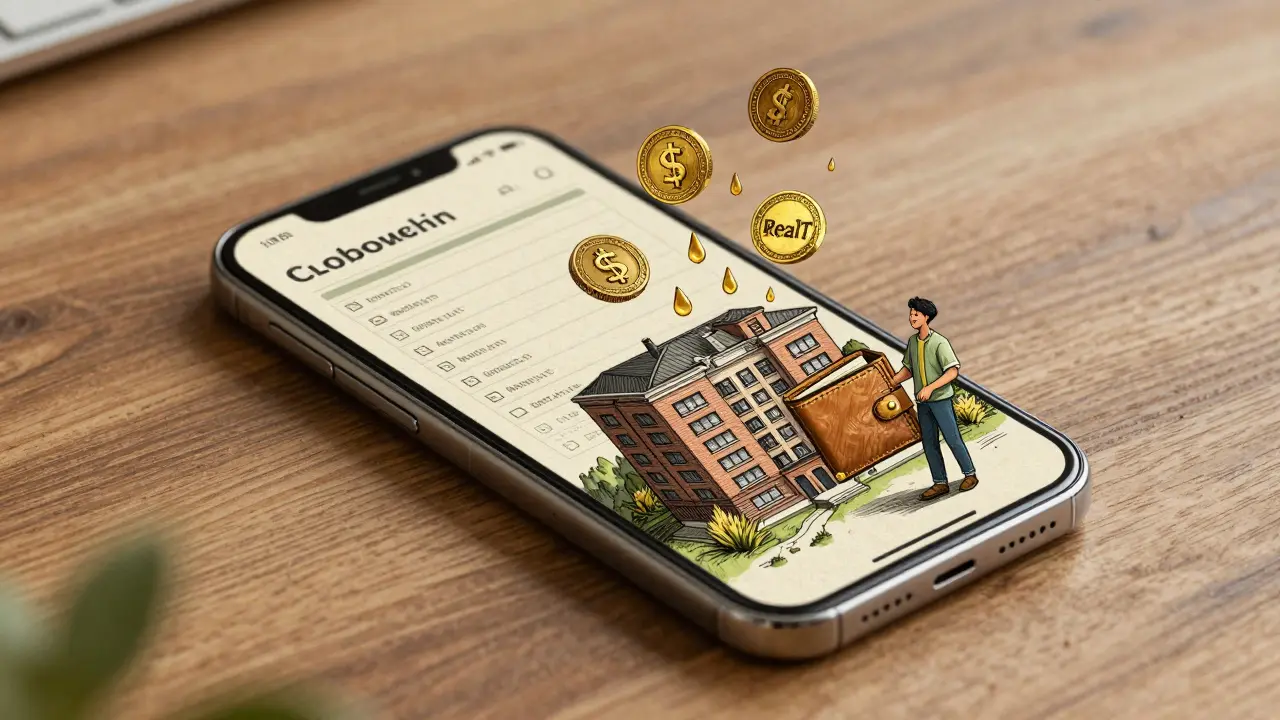
RealT, a leading platform for tokenized U.S. rental properties, reports that 73% of its users trade their tokens at least once a month. That’s unheard of in traditional real estate. One investor in Atlanta bought tokens in a four-unit building, rented them out, and sold half his stake six months later for a 14% profit - all from his phone. No realtor. No closing costs. Just a blockchain transaction.
Reduces Costs and Speeds Up Transactions
Traditional asset trading is expensive. Real estate commissions? 5-6%. Art auctions? 15-20% in fees. Legal paperwork? Thousands in lawyer fees. Tokenization cuts through all of it.
Smart contracts - self-executing code on the blockchain - handle the entire process. Buy a token? The contract verifies your identity, transfers ownership, and sends rental income automatically. No middlemen. No delays. No hidden fees.
According to 4irelabs’ 2025 guide, tokenized art markets charge 2-5% in fees. Traditional markets? 8-12%. That’s a 50-70% cost reduction. For a $1 million property sale, that’s $50,000 saved instead of $120,000. That money stays in the investor’s pocket.
Processing time drops too. EY found that tokenized real estate transactions take 3-5 days - down from 30-60 days. That’s a 90%+ efficiency gain. For institutional investors, this means faster capital deployment. For small investors, it means fewer headaches and more control.
Increases Transparency and Security
Ever wonder if your property deed is real? Or if a painting is truly signed by the artist? Or if the gold bar you bought is actually 24-karat? Tokenization solves these doubts.
Every token is tied to a verifiable, immutable record on the blockchain. You can trace every owner, every transaction, every dividend payment. No one can alter the record. No one can fake it.
EY’s May 2025 survey found that 89% of users felt more confident about ownership verification with tokenized assets than with paper documents. That’s huge. Paper records get lost. They’re forged. They’re outdated. Blockchain doesn’t.
Security is built in too. Most platforms use institutional-grade custody solutions like Fireblocks or Coinbase Custody. Multi-signature wallets require multiple approvals before any transfer. That’s far more secure than a safe deposit box or a broker’s back office.
Enables Custom Investment Portfolios
Traditional funds are rigid. You buy a REIT. You get whatever’s in it - whether it’s warehouses in Ohio or malls in Florida. You can’t pick. You can’t filter.
Tokenization changes that. Investors can now build custom portfolios based on exact criteria. Want only solar-powered office buildings in Germany? Done. Want exposure to Renaissance art but only pieces certified by the Louvre? Possible. Want to invest in timberland with carbon credits attached? Available.
Deloitte’s 2025 report says institutional investors are already using tokenization to create portfolios aligned with ESG goals - environmental, social, and governance factors. A pension fund in Sweden, for example, now holds tokenized assets that meet strict sustainability ratings. That’s impossible with traditional funds.
This isn’t just for big players. Retail investors can do the same. One user on Reddit bought tokens in five different properties across three countries, all with 6%+ yields - something no mutual fund could offer without massive capital.
Real-World Examples of Success (and Failure)
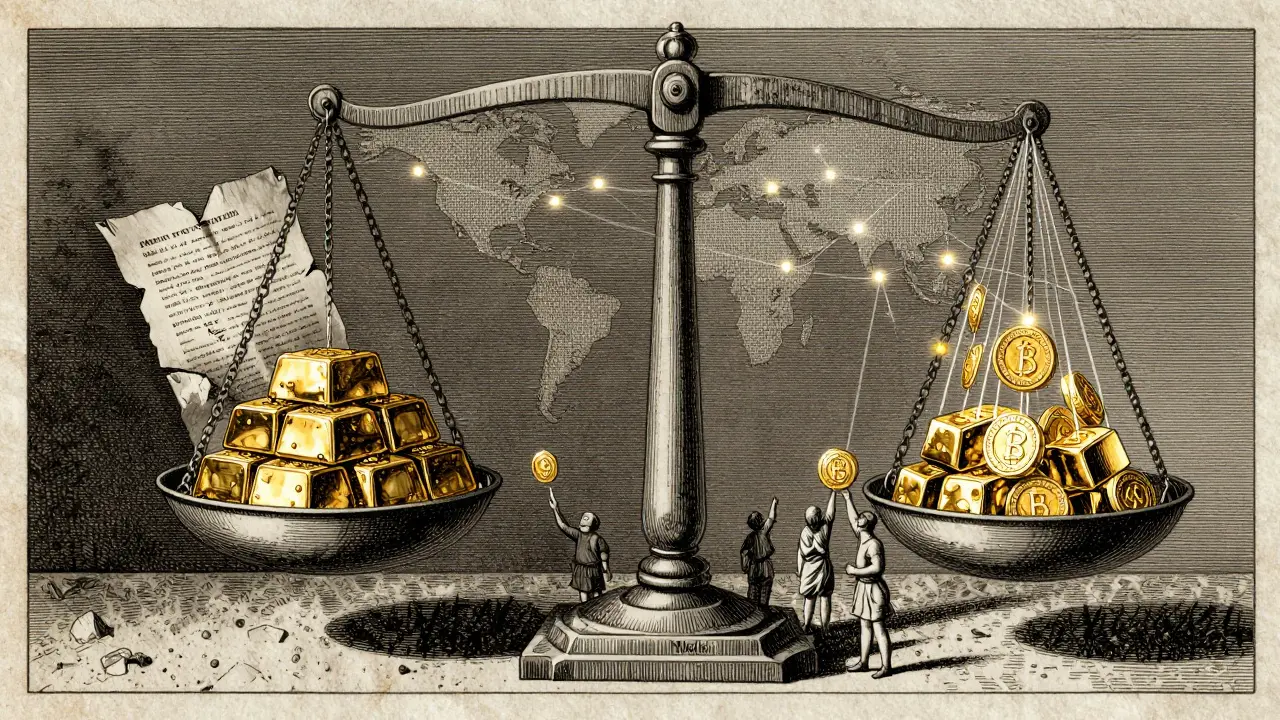
The proof is in the numbers. As of Q2 2025, $42 billion in real estate has been tokenized globally. BlackRock launched its own tokenized fund platform in July 2025, settling trades in under 5 seconds. Singapore’s regulatory sandbox has attracted over 80 tokenized asset projects in the last year.
But it’s not all smooth sailing. Some platforms collapsed. In early 2024, a $22 million fractional real estate startup shut down after SEC enforcement. Why? Lack of compliance. No KYC. No legal structure. Tokenization isn’t magic. It still needs rules.
Successful platforms follow three rules: regulatory compliance, clear asset backing, and strong custody. RealT, Securitize, and Blocksquare are examples. They work with lawyers, auditors, and regulators. They don’t promise returns. They show contracts. They prove ownership.
Challenges Still Exist
Tokenization isn’t perfect. Regulatory confusion is still the biggest hurdle. Only 17 countries have clear rules for security tokens as of Q3 2025. The U.S. has a patchwork of SEC, CFTC, and state rules. The EU’s MiCA regulation (effective June 2025) is the gold standard - but it doesn’t apply everywhere.
Technical complexity is another barrier. Setting up a wallet, managing private keys, understanding gas fees - it’s intimidating for newcomers. A June 2025 Trustpilot analysis found that 37% of first-time users needed customer support just to get started.
And while the market is growing fast - $12.8 billion in Q3 2025, up 67% year-over-year - it’s still tiny compared to the $256 trillion in real assets out there. Most of that potential is still locked away.
What’s Next?
The future is clear. Gartner predicts that by 2028, 10% of all illiquid assets - that’s $25 trillion - will be tokenized. Central banks are testing this too. The BIS’s Project mBridge, involving 14 major central banks, is already running trials with tokenized assets settled using digital currencies.
As regulation catches up and user interfaces get simpler, adoption will explode. The next wave won’t be just for investors. It’ll be for renters, homeowners, artists, farmers, and small business owners. Imagine renting out your garage as a tokenized storage unit. Or selling 10% of your farm’s harvest as a digital asset. The tools are here. The infrastructure is building.
Tokenizing real assets isn’t about replacing banks. It’s about making finance work better - faster, fairer, and for more people. The old system was built for a time when everything moved slowly. Now, everything moves fast. And tokenization is how we’re catching up.
What exactly is tokenizing a real asset?
Tokenizing a real asset means converting ownership rights to something physical - like a building, artwork, or gold - into digital tokens on a blockchain. Each token represents a fraction of ownership. You can buy, sell, or trade these tokens like stocks, but they’re backed by real-world value.
Can I really invest $10 in real estate through tokenization?
Yes. Platforms like RealT and Propy allow investments as low as $10 in tokenized residential or commercial properties. These are not speculative coins - they’re backed by actual buildings that generate rental income. Your $10 buys you a tiny slice of a property, and you receive a proportional share of rent.
Is tokenized real estate safer than traditional real estate?
It has advantages. Ownership is recorded on a public, tamper-proof blockchain. You can verify every transaction. No lost deeds. No fraud. But safety also depends on the platform. Reputable platforms use licensed custodians, legal audits, and KYC checks. Avoid platforms that don’t disclose asset backing or regulatory status.
Are tokenized assets regulated?
It depends on the country. The EU’s MiCA regulation (effective June 2025) is the most comprehensive. The U.S. still has a patchwork of rules enforced by the SEC and state agencies. In most cases, tokenized real assets are treated as securities, meaning issuers must register and comply with investor protection laws. Always check if the platform is registered in your jurisdiction.
What’s the biggest risk in tokenizing assets?
The biggest risk isn’t technology - it’s regulation and scams. Many early platforms promised high returns without legal backing. When regulators stepped in, they shut down. Always research the asset’s legal structure, who backs it, and whether the issuer is compliant. If it sounds too good to be true, it probably is.


There's something deeply human about this shift - the idea that ownership, once reserved for those with capital and connections, can now be shared in fractions as small as a single dollar. It’s not just about technology; it’s about reimagining community. When a teacher in Ohio can own a sliver of a Brooklyn brownstone, or a nurse in Detroit holds a stake in a solar farm in Arizona, we’re not just democratizing finance - we’re weaving new social contracts into code.
Blockchain doesn’t erase power structures, but it does scatter them. No single entity controls the ledger. No bank holds the keys. And that fragility - that distributed trust - is what makes this revolutionary. It’s not perfect. It’s messy. But it’s ours now. And that matters.
I wonder how this changes our relationship to property. We used to think of homes as nests, or investments as ladders. Now they’re nodes in a network. A piece of a building isn’t just a financial asset - it’s a thread in a larger tapestry of shared stakes. Maybe that’s the quiet revolution: we’re learning to belong to each other, not just through emotion, but through mathematics.
It’s beautiful, in a way that’s hard to articulate. Not because it’s flawless, but because it’s possible. And possibility, however small, is the first spark of change.
I don’t know if this will last. I don’t know if regulation will strangle it. But for now, it exists. And that’s enough to make me hopeful.
Not because I’m an optimist. But because I’ve seen how much we’ve lost by keeping things locked away. And this? This feels like undoing a lock we never should’ve had.
omg i just bought my first $10 token today 😭 it’s a tiny piece of a house in Austin and i’m already getting rent every month?? i’m not rich but i feel like i’m part of something real now 🏡✨
my mom called it ‘crypto nonsense’ but she’s asking me how to do it now lmao
thank you for writing this. i didn’t know this was possible for people like me.
liquidity event horizon achieved
smart contracts > escrow agents
gas fees still a thing tho
regulatory arbitrage inevitable
custody solutions non trivial
onchain provenance > paper trail
decentralized ownership ≠ decentralized control
market depth still shallow
real asset backstop critical
reading this made me cry a little 💕
i’ve been saving for years to buy my first property and i was starting to feel like it was impossible. but now? i can invest in a cabin in the woods with my sister, or a studio in Lisbon with my best friend. it’s not just about money - it’s about connection.
thank you for seeing this as more than tech. it’s about belonging.
also - anyone else nervous about the platform going down? i feel like i need to screenshot my wallet address just in case 😅
Let’s be honest - this is just Wall Street’s next playground. You think a nurse in Ohio owning 0.0001% of a building is progress? It’s a distraction. The real power still lies with the custodians, the regulators, the white-shoe law firms that vet the tokens. This isn’t democratization - it’s rebranding.
And don’t get me started on the ‘$10 investment’ marketing. That’s bait. The real returns are locked behind institutional tiers, tiered staking, and minimum liquidity pools. The retail investor is a marketing tool, not a participant.
Tokenization doesn’t remove gatekeepers - it just makes them look like heroes.
blockchain is a gov tracking tool
they want to own every asset you touch
every token = digital fingerprint
theyll freeze your tokens if you say wrong thing
remember when you could just own a house? now its all monitored
secret service already testing onchain surveillance
you think this is freedom? its the opposite
paper deeds at least burned
code never forgets
trust no one
theyre coming for your garage
theyre coming for your car
theyre coming for your dog
2028 is the year they take it all
How adorable. You think this is progress? You think a $10 token makes you ‘empowered’? How quaint.
The real elite don’t need tokens. They own the infrastructure. They own the custody providers. They own the regulators. The ‘democratization’ you’re celebrating? It’s a performance. A carefully staged ballet for the gullible.
And you - yes, you, the one who cried over a rental payout - you’re the perfect mark. You’re the one who’ll pay 5% fees to ‘access’ what the 0.1% already control. You’re the one who’ll be told ‘it’s not a security’ until it is - and then you’ll be the one with nothing.
Tokenization isn’t liberation. It’s a velvet cage. And you’re happily polishing the bars.
How very… American.