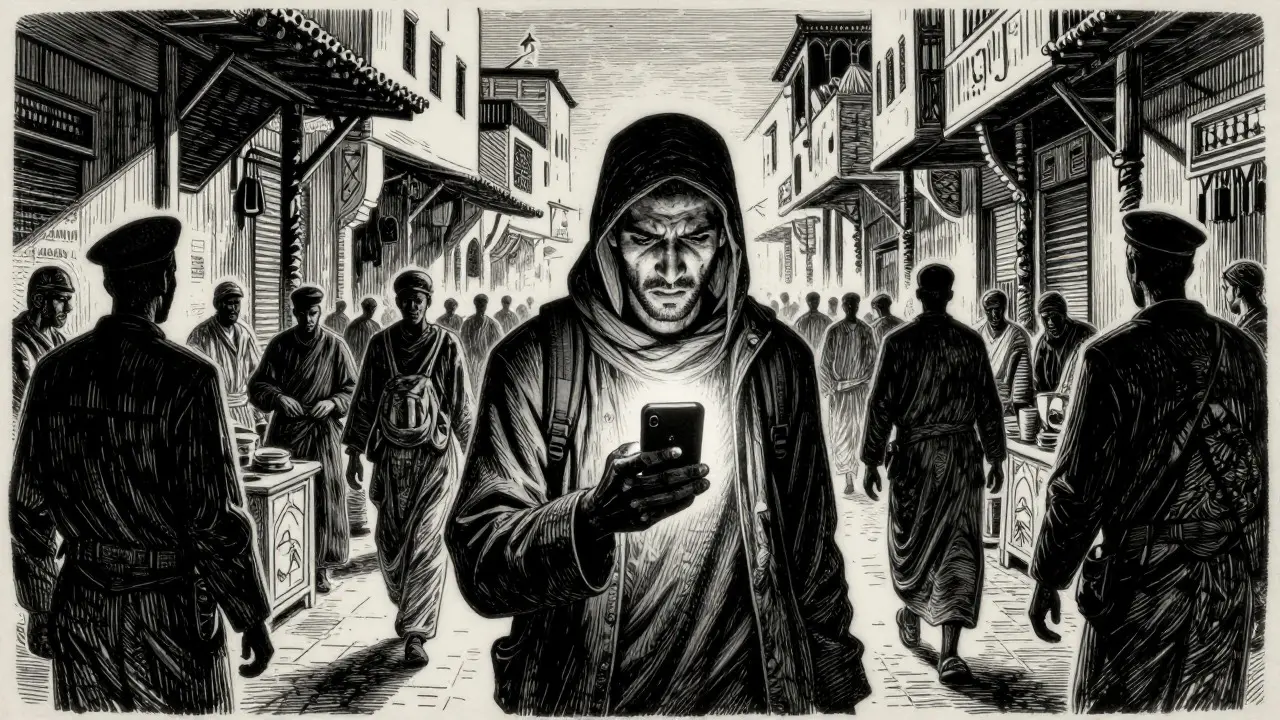
Imagine you are traveling in Algeria or Egypt, and you decide to check your Bitcoin balance on your phone. In many places, this is a harmless habit. But in these specific countries, that simple action could technically land you in serious legal trouble. The world of cryptocurrency is not just about charts and profits; it is also a minefield of international laws. As of mid-2026, the question isn't just "is crypto banned?" but rather, "what happens if you get caught?"
The short answer is complicated. While some nations treat crypto usage as a minor administrative fine, others have criminalized it entirely. The gap between what the law says and what actually happens on the street is widening. You might see headlines about strict bans, but local users often trade openly using peer-to-peer methods without facing jail time. Understanding this distinction is crucial for anyone holding digital assets while living in or visiting restricted jurisdictions.
The Landscape of Global Crypto Bans
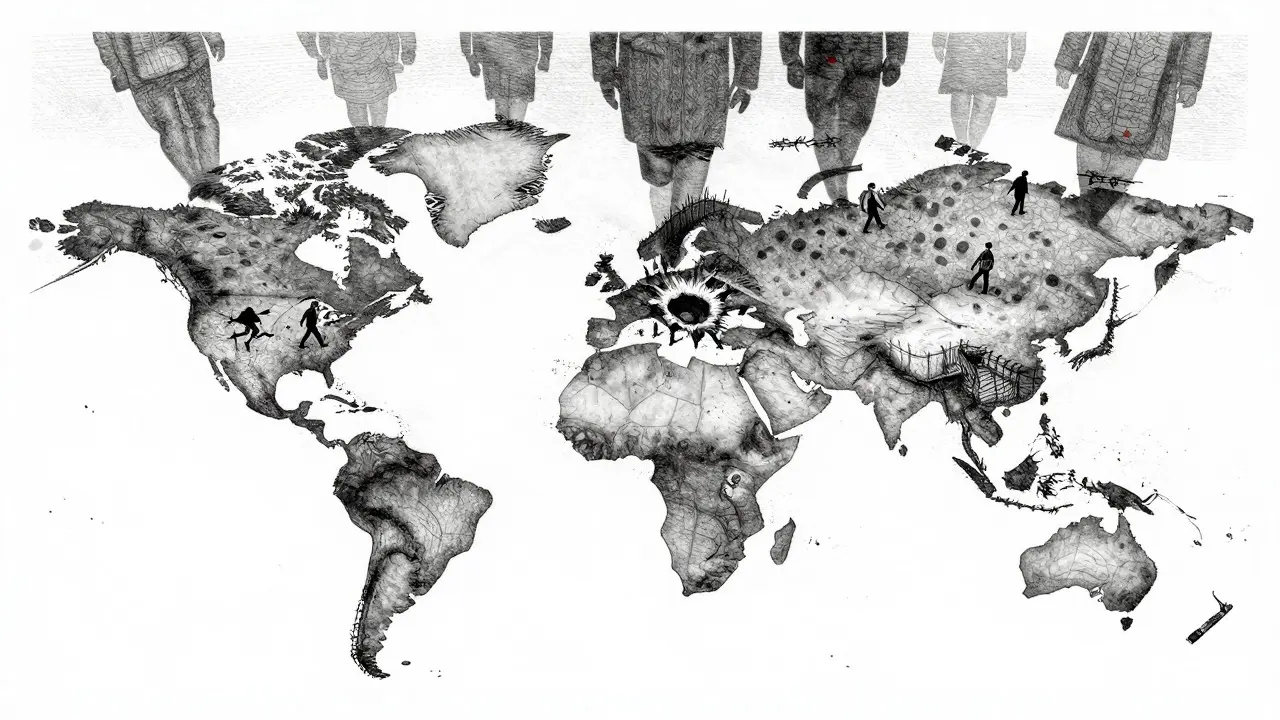
To understand the risks, we first need to look at who is banning what. According to the Atlantic Council's Cryptocurrency Regulation Tracker from 2025, the global map is split into three distinct zones. Out of 75 countries studied, 45 nations fully legalize cryptocurrency. Another 20 impose partial bans, which usually mean you can hold coins but cannot use them for payments or must pay heavy taxes. Then there are the 10 countries with general or outright bans.
These bans are rarely random. They usually stem from three fears: money laundering, terrorist financing, and capital flight. When a government wants to control its currency, it sees decentralized networks like Bitcoin as a threat. For example, in North Africa, countries like Algeria and Morocco have maintained strict prohibitions since around 2017. Their goal is to prevent citizens from moving wealth out of the country through untraceable channels.
However, the definition of a "ban" varies wildly. In some places, only banks are forbidden from touching crypto. In others, individuals are punished for merely owning it. This ambiguity creates a gray area where travelers and expats often stumble into legal trouble unintentionally.
Strict Laws vs. Actual Enforcement
Here is the reality check: having a ban on the books does not mean police are knocking on doors every night. Dr. Sarah Bloom Raskin, former Deputy Secretary of the U.S. Treasury, noted in early 2025 that criminalizing crypto creates massive enforcement challenges. Why? Because adoption rates remain high even in banned countries. People find ways around restrictions.
In Algeria, Article 117 of the official journal explicitly prohibits the purchase, sale, use, and holding of virtual currency. It states that breaches are punishable by law, yet it doesn't specify exact prison terms or fine amounts. This vagueness gives authorities discretion. In practice, most Algerian users report using platforms like LocalBitcoins for years without incident. The risk exists, but it is often low unless you are moving large sums or drawing attention to yourself.
Morocco follows a similar pattern. The Office des Changes declared in 2017 that virtual currency transactions infringe on exchange regulations. Bank Al-Maghrib Governor Abdellatif Jouahri clarified that Bitcoin is a risky financial asset, not legal tender. Despite this, user reports from Reddit communities in 2025 show that many Moroccans trade freely. The penalty here is typically financial-a fine for violating foreign exchange rules-rather than immediate imprisonment for small-scale holders.
When Penalties Become Criminal
So, when do fines turn into jail time? The line is usually crossed when crypto intersects with organized crime, sanctions evasion, or large-scale money laundering. General users buying Bitcoin for savings are rarely the target. The targets are infrastructure providers and illicit actors.
Consider the case of Russia. While domestic regulation has been inconsistent, the U.S. Department of the Treasury's Office of Foreign Assets Control (OFAC) has aggressively targeted Russian crypto entities. In 2024, OFAC issued 13 sanctions designations including 86 cryptocurrency addresses linked to illicit activities. Entities like NetEx24 and Bitpapa saw inflows drop by 82% after being designated. For operators running these exchanges, the penalty wasn't just a fine; it was global isolation and potential criminal prosecution under U.S. jurisdiction if they had any ties to American systems.
In Egypt, the Central Bank prohibits individuals and banks from dealing in cryptocurrencies. Yet, a CoinDesk survey in May 2025 found that only 12% of users in banned jurisdictions reported personal legal consequences. Most faced technical hurdles, like payment processor blocks, rather than police raids. The criminal penalty is reserved for those facilitating large-scale illegal flows, not the average person checking their wallet.
China’s Approach: Business vs. Individual
China represents the most complex case. Since 2021, China has banned crypto exchanges, trading, and mining. The enforcement is brutal for businesses. Mining operations were shut down overnight, and exchanges were forced out of the market. However, for individual holders, the situation is nuanced.
There are no documented cases of Chinese citizens being imprisoned solely for holding Bitcoin. The focus is on commercial activity. If you run an unlicensed exchange or a mining farm, you face severe criminal charges for illegal business operations. If you just hold coins in a cold wallet, you are largely ignored. Chainalysis estimated that $28.7 billion in peer-to-peer transactions originated from China in 2024 alone. The government tolerates this underground market because shutting it down completely is technically impossible without controlling every internet connection.
The Shift Toward Targeted Sanctions
By 2026, the global trend is moving away from blanket criminalization toward targeted sanctions. Blanket bans are hard to enforce and drive activity underground, making it harder to track criminals. Instead, regulators prefer to sanction specific bad actors.
The TRM Labs 2025 Crypto Crime Report highlights this shift. Rather than arresting everyone who uses crypto, agencies like the UK’s National Crime Agency (NCA) launch operations like "Operation Destabilise." They target specific individuals, such as Elena Chirkinyan and Khadzi-Murat Dalgatovich Magomedov, who used crypto for money laundering and sanctions evasion. These individuals face real criminal charges, but the charges are related to fraud and laundering, not the mere act of using crypto.
This approach allows governments to maintain the appearance of strict control while allowing everyday users to operate in the shadows. It is a pragmatic solution to an unenforceable problem. For the average user, this means the risk of criminal penalty is low unless you are involved in suspiciously large or opaque transactions.
Risks for Travelers and Expats
If you are a traveler or expat, you need to be careful. Your home country’s laws may not protect you abroad. Here is how to navigate the risks:
- Know the Local Law: Before visiting Algeria, Egypt, Bangladesh, or Qatar, check the current status. A ban in one country might be a suggestion in another.
- Avoid Public Displays: Do not discuss your crypto holdings openly in highly restricted regions. Discretion is your best defense.
- Use P2P Carefully: Peer-to-peer platforms allow you to trade directly with locals. While effective, ensure you are not inadvertently acting as an unlicensed money transmitter by processing funds for others.
- Watch for KYC Traps: Platforms like KuCoin, though sometimes accessible in restricted regions, may freeze accounts if Know Your Customer (KYC) verification fails. This isn't a criminal charge, but it can leave your funds stranded.
Remember, the goal of most bans is to stop capital flight. If you are a tourist spending a few hundred dollars, you are unlikely to be noticed. If you are trying to move millions out of the country, you will attract attention.
Comparison of Enforcement Styles
| Country/Region | Ban Type | Primary Penalty for Individuals | Enforcement Focus |
|---|---|---|---|
| Algeria | Outright Ban | Fines (Vague Legal Basis) | Capital Flight Prevention |
| Morocco | Outright Ban | Exchange Regulation Fines | Currency Control |
| Egypt | Outright Ban | Administrative Blocks | Banking System Protection |
| China | Commercial Ban | Low Risk for Holders | Exchanges & Mining Ops |
| Russia (Sanctioned Entities) | Partial/Complex | Asset Freezes/Sanctions | Illicit Finance & War Funding |
The Future of Crypto Regulation
Looking ahead to 2027 and beyond, expect fewer blanket bans and more sophisticated tracking. The European Union’s MiCA framework, implemented in 2024, shows the way forward: strict licensing for providers, but clear rules for users. The U.S. GENIUS Act of 2025 focuses on stablecoins and sanctions evasion rather than criminalizing ownership.
Regulators are realizing that you cannot ban technology that lives on the internet. Instead, they are building tools to trace it. The Financial Crimes Enforcement Network (FinCEN) treats virtual currency businesses as Money Services Businesses, requiring anti-money laundering compliance. This means the pressure is shifting onto exchanges and wallets to police their users, rather than the state policing every citizen.
For the individual, this is actually good news. As long as you are not laundering money or evading sanctions, you are likely safe. The era of mass arrests for crypto usage appears to be fading, replaced by a system of surveillance and targeted strikes against major criminals.
Can you go to jail for holding Bitcoin in a banned country?
In most cases, no. While countries like Algeria and Egypt have laws prohibiting crypto possession, actual imprisonment for simple holding is rare. Penalties are usually financial fines or administrative blocks. Jail time is typically reserved for large-scale money laundering, operating unlicensed exchanges, or sanctions evasion.
Which countries have the strictest crypto bans?
As of 2026, Algeria, Morocco, Egypt, Bangladesh, and Qatar maintain outright bans on cryptocurrency transactions. China has banned commercial crypto activities like exchanges and mining, though individual holding is tolerated. These nations enforce bans primarily to control capital flight and protect their national currencies.
What happens if I use a banned crypto exchange?
If you use a banned exchange in a restrictive country, your biggest risk is account freezing or loss of funds due to lack of legal recourse. You may also face fines for violating foreign exchange regulations. Criminal prosecution is unlikely unless you are processing significant volumes of money for third parties.
How do governments enforce crypto bans effectively?
Governments struggle to enforce blanket bans. Instead, they use targeted sanctions, block IP addresses of major exchanges, and require banks to monitor for crypto-related transfers. Agencies like OFAC designate specific illicit addresses, forcing compliant global banks to freeze associated funds. This indirect method is more effective than arresting individual users.
Is it safe to travel with crypto hardware wallets?
Physically carrying a hardware wallet is generally safe as it is just a device. However, if border agents in a banned country discover your private keys and ask about your holdings, you could face questioning or fines. It is advisable to keep your crypto discreet and avoid declaring it unless legally required.
What is the difference between a partial and general crypto ban?
A general ban prohibits all aspects of crypto, including holding, buying, and selling. A partial ban might allow you to hold crypto as an investment but forbid using it for payments or require special licenses for trading. Partial bans are more common and less strictly enforced than general bans.
Look, everyone is getting way too worked up about this whole "ban" situation because they are ignoring the basic reality of how these laws actually work on the ground versus what is written in some dusty legal journal from twenty years ago. I mean, sure, if you go to Algeria and start setting up a mining farm in your living room, yeah, maybe the cops show up, but for the average guy just checking his balance? It is basically non-existent risk unless you are screaming at the top of your lungs that you are holding assets. The article makes it sound like you are walking through a minefield, but really it is more like walking through a park where the sign says "no dogs" but nobody cares as long as your dog isn't barking or peeing on the mayor's car. People in Morocco have been trading on LocalBitcoins for years without a single issue because the government knows they cannot police every smartphone transaction. The real danger isn't the law itself, it is the stupidity of people who think they can move millions in cash equivalents without triggering alerts. So instead of panicking, just use common sense and don't be an idiot about it.
oh my god finally someone said it!! i am so tired of people acting like crypto is illegal everywhere lol its such a vibe to see ppl traveling with hardware wallets like its no big deal 😍✨
The philosophical underpinning of this entire discourse reveals a profound misunderstanding of state power vs individual sovereignty. When we look at the ban not as a legal restriction but as a psychological barrier imposed by the collective unconscious of the regulated populace, we see that the true crime is not the possession of bitcoin but the failure to recognize the ephemeral nature of fiat currency itself. The Algerian government, in its infinite wisdom (or lack thereof), attempts to freeze time by freezing capital, yet capital is merely energy in motion, and energy cannot be destroyed, only redirected into the shadows where the light of regulation does not reach. Thus, the ban is a performative act, a theater of control that soothes the anxieties of the central planners while the digital gold flows freely beneath their feet like water through a sieve. We must ask ourselves: is the jail cell real, or is it a construct of our fear?
hii from india! :D we dont have bans here but taxes r crazy lol good info tho :)
I went to egypt last year and didnt tell anyone about my stash. Just kept it quiet. Best advice ever. Typos aside, point stands.
This is super helpful info! 🙌 I was always worried about traveling with my Ledger. Glad to know discretion is key. Thanks for sharing! 🚀💰
You need to listen closely!!! This is critical information for your financial freedom!!! Do not ignore the warnings about KYC traps!!! They will freeze your funds if you are not careful!!! Stay vigilant!!! Protect your stack!!!
It is interesting to see how enforcement varies so much. I think most people just want peace of mind when traveling. Knowing that China focuses on businesses rather than individuals gives me a lot of relief. It shows that governments are pragmatic even when they seem strict.
The distinction between administrative fines and criminal penalties is crucial here. Many travelers panic unnecessarily because they do not understand that jail time is reserved for large-scale money laundering. For the average person, the risk is minimal if they remain discreet. It is reassuring to see data showing that only 12% of users in banned jurisdictions faced personal legal consequences. This suggests that the threat is often overstated in media reports.
I feel like we should all just trust our instincts. If it feels sketchy, keep it hidden. The drama around crypto bans is exhausting, but staying low-key seems to be the best path forward. Let us hope regulations become clearer soon.