
You probably think your crypto holdings are invisible to the IRS or HMRC. For years, that was mostly true. But the era of digital anonymity is ending. Starting January 1, 2026, a massive shift hits global finance. The Common Reporting Standard (CRS) gets a major upgrade. It now covers crypto assets. This isn't just a tweak; it's a fundamental change in how governments see your wallet.
If you hold Bitcoin, Ethereum, or stablecoins across borders, this matters. Tax authorities are no longer guessing about your gains. They will have data. Directly from exchanges and banks. Let’s break down what CRS 2.0 means for you, why the OECD pushed for it, and how the new Crypto-Asset Reporting Framework (CARF) fits into the picture.
The Old Rules vs. The New Reality
Think back to 2014. That’s when the Organisation for Economic Co-operation and Development (OECD) created the original Common Reporting Standard. Its goal? Stop tax evasion. Before CRS, hiding money offshore required elaborate schemes. Now, over 120 countries automatically share bank account info. If you’re a US citizen with a bank account in Switzerland, the IRS knows about it. This system, often called "GATCA," worked well for traditional cash and stocks.
Crypto broke the model. Digital assets move fast. They cross borders instantly. Traditional banks didn’t always know who owned which token. A user might trade on an exchange in Singapore while living in California. The old CRS rules didn’t catch these trades efficiently. Authorities lacked visibility. They couldn’t easily verify if you paid taxes on those capital gains. This gap prompted the update we face today.
The core problem wasn’t just privacy. It was enforcement. Without data, audits were rare. Most people self-reported. Some did so honestly. Others didn’t. The new framework aims to close that loophole by forcing institutions to report not just balances, but transaction types involving digital assets.
Enter CARF: The Missing Piece
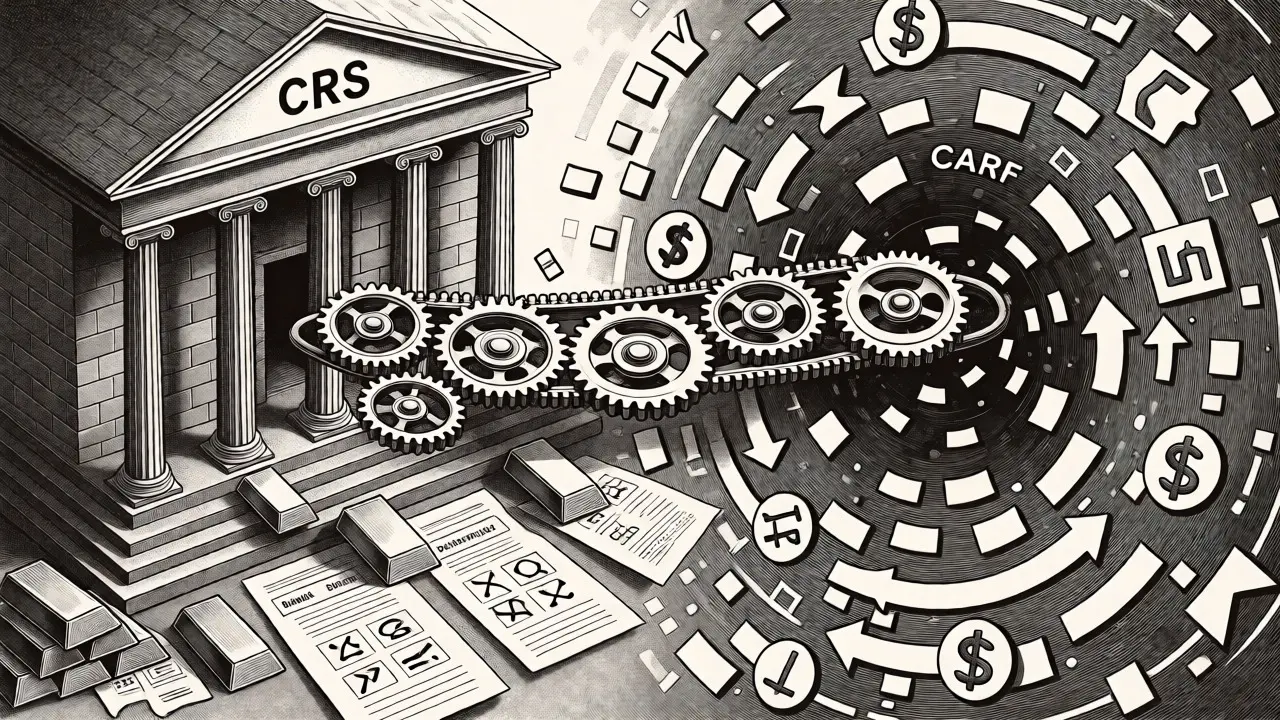
To fix the crypto blind spot, the OECD didn’t just patch CRS. They built a companion system: the Crypto-Asset Reporting Framework (CARF). Think of them as partners. CRS tracks where your money sits. CARF tracks how your crypto moves.
Here is the key distinction: CRS focuses on holdings. CARF focuses on transactions. When they work together, they create a complete map of your financial life. If you swap Bitcoin for Ethereum on a centralized exchange, CARF catches that event. If you keep those tokens in a custodial account, CRS notes the balance. Both systems feed into the same automatic exchange network.
| Feature | Common Reporting Standard (CRS) | Crypto-Asset Reporting Framework (CARF) |
|---|---|---|
| Primary Focus | Financial accounts and holdings | Crypto-asset transactions and exchanges |
| Target Assets | Banks, stocks, bonds, funds | Stablecoins, derivatives, NFTs, CBDCs |
| Data Type | Balance information | Transaction details (buy/sell/swap) |
| Effective Date | Amended Jan 1, 2026 | Exchanges start 2027 |
This dual approach prevents duplication. You won’t get reported twice for the same event. Instead, each framework handles its specific domain. Financial institutions must navigate both. Banks already familiar with CRS will find CARF familiar. Exchanges, however, face new hurdles. Many weren’t designed to track tax residency per user. Now they must.
What Counts as a Reportable Asset?
Definitions matter here. The amended CRS expands what counts as a "financial asset." It now includes Central Bank Digital Currencies (CBDCs) and Specified Electronic Money Products. Basically, if it looks like money and acts like money on a ledger, it’s likely covered.
The definition of crypto-assets itself is precise. It covers any digital representation of value secured by cryptography. This includes:
- Stablecoins: Tokens pegged to fiat currencies like USD or EUR.
- Derivatives: Contracts referencing crypto prices held in custodial accounts.
- NFTs: Certain non-fungible tokens, depending on their utility and transferability.
Investment entities investing in crypto also fall under scrutiny. If you hold crypto through a fund or ETF structure, that entity reports to your local tax authority. Then, that authority shares the data with yours. The net effect? Your portfolio is visible globally.
Who Has to Report?
Not everyone files paperwork directly. You don’t log into a portal and upload your Binance history. Instead, Reporting Financial Institutions do the heavy lifting. These include:
- Banks: Already reporting under CRS, they now add crypto-related accounts.
- Custodial Wallet Providers: Services holding your keys for you.
- Exchanges: Centralized platforms facilitating trades.
- Investment Funds: Entities pooling capital into digital assets.
These institutions must identify your tax residency. How? Usually via self-certification forms during signup. If you provided a US address and SSN, you’re flagged as a US person. If you gave a UK passport number, you’re flagged for HMRC. Errors here cause headaches later. Ensure your KYC (Know Your Customer) data is accurate.
Decentralized Finance (DeFi) protocols pose a challenge. Purely decentralized exchanges (DEXs) without a central operator may struggle to comply. However, regulators are pushing for intermediaries to step up. If a DEX has a front-end interface acting as a broker, it might be liable. The line blurs, but the trend is clear: more coverage, less gray area.
Global Implementation Timelines
Timing varies by country. The OECD set the stage, but local laws dictate execution. The European Union integrates these rules via DAC8, updating its administrative cooperation directives. Countries like Guernsey, the UK, and others committed early. In November 2023, 47 jurisdictions signed a joint statement supporting CARF readiness.
For most users, the practical impact starts in 2026. That’s when CRS amendments take legal effect. Actual data exchange often lags slightly. CARF exchanges are targeted to begin in 2027. So, if you sell crypto in 2026, expect your government to ask questions in 2027 or 2028.
Don’t assume all countries move at the same speed. Some adopt faster due to tech infrastructure. Others delay due to legislative hurdles. If you live in a jurisdiction with strict capital controls or high crypto adoption, watch local announcements closely. Compliance costs rise for businesses, potentially passed on to users via fees.
Practical Steps for Crypto Holders
So, what should you actually do? Panic isn’t helpful. Preparation is. Here is a checklist to stay ahead of the curve:
- Audit Your Accounts: List every platform holding your assets. Note which ones are custodial versus self-custody.
- Verify Residency Status: Check the tax residency field on each exchange profile. Is it current? Did you move recently?
- Keep Records: Even if exchanges report, you need proof. Download transaction histories annually. Use tools like CoinTracker or Koinly to categorize trades.
- Understand Cost Basis: Different methods (FIFO, LIFO) affect tax bills. Know which method your jurisdiction requires.
- Consult a Pro: Cross-border crypto taxation is complex. If you have significant holdings or multiple nationalities, hire a specialist familiar with CRS/CARF.
Self-custody wallets (like MetaMask or Ledger) present a nuance. Currently, CARF primarily targets custodial providers. If you hold coins yourself, no third party reports for you. But if you interact with a centralized service-even briefly-that interaction gets logged. Total anonymity is fading, even for hardware wallet users, because on-ramps and off-ramps are monitored.
Risks and Misconceptions
A common fear: "Will I be taxed on unrealized gains?" Generally, no. Most jurisdictions tax realized events-sales, swaps, spending. Holding BTC while it rises doesn’t trigger a bill in the US or UK. However, swapping BTC for ETH is a taxable event in many places. CARF helps authorities verify these swaps.
Another myth: "This only affects whales." Small traders aren’t exempt. Automated reporting scales down to low balances. Thresholds exist, but they vary. In some regions, any account over $50,000 triggers detailed review. In others, smaller amounts still appear in bulk data sets.
Be wary of scams promising "tax-free crypto havens." While some countries offer favorable rates, CRS ensures transparency. You can’t hide income by moving assets to a low-tax zone if your home country receives the data. The benefit of tax planning remains, but the option of total concealment vanishes.
Frequently Asked Questions
Does CRS apply to my personal crypto wallet?
Directly, usually no. CRS applies to financial institutions. If you use a self-custody wallet like MetaMask, there is no intermediary to report to tax authorities. However, if you buy or sell through a centralized exchange or broker, that institution reports your activity. Interactions with DeFi protocols may also be captured if intermediaries are involved.
When does the new crypto reporting rule start?
The amended Common Reporting Standard (CRS 2.0) takes effect on January 1, 2026. The Crypto-Asset Reporting Framework (CARF) exchanges are scheduled to commence in 2027. This means data collected in 2026 will likely be shared with tax authorities in 2027.
Will I pay higher taxes because of CRS?
No, CRS itself does not change tax rates. It changes visibility. If you were previously evading taxes on crypto gains, you might owe more because authorities now have the data to enforce existing laws. If you were compliant, your tax bill shouldn’t increase due to CRS alone.
Are NFTs included in the reporting standard?
Yes, certain NFTs are included. The updated definitions cover digital representations of value secured by distributed ledgers. This encompasses stablecoins, derivatives, and specific non-fungible tokens, particularly those used for investment or payment purposes rather than purely collectible art pieces.
How does CARF differ from FATCA?
FATCA is a US-specific law requiring foreign institutions to report US persons' accounts. CRS is a global standard adopted by over 120 countries. CARF is a new extension specifically for crypto assets. While FATCA paved the way for automatic exchange, CARF modernizes it for digital assets, applying broadly across participating OECD nations.
Next Steps for Compliance
Start by reviewing your current setup. Are you using multiple exchanges? Consolidate where possible to simplify tracking. Ensure your email addresses and physical addresses match across platforms. Mismatches can flag accounts for manual review.
Watch for updates from your brokers. They will send notices about new terms of service regarding tax reporting. Read them. Don’t click away. Sometimes, opting out of certain features affects reporting capabilities.
Finally, consider the long-term view. As regulation tightens, institutional adoption grows. Big players like BlackRock entering crypto markets rely on clear tax frameworks. This stability benefits retail investors too. Knowing the rules reduces uncertainty. Embrace the transparency. It protects you from retroactive penalties and aligns you with the future of finance.