
Imagine buying Bitcoin with your savings, only to find your bank account frozen the next morning. For many in Bangladesh, this isn't a hypothetical scenario; it's a daily reality. While the country doesn't have a single law that explicitly says "owning crypto is a crime," the regulatory environment creates a trap where trading can lead to serious legal trouble under other statutes.
The core issue lies in how authorities interpret existing financial laws. The Bangladesh Bank, the central bank, has declared cryptocurrencies not legal tender since 2017. This means you can't use them officially, but does it mean you'll go to jail for holding them? Not necessarily. However, if your transactions look suspicious to the Bangladesh Financial Intelligence Unit (BFIU), you might face charges under the Money Laundering Prevention Act or the Foreign Exchange Regulation Act. This article breaks down exactly where the legal lines are drawn and what risks you actually face as a trader.
The Regulatory Gray Zone: What Is Actually Illegal?
To understand the risk, we need to separate ownership from transaction. In November 2021, the Bangladesh Bank formally communicated to the Criminal Investigation Department (CID) that simply owning cryptocurrency was not illegal. This was a significant clarification, documented in CID Case No. 1147/2021. So, sitting on your Bitcoin isn't a crime in itself.
However, the moment you move that value-selling it for Taka, buying goods with it, or transferring it across borders-the legal landscape shifts dramatically. Authorities view these actions as potential violations of two main laws:
- Foreign Exchange Regulation Act of 1947: Since crypto isn't recognized currency, moving funds into or out of it can be seen as an unauthorized foreign exchange transaction.
- Money Laundering Prevention Act (amended 2015): Section 6 criminalizes transactions involving proceeds from illegal activities. Because crypto is "not legal tender," regulators often assume unexplained crypto gains are dirty money until proven otherwise.
This creates what legal expert Barrister Rokibul Hasan calls a "dangerous legal limbo." You aren't prosecuted for having the asset, but you are exposed when you try to cash out or trade actively.
Penalties: Fines, Prison, and Asset Seizure
If you do get caught, the consequences can be severe. Under the Money Laundering Prevention Act, penalties for violating transaction rules include imprisonment ranging from 1 to 10 years and fines between 10,000 and 1,000,000 Bangladeshi Taka (BDT). But the financial loss often goes beyond just the fine.
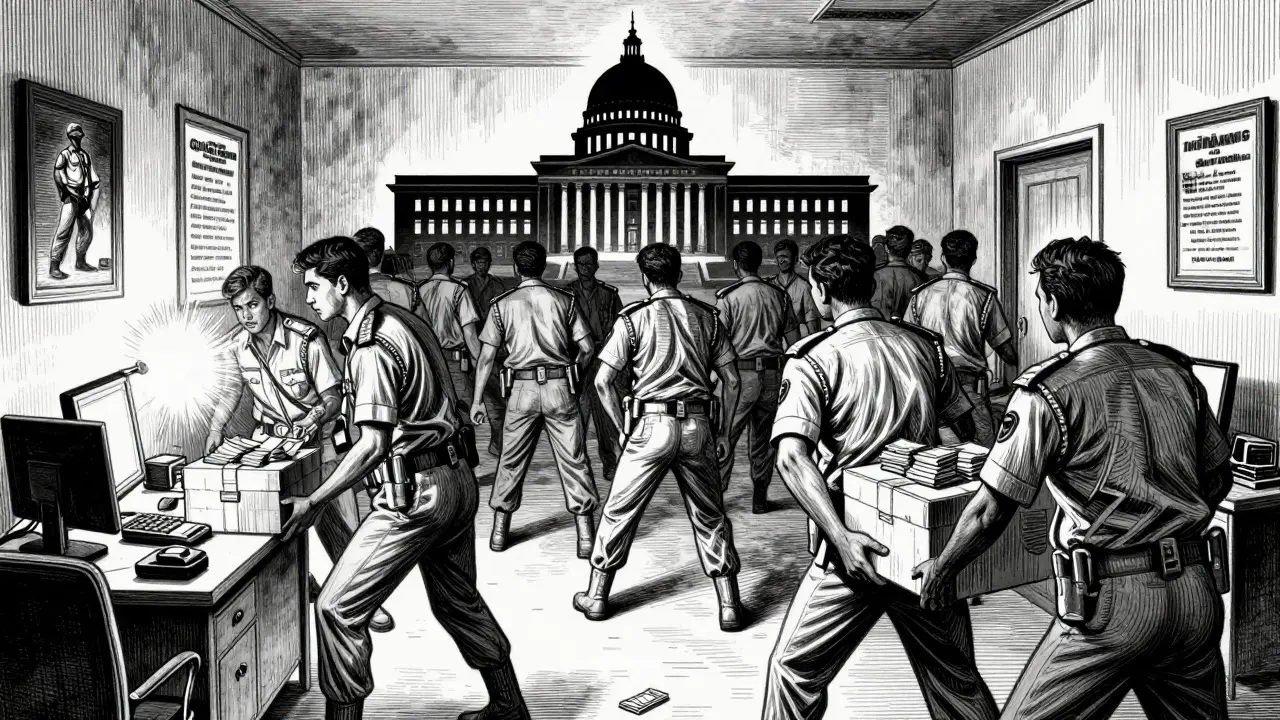
Asset seizure is a common enforcement tool. In February 2023, authorities seized 127 Bitcoin from a Dhaka-based trader named Mohammad Ali. At the time, that haul was worth approximately 1.3 billion BDT (around $12.1 million). He wasn't just fined; his assets were locked up during the investigation. Similarly, in July 2022, the CID arrested 14 individuals in Dhaka for operating an underground exchange handling roughly $2.3 million in transactions.
| Activity | Legal Status | Potential Penalty | Risk Level |
|---|---|---|---|
| Holding Bitcoin | Not explicitly illegal | None directly, but vulnerable to seizure if linked to other crimes | Low |
| Trading via P2P | Gray zone / Prohibited | Fine + 1-10 years prison (under MLPA) | High |
| Cash-out to BDT | Violates FX Act | Confiscation of funds + Fine | Very High |
| Using Crypto for Business | Prohibited | Civil & Criminal liability | Very High |
How Enforcement Works: Tracking Your Moves
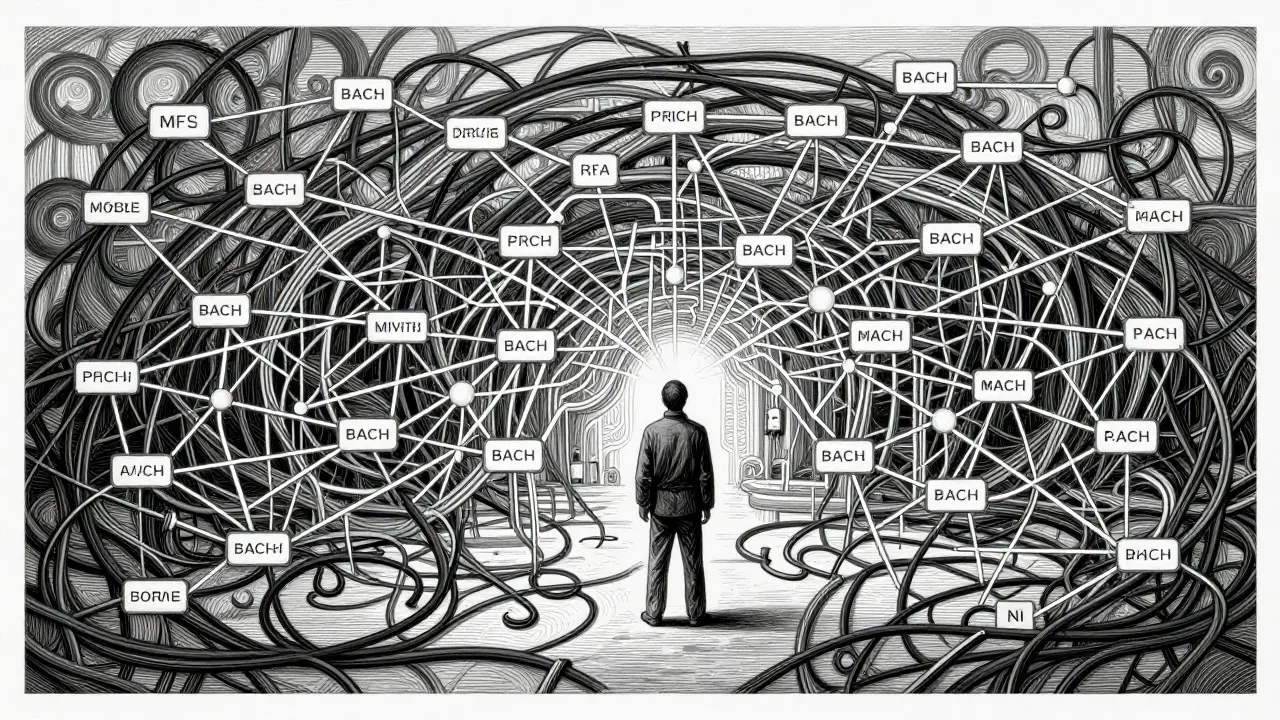
You might think you're safe because you don't use official banks. But enforcement has gotten smarter. The primary tools used by the BFIU and Bangladesh Bank include monitoring international card transactions through the Bangladesh Automated Clearing House (BACH). In Q4 2024 alone, they flagged 127 suspicious crypto-related transactions.
Mobile financial services are another major watchpoint. Providers like bKash and Nagad report large or irregular transfers to authorities. In 2024, these platforms blocked 2,843 accounts suspected of crypto activity. If you've ever had your bKash account frozen without warning, this is likely why. A May 2025 survey by a Dhaka-based fintech researcher found that 68% of 350 surveyed users reported at least one frozen account in the previous year.
Enforcement also happens through local agents. Many traders use intermediaries to convert Tether (USDT) to Taka, paying commissions of 3-5%. These agents are frequent targets. In June 2024, 23 traders lost approximately $350,000 when an agent named 'Sohel Rana' disappeared after collecting payments. When agents get caught, their client lists often become evidence against the traders themselves.
Tax Implications: The Hidden Cost
Beyond criminal risk, there's the tax angle. There are no specific crypto tax regulations in Bangladesh yet. However, the National Board of Revenue (NBR) applies the general Income Tax Ordinance of 1984 to these transactions.
This means your crypto profits could be taxed as business income or capital gains. As confirmed by NBR Commissioner Md. Moniruzzaman in a February 2025 briefing, you might face the standard 25% corporate tax rate or 30% personal income tax rate. Since most traders operate informally, they rarely file these taxes. But if you get audited or investigated for money laundering, back-taxes and penalties can pile up quickly, adding to the financial burden of any legal case.
Regional Context: Why Bangladesh Stays Strict
It helps to look at neighbors. India allows trading but imposes a strict 30% tax on gains. Pakistan began exploring Bitcoin reserves in early 2025. Sri Lanka drafted a regulatory framework in late 2024. Bangladesh, however, maintains a stance of "strict prohibition with no shift."
Why? The central bank argues that crypto threatens monetary policy. With remittances constituting 6.1% of GDP ($21.1 billion annually in 2024), the government fears that widespread crypto adoption could destabilize the flow of dollars into the country. Dr. B M Mainul Hossain, a Professor of Finance at Dhaka University, counters this, arguing in his April 2024 paper that the ban costs Bangladesh approximately $150 million annually in potential tax revenue and stifles innovation. Yet, Finance Minister Abul Hassan Mahmood Ali stated in March 2025 that there are no plans to reconsider the ban.
Practical Advice for Navigating the Risk
If you are still choosing to trade despite the ban, here are some practical steps to minimize exposure, though no method eliminates risk entirely:
- Keep Records Clean: Maintain clear records of every transaction. If you can prove the source of your funds is legitimate (e.g., salary, inheritance), it becomes harder for authorities to claim money laundering.
- Avoid Large Cash Outs: Small, regular withdrawals are less likely to trigger automatic flags than one massive transfer. Use multiple channels if possible, but keep amounts modest.
- Be Cautious with Agents: Using local agents adds a layer of trust risk. If the agent gets arrested, you become part of the case. Prefer direct peer-to-peer trades with verifiable counterparties, even if it's slower.
- Monitor Your MFS Accounts: Keep an eye on bKash and Nagad balances. Sudden freezes usually indicate a flag from BFIU. Have backup identification ready in case of inquiries.
- Consult a Local Lawyer: Before making significant moves, speak with a lawyer who understands the nuances of the Foreign Exchange Act and Money Laundering Prevention Act. Generic advice won't cut it in this gray zone.
The situation remains fluid. While the 2020 National Blockchain Strategy recognized blockchain's potential, it explicitly excluded cryptocurrencies. The central bank's Innovation Hub launched a sandbox for non-crypto blockchain applications in January 2025, suggesting a possible future distinction between the technology and the assets. Until then, the legal consequences for Bitcoin trading in Bangladesh remain a high-stakes game of whack-a-mole with regulators.
Is owning Bitcoin illegal in Bangladesh?
No, owning Bitcoin is not explicitly illegal. The Bangladesh Bank clarified in 2021 that possession alone is not a crime. However, trading, exchanging, or using it as a medium of exchange can violate the Foreign Exchange Regulation Act and Money Laundering Prevention Act.
What are the penalties for crypto money laundering in Bangladesh?
Under the Money Laundering Prevention Act (amended 2015), penalties include 1 to 10 years of imprisonment and fines ranging from 10,000 to 1,000,000 Bangladeshi Taka. Assets involved in the transaction may also be seized.
Do I need to pay tax on my crypto profits in Bangladesh?
Yes, potentially. The National Board of Revenue applies the general Income Tax Ordinance of 1984. Profits may be subject to the standard 25% corporate tax rate or 30% personal income tax rate, though specific crypto tax rules are still undefined.
How do authorities track crypto transactions in Bangladesh?
Authorities monitor international card transactions via the Bangladesh Automated Clearing House (BACH) and track mobile financial service (MFS) providers like bKash and Nagad. They also investigate local agents and peer-to-peer networks for unusual patterns.
Will the crypto ban in Bangladesh be lifted soon?
As of March 2025, Finance Minister Abul Hassan Mahmood Ali stated there are no plans to reconsider the ban. However, the central bank is exploring blockchain technology separately from cryptocurrencies, which could signal a future policy shift.


It is truly fascinating to observe how different nations handle the same digital asset with such divergent legal frameworks! The situation in Bangladesh highlights a complex interplay between traditional monetary policy and modern technological adoption. It is remarkable that while ownership is technically permitted, the act of trading creates such significant legal exposure for individuals. This regulatory gray zone serves as a stark contrast to jurisdictions that have embraced crypto as a legitimate financial instrument. One must consider the profound impact this has on the local economy and the livelihoods of those who depend on remittances. The fear of destabilizing the flow of dollars into the country seems to be the primary driver behind such strict prohibitions. It is intriguing to see how the central bank prioritizes macroeconomic stability over individual financial freedom in this context. The potential loss of tax revenue, estimated at $150 million annually, is a significant factor that policymakers might be overlooking. Perhaps there is a middle ground that could allow for regulated innovation without threatening the core currency. Understanding these nuances is essential for anyone looking to engage with global markets from within Bangladesh.
So basically if you hold it, you're fine, but the second you try to turn it into actual money you're looking at 10 years in the slammer? That's not a ban, that's just a very expensive way to keep your savings in a cold wallet forever. I mean, who even trades if they can't cash out without risking their freedom?
its all part of the plan to keep us poor and dependent on the dollar system. they know the people are smart enough to figure out how to bypass the banks so they just make the penalties so harsh that nobody dares to try. i saw a guy get his bKash account frozen last week for no reason at all, probably because he bought some USDT online. the agents are just patsies too, they get arrested and then they flip on everyone else. its a total mess and the government is doing it on purpose to control the narrative. dont trust them, they want your data and your money both.
This is exactly why the US system is superior! 🇺🇸 We don't have this kind of bureaucratic nightmare where your own bank decides if you're a criminal based on a guess. In America, we value property rights and free markets, not this arbitrary 'gray zone' nonsense. 📉📈 If you want to trade, you trade. If you want to hold, you hold. No need for secret agents or frozen mobile wallets. The best advice here is simple: move your assets to a jurisdiction that respects the rule of law and individual liberty. Don't let a foreign central bank dictate your financial destiny. 💰✨
I think the point about the agents is really important. It’s scary to think that using an intermediary could expose you to so much risk just because one person got caught. It makes you wonder how many people are actually operating safely versus how many are just waiting to be flagged by the BFIU. The uncertainty must be stressful for anyone trying to manage their finances in that environment.