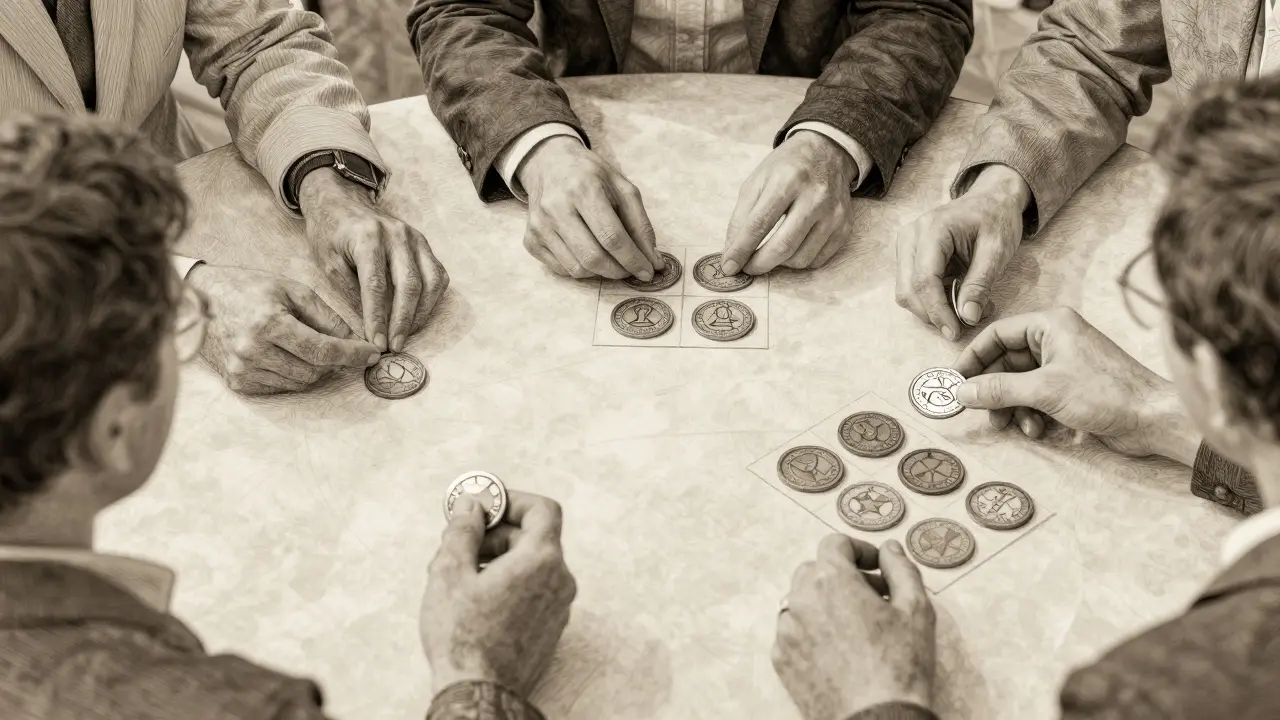
Imagine a company where every member gets a say in decisions based on tokens they hold. If one person owns 90% of the tokens, they could control everything. DAO voting mechanisms solve this problem by designing fairer ways to make decisions. Let's explore how they work.
Key Takeaways
- DAO voting mechanisms prevent single entities from controlling decisions through mathematical safeguards and procedural rules.
- Quadratic Voting makes bulk voting exponentially expensive, ensuring minority voices have influence.
- Conviction Voting rewards sustained community engagement, reducing last-minute manipulation.
- Liquid Democracy allows token holders to delegate votes to experts, balancing participation and expertise.
- Multisig and Quorum Voting add security for critical decisions but can slow down urgent actions.
What Are DAO Voting Mechanisms?
DAO (Decentralized Autonomous Organization) is a blockchain-based entity governed by smart contracts and member votes rather than a central authority. DAOs operate transparently, with decisions made through community voting. Without proper voting mechanisms, these organizations risk centralization where large token holders dominate decisions.
DAO voting mechanisms are the rules that determine how decisions get made. They address critical challenges like whale dominance (where one entity controls most tokens), collusion, and inefficient resource allocation. These systems use math, time-based incentives, and delegation to keep governance fair and decentralized.
Quadratic Voting: The Math Behind Fairer Decisions
Quadratic Voting is a sophisticated system where the cost of votes increases quadratically with the number cast. For example, casting one vote costs one token, two votes cost four tokens, and three votes cost nine tokens.
This math prevents whales from easily buying control. A single whale holding 10,000 tokens could only cast 100 votes (since 100² = 10,000), whereas in a simple one-token-one-vote system, they'd control 10,000 votes. This ensures minority voices can still influence outcomes.
According to Frontier's blockchain research, Quadratic Voting creates strategic incentives for token allocation across multiple proposals rather than concentrating on single issues. However, LimeChain's 2022 analysis highlights the need for robust identity verification to prevent Sybil attacks, where fake identities undermine the system's fairness.
Conviction Voting: Time-Based Power
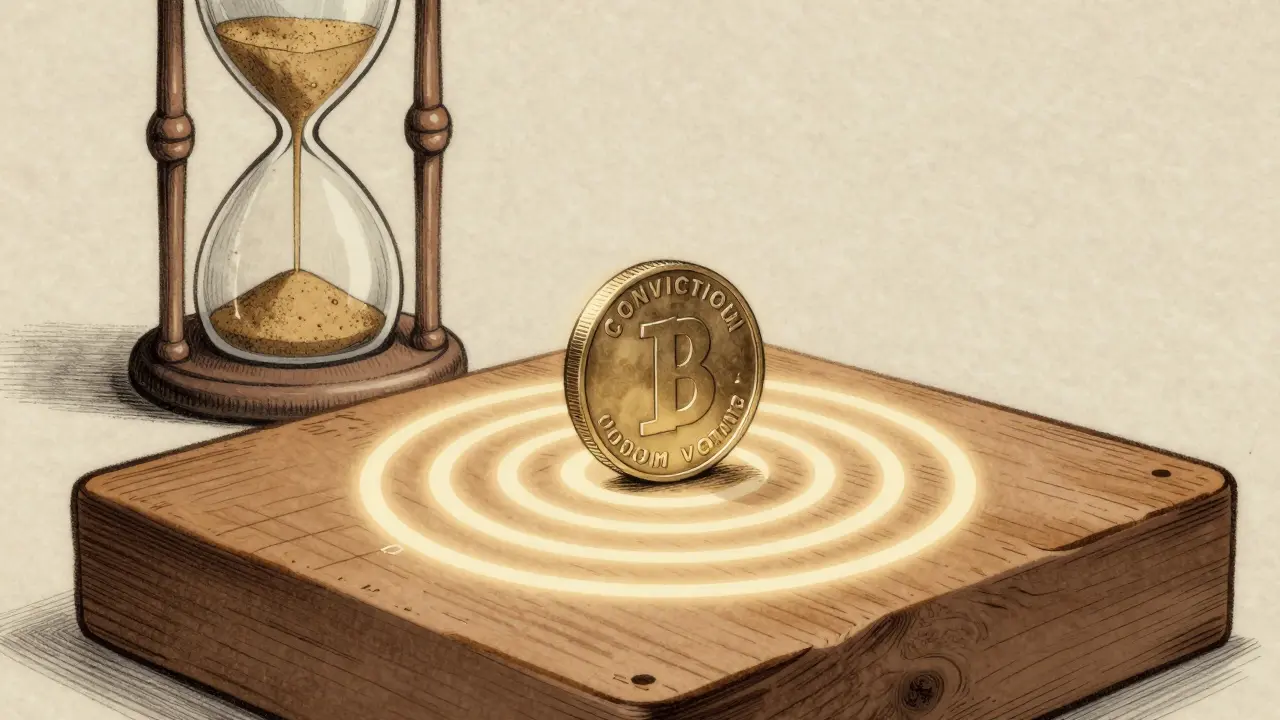
Conviction Voting operates on time-based utility accumulation. Voting power increases gradually the longer a vote remains unchanged on a proposal, approaching a maximum point asymptotically.
For instance, a proposal about funding a new feature might take weeks to reach full conviction. If a member changes their mind, their previous vote's utility diminishes quickly. This discourages last-minute voting sprees.
Brian D. Colwell emphasizes that Conviction Voting creates individual accountability. Members think carefully before voting because their commitment directly impacts outcomes. This system filters out low-conviction participants, reducing vote brigading common in snapshot voting. However, it requires continuous monitoring systems and sophisticated smart contracts, adding computational overhead.
Liquid Democracy: Delegating for Efficiency
Liquid Democracy allows token holders to delegate voting power to other members with greater expertise. This addresses the participation problem where retail investors lack time or knowledge to engage with every proposal.
For example, a non-technical member might delegate their votes to a blockchain developer for technical proposals. This keeps the system efficient without requiring everyone to study every proposal.
Users report positive feedback for enabling passive participation. However, delegation concentration can create new power imbalances if prominent community members accumulate too much delegated power. The key is ensuring delegates remain accountable and can be easily replaced.
Multisig and Quorum Voting: Security Layers
Multisig Voting requires multiple predetermined signatures for proposal execution. This provides enhanced security for critical decisions like treasury management or protocol upgrades.
For example, a DAO might require three out of five team members to approve a large fund transfer. This prevents single points of failure but can create bottlenecks when signatories are unavailable.
Token-based Quorum Voting sets a minimum participation threshold before votes become valid. This ensures decisions represent community engagement but can stall urgent decisions if participation is too low.
Companies like Colony use these mechanisms for different decision types. Critical upgrades might use Multisig combined with Quadratic Voting, while routine operations use Simple Majority with time-based elements.
Challenges and Evolution
Current DAOs experiment with hybrid systems. For instance, using Quadratic Voting for major protocol changes and Simple Majority for routine updates. Researchers are exploring privacy-preserving voting through zero-knowledge proofs, allowing members to vote without revealing positions.
AI tools are being developed to analyze proposals and suggest delegates based on expertise. However, regulatory pressures are emerging. Some governments want identity verification, conflicting with DAOs' decentralized nature. These tensions continue shaping the evolution of DAO voting systems worldwide.
Frequently Asked Questions
What is the main problem with simple token-based voting?
Simple token-based voting (one token = one vote) allows large token holders, or whales, to dominate decisions. If a single entity controls over 50% of tokens, they can unilaterally pass proposals. This undermines decentralization and leads to centralization risks.
How does Quadratic Voting prevent whale dominance?
Quadratic Voting makes bulk voting exponentially expensive. Casting n votes requires n² tokens. For example, 10 votes cost 100 tokens. This means a whale with 10,000 tokens can only cast 100 votes, not 10,000. This ensures smaller holders can still influence outcomes by pooling their votes more effectively.
Can Conviction Voting be gamed?
While Conviction Voting reduces last-minute manipulation, it can be gamed through rapid vote switching. However, the system's design slows down utility changes, making it harder to manipulate. For example, changing a vote immediately reduces its accumulated utility, so strategic switching offers little benefit.
Why use Liquid Democracy in DAOs?
Liquid Democracy allows token holders to delegate votes to experts, improving participation efficiency. It solves the problem where retail investors lack time or expertise to engage with every proposal. However, it requires safeguards to prevent delegation concentration, ensuring power doesn't shift to a few individuals.
What's the future of DAO voting mechanisms?
The future includes hybrid systems combining multiple mechanisms for different decisions. Innovations like zero-knowledge proofs for privacy-preserving votes and AI-driven delegation based on expertise are emerging. However, regulatory challenges may force identity verification, creating tension between decentralization and compliance.
Quadratic Voting is a naive solution. Real governance requires strong leadership, not some math trick. Token-based systems ignore national sovereignty and the need for decisive action. This is why Western democracies have been successful-they have clear hierarchies and checks. DAOs are just a distraction.
Quadratic Voting is a game-changer for DAOs! It ensures everyone's voice matters, even if they don't have many tokens. This is how we build fair, inclusive governance systems. Let's keep pushing for better solutions together!
Let me tell you why Quadratic Voting is actually terrible. It's not about the math-it's about the human element. People don't vote based on numbers; they vote based on emotion. And when you make it exponentially expensive, you're just creating a system where the rich can still dominate because they can afford to pay the cost. Plus, it's not like people are rational actors. They'll just find ways to game it. I've seen this before in other systems. It's all a facade. The real problem is that DAOs are trying to force a new model without understanding the old one. We need to learn from history, not reinvent the wheel. But nobody listens to me, of course. It's always the same story. This is why we need traditional governance structures that actually work. The idea that blockchain can solve governance is laughable. Real governance requires strong institutions, not some decentralized fantasy. It's all about power dynamics, and this system just masks the real issues. I've been studying this for years, and I know what I'm talking about.
Quadratic Voting is rad! It stpos whales from hogging power.
Let's be real: DAO voting mechanisms are just a way for the rich to stay rich. Quadratic Voting? More like 'Quadratic Wealth Concentration'. It's all about power dynamics. The system is designed to keep the same people in charge. I've seen it before. This is just another scam pretending to be decentralized. Wake up, people!
Quadratic Voting is a brilliant concept! It's so important to ensure that minority voices aren't drowned out. However, it's crucial to implement it carefully, with proper identity verification to prevent Sybil attacks! I really appreciate how the system balances fairness and security! Let's all work together to make DAOs better!
Token-based voting ensures fair decisions.
The theoretical underpinnings of Quadratic Voting present a fascinating paradox: while it mathematically mitigates the influence of large token holders, it simultaneously introduces a new layer of complexity that may inadvertently create systemic vulnerabilities. A rigorous analysis reveals that the system's reliance on quadratic cost functions necessitates a robust identity verification framework to prevent Sybil attacks, thereby challenging the very notion of decentralisation. This tension between mathematical elegance and practical implementation is emblematic of the broader challenges facing DAO governance.
Quadratic Voting is fascinating! It's so important to consider how token distribution affects governance. Combining it with Conviction Voting creates a more resilient system-this is the way forward for DAO governance!!