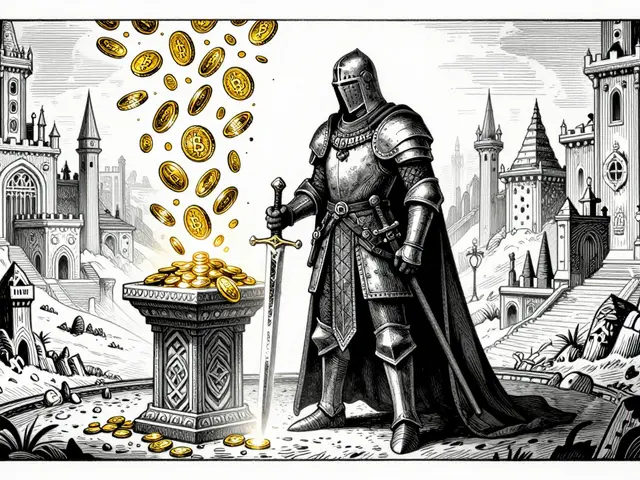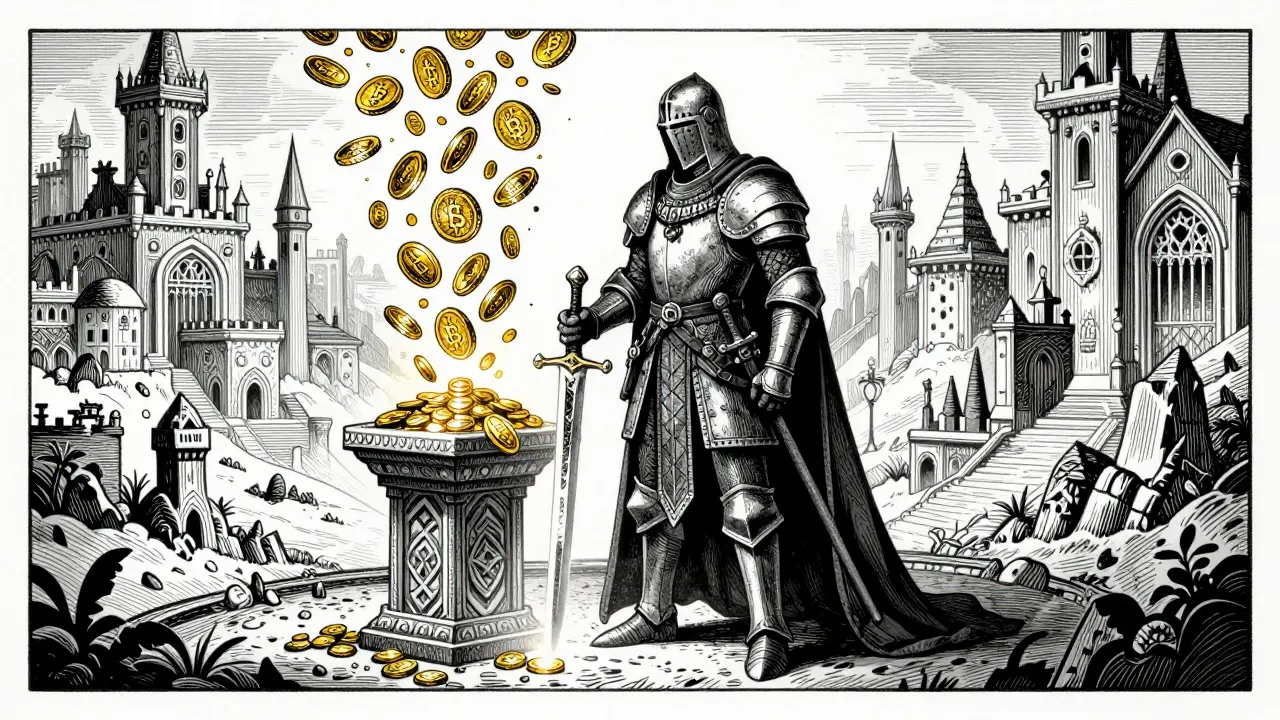
Imagine logging into a fantasy RPG to slay monsters, only to realize your sword skills are directly tied to your yield farming returns. That is the strange, compelling reality of DeFi Kingdoms, a platform that blurs the line between decentralized finance and play-to-earn gaming. If you clicked this title looking for a traditional spot trading experience like Binance or Coinbase, you might be disappointed. But if you are curious about how GameFi ecosystems integrate liquidity pools with hero-based gameplay, this review breaks down whether DeFi Kingdoms (DFK) still holds value in the current crypto landscape.
Launched originally on the Harmony blockchain and later expanding to its own Layer 1 chain, the DeFi Kingdoms Blockchain (DFK Chain), the project has survived several market cycles. It operates as an Automated Market Maker (AMM) where users provide liquidity to earn fees, but it wraps this financial mechanism in a pixel-art interface featuring heroes, quests, and NFTs. The core utility token, JEWEL, drives both the economy and the governance of the ecosystem.
How the DeFi Kingdoms Exchange Actually Works
Unlike centralized exchanges where an order book matches buyers and sellers, DeFi Kingdoms relies on liquidity pools. When you want to swap tokens-say, converting USDC to JEWEL-you interact with a pool containing both assets. The price is determined algorithmically based on the ratio of tokens in the pool. This is standard AMM technology, similar to Uniswap or SushiSwap, but with a distinct twist.
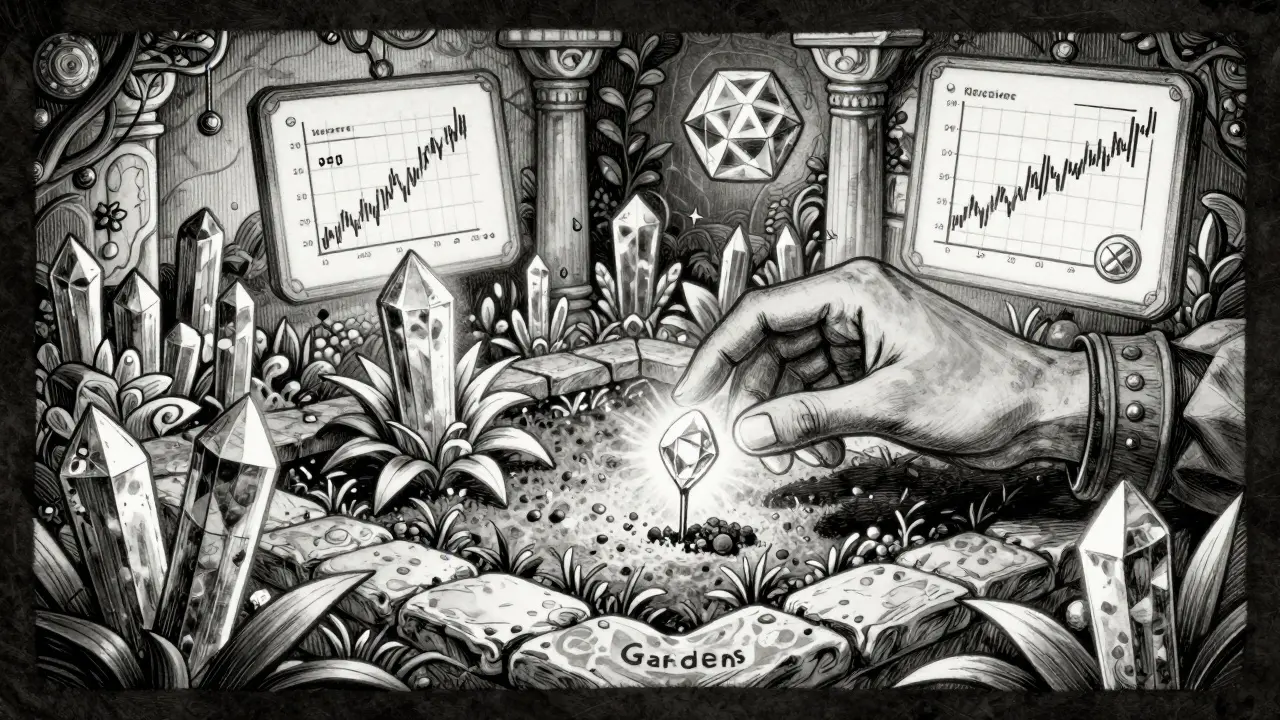
The "twist" is the gamification. In DeFi Kingdoms, providing liquidity isn't just a transaction; it's part of the game loop. Users who deposit paired tokens receive LP (Liquidity Provider) tokens. These tokens can then be staked in specific pools called "Gardens." Staking in these Gardens allows users to farm additional rewards, primarily in JEWEL tokens. This creates a dual incentive structure: you earn trading fees from swaps plus block rewards from staking.
- Swaps: Standard token exchanges using the DEX interface.
- Liquidity Provision: Depositing asset pairs to facilitate trades.
- Gardens (Staking): Locking LP tokens to earn higher yields.
- Banking: Simple single-asset deposits offering lower, more stable APRs.
For the average user, the process involves connecting a Web3 wallet (like MetaMask) configured for the DFK Chain. You must hold some native gas tokens to cover transaction fees. Once connected, the interface guides you through selecting pools, approving token transfers, and confirming transactions. The visual design is intentionally retro, appealing to gamers familiar with classic RPGs, which lowers the intimidation factor for newcomers while signaling the platform's unique identity.
JEWEL Token: Utility vs. Speculation
The heart of the DeFi Kingdoms economy is the JEWEL token. Its performance dictates the health of the entire ecosystem. Historically, JEWEL has experienced extreme volatility, typical of high-risk GameFi assets. As of mid-2026, analysts project trading ranges between $0.04 and $0.05, reflecting a stabilization after earlier boom-and-bust cycles.
Why does JEWEL matter? It serves multiple critical functions:
- Currency: Used to buy Hero NFTs, potions, and equipment within the game.
- Rewards: Distributed to liquidity providers and stakers.
- Governance: Allows holders to vote on protocol upgrades and treasury allocations.
- Burn Mechanism: A portion of transaction fees is burned, creating deflationary pressure.
If you are considering investing, understand that JEWEL is not a passive store of value like Bitcoin. Its price is heavily influenced by player activity. More players mean more demand for heroes and items, driving up JEWEL usage. Conversely, if the game loses popularity, selling pressure increases. This dependency on user engagement makes it fundamentally different from pure DeFi protocols that rely solely on financial metrics.
Yield Farming: High Rewards, Higher Risks
One of the main draws for DeFi veterans is the potential for high Annual Percentage Rates (APRs). In its early days, some Gardens offered APRs exceeding 250%, with compound strategies pushing theoretical returns over 1,000%. Even today, rates remain significantly higher than traditional savings accounts, which typically offer less than 1%.
| Feature | Traditional Bank | Major DEX (e.g., Uniswap) | DeFi Kingdoms |
|---|---|---|---|
| Base APR | 0.25% - 0.5% | Variable (often <5%) | 24% - 100%+ |
| Risk Profile | Low (Insured) | Medium (Smart Contract Risk) | High (Token Volatility + Smart Contract) |
| Complexity | Very Low | Medium | High (Requires Gaming Knowledge) |
| Additional Benefits | None | Trading Fees | Gameplay Assets + Governance |
However, chasing high APRs comes with significant risks. The primary danger is impermanent loss. If the price of one token in your liquidity pair diverges significantly from the other, you may end up with less value than if you had simply held the tokens in your wallet. Additionally, the sustainability of high yields depends on new capital entering the system. If inflows slow down, APRs drop rapidly. Always calculate the real yield after accounting for token depreciation and gas fees.
The Gaming Layer: Heroes and Stats
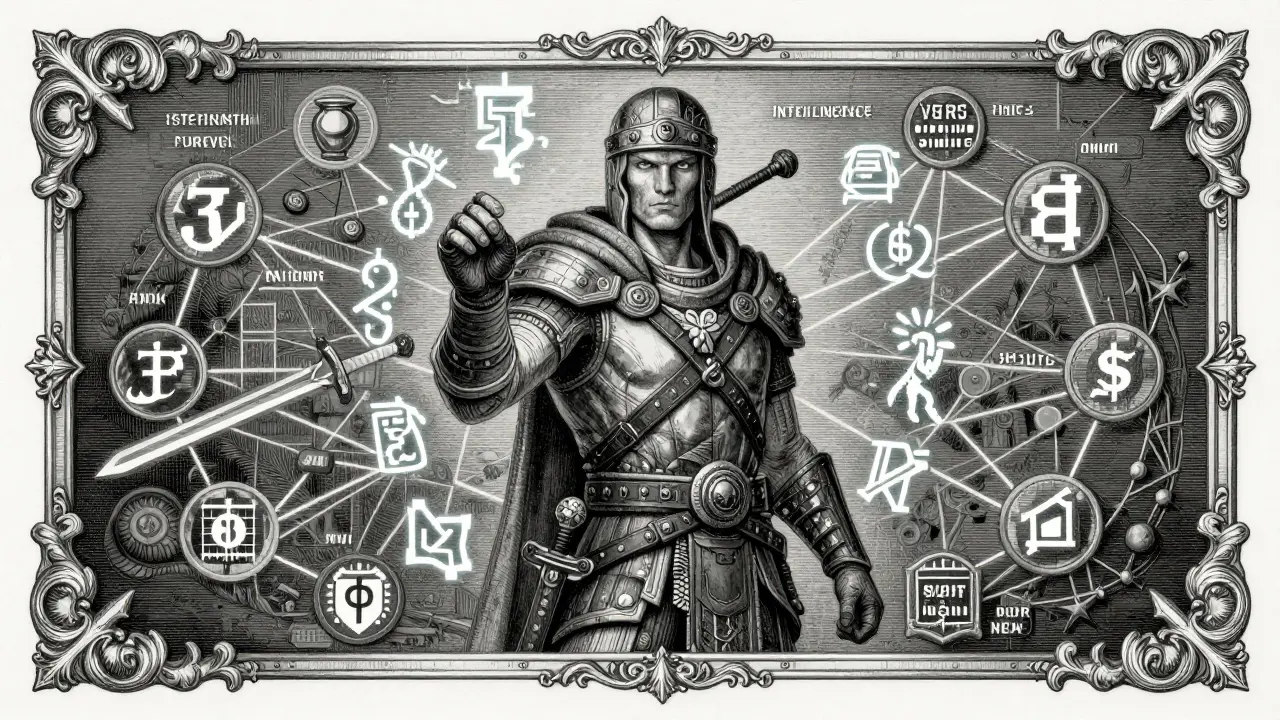
What sets DeFi Kingdoms apart is its deep integration of RPG mechanics. Each player controls one or more "Heroes," which are NFTs with unique attributes. These stats aren't just cosmetic; they affect your efficiency in mining resources and completing quests.
Key hero attributes include:
- Strength (STR): Increases physical damage and mining output.
- Dexterity (DEX): Boosts critical strike chance and fishing success.
- Agility (AGI): Determines action speed and evasion.
- Vitality (VIT): Improves health regeneration and debuff recovery.
- Intelligence (INT): Enhances magic power and mana gains.
This layer adds complexity. To maximize profits, you need to optimize your hero's build for specific activities. For example, a high-STR hero might be better suited for mining rare ores that can be sold for profit, while a high-INT hero excels in magical crafting. This requires time investment beyond simple clicking. You must manage inventory, upgrade gear, and strategize quest routes. For pure traders, this might feel like unnecessary friction. For gamers, it’s the hook that keeps them engaged long enough to care about the financial side.
User Experience and Community Feedback
Community sentiment around DeFi Kingdoms is mixed but passionate. Fans praise the innovative fusion of DeFi and gaming, noting that it makes complex concepts like liquidity provision more accessible through storytelling. The pixel art aesthetic is widely appreciated for its charm and nostalgia.
Critics, however, point out the steep learning curve. New users often struggle to understand the interplay between the DEX, the bank, and the game mechanics. Documentation exists, but navigating between wallets, bridges, and in-game menus can be overwhelming. Furthermore, the reliance on the DFK Chain means users must manage cross-chain assets, adding another layer of technical difficulty.
Web traffic data shows modest but steady organic visits, indicating a loyal niche audience rather than mass adoption. This suggests the platform is not trying to compete with giants like Uniswap for volume but instead carving out a specialized space for crypto-gamers.
Is DeFi Kingdoms Right for You?
Deciding whether to use DeFi Kingdoms depends entirely on your goals.
It is a good fit if:
- You enjoy RPG games and want to monetize your playtime.
- You are experienced with DeFi and comfortable managing smart contract risks.
- You believe in the long-term growth of the GameFi sector.
- You are willing to spend time optimizing hero stats and farming resources.
It is NOT a good fit if:
- You want a simple, low-risk place to store crypto.
- You have no interest in gaming mechanics or NFTs.
- You cannot afford to lose your principal investment due to volatility.
- You prefer centralized exchanges with customer support and easy fiat on-ramps.
In summary, DeFi Kingdoms is not just an exchange; it is an ecosystem. Its value proposition lies in the synergy between financial incentives and entertainment. While it offers attractive yields and a unique experience, it demands active participation and carries higher risks than traditional platforms. Approach it with caution, do your own research, and never invest more than you can afford to lose.
Is DeFi Kingdoms safe to use?
Like any DeFi platform, DeFi Kingdoms carries inherent risks. While the code has been audited, smart contracts can still contain vulnerabilities. Additionally, the value of JEWEL and other assets can fluctuate wildly. Always use hardware wallets for large amounts and never share your private keys.
Do I need to buy JEWEL to start playing?
Yes, JEWEL is essential for purchasing Hero NFTs and accessing premium features. You will also need ETH or DFK native tokens for gas fees. You can buy JEWEL on major exchanges or swap directly within the DeFi Kingdoms DEX.
Can I make money without playing the game?
Technically, yes. You can provide liquidity and stake in Gardens without engaging in combat or quests. However, the highest yields often require holding specific NFTs or participating in game-related activities, so ignoring the gaming aspect may limit your earning potential.
What happens if the JEWEL price crashes?
If JEWEL crashes, the value of your rewards and the assets in your liquidity pools will decrease. Impermanent loss could exacerbate these losses. It is crucial to monitor market trends and have an exit strategy before committing funds.
How does DeFi Kingdoms compare to Axie Infinity?
Both are leading GameFi projects, but DeFi Kingdoms places heavier emphasis on DeFi mechanics like liquidity farming and yield generation. Axie Infinity focuses more on battle-oriented gameplay and breeding. DeFi Kingdoms appeals more to users interested in combining trading with gaming, while Axie attracts those who prefer competitive PvP experiences.