You might think buying Bitcoin is just a personal financial choice, but in Egypt is a North African country with one of the strictest cryptocurrency regulatory frameworks globally, it can land you in serious legal trouble. The stakes are incredibly high: violators face imprisonment and fines ranging from 1 million to 10 million Egyptian pounds. That translates to roughly $51,634 to $516,340 USD, depending on exchange rates. For many Egyptians, this isn't just a fine; it’s a life-altering penalty that can wipe out years of savings.
This crackdown isn't new news, but the specifics often get lost in the noise. Since the Central Bank of Egypt (CBE) issued its initial warnings in 2018, the government has moved from advisory cautions to hard criminal sanctions. Today, under Law No. 194 of 2020 is the primary legislation prohibiting cryptocurrency issuance, trading, and promotion in Egypt, almost every aspect of the crypto ecosystem is off-limits. If you're an expat, a local trader, or a business looking to operate here, understanding these rules is critical to avoiding disaster.
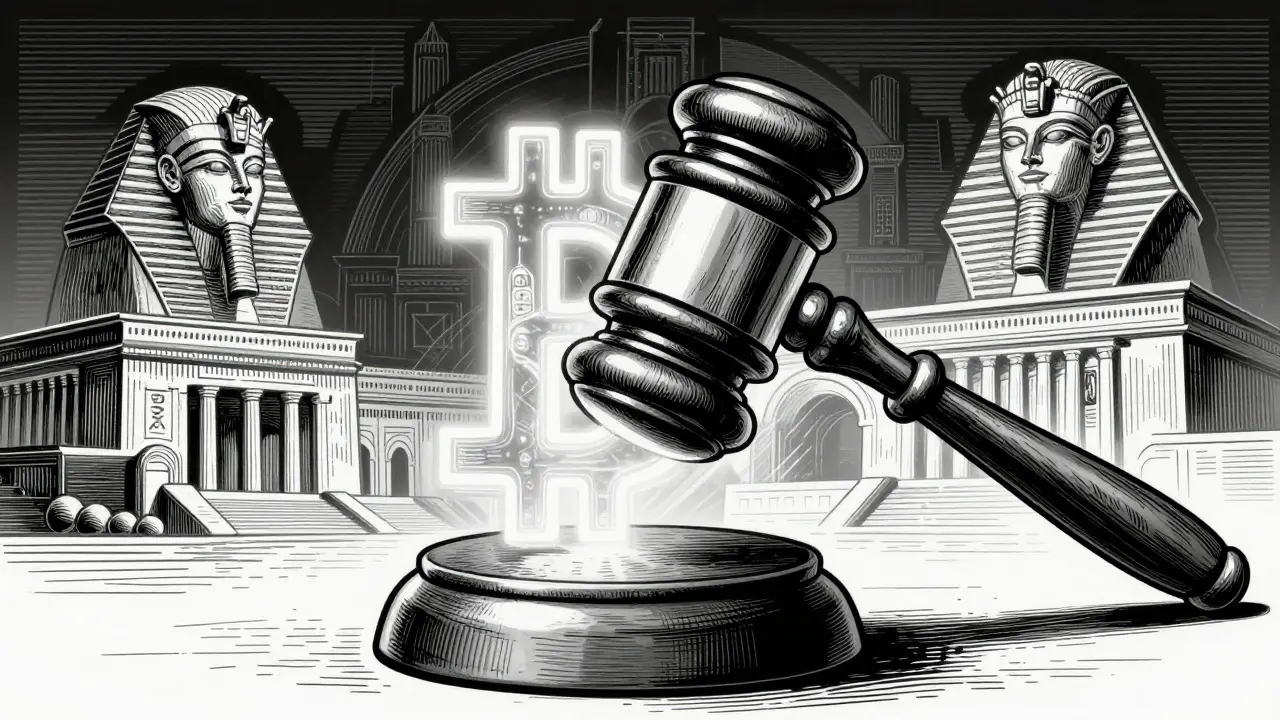
The Legal Hammer: Article 206 of Law No. 194 of 2020
To understand why the penalties are so severe, you have to look at the law itself. Article 206 is the specific clause within Law No. 194 of 2020 that criminalizes cryptocurrency activities serves as the main weapon in the state's arsenal against digital assets. It doesn't just say "be careful." It explicitly prohibits the issuance, trading, promotion, and operation of cryptocurrency exchanges.
The penalty structure is binary and brutal. According to the Central Bank of Egypt, violators shall be imprisoned and fined no less than 1 million pounds and no more than 10 million Egyptian pounds. Or, they face one of these two penalties. This means you could go to jail without paying the fine, pay the massive fine without jail time, or suffer both. There is no middle ground for "minor" infractions.
Why such harsh measures? The government argues that cryptocurrencies lack tangible asset backing and regulatory supervision. In their view, they are vehicles for financial instability, illicit activities, and electronic piracy. By criminalizing the entire ecosystem, Egypt aims to protect its currency, the Egyptian Pound (EGP) is the official currency of Egypt, which the government seeks to stabilize through strict capital controls, from volatility and capital flight.
Who Is Watching? CBE and the FRA
It’s not just one agency keeping tabs on your wallet. The enforcement comes from two major bodies working in tandem:
- Central Bank of Egypt (CBE) is the central banking institution responsible for monetary policy and financial stability in Egypt: They set the tone. Their 2018 warning specifically targeted Bitcoin, stating it lacks official governmental guarantee. They reinforce the position that crypto is risky and unregulated.
- Egyptian Financial Regulatory Authority (FRA) is the body overseeing capital markets and non-bank financial services in Egypt: They handle the operational side. The FRA warns citizens against dealing with unlicensed entities. They cite Capital Market Law No. 95 of 1992, requiring approved prospectuses for any public offering. If you see a social media post promising returns on crypto investments, the FRA considers it an illegal solicitation.
The FRA has even announced plans to release a negative list of unlicensed entities offering non-bank financial services. They actively monitor websites and social media platforms. If you promote a crypto project or solicit investment without a license, you’re breaking the law. The authorities aren't just waiting for big fish; they are casting a wide net over anyone promoting virtual encrypted currencies.
The Paradox: High Usage Despite the Ban
Here’s where things get interesting. You’d expect a total ban with massive fines to kill adoption. But in Egypt, the opposite seems true. Despite the legal risks, Egypt maintains one of the highest cryptocurrency usage rates in Africa and the Middle East.
A January 2022 report by TripleA revealed that Egypt ranked second among Arab countries in terms of crypto ownership. There were approximately 1,791,185 crypto owners, representing 1.75% of the population. Only Morocco had higher ownership in the region. Globally, the average was around 3.9%, so Egypt is punching above its weight class despite being one of the most hostile jurisdictions for crypto.
Why do people keep using it? Several factors drive this disconnect between policy and behavior:
- Currency Volatility: When the Egyptian Pound fluctuates, citizens look for stores of value outside the traditional banking system.
- Lack of Trust: Skepticism about long-term economic stability pushes people toward decentralized assets.
- Global Integration: Freelancers and tech workers need ways to receive payments from abroad that bypass slow and expensive traditional banking channels.
This data suggests widespread non-compliance. People are trading, holding, and using crypto because the demand outweighs the fear of prosecution-at least for now. However, "widespread non-compliance" doesn't mean "safe." It means the risk is systemic.
| Region/Country | Est. Crypto Owners | % of Population | Regulatory Stance |
|---|---|---|---|
| Egypt | 1,791,185 | 1.75% | Banned (Law 194/2020) |
| Morocco | 878,168 | 2.38% | Restricted |
| Global Average | N/A | 3.9% | Varies |
| Asia | 160 Million | N/A | Mixed (Adoption to Ban) |
Impact on Business and Cross-Border Trade
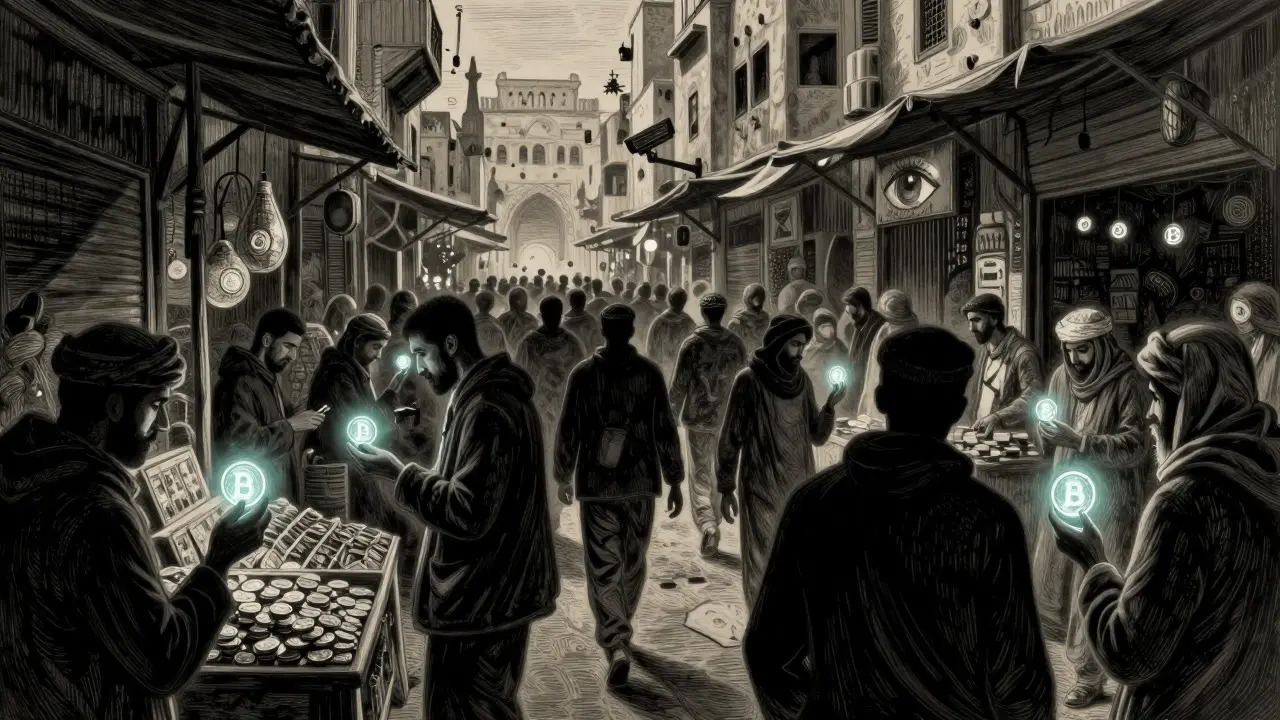
If you run a business in Egypt, the ban creates significant friction. The prohibition eliminates crypto as a payment rail. This forces companies to rely on traditional banking channels for international transactions. These channels are often slower, more expensive, and subject to strict capital controls.
For startups and tech companies, this is a double-edged sword. On one hand, it isolates the market from global partners who prefer the efficiency of digital currency settlements. On the other hand, it prevents the development of legitimate cryptocurrency businesses and blockchain innovation within Egypt. You can’t build a fintech startup based on crypto rails if those rails are criminalized.
International businesses considering operations in Egypt must also tread carefully. Any inadvertent cryptocurrency exposure-such as accepting stablecoins for B2B payments-could result in criminal liability under Egyptian law. The compliance risk is substantial, and few legal teams will advise taking that chance when the potential fine is up to 10 million EGP.
What Counts as a Violation?
Many people think "trading" only means buying and selling on an exchange. But Law No. 194 of 2020 is broader. Here’s what falls under the hammer:
- Trading: Buying, selling, or exchanging cryptocurrencies for fiat or other assets.
- Promotion: Marketing crypto projects, posting about them on social media, or influencing others to invest.
- Operation: Running a crypto exchange, wallet service, or mining pool within Egypt.
- Issuance: Creating new tokens or coins without government approval.
The FRA has specifically warned against "illegal promotion of virtual encrypted currencies." This means if you’re an influencer talking about Bitcoin gains, or a company advertising a token sale, you’re potentially violating the law. The authorities view these actions as breaches of Capital Market Law No. 95 of 1992, which requires FRA-approved prospectuses for public offerings.

Enforcement Reality: Are They Actually Catching People?
This is the million-dollar question. While the law is clear, enforcement capacity varies. The government has demonstrated consistent commitment through public warnings and reporting mechanisms. The FRA asks citizens to report unlicensed product solicitations. They identify numerous websites and social media platforms operating without licenses.
However, catching individual retail traders is difficult. Blockchain transactions are pseudonymous, and peer-to-peer trades leave little paper trail. Most enforcement efforts likely target larger entities: exchanges trying to serve Egyptian users, promoters running large-scale scams, or businesses integrating crypto payments. For the average person holding Bitcoin in a cold wallet, the immediate risk might feel low. But the legal threat remains real, and policy can shift overnight.
Remember, the persistence of high usage despite criminal penalties suggests either inadequate enforcement mechanisms or strong public demand. Don’t mistake silence for permission. The government retains the power to crack down harder at any moment.
Looking Ahead: Will the Ban Lift?
As of mid-2026, there is no indication that Egypt plans to repeal Law No. 194 of 2020. The Central Bank’s stance remains firm: cryptocurrencies are risky and lack tangible backing. However, the global landscape is changing. With the rise of Central Bank Digital Currencies (CBDCs), some analysts speculate Egypt might eventually allow a state-controlled digital pound while keeping private cryptos banned.
Until then, the status quo holds. The disconnect between high user adoption and strict prohibition creates a volatile environment. For investors and users, this means operating in a gray zone where legal protection is minimal, and penalties are maximal.
Is Bitcoin legal in Egypt in 2026?
No, Bitcoin is not legal for trading, promotion, or issuance in Egypt. Under Law No. 194 of 2020, all cryptocurrency-related activities are prohibited. While possession may not always be prosecuted aggressively, trading and promoting it carry severe legal risks, including fines up to 10 million EGP and imprisonment.
How much is the fine for crypto trading in Egypt?
The fine ranges from 1 million to 10 million Egyptian pounds (EGP). Depending on the exchange rate, this is approximately $51,634 to $516,340 USD. Violators may also face imprisonment, or both penalties combined.
Which law bans cryptocurrency in Egypt?
Law No. 194 of 2020 is the primary legislation banning cryptocurrency. Specifically, Article 206 of this law criminalizes the issuance, trading, promotion, and operation of cryptocurrency exchanges.
Can I use crypto for business payments in Egypt?
Technically, no. Using crypto for business payments violates the ban on trading and operation of crypto services. Businesses risk heavy fines and legal action from the Egyptian Financial Regulatory Authority (FRA) and the Central Bank of Egypt (CBE).
Why does Egypt have such strict crypto laws?
The government cites concerns over financial instability, lack of tangible asset backing, and the potential for cryptocurrencies to facilitate illicit activities and electronic piracy. They aim to protect the Egyptian Pound and maintain control over monetary policy.
Are there any exceptions to the crypto ban?
Currently, there are no broad exceptions for private cryptocurrencies. All activities require prior authorization from relevant governmental bodies, which is rarely granted for standard crypto projects. The focus is on prohibition rather than regulated integration.
look, i know the fines are scary but you gotta understand the mechanics here. the central bank isn't just being mean for no reason they are trying to stop capital flight because when everyone dumps the pound for bitcoin the currency collapses and then nobody can buy bread. its a vicious cycle of devaluation that hurts the poor most. if you are trading on p2p platforms like binance p2p or local meetups you are technically breaking the law but enforcement is hit or miss. most people get away with it as long as they dont run an exchange or promote it publicly on social media. the key is staying under the radar and not flashing your gains online because that invites scrutiny from the fra.
they want to control every penny you earn because freedom is dangerous to their power structure. think about it why ban something that has no physical form unless it threatens their ability to print money until it is worthless? this is classic behavior of a failing regime trying to hoard resources while the rest of us starve. the elites have offshore accounts in switzerland and dubai so they dont care about crypto bans but we do because we need a way out. wake up sheeple they are stealing your future one regulation at a time.
honestly this whole article is missing the point entirely 🙄 its not about safety its about control. but also let's be real who actually pays these fines? only the idiots who try to start exchanges in cairo. regular joes holding btc in cold wallets are fine because the state doesn't have the manpower to track every satoshi. besides if you are smart enough to use privacy coins or mixers they cant touch you anyway. its all theater to scare the masses into compliance while the real money moves through shadow banking systems 🤷♂️
the narrative is completely fabricated by the cabal to suppress decentralization. look at the timing of this law right after the massive devaluations of the egyptian pound. it was never about financial stability it was about preventing citizens from opting out of their broken fiat system. they call it 'electronic piracy' which is a euphemism for losing monetary sovereignty. the deep state fears anything they cannot tax or trace. keep your keys private and trust no one especially not the government officials who wrote this garbage legislation.
I find it fascinating how different cultures approach this issue and I truly believe that understanding the economic desperation in Egypt helps explain the strictness. When a currency loses value rapidly people naturally seek alternatives regardless of legality. It is a human instinct to protect one's livelihood against inflation. Perhaps instead of criminalizing the users the focus should be on educating them about the risks involved in unregulated markets. We must remember that behind every statistic there is a family trying to survive in a volatile economy and judging them harshly misses the deeper humanitarian crisis at play here.
so you guys are just sitting there waiting to get arrested huh? 😡 typical. you ignore the warnings and then cry when you lose everything. my neighbor tried to trade litecoin last year and now he owes back taxes plus a fine that took three years to pay off. don't let these tech bros fool you into thinking you are smarter than the law. the fra has eyes everywhere including on telegram groups where people coordinate trades. stop acting like victims and take responsibility for your illegal actions before it ruins your life. 🤬
i live in egypt and yes it is scary but many people still do it quietly. the banks block transfers to known crypto exchanges so people use gift cards or p2p deals with friends. it is risky but sometimes you have no choice when the dollar goes up again. just be careful and do not tell anyone about your holdings.
This is absolutely unacceptable treatment of citizens! The government has no right to impose such draconian penalties on individuals simply for choosing their own financial instruments. It is high time they realized that prohibition only creates black markets and empowers criminals rather than protecting the public. You need to fight back and demand legal reform immediately!