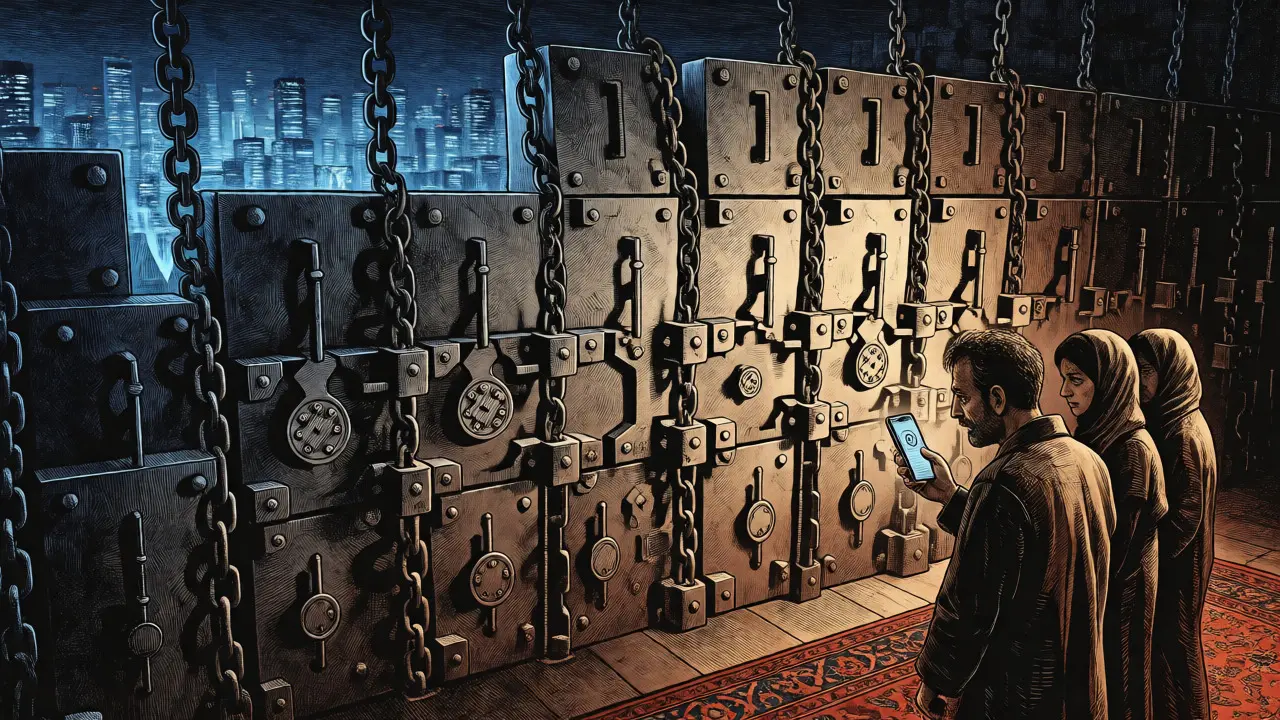
Imagine trying to send money to your family abroad, but every bank you try says "no" because of a list. That is the daily reality for millions in Iran. Since October 2019, FATF has kept Iran on its most severe watchlist, known as the "Call for Action." This isn't just a bureaucratic label; it acts like a financial wall. For ordinary people, this means traditional banking routes are mostly closed. So, where do they go? They turn to cryptocurrency. But here’s the twist: using crypto doesn’t mean escaping scrutiny. In fact, it often brings new headaches, from frozen accounts to higher fees. Let’s break down exactly how this designation changes life for Iranian crypto users.
The Financial Wall and Why Crypto Became Essential
When the Financial Action Task Force (FATF) blacklists a country, global banks get nervous. They don’t want to risk fines or lose their own licenses by dealing with entities in that jurisdiction. For Iran, this meant correspondent banking relationships plummeted. Data from the World Bank shows these connections dropped from 28 in 2018 to just 3 by 2025. Without banks, international payments stall. Enter cryptocurrency. It became the lifeline. By late 2024, an estimated 18.7 million Iranians-about 42% of the adult population-were using digital assets. This wasn’t about speculation alone; it was survival. People needed a way to pay for imports, send remittances, and store value outside a struggling local currency system.
The scale is massive. According to Chainalysis, sanctioned jurisdictions received $15.8 billion in crypto transactions in 2024. Iran accounted for $9.2 billion of that total. Think about that: more than half of all illicit-adjacent crypto flows in sanctioned zones came from one country. Bitcoin dominated these movements, making up 78% of transactions due to its reputation for being hard to block. Ethereum followed at 14%, while privacy coins like Monero held a smaller slice. The driver here isn’t just convenience; it’s necessity driven by exclusion.
The Paradox of Compliance and Surveillance
You might think moving to crypto avoids government eyes. Not quite. FATF rules require exchanges to follow "Know Your Customer" (KYC) laws. This creates a nasty paradox for Iranian users. To use major global platforms like Binance or Bybit, you must verify your identity. But once you do, those platforms flag your location based on IP addresses and ID documents. Because Iran is blacklisted, many exchanges simply block Iranian IPs or freeze accounts entirely. A survey by Nobitex found that 33% of Iranian users faced account freezes on global exchanges. One user, 'TehranTrader,' reported having $8,200 frozen after just three small transactions, all under $1,500, triggering automated compliance checks.
| Method | Success Rate | Average Cost/Premium | Main Risk |
|---|---|---|---|
| Global Exchanges (e.g., Binance) | Low (IP Blocks) | Standard Fees | Account Freezes |
| Peer-to-Peer (P2P) | 78% | +22% Premium | Counterparty Fraud |
| Decentralized Exchanges (DEXs) | 63% | +15% Slippage | Liquidity Issues |
| Local Halal Chains | High | Isolated Liquidity | No Cross-Border Use |
This compliance burden forces users into less efficient methods. Many turn to Peer-to-Peer (P2P) trading or Decentralized Exchanges (DEXs) like PancakeSwap. While these options bypass centralized bans, they come with costs. P2P trades often carry a 22% premium because sellers charge extra for the hassle and risk. DEXs suffer from slippage-where the price changes between when you click buy and when the trade executes-averaging around 15%. It’s a tax on freedom, essentially. You pay more to move your money because the traditional rails are broken.

Infrastructure Hurdles and Technical Barriers
Using crypto in Iran isn’t as simple as downloading an app. The infrastructure fights back. Internet access requires registered SIM cards, and the state uses tools like Soroush+ to monitor traffic. KPMG reports that anti-surveillance apps have a 41% blocking rate. If you’re trying to sync a wallet or execute a smart contract, connection drops are common. During peak hours (8-10 PM Tehran time), 74% of users report transaction failures. This isn’t just annoying; it’s dangerous if you’re mid-transfer.
Then there’s the learning curve. Non-custodial wallets, which give you full control over your keys, are essential to avoid exchange freezes. But mastering them takes time. Surveys from the Iran Blockchain Academy suggest it takes about 72 hours for a new user to become proficient enough to manage seed phrases safely. Mistakes here are fatal-if you lose your phrase, your money is gone forever. With 61% of new users needing technical help, errors are frequent. Moreover, 92% of transactions happen on mobile devices, primarily Trust Wallet and Exodus, keeping average values under $1,500 to stay below detection thresholds. This fragmentation makes large-scale business transactions difficult.
Economic Consequences and Market Distortions
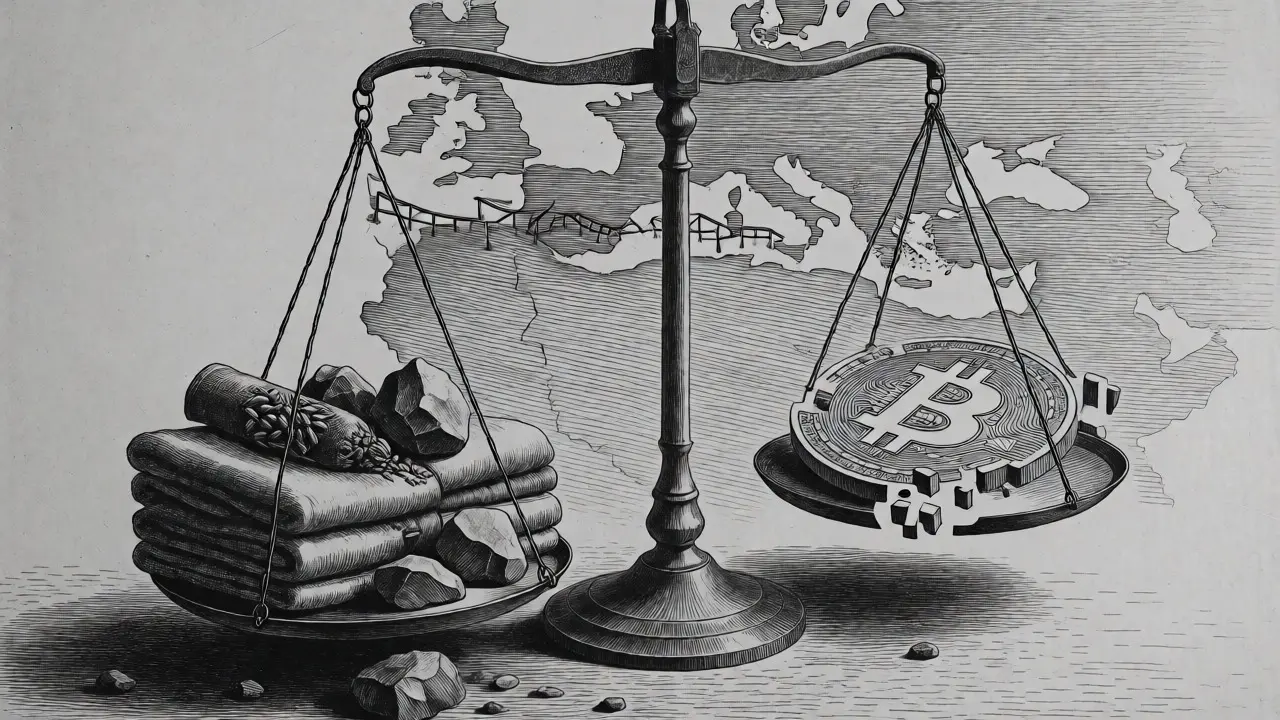
The blacklist hasn’t stopped crypto adoption; it has distorted it. Instead of fostering innovation, it pushed activity underground or into niche channels. Dr. Reza Vafadari from the Middle East Institute noted that 78% of Iran’s crypto activity now serves as a sanctions evasion mechanism. Most of this facilitates import payments for goods that can’t be bought through normal banking channels. Meanwhile, enterprise adoption remains tiny. Only 0.3% of Iran’s registered businesses use crypto for B2B transactions. Why? Because companies need audit trails and stable partners, not volatile, high-risk channels.
For individuals, though, it’s different. Remittances surged, with 17% of users relying on crypto for family support. But the cost is real. Moving 2.3 BTC via multi-hop atomic swaps on networks like HalalChain took 17 minutes but cost a 15-20% premium compared to open markets. These inefficiencies drain wealth. Additionally, regulatory arbitrage risks loom large. When UAE-based exchange Rain suspended Iranian accounts following a June 2025 FATF statement, 317 users lost $4.1 million collectively. There is no safety net. If a platform decides to cut ties due to geopolitical pressure, your funds might be stuck in limbo.
The Future Outlook: Stuck in Limbo?
Will things change soon? Probably not. Despite Iran ratifying some conventions, such as the UN Convention Against Transnational Organized Crime, FATF remains unmoved. President Raja Kumar emphasized that countermeasures must include increased supervisory scrutiny. Experts like Dr. Emad Kiyaei argue the blacklist is counterproductive, accelerating adoption without reducing proliferation risks. The probability of systemic collapse in the local crypto sector if restrictions persist beyond Q2 2026 is estimated at 60%. Yet, users aren’t leaving. 93% of surveyed Iranians said they would increase crypto usage if the blacklist continues through 2026. They have no other choice. The window for conventional monetary exchange with the EU is closed, and digital assets are the only door left open-even if it’s locked tight.
Why is Iran on the FATF blacklist?
Iran was placed on the FATF blacklist in October 2019 for failing to implement key anti-money laundering and counter-terrorist financing reforms agreed upon in 2016. As of 2025, it remains one of only two countries subject to the highest level of countermeasures.
Can Iranian users still use major exchanges like Binance?
Technically yes, but practically it is very difficult. Global exchanges often block Iranian IP addresses with near-perfect accuracy. Even if users bypass this, KYC requirements frequently lead to account freezes due to compliance risks associated with the FATF designation.
What is the most popular cryptocurrency in Iran?
Bitcoin is the dominant asset, accounting for 78% of crypto transactions in sanctioned jurisdictions including Iran. Its censorship-resistant nature makes it preferred for storing value and moving funds across borders despite volatility.
How does the FATF blacklist affect transaction fees for Iranians?
Users face significant premiums. Peer-to-peer trades often include a 22% markup, while decentralized exchanges incur about 15% slippage due to lower liquidity. These costs act as a hidden tax on accessing global financial systems.
Are there any local alternatives to global exchanges?
Yes, domestic exchanges like Nobitex and Wallex operate locally. However, they function under restrictive frameworks that often prohibit cross-border transfers, forcing users to rely on offshore solutions for international needs.