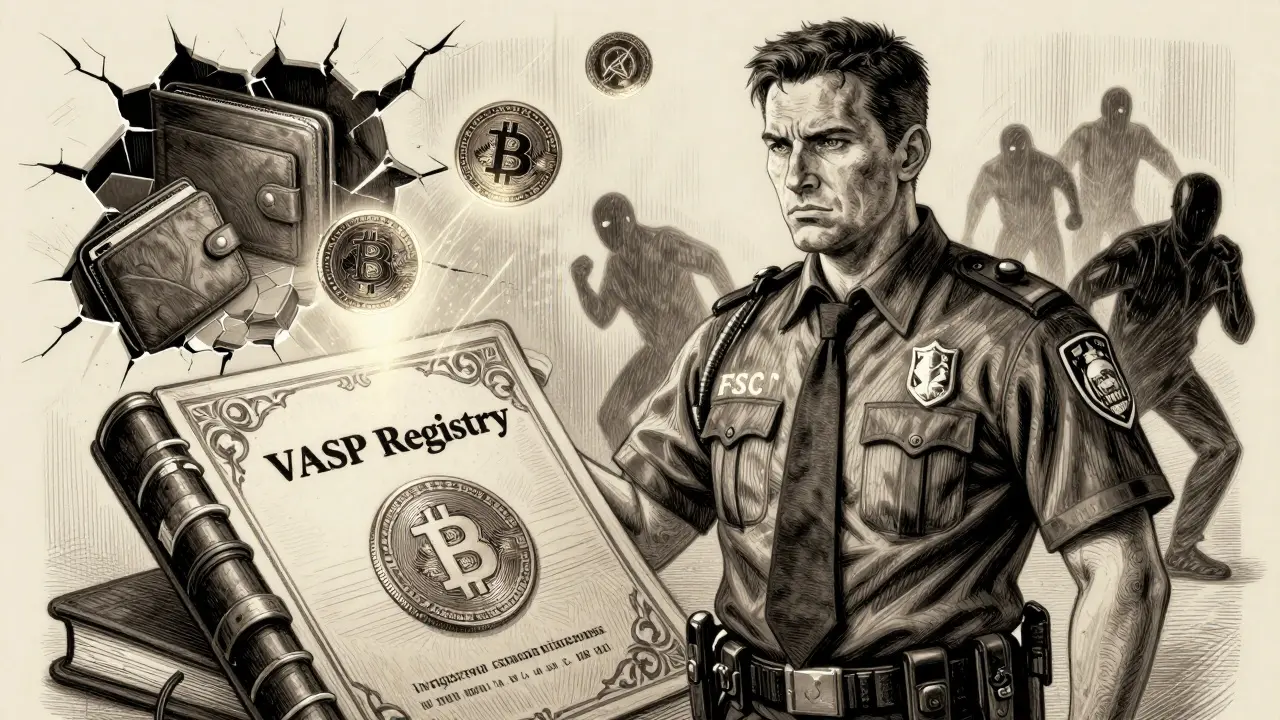
If you're running or planning to launch a cryptocurrency exchange in Taiwan, you can't afford to ignore the FSC crypto regulations. The Financial Supervisory Commission (FSC) isn't just watching-it's building a system that forces exchanges to play by strict rules or get shut down. This isn't about slowing innovation. It's about making sure people's money stays safe when they trade Bitcoin, Ethereum, or any other digital asset.
What the FSC Actually Regulates
The FSC doesn't treat cryptocurrency as money. It calls it a "virtual commodity." That distinction matters because it means exchanges aren't allowed to act like banks. They can't hold deposits, issue loans, or promise returns. But they can facilitate trading-only if they follow the rules. All exchanges operating in Taiwan, whether based locally or overseas, must register as a Virtual Asset Service Provider (VASP). This isn't optional. Since July 2024, any exchange doing business with Taiwanese users must complete mandatory AML registration with the FSC. Failure to register means you're breaking the law-and you could face criminal charges. The FSC also draws a line between security tokens and regular cryptocurrencies. If a digital asset qualifies as a security token, it falls under the Securities and Exchange Act. That means only licensed securities dealers can trade them. The Taipei Exchange (TPEx) is the only platform approved to handle these, and even then, only one security token has been officially issued so far. For most traders, this doesn't change much-but it shows the FSC is serious about controlling high-risk assets.What Exchanges Must Do to Stay Legal
The FSC doesn't just say "register and go." It demands real, measurable compliance. Here's what every exchange needs to have in place:- Anti-Money Laundering (AML) and Counter-Financing of Terrorism (CFT) systems: Every user must be verified. Exchanges must collect full identification, monitor transactions for suspicious patterns, and report anything unusual to authorities.
- Asset segregation: Customer funds and crypto must be kept completely separate from the exchange's own money. No mixing. No using user deposits to cover operational costs.
- Cold and hot wallet security: Most assets must be stored in offline, cold wallets. Only small amounts for daily trading can be kept online. Exchanges must prove they have encryption, multi-signature access, and regular audits of their wallet systems.
- Internal controls and audits: Exchanges need independent auditors reviewing their systems at least once a year. They must document every decision, every policy, and every security update.
- Public disclosure: Exchanges must publish clear terms of service, fee structures, and risk warnings on their websites. No hidden clauses. No vague language.
- Fair trading rules: No price manipulation. No wash trading. No favoring certain users. The FSC monitors trading data and can shut down platforms that show signs of manipulation.
The New Anti-Fraud Laws
In 2024, Taiwan's Legislative Yuan passed four major anti-fraud laws specifically targeting crypto. These aren't just administrative penalties-they're criminal offenses. Now, if an exchange hides user funds, runs a Ponzi scheme, or lies about its reserves, the people behind it can be sentenced to prison. The Ministry of Justice made it clear: cryptocurrency fraud is no longer treated as a financial mistake. It's financial crime. One example: if an exchange claims to have $100 million in reserves but only holds $10 million, that's fraud. If they suddenly disappear with user funds, that's theft. The FSC works directly with prosecutors to build criminal cases. In 2024, two local exchanges were shut down and their owners arrested under these new laws.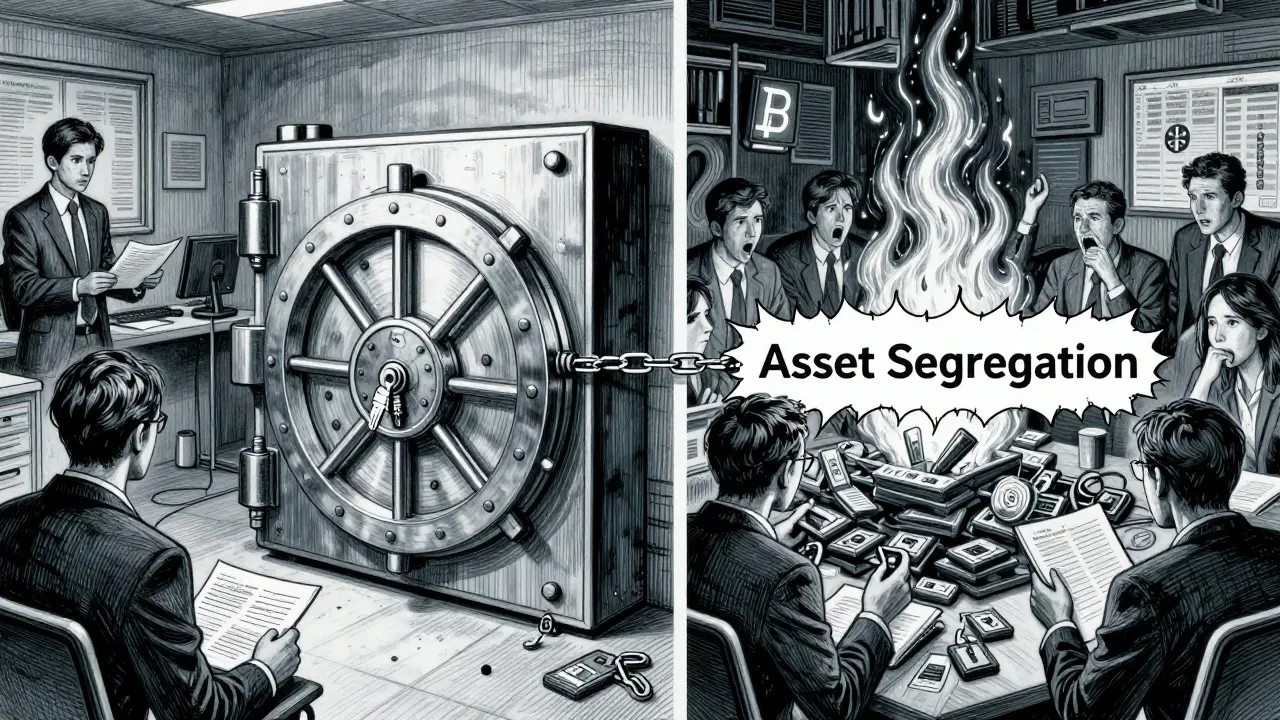
How Taiwan Compares to Other Countries
Taiwan isn't going full ban like China, nor is it going full free-for-all like some smaller nations. It's taking a middle path-similar to Japan and South Korea. Like Japan, Taiwan requires registration and strict AML rules. Like South Korea, it demands real-time transaction monitoring and user ID verification. But Taiwan goes further in two key areas: criminal penalties for fraud and the push for asset segregation. The FSC also watches global moves closely. When the U.S. approved spot Bitcoin ETFs in January 2024, Taiwan didn't rush to copy it. Instead, it waited. By late 2024, it allowed professional investors to access foreign crypto ETFs-but only after setting strict rules. You need to be a qualified investor with over NT$10 million in assets to even qualify. Retail traders are still locked out. This isn't about holding back progress. It's about protecting ordinary people from losing everything to a scam.Industry Response: Cooperation Over Conflict
Instead of fighting the rules, Taiwan's biggest exchanges came together. In early 2024, 24 major platforms formed the Taiwan Virtual Asset Service Provider Association. Their goal? To help shape the regulations so they actually work in practice. This group meets monthly with FSC officials. They share technical challenges-like how to verify overseas users or handle cross-border transactions. They've helped rewrite confusing parts of the guidelines to make them clearer for operators. It's rare to see an industry this proactive. In many countries, exchanges lobby to weaken rules. In Taiwan, they're helping build them. That’s why the FSC trusts them enough to allow them to self-report minor compliance issues without immediate penalties-as long as they fix them fast.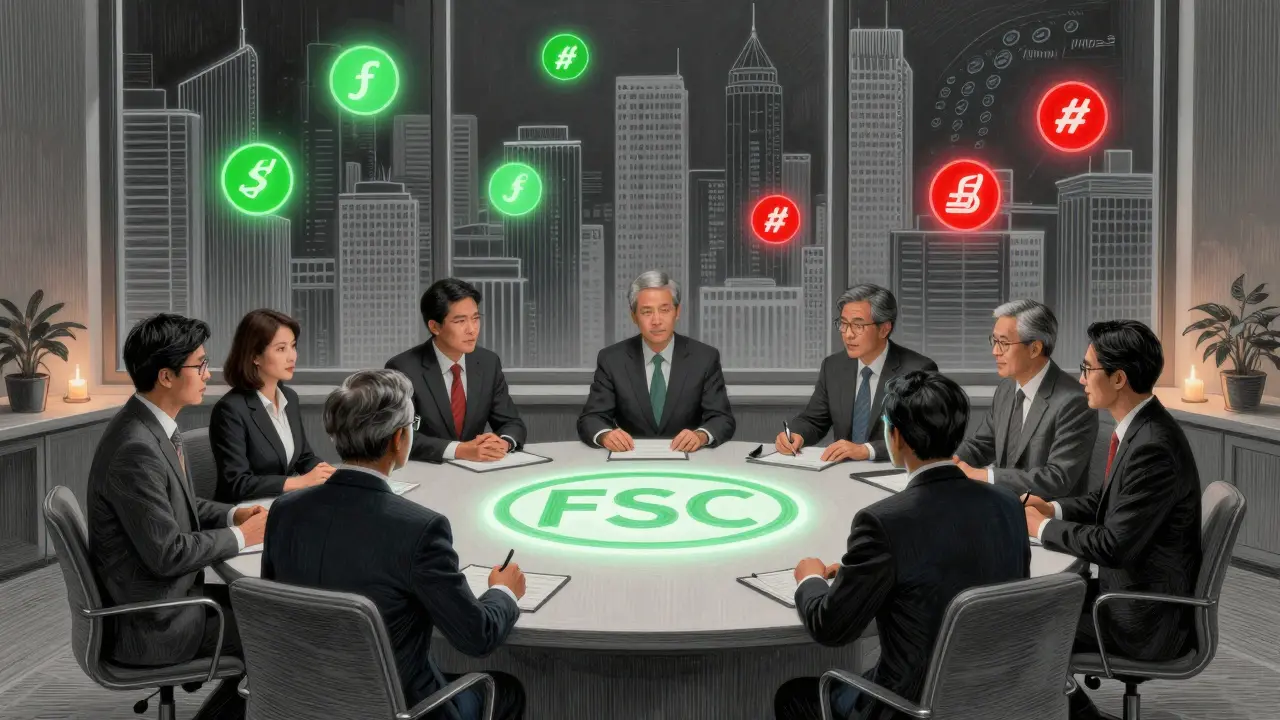
What’s Coming Next?
The FSC isn't done. A full cryptocurrency law is in the works. A feasibility study was completed in late 2024, and a draft law is expected by mid-2025. This law will likely:- Formally define what counts as a "virtual asset" under Taiwanese law
- Establish a licensing system for exchanges (not just registration)
- Require insurance for customer assets
- Possibly allow retail investors to access crypto ETFs, but only through approved platforms
What This Means for You
If you're a trader in Taiwan: you're safer now. Your funds are less likely to vanish because exchanges have to prove they're keeping them secure. You have legal recourse if something goes wrong. If you're an exchange operator: the cost of compliance is high. You need lawyers, auditors, cybersecurity teams, and compliance officers. Many small exchanges have already closed. Only those with real funding and serious infrastructure are surviving. If you're an investor from outside Taiwan: you can still trade on Taiwanese exchanges-but only if they're FSC-registered. Check their website. Look for the FSC registration number. If it's not there, walk away. The message from the FSC is clear: you can operate here. But you have to do it right. No shortcuts. No excuses. No exceptions.How to Check if an Exchange Is Legit
Here's how to verify a platform before you deposit any money:- Go to the FSC's official website and search their VASP registry. All registered exchanges are listed there.
- Look for the registration number on the exchange's website-usually in the footer or "About" section.
- Check if they publish their AML policies and wallet security details. If they don't, they're hiding something.
- Search for news about the exchange. If there are reports of delays in withdrawals or user complaints, avoid it.
- Don't trust social media influencers. If someone pushes an exchange without mentioning FSC registration, they're not being honest.
Is it legal to trade crypto in Taiwan?
Yes, trading cryptocurrency is legal in Taiwan-but only through FSC-registered exchanges. Individuals can buy, sell, and hold crypto without restriction. However, any platform offering trading services must be registered as a Virtual Asset Service Provider (VASP) with the Financial Supervisory Commission. Unregistered exchanges are illegal and pose serious risks to users.
Do I need to register with the FSC if I run a crypto exchange?
Yes. All cryptocurrency exchanges operating in Taiwan, including foreign-based platforms serving Taiwanese users, must register as a VASP with the FSC. This requirement became mandatory in July 2024. Failure to register is a criminal offense under Taiwan's Anti-Money Laundering Act, and can result in fines, operational shutdowns, or imprisonment for executives.
What happens if an exchange doesn't follow FSC rules?
Non-compliance can lead to immediate suspension of operations, heavy fines, and criminal prosecution. The FSC works with prosecutors to pursue cases of fraud, asset misappropriation, or failure to implement AML controls. In 2024, two local exchanges were shut down and their founders arrested under new anti-fraud laws that allow for custodial sentences. Users of unregistered or non-compliant exchanges have no legal protection if funds are lost.
Can I invest in crypto ETFs in Taiwan?
Only professional investors can currently invest in foreign crypto ETFs through approved platforms. The FSC allows this under strict conditions: you must have over NT$10 million in financial assets and pass a knowledge and risk assessment. Retail investors are not permitted to access these products. No domestic crypto ETFs are approved yet, but discussions are ongoing for potential future rollout.
Are security tokens allowed in Taiwan?
Yes, but only under very tight restrictions. Security tokens are treated like traditional securities and must be traded only through licensed securities dealers. The Taipei Exchange (TPEx) is the only approved platform for security token offerings (STOs). Due to high compliance costs and regulatory scrutiny, only one STO has been officially approved since the rules were introduced in 2023.
How often does the FSC update its crypto rules?
The FSC updates its guidelines regularly, often in response to global events like the FTX collapse or U.S. ETF approvals. Major regulatory changes happen annually, with new draft laws expected every 6-12 months. A comprehensive cryptocurrency law is anticipated by mid-2025. Exchanges are advised to monitor FSC announcements and join industry groups like the Taiwan Virtual Asset Service Provider Association to stay ahead of changes.
lol so Taiwan just turned crypto into a bureaucratic nightmare with a side of prison time? Guess that’s what happens when you try to regulate something that’s literally designed to bypass regulators. Meanwhile, my uncle in Nigeria just bought 3 BTC with his phone and a WhatsApp group. Who’s really winning here?
Let’s be real - this is the most coherent crypto regulatory framework I’ve seen outside of Switzerland. Most countries either ban it outright or let it become a Wild West casino. Taiwan’s doing the hard work: segregation, audits, criminal liability for fraud. It’s not sexy, but it’s what actually protects people. The fact that exchanges are *collaborating* with regulators instead of lobbying to gut it? That’s revolutionary. Most of us in Africa wish we had this level of institutional integrity.
so like… if i buy dogecoin on binance and i’m in taiwan… is that illegal? or just… uncool? 🤔
Oh wow, look who’s suddenly the voice of reason - the same country that let FTX implode while its CEOs sipped champagne in the Bahamas. Now Taiwan’s got a 12-point compliance checklist and suddenly you’re the moral compass of global finance? Cute. The only thing more absurd than these regulations is the idea that any of this stops a determined scammer. They’ll just move to Belize, rename their site ‘CryptoHub247.com’, and use a VPN. This is theater. Performance art for regulators who need to feel useful.
And don’t get me started on ‘professional investors’ needing NT$10M to touch an ETF. So now the rich get to gamble with government approval while everyone else gets to watch from the sidelines? Brilliant. Capitalism with a bow.
What strikes me most is not the rules themselves, but the cultural shift they represent. In many jurisdictions, regulation is seen as an enemy of innovation. In Taiwan, it’s being treated as a shared responsibility - a framework to build trust. This isn’t about stifling crypto; it’s about maturing it. The formation of the VASP Association is perhaps the most hopeful sign: an industry choosing accountability over evasion. That’s not policy. That’s wisdom.
When we treat digital assets as mere commodities, we risk reducing them to speculation. But when we treat them as systems of value - with real human stakes - we’re forced to ask harder questions. And Taiwan, for once, is asking them.
As someone from India, where crypto regulation is still in chaos, this is a masterclass in balance. No bans, no free-for-all - just clear boundaries with teeth. The asset segregation rule alone could prevent countless tragedies. I hope other Asian nations take notes. And yes, the prison sentences for fraud? Necessary. Too many lives have been destroyed by fake exchanges pretending to be banks.
Also, the fact that they’re looking at DeFi and NFTs next? Smart. The future isn’t just centralized exchanges. The regulators are thinking ahead - rare in any country.
Finally, someone’s building a bridge between innovation and responsibility. Not a wall. Not a free pass. A bridge. This is how you protect the little guy without killing the dream. Taiwan’s showing the world that you can have both safety and progress - you just need to actually care about the people using the system.