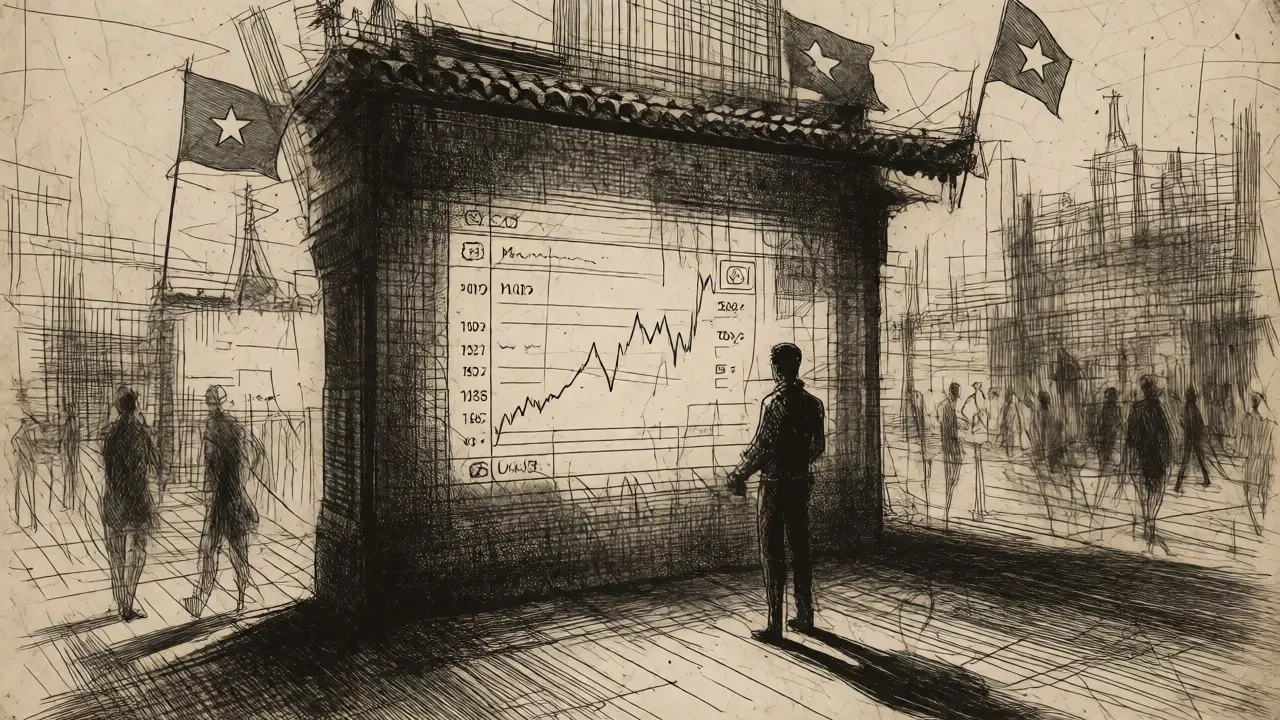
Imagine logging into your favorite trading platform only to find it hasn’t updated its price feed in months. That’s the reality for anyone checking on Hanbitco today. Launched during the peak of the 2017 crypto boom, this South Korean exchange promised a multilingual gateway for English, Vietnamese, and Korean speakers. But fast forward to November 2026, and the lights seem to be off. If you’re searching for a reliable place to trade, Hanbitco is likely not it. This review breaks down why this platform faded from the radar and what you should know before risking any capital here.
What Exactly Was Hanbitco?
Hanbitco was a centralized cryptocurrency exchange based in South Korea that launched in November 2017. It positioned itself as a niche player, targeting users who wanted access to Asian markets without the language barriers often found on domestic Korean exchanges. The team behind it claimed over two decades of combined experience in finance and exchange operations. However, unlike major players like Upbit or Bithumb, Hanbitco never publicly disclosed its leadership team or detailed corporate structure. This opacity is a red flag in the crypto world, where transparency usually correlates with trust.
The platform offered basic spot trading features. You could view order books, check price charts, and track your history. But don’t expect advanced tools. There were no derivatives, no margin trading options, and no DeFi integrations. It operated on a traditional model that felt outdated even by 2020 standards. Security protocols weren’t highlighted prominently, which matters when you’re holding digital assets. Did they use cold storage? What percentage of funds was kept offline? These details remained vague, leaving users to guess about their fund safety.
Trading Volume and Market Position
Numbers tell a clearer story than marketing claims. In June 2019, Hanbitco recorded a 24-hour trading volume of USD 4.2 million. That placed it at rank 99 globally. Not terrible for a small exchange, but far from competitive. By December 2021, volumes had jumped to USD 19 million. On paper, that’s a 352% increase. But context matters. While Hanbitco grew, the market exploded around it. Top-tier exchanges were processing billions daily. Hanbitco remained a micro-cap player in a giant’s game.
Compare this to established competitors. Changelly, for instance, maintained a user rating of 4.4 out of 5.0 based on dozens of reviews. Hanbitco? It sat at a 3.0 out of 5.0, based on exactly one user review. One. That single data point suggests extremely low user engagement. Either nobody used it, or those who did didn’t feel compelled to share their experience. For an exchange, silence is rarely golden; it’s usually a sign of irrelevance.
| Feature | Hanbitco | Upbit/Bithumb (Korean Giants) | Global Standards (Binance/Coinbase) |
|---|---|---|---|
| Daily Trading Volume (Peak) | ~$19 Million | Billions | Tens of Billions |
| User Reviews | 1 (3.0 Rating) | Thousands (4.0+ Rating) | Millions (4.5+ Rating) |
| Advanced Features | Spot Only | Spot, Margin, Derivatives | Full Suite + DeFi/Earn |
| Current Status (2026) | Inactive/Unknown | Active Leader | Active Leader |

Why Did It Fade Away?
The South Korean crypto market is brutal. It’s dominated by a few heavyweights with deep pockets and strong regulatory ties. When Hanbitco launched in late 2017, the market was euphoric. But the subsequent bear market and tightening regulations hit smaller exchanges hard. Compliance costs rose. Liquidity dried up. Without massive user bases or institutional backing, platforms like Hanbitco struggled to survive.
Industry monitoring services like Cryptowisser flagged Hanbitco as inactive. While the exact date of this designation isn’t always public, the lack of recent updates speaks volumes. No new listings. No social media activity. No press releases. As of late 2025 and into 2026, there’s been radio silence. In the crypto world, if you aren’t moving, you’re dying. Consolidation between 2022 and 2025 wiped out many mid-tier exchanges. Hanbitco appears to have fallen victim to this trend, either shutting down completely or operating so quietly it might as well be closed.
Security and User Experience Concerns
You might ask, "Was there a hack?" Interestingly, no major security incidents were widely reported for Hanbitco. But don’t mistake silence for safety. With such a small user base, fewer people are watching. A minor withdrawal issue might go unnoticed until it becomes a crisis. We saw minimal organic mentions on Reddit or Telegram. When users do talk about an exchange, it’s usually because something went wrong-or right. Here, there was just nothing.
The user interface supported English, Vietnamese, and Korean. This was its main selling point. For Vietnamese traders wanting access to Korean tokens, it seemed convenient. But convenience means little if the platform lacks liquidity. Thin order books mean you get bad fills. You buy Bitcoin at $50,000, sell it at $49,800 because there’s no depth. Over time, those slippage costs eat away at profits. Plus, without clear KYC (Know Your Customer) documentation available publicly, onboarding could have been frustrating for international users.

Should You Use Hanbitco Today?
Short answer: No. Long answer: Definitely no. If you see a listing for Hanbitco on an aggregator site, treat it with extreme caution. The risk of depositing funds into an exchange with unknown operational status is high. Even if the website loads, can you withdraw? Are the prices real-time? Can you contact support? These questions remain unanswered because the infrastructure seems dormant.
For US-based traders, remember that while Hanbitco didn’t explicitly ban US users, its lack of regulatory clarity makes it a poor choice. Most reputable exchanges now clearly state their compliance stance with the SEC or FinCEN. Hanbitco’s ambiguity is a liability, not a feature. Stick to platforms with proven track records, transparent reserves, and active customer support.
Alternatives for Asian Market Access
If you liked Hanbitco’s idea of bridging Asian and Western markets, look elsewhere. Upbit remains the gold standard for Korean assets. They have high liquidity and strong regulatory standing. For global access with good UI, Binance or Kraken offer robust support for multiple languages and currencies. If you specifically want Vietnamese-friendly platforms, consider regional players that have survived the consolidation wave. Always check the last trade timestamp before signing up. If the most recent trade was weeks ago, run.
Is Hanbitco still active in 2026?
Most industry monitors classify Hanbitco as inactive or defunct. There has been no significant news, trading volume data, or social media activity from the exchange since roughly 2021-2022. Users should assume it is no longer operational for practical trading purposes.
Did Hanbitco suffer a major hack?
There are no widely reported major hacks associated with Hanbitco. However, the lack of public security audits and the platform's eventual disappearance suggest it may have simply ceased operations due to low volume rather than a catastrophic security failure.
Can I still withdraw my funds from Hanbitco?
This is uncertain. Many users report difficulties contacting support on inactive exchanges. If you have funds stuck, try opening a support ticket. Be prepared for slow or non-existent responses. It is highly recommended to avoid depositing new funds into the platform.
What countries were allowed to use Hanbitco?
Hanbitco accepted users from the United States and did not list specific prohibited jurisdictions in its early terms. Its primary focus was on South Korea, Vietnam, and English-speaking regions, offering multilingual support for these groups.
How does Hanbitco compare to Upbit?
Upbit is vastly superior. It has billions in daily trading volume, thousands of active users, and full regulatory compliance in South Korea. Hanbitco peaked at around $19 million in daily volume and had almost no user feedback. Upbit offers derivatives and margin trading, which Hanbitco lacked.

it is honestly kinda sad to see these little guys fade into the digital ether like they never even existed, you know? i remember when everyone was hyped up in 2017 thinking every single new exchange was gonna be the next big thing, but looking back it feels like we were all just chasing ghosts in a machine. hanbitco really represents that era of unchecked optimism where transparency wasn't really a requirement yet and if you had a website and a logo people would throw their money at you without asking too many questions about who was actually running the show behind the curtain. its wild how quickly the landscape shifted from 'anything goes' to 'show me your proof of reserves or get out', and platforms that didn't adapt to that harsh reality just got swallowed up by the giants who had the capital to survive the winter. i guess its a good reminder for us all that in crypto, staying relevant is way harder than getting started, because once the hype dies down only the ones with real utility and trust are left standing while the rest become footnotes in history books nobody reads anymore.