
Picking a place to trade your digital assets usually feels like a choice between the giants. But every now and then, a smaller name like Hikenex is a digital asset trading platform that positions itself as a next-generation exchange for global users. While it claims to offer a streamlined experience for buying and trading, the reality of using a niche platform is often very different from the marketing promises. If you're wondering whether to trust your funds to Hikenex, you need to look past the "Gen-Next" slogans and examine the actual data.
The Core Offering: What Can You Actually Trade?
On the surface, Hikenex looks like a standard gateway into the crypto world. It provides the basic tools you'd expect: the ability to buy Bitcoin, Ethereum, and Litecoin. However, there is a glaring red flag regarding its asset library. Depending on where you look, the platform claims to support either 30 digital currencies or over 300. When a platform can't be clear about how many assets it actually hosts, it's a sign of inconsistent documentation.
For those who aren't professional traders, the Fiat Gateway is the main draw. Hikenex allows users to purchase crypto using credit cards, which is a huge plus for beginners who don't want to deal with complex bank transfers. They also offer margin trading, allowing you to trade with borrowed funds to amplify your potential returns-though this comes with a high risk of losing your initial investment quickly.
Technical Backbone and Network Support
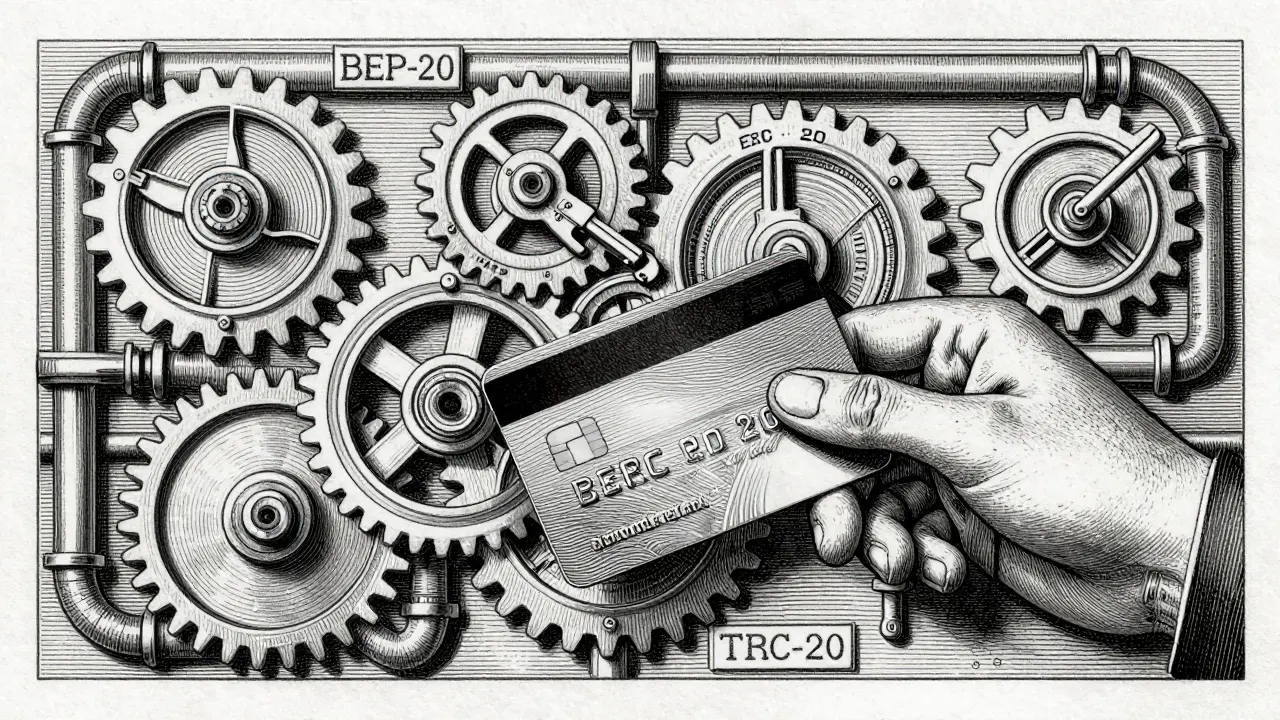
One area where Hikenex actually provides some concrete value is its network compatibility. The platform isn't limited to just one blockchain; it supports several major token standards that make moving your money around easier. Specifically, it integrates with:
- BEP-20 (the Binance Smart Chain standard), which usually offers lower fees.
- ERC-20 (the Ethereum standard), the gold standard for smart contract tokens.
- TRC-20 (the Tron standard), often used for fast, cheap USDT transfers.
Having this variety means you can send assets across different chains without needing a separate bridge or a third-party service. For a small exchange, this level of flexibility is a decent technical touch.
Regional Focus: Singapore and Canada
Hikenex doesn't seem to be fighting for global dominance like Binance or Coinbase. Instead, it has carved out a presence in specific markets. In Singapore, for instance, they've implemented VIP tier structures and localized promotions to attract users. Some local analysts have praised the KYC (Know Your Customer) process for being remarkably fast, often taking less than 24 hours to verify an account.
Canadian users have also been a target, with reports of competitive rates across the supported networks. However, the "best rates" claim is vague. Without a transparent, real-time fee schedule listed on their main page, it's hard to prove if they are actually cheaper than the big players. If you're in these regions, the local focus might make the platform feel more accessible, but it doesn't necessarily make it safer.
| Feature | Hikenex | Top-Tier Exchanges (e.g., CoinEx, Binance) |
|---|---|---|
| Asset Variety | Conflicting (30 to 300+) | Thousands of pairs |
| Liquidity | Very Low / Unmeasurable | Extremely High (Billions daily) |
| Mobile App | Web-based / Not specified | Dedicated iOS & Android Apps |
| Regulatory Clarity | Unclear / Niche | Highly regulated in key jurisdictions |
| KYC Speed | Fast (< 24 hours) | Varies (usually fast) |
The Red Flags: Liquidity and Security
Here is where things get worrying. In the world of crypto, liquidity is everything. Liquidity is basically the ability to buy or sell an asset without causing a massive price swing. High-volume exchanges process billions of dollars a day. Hikenex, by contrast, has almost zero measurable 24-hour trading volume on major tracking sites like CoinGecko. This means if you try to sell a large amount of a specific coin, you might find there are no buyers, or you'll be forced to sell at a terrible price.
Even more concerning is the total silence regarding security. Most reputable platforms brag about their cold storage, multi-signature wallets, and insurance funds. Hikenex has virtually no documented security protocols. When you send your money to an exchange, you are trusting them with your private keys. If they aren't talking about how they protect those keys, you're essentially gambling that they won't get hacked or disappear.

User Experience and Community Sentiment
Usually, you can go to Reddit or Trustpilot to see if a platform is a scam or a hidden gem. With Hikenex, the silence is deafening. There are almost no active discussions on r/cryptocurrency or r/Bitcoin. The only real "community" presence is in a few obscure Telegram groups and a very old Bitcointalk thread from 2018. While a few users in Singapore reported successful small Bitcoin purchases (under S$500), there is a complete lack of long-term user testimonials.
Customer support also seems to be a weak point. Some regional reviews have criticized the limited channels available to get help. If you run into a problem with a withdrawal-which some Canadian users say can take up to 24 hours-you might find yourself shouting into a void.
The Bottom Line: Should You Use It?
Hikenex seems designed for a very specific type of person: a complete beginner who wants to buy a small amount of Bitcoin with a credit card and doesn't care about professional trading tools or rigorous security audits. For that limited use case, the fast KYC and simple interface are helpful.
However, for anyone else, the risks outweigh the rewards. The lack of transparency regarding security, the anemic trading volume, and the missing regulatory compliance in markets like Singapore make it a dangerous place to store significant wealth. In a market where smaller, unregulated exchanges are frequently shut down or liquidated, the safest move is usually to stick with platforms that have a proven track record and transparent reserves.
Is Hikenex a safe exchange for long-term holding?
Generally, no. Hikenex lacks documented security protocols, such as cold storage or insurance funds, and has very low trading volume. For long-term holding, it is always safer to use a hardware wallet or a top-tier exchange with a transparent security record.
Can I buy crypto with a credit card on Hikenex?
Yes, Hikenex provides a credit card purchase option and a fiat gateway, making it relatively easy for beginners to enter the market without needing an existing crypto wallet.
How long does KYC verification take on Hikenex?
Based on regional reports from Singapore, the KYC process is quite efficient and typically takes less than 24 hours to complete.
What networks does Hikenex support for deposits and withdrawals?
Hikenex supports several major standards, including BEP-20 (Binance Smart Chain), ERC-20 (Ethereum), and TRC-20 (Tron), allowing for cross-chain transfers of compatible assets.
Why is Hikenex not listed on CoinGecko or CoinMarketCap?
These platforms typically list exchanges based on trading volume and liquidity. Hikenex's absence suggests that its daily trading activity is too low to meet the criteria for these global tracking services.

Only an idiot would use a site that isn't from the US anyway. Why even look at this junk? Total garbage!
The lack of liquidity is scary. Good catch on the volume issue.
The sheer audacity of this platform to masquerade as a 'next-generation' hub while possessing the operational depth of a puddle is truly farcical. It is an affront to the intellectual standards of the trading community to even entertain such a pedestrian excuse for an exchange. One finds the lack of security documentation not just negligent, but a grotesque manifestation of corporate apathy. To dwell in the shadow of such incompetence is a tragedy of modern finance. Truly a kaleidoscopic disaster of a platform. I simply cannot fathom how anyone with a shred of discernment would entrust their hard-earned capital to this digital void. The inconsistency regarding asset counts is a laughably amateurish blunder. It is practically an invitation for a rug pull. The entire facade is crumbling under the slightest bit of scrutiny. Such a banal attempt at legitimacy is offensive. I've seen more transparency in a brick wall. It is a moral failure to market this to beginners. The hubris is staggering. Simply pathetic.
I've dealt with many niche platforms!!! The lack of cold storage is a massive deal-breaker... definitely!!! Always keep your assets in a hardware wallet!!!
The technical support of multiple token standards is a commendable feature, though the operational risks mentioned are significant.
Agree with the points about security. It's better to be safe than sorry here.