
Imagine trying to send money to a family member abroad, but your bank account is frozen. Or picture wanting to save your life savings from a currency that loses value every day, only to find that digital wallets are illegal in your country. For millions of people living in nations with strict banking controls or outright cryptocurrency bans, this isn't a hypothetical scenario-it’s daily reality. Yet, despite governments in countries like China, Nigeria, and Vietnam imposing severe penalties, citizens continue to find ways to access the global financial system.
The drive to bypass these restrictions has created a shadow ecosystem of innovation. It’s not just about speculation; it’s often about survival. When traditional banking channels are blocked by state mandates or economic collapse, users turn to alternative methods ranging from peer-to-peer networks to decentralized technology. This article breaks down exactly how these workarounds function, the risks involved, and the tools being used in 2025 and beyond.
The Landscape of Restrictions
To understand the solutions, you first need to grasp the problem. The regulatory environment for cryptocurrency varies wildly across the globe. According to data from CoinGecko in 2025, nine countries have implemented complete bans on Bitcoin: Afghanistan, Algeria, Bangladesh, China, Egypt, Kuwait, Nepal, and North Macedonia. Other nations, such as Turkey and Vietnam, enforce severe restrictions that make legal participation nearly impossible.
In Algeria, for instance, authorities enforce prison sentences under Anti-Money Laundering laws for crypto activities. In Bangladesh, trading is classified as illegal under the Money Laundering Prevention Act. Meanwhile, the Central Bank of Nigeria has maintained a ban on banks facilitating crypto transactions since 2017, reinforced by stricter circulars in 2021. These aren’t just bureaucratic hurdles; they are criminal offenses designed to cut off access entirely.
However, prohibition rarely equals elimination. Instead, it drives activity underground. The Chainalysis Global Adoption Index for 2025 shows that despite these bans, grassroots adoption remains high. Nigeria ranks fourth globally in crypto adoption, and Vietnam sits at seventh. This resilience proves that when demand exists, supply finds a way-often through unconventional means.
Peer-to-Peer (P2P) Trading: The Human Network
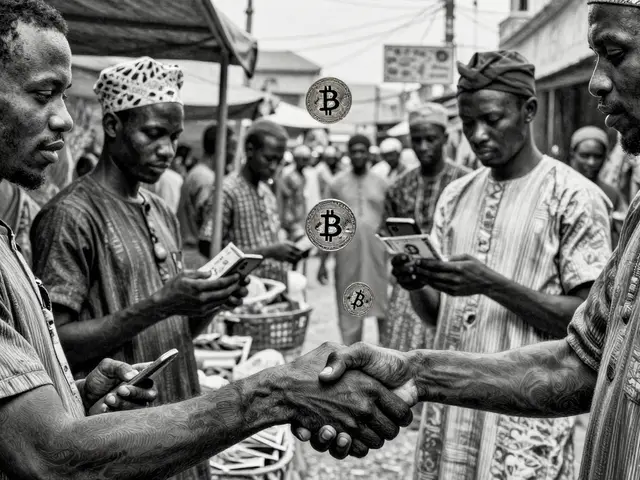
The most common method for accessing crypto in restricted jurisdictions is Peer-to-Peer (P2P) trading. Unlike centralized exchanges where you buy directly from the platform, P2P connects buyers and sellers directly. The exchange acts merely as an escrow service, holding the crypto until both parties confirm the fiat transfer.
Platforms like Binance P2P and Paxful dominate this space. In Q1 2025 alone, Binance P2P processed $8.7 billion in volume from restricted countries. Paxful reported 1.2 million active users from nations like Nigeria, Venezuela, and Argentina during the same period. Why is this so popular? Because it allows users to use local payment methods that don’t trigger immediate red flags with international banking systems.
In Vietnam, users frequently trade via bank transfers to trusted middlemen listed on Binance P2P. A user named CryptoViet shared on the forum Tinhte.vn in April 2025 that he had traded over 1.2 billion VND ($49,500) using this method. He noted a catch: he had to pay a 2.5% premium over the market rate. This “risk premium” is standard in restricted markets. You pay extra for the convenience and safety of a vetted counterparty.
However, P2P is not without its dangers. Trustpilot reviews from Chinese users on Paxful highlight frequent complaints about transaction delays exceeding 72 hours and account freezes triggered by recognizing local mobile numbers. In Bangladesh, a Facebook group admin documented 87 account closures in January 2025 alone, freezing an estimated $412,000 in assets. The key takeaway here is trust verification. Users must meticulously check seller ratings, trade history, and completion rates before engaging.
Decentralized Exchanges (DEXs): No Middleman, No KYC
If P2P relies on human trust, Decentralized Exchanges (DEXs) rely on code. Platforms like Uniswap and PancakeSwap operate without Know Your Customer (KYC) verification. There is no central authority to ban your account or freeze your funds because you connect directly to the blockchain via your own wallet.
This anonymity makes DEXs attractive for users in heavily surveilled states. A Koinly analysis from October 2025 identified 20 no-KYC exchanges, including Bisq and Hodl Hodl, which facilitate private trading. Bisq, for example, is a desktop application that uses Tor for privacy, averaging $1.2 million in daily trading volume. While this pales in comparison to Coinbase’s $14.7 billion, it serves a critical niche.
The trade-off is liquidity and complexity. DEXs often suffer from slippage (the difference between expected price and executed price) due to lower trading volumes. Furthermore, they require a higher level of technical literacy. You must manage your own private keys, understand gas fees, and navigate smart contract interactions. For a novice in Iran or North Korea, this learning curve can be steep. A World Bank survey from March 2025 found that 78% of new users in restricted countries needed assistance with seed phrase management, highlighting the barrier to entry.

Technical Workarounds: VPNs and Tor
Before you can even access these platforms, you often need to bypass internet censorship. Governments in countries like China and Iran actively block access to known crypto websites and APIs. To get around this, users employ Virtual Private Networks (VPNs) and anonymous browsers.
NordVPN reported a staggering 217% increase in users from China and a 342% increase from Nigeria between Q4 2023 and Q4 2024. These services mask your IP address, making it appear as though you are browsing from a friendly jurisdiction like Canada or Germany. However, relying solely on a commercial VPN carries risk. If the VPN provider logs your data and is compelled to hand it over, your anonymity is compromised.
For higher security, many turn to the Tor browser. Tor routes traffic through multiple volunteer-operated relays, encrypting it at each step. Metrics from the Tor Project in January 2025 showed an 189% adoption growth in Iran and 223% in North Korea. While slower than standard connections, Tor provides a layer of obscurity that is difficult for state actors to penetrate. A Datawallet survey from February 2025 revealed that 63% of users in restricted countries rely on VPNs, yet 47% experienced service interruptions during government-imposed internet blackouts, underscoring the fragility of these tools.
Alternative Payment Methods: Gift Cards and Hawala
When direct bank transfers are monitored or blocked, users turn to indirect value transfer methods. One clever workaround is gift card arbitrage. Users purchase Steam, iTunes, or Amazon gift cards with local currency and then trade them for cryptocurrency on platforms like Paxful.
Chainalysis documented $427 million in gift card-based crypto transactions from restricted countries in 2024. This method works because gift card purchases are often seen as routine retail spending rather than financial transfers. However, it requires finding a buyer willing to accept the card at a fair rate, which often involves significant discounts.
Another ancient method adapted for the digital age is Hawala. Traditionally an informal value transfer system based on trust and honor, Hawala networks have integrated crypto. In the Middle East, users leverage Dubai-based services to convert fiat to crypto through exchanges compliant with the Dubai Virtual Asset Regulatory Authority (VARA). Between July 2023 and June 2024, these VARA-compliant entities processed over $30 billion in transactions. Alex Thorn of Galaxy Digital noted in March 2025 that hawala networks now process 15% of crypto transactions from restricted jurisdictions, blending old-world trust with new-world tech.
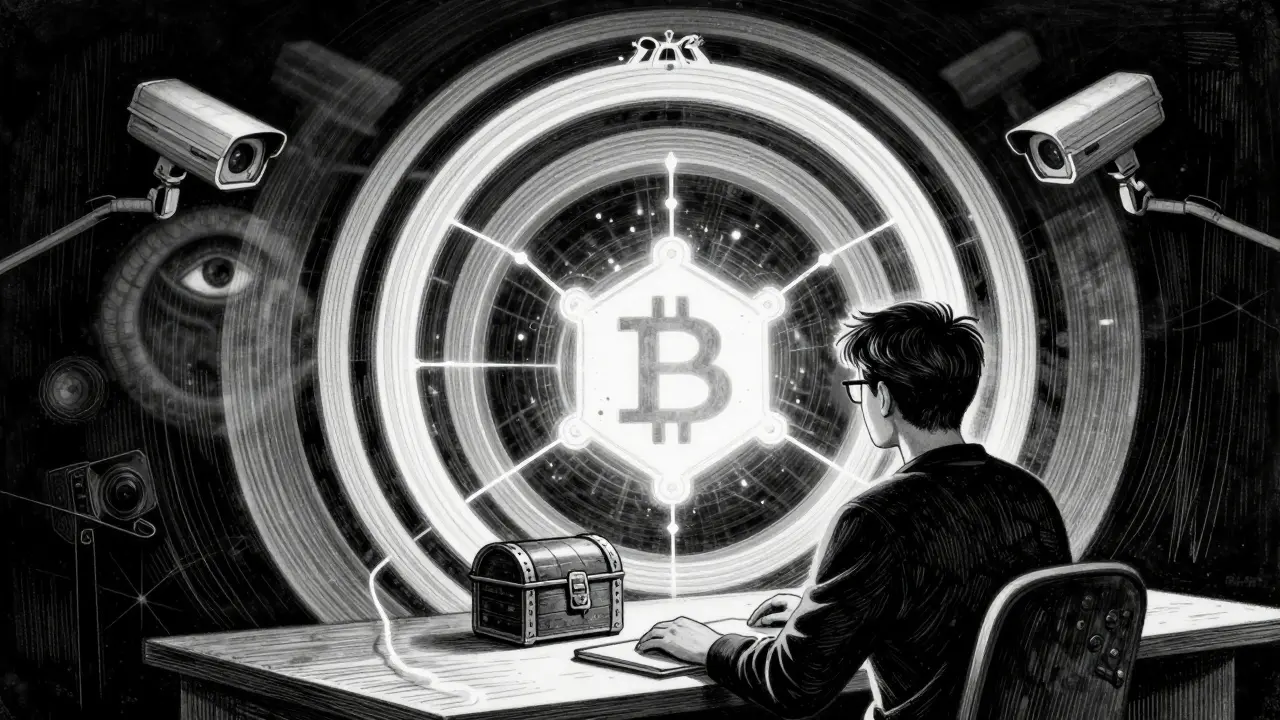
Privacy Coins and Non-Custodial Wallets
For those concerned about transaction visibility, privacy coins offer an additional layer of protection. Monero (XMR) and Zcash (ZEC) obscure the sender, receiver, and amount of a transaction. Adoption of these coins spiked by 317% in China and 289% in Iran since 2023, according to CoinMarketCap data from 2025.
However, privacy coins represent only 2.3% of total crypto market capitalization, meaning liquidity can be thin. Moreover, some exchanges delist them due to regulatory pressure. Therefore, users often store these assets in non-custodial wallets like Trust Wallet or hardware devices. Mobile-based solutions like the Bitcoin Beach Wallet have also gained traction in Latin America, serving 450,000 users in El Salvador and neighboring regions. While slower (taking up to 10 minutes for confirmation), these wallets give users full control over their assets, removing the risk of exchange insolvency or seizure.
| Method | Anonymity Level | Liquidity | Risk Factor | Best For |
|---|---|---|---|---|
| P2P Platforms | Medium | High | Counterparty fraud, account freezes | Large trades, local currency conversion |
| DEXs (e.g., Uniswap) | High | Low to Medium | Smart contract bugs, high fees | Tech-savvy users, avoiding KYC |
| Gift Card Arbitrage | Low | Very Low | Scams, poor exchange rates | Small amounts, initial onboarding |
| Hawala Networks | High | Variable | Trust dependency, lack of recourse | Cross-border transfers, cultural familiarity |
| Privacy Coins | Very High | Low | Regulatory delisting, volatility | Long-term storage, high privacy needs |
The Risks of Going Underground
It is crucial to acknowledge that these methods are not safe. They are risky. Professor David Yermack of NYU Stern warned in April 2025 that 67% of users in restricted countries reported at least one security incident. This includes scams targeting no-KYC exchange users, phishing attacks, and rug pulls. The IMF’s 2025 Financial Stability Report highlighted that 41% of Nigerian users felt pressured to use unregulated platforms that later collapsed, resulting in $217 million in losses in 2024 alone.
Furthermore, the regulatory arms race is accelerating. In January 2025, OKX expanded restrictions to over twenty countries, citing compliance with international sanctions. This forced many users to migrate to less established platforms, increasing their exposure to fraud. As governments enhance blockchain surveillance capabilities, traditional workarounds may become less effective. The IMF warns that this could drive users toward more sophisticated but riskier alternatives.
Practical Steps for Safe Access
If you are in a restricted jurisdiction and must access crypto, prioritize security and education. A guide published by CryptoSlate in February 2025 outlines a seven-step process for Iranian users, which applies broadly:
- Secure Your Connection: Install a reputable, no-log VPN like NordVPN or ExpressVPN. Consider using Tor for added anonymity.
- Choose a Non-Custodial Wallet: Set up a wallet like Trust Wallet or MetaMask. Write down your seed phrase on paper and store it securely. Never share it.
- Acquire Initial Crypto: Use P2P platforms with high-rated merchants or gift card arbitrage for small amounts. Avoid sending large sums to unverified individuals.
- Transfer to a DEX: Move funds to a decentralized exchange for trading if you need liquidity without KYC.
- Verify Contracts: Before interacting with any DeFi protocol, verify the contract addresses on official sources. Fake tokens are rampant.
- Withdraw to Cold Storage: For long-term holdings, move assets to a hardware wallet or a secure offline wallet.
- Stay Updated: Join community channels like ‘Crypto Without Borders’ on Telegram, which has grown to 147,000 members providing country-specific guides.
Remember, there is no customer support to call if things go wrong. You are responsible for your own security. Start small, test the waters, and never invest more than you can afford to lose.
Is it legal to use crypto in banned countries?
In countries with explicit bans like China, Algeria, and Bangladesh, using cryptocurrency for payments or trading is illegal and can result in fines or imprisonment. However, enforcement varies, and many citizens use workarounds like P2P trading or DEXs to access the market discreetly. Always consult local laws, as regulations change frequently.
What is the safest way to buy crypto without KYC?
The safest no-KYC method depends on your technical skill. For beginners, using reputable P2P platforms with high-rated sellers offers better security against scams. For advanced users, decentralized exchanges (DEXs) like Uniswap provide greater anonymity but require managing private keys and understanding smart contracts. Combining a no-log VPN with a non-custodial wallet enhances privacy.
Why do P2P traders charge a premium?
P2P traders in restricted countries charge a premium to cover the risks they face, including potential account freezes, legal repercussions, and the cost of maintaining multiple bank accounts. This "risk premium" compensates them for providing a service that circumvents banking restrictions. Rates fluctuate based on local demand and regulatory pressure.
Can I use a regular bank card to buy crypto in a banned country?
Generally, no. Banks in restricted countries are often prohibited from processing crypto-related transactions. Using a local bank card on a centralized exchange will likely result in a declined transaction or a frozen account. Users typically resort to P2P bank transfers, gift cards, or Hawala networks to avoid direct bank involvement.
Are privacy coins like Monero safer to use?
Privacy coins offer enhanced transaction anonymity, making them harder to trace by authorities. However, they are not inherently "safer" from scams or hacks. In fact, their low liquidity and regulatory scrutiny can make them harder to sell. They are best suited for users who already hold crypto and want to obscure their holdings, not for initial onboarding.

the idea that people in restricted nations are just looking for a quick buck is fundamentally flawed and misses the human element entirely. it is about survival and dignity when your local currency evaporates like morning dew under the harsh sun of economic mismanagement. we must look at this not as a financial anomaly but as a testament to the indomitable human spirit refusing to be caged by bureaucratic incompetence. technology becomes a lifeline rather than a toy when the alternative is starvation or poverty. i have seen friends who lost everything because they could not access basic banking services and crypto was their only way out. it is a complex web of trust and risk but the reward is freedom from systemic oppression. one must understand that every transaction is a small act of rebellion against a system that seeks to control every aspect of life. the risks are real yes but so is the necessity of having any kind of financial agency. we should support these individuals not judge them for using tools that allow them to breathe. the world is changing and those who cling to old ways of control will eventually find themselves irrelevant.
Oh, how quaint. The article suggests that the average citizen in Bangladesh or Nigeria possesses the technical acumen to navigate decentralized exchanges without losing their entire life savings to a phishing scam. It is almost laughable to think that a farmer with no internet literacy can manage seed phrases while dodging state surveillance. This romanticization of the 'shadow ecosystem' ignores the brutal reality that these platforms are rife with fraudsters preying on the desperate. The author seems blissfully unaware that the 'innovation' mentioned is often just sophisticated theft. One might assume that readers are capable of critical thought rather than swallowing this techno-utopian drivel whole.
yeah right another article telling us how smart these people are for getting scammed. its basically gambling with your life savings. dont believe the hype.
i really appreciate the detailed breakdown here even though i know some parts might seem risky to others. it is important to remember that for many people there is simply no other option available to them so they have to take whatever chances they can get. the section about p2p trading felt very relatable because i have seen friends use similar methods to send money home. it is not about being reckless it is about trying to keep a connection with family when banks refuse to help. we should all try to understand the pressure these communities are under before judging their choices. the information provided here is actually quite helpful for understanding the mechanics behind the scenes.
this is such an important topic. thank you for sharing this perspective.
Let’s be clear about one thing: if you are in a country where this is illegal, you are breaking the law and you deserve whatever consequences come your way. These governments exist for a reason and bypassing their controls destabilizes the entire economic framework. You cannot expect to live in a society and then ignore its rules just because you find them inconvenient. The notion that 'survival' justifies criminal activity is a dangerous slippery slope. If everyone decided which laws to follow based on personal convenience, we would have chaos. Respect the jurisdiction you reside in or leave. Do not complain about restrictions while actively undermining the legal structure of the nation.
I think there is a lot of nuance here that gets missed in the heated debates. On one hand the legal arguments are valid but on the other hand the humanitarian aspect is undeniable. I have worked in fintech compliance and seeing the sheer volume of transactions flowing through P2P networks in restricted regions is eye opening. It is not just speculation it is remittance and savings preservation. The key is education. Most losses occur because users do not understand the risks of non-custodial wallets. We need better resources for these communities rather than just condemnation or blind celebration. It is a balance between security and accessibility.
The liquidity issues on DEXs are a major bottleneck for retail adoption in these regions. Slippage eats into margins fast especially when dealing with smaller amounts. Also the gas fees on Ethereum mainnet make micro-transactions unfeasible for most users in emerging markets. Layer 2 solutions are starting to gain traction but the UX is still clunky for non-tech savvy users. The reliance on Tor also introduces latency that makes real-time trading nearly impossible. It is a messy ecosystem but it is evolving faster than traditional finance ever did.
look i get the fear mongering but u guys are missing the point. its about freedom man. if ur gov cant protect ur money why should u trust em? im tired of seeing ppl get lectured on following rules that dont work. wake up and smell the coffee. the system is broken and crypto is the fix. stop being so scared of change. its time to take control of ur own destiny. dont let them tell u what to do. join the revolution or stay poor.