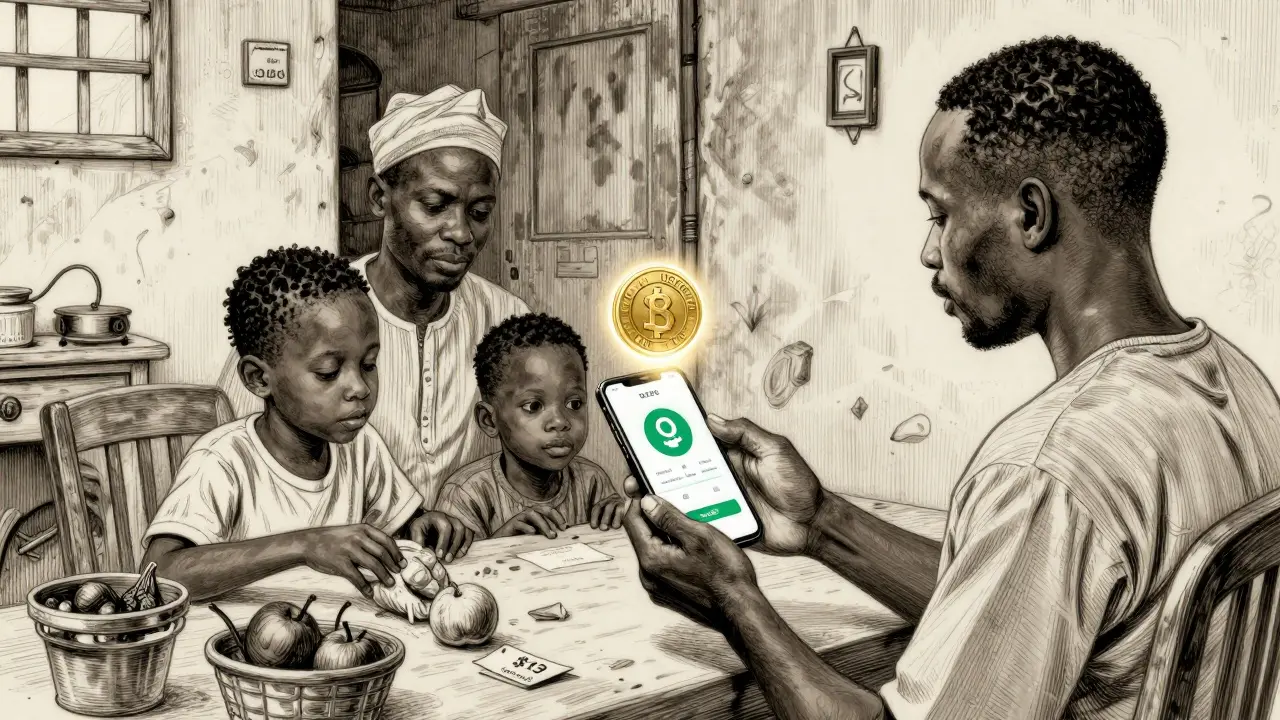
Every year, billions of people send money across borders to support families, pay for essentials, or invest back home. But for most, it’s expensive, slow, and frustrating. Sending $200 to Nigeria, the Philippines, or Mexico can cost more than $13 in fees. That’s not just a number-it’s groceries delayed, school supplies missed, or medical bills left unpaid. Traditional remittance companies like Western Union or MoneyGram still dominate, but a quiet revolution is happening: cryptocurrency and stablecoins are cutting through the red tape, slashing costs, and speeding up transfers-when they can get past the rules.
Why Traditional Remittances Are Still Too Slow and Costly
The old system isn’t broken-it’s just outdated. When you send money internationally through a bank or money transfer operator, your cash doesn’t travel directly. Instead, it goes through a chain of banks, each taking a cut and adding delays. Your $200 might pass through three or four intermediary banks before it lands in your cousin’s account in Lagos. Each step adds time-sometimes days-and fees. The World Bank says the global average fee for sending $200 was 6.62% in late 2024. That’s $13.24 gone before the recipient even sees a cent. In some corridors, it’s worse. Sending money from the U.S. to Venezuela or from the UK to Somalia can cost over 10%. Why? Because those routes are risky in the eyes of banks. Fewer players are willing to handle them, so the ones left can charge more. And if you’re sending from a country with weak banking infrastructure-like parts of Africa or Southeast Asia-you might have to travel miles just to drop off cash or pick up cash on the other end.How Stablecoins Cut the Middlemen Out
Enter stablecoins. These are digital currencies tied to real money-usually the U.S. dollar. USDC and USDT are the biggest ones. Unlike Bitcoin, they don’t swing wildly in value. If you send 1 USDC, the recipient gets 1 USDC, worth exactly $1. And because they run on blockchains, they don’t need banks to move them. Here’s how it works: You open an app like BVNK or Yellow Card, convert your dollars to USDC, and send it to your relative’s crypto wallet. In under a minute, it lands. No intermediary banks. No delays. On Layer 2 networks like Polygon or Arbitrum, the transaction fee is often less than a penny. That’s a 99% drop from traditional fees. In 2024, stablecoins moved $15.6 trillion in total value-roughly the same as Visa’s annual volume. By early 2025, they were handling 3% of all global cross-border payments, or about $6 trillion in remittances alone. That might sound small compared to the $200 trillion total, but it’s growing fast. Experts predict stablecoin remittances will grow 5% a year through 2027.Real-World Wins: Businesses and Families Saving Money
For businesses, the shift is already paying off. A manufacturing company in Ohio used to wait 3-5 days to pay its supplier in Singapore. Each transfer cost $45 in bank fees. Now, they send USDC through BVNK. The payment clears in 12 minutes. Fees? Under $0.05. The CFO told a case study, “We cut our payment processing time from days to minutes-and saved $20,000 last year just on fees.” Families are seeing similar results. In the Philippines, where remittance inflows hit $38 billion in 2024, the central bank reported cryptocurrency-based remittances jumped 217% year-over-year. A mother in Los Angeles sends $300 monthly to her daughter in Cebu. Before, she paid $20 per transfer. Now, she uses a crypto app. She sends USDC. Her daughter cashes out via a local exchange that charges 2.5%. Total cost: $7.50. That’s $12.50 saved every month. Over a year, that’s $150-enough for a new phone or school uniform.
The Catch: Access and Regulation
But here’s the problem: not everyone can use this system. First, the recipient needs a wallet. Not everyone has a smartphone, let alone knows how to set up a crypto wallet. Even if they do, converting stablecoins back to cash isn’t always easy. In Nigeria, a recipient might get USDC, but to turn it into naira, they need to go through a peer-to-peer market or a licensed exchange. Those services often charge 3-5%-eating into the savings. Then there’s regulation. Every country has its own rules. The U.S. is still figuring out how to regulate stablecoins. The EU has MiCA, a strict law that requires issuers to hold reserves and disclose risks. Vietnam, India, and Indonesia have banned or restricted crypto altogether. In some places, even receiving crypto can trigger tax or reporting obligations you didn’t know existed. J.P. Morgan’s blockchain lead put it bluntly: “Unless one blockchain becomes the global standard, we’re just replacing one fragmented system with another.” Right now, USDC runs on Ethereum, Solana, and others. But if your cousin’s wallet only supports one chain, and you send on another, the money disappears. That’s why protocols like Circle’s CCTP-launched in 2024-are critical. They let you send USDC from Ethereum to Solana without losing value. But not all providers support it yet.Who’s Winning and Who’s Struggling
Traditional players aren’t sitting still. Wise and Western Union now offer crypto options. Wise lets you send crypto directly to recipients in 20 countries. But their crypto fees are still higher than pure blockchain services. Western Union’s crypto option is limited to a few corridors and requires users to jump through hoops. Meanwhile, blockchain-native services like Circle, Ripple, and BVNK are gaining traction-especially in emerging markets. BVNK has a 4.7/5 rating from enterprise users for seamless integration. But 63% of them say regulatory compliance is their biggest hurdle. Yellow Card, which serves Africa and Latin America, reports 89% of business users love the speed-but only 37% say on-ramps are reliable enough to depend on. In Southeast Asia, adoption is surging. In the Philippines, 4.3% of all remittances now flow through crypto. In Kenya and Ghana, peer-to-peer crypto trading platforms are booming. But in countries like Brazil or India, regulators are cracking down on exchanges. The same technology that helps a family in Nigeria can get shut down in another country next month.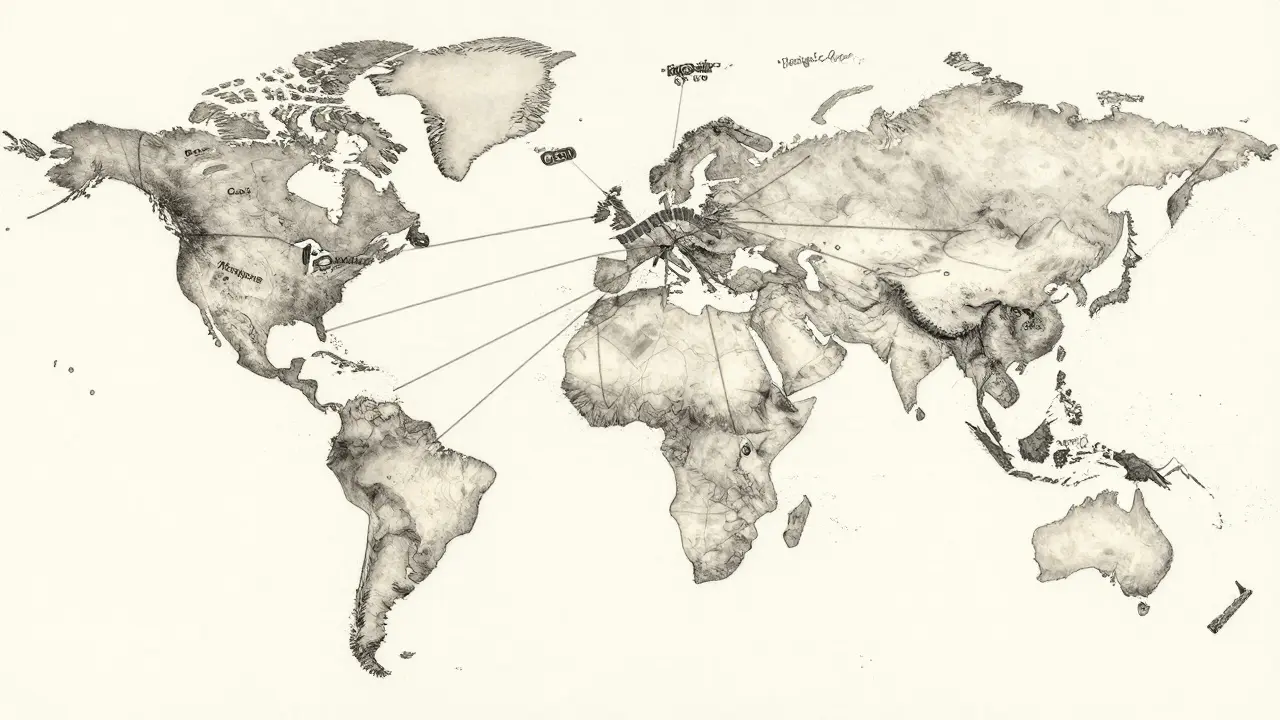
What It Takes to Start Using Crypto for Remittances
If you’re thinking about switching, here’s what you need:- A trusted crypto wallet that supports stablecoins (like MetaMask, Trust Wallet, or a provider’s hosted wallet).
- A way to buy USDC or USDT with fiat-via apps like Coinbase, Kraken, or local exchanges.
- A recipient who can cash out. Check if they have access to a licensed exchange or P2P platform in their country.
- Understand local laws. In some places, receiving crypto is legal but reporting it to tax authorities isn’t optional.
- Use a provider that complies with KYC and AML rules. Don’t skip this. It’s not just about safety-it’s about keeping your money from being frozen.
The Future: CBDCs and Global Standards
The next big shift won’t be private stablecoins-it’ll be central bank digital currencies (CBDCs). Around 90% of the world’s central banks are exploring them. The Bank for International Settlements’ mBridge project already showed cross-border payments settling in seconds using digital yuan and euro CBDCs. Imagine sending money from Germany to Indonesia as easily as sending a text. No fees. No intermediaries. Just instant, government-backed digital cash. But that’s years away. In the meantime, stablecoins are filling the gap. They’re not perfect. They’re not legal everywhere. And they’re not for everyone. But for millions of people stuck with $13 fees just to send home $200, they’re the best option available today. The real question isn’t whether crypto will replace banks. It’s whether the world will fix the rules fast enough to let it help.Can I really send money abroad for less than a dollar using crypto?
Yes-on certain blockchain networks like Polygon or Arbitrum, sending USDC or USDT can cost less than $0.01. Even on Ethereum, fees are often under $0.50. That’s far cheaper than traditional services, which charge $10-$15 on average for $200 transfers. The catch? Your recipient must be able to cash out without paying high fees themselves.
Is using cryptocurrency for remittances legal?
It depends on the country. In the U.S., Canada, the EU, Japan, and parts of Southeast Asia, it’s legal to send and receive crypto for remittances. But in countries like Nigeria, India, or Vietnam, restrictions vary. Some ban exchanges, others require licenses, and a few treat crypto as a commodity subject to capital gains tax. Always check your country’s rules before sending.
What if my family doesn’t know how to use crypto?
Many services now offer auto-conversion. You send USDC from your app, and the recipient gets cash in their local bank account or mobile wallet-no crypto knowledge needed. Providers like Yellow Card and BVNK partner with local cash-out networks in Africa, Latin America, and Asia to make this possible. The recipient never touches a wallet-they just get a text saying money arrived.
Are stablecoins safe?
USDC and USDT are backed by reserves-cash, Treasury bills, and short-term bonds. Circle, the issuer of USDC, publishes monthly audits showing it holds $1 for every USDC in circulation. But not all stablecoins are equal. Some are less transparent. Stick to well-known, regulated ones. Also, never send crypto to an unknown address. Once sent, it’s gone forever.
Why aren’t more people using crypto for remittances if it’s cheaper?
Three main reasons: access, trust, and complexity. Many recipients don’t have smartphones or internet access. Others don’t trust crypto after scams or media hype. And even if they do, converting crypto to cash can still cost 3-5% if local options are limited. Until cash-out networks become as common as ATMs, adoption will grow slowly-but steadily.
So let me get this straight-we’re celebrating a system where your grandma has to download an app just to get her son’s money, and we call it progress? The fees are low, sure, but now you need a PhD in blockchain just to avoid getting scammed. And don’t even get me started on the ‘auto-conversion’ fairy tale. Real talk: if your cousin in Manila can’t cash out without paying 5% and waiting three days, then you didn’t fix anything-you just moved the scam to a blockchain.
Look, I get it. Crypto sounds like magic when you’re not the one trying to explain it to your aunt in Lucknow who still uses a feature phone. But here’s the thing-people aren’t resisting innovation because they’re Luddites. They’re resisting it because the last time someone told them ‘this will change everything,’ it turned out to be a Ponzi scheme that stole their life savings. The tech is cool, but trust doesn’t come from whitepapers. It comes from consistency. And right now, crypto’s track record is more like a rollercoaster with no seatbelts.
Also, if the solution is ‘just use USDC,’ why are we still talking about cash-out networks like they’re some exotic luxury? If this is supposed to help the poor, then the infrastructure should be as simple as a text message. Not a five-step tutorial with three verification layers.
And don’t get me started on the ‘regulation’ excuse. We regulate banks because people get hurt when they’re not. But now we’re acting like crypto is some wild west frontier where rules are optional? That’s not freedom-that’s negligence dressed up as innovation.
Yes, fees are lower. But if the system collapses because someone’s wallet got hacked or a stablecoin depegs, who pays? Not the VC who funded the app. It’s the single mom in Bihar who just lost her daughter’s school fees. That’s not disruption. That’s exploitation with a blockchain logo.
I’m not anti-tech. I’m pro-human. And right now, this system is asking the most vulnerable to become their own bankers, auditors, and cybersecurity experts-all while being told they’re lucky to even have access.
Been using USDC to send money to my sister in Guatemala for a year now. $0.03 fee. 45 seconds. She gets pesos in her mobile wallet. No bank visit. No waiting. No $15 fee. Simple. Real. Works. If your cousin can't cash out? That's a local infrastructure problem, not a crypto problem. Fix the cash-out points. Don't blame the tool.
OMG YES this is life changing!! I sent $200 to my cousin in Manila and she got it in 2 mins and converted it to php with no stress!! I used to cry every time I paid $20 fee 😭 now I just send crypto and she gets like $192.50 instead of $180?? I’m literally crying happy tears!! 🥹💸 #CryptoForThePeople
This is exactly the kind of innovation we need-simple, fast, and affordable. People keep talking about ‘regulation’ like it’s a roadblock, but honestly? It’s the only way this scales responsibly. We don’t need chaos. We need smart rules that protect people without killing progress. And honestly? If your grandma can’t use it, maybe the app isn’t designed for her yet. Not because crypto is bad-but because we haven’t built the right interface. Let’s build it. Together.
Real talk: I work with remittance agencies in Nigeria. We’ve seen a 40% spike in crypto-based transfers in the last 8 months. People love it. But here’s the catch-they don’t care about Ethereum or Solana. They care that their money arrives before the market closes. And they care that the agent who cashes it out doesn’t charge them 8%. So the real win isn’t the blockchain-it’s the local partnerships. Circle’s CCTP? Cool. But what matters more is that 300 kiosks in Lagos now accept USDC and give naira in 90 seconds. That’s the real innovation.
Also, stop calling it ‘crypto remittances.’ It’s just money now. The tech is invisible. And that’s how it should be.
Let’s not romanticize this. Stablecoins are merely a regulatory arbitrage play disguised as financial inclusion. The reserves are opaque, the audits are self-reported, and the entire ecosystem relies on centralized custodians with questionable compliance. You think you’re bypassing banks? You’re just moving your risk to a private entity that’s less transparent than the Fed. And don’t even get me started on the AML/KYC loopholes-this is how illicit finance thrives. The 3% fee savings are a distraction from the systemic fragility.
Meanwhile, CBDCs are being piloted by 90 central banks. That’s the future-not speculative tokens backed by unverified treasuries. The real disruption is state-backed, programmable, auditable digital currency. Not crypto bros sending USDC through Polygon like it’s a TikTok trend.
It’s funny how the same people who spent the last decade mocking Bitcoin as a drug dealer’s currency are now hailing stablecoins as the salvation of the global poor. The irony is almost poetic. You don’t solve systemic inequality by handing people a wallet and telling them to ‘figure it out.’ You solve it by fixing banking infrastructure, wages, and capital access. Crypto doesn’t fix poverty. It just lets the rich send money faster while the poor still pay 3% to cash out. And now we’re supposed to be impressed?
Also, the phrase ‘auto-conversion’ is a marketing lie. It only works if your recipient lives near a licensed exchange with a bank account. In rural Ghana? In the Philippines’ countryside? In rural India? No. It doesn’t work. So you’re not helping millions. You’re helping the urban 10% who have smartphones and internet. That’s not inclusion. That’s exclusion with better branding.
Stop acting like this is a revolution. It’s just a new way to launder money. And if you think people in developing countries are suddenly becoming crypto experts, you’re delusional. Most of these ‘success stories’ are just middle-class expats using apps their kids set up for them. The real poor? They’re still walking 5km to Western Union. And now they’re being told they’re ‘left behind’ because they don’t have a crypto wallet. That’s not progress. That’s condescension wrapped in blockchain.
The discussion around crypto remittances often overlooks a fundamental truth: technology does not exist in a vacuum. Its impact is shaped by context. In India, where over 60% of the population still relies on cash and mobile networks are inconsistent, the notion of a seamless USDC transfer is a theoretical ideal. What matters more is reliability, accessibility, and local support. The fact that Western Union and Wise are now integrating crypto options suggests that even traditional players recognize the demand-but they’re doing it cautiously, because they understand the stakes. Innovation must serve, not sideline. The goal should be interoperability, not replacement.