Iceland Crypto Mining Power Cap Calculator
Calculate your maximum sustainable hash rate under Iceland's new power restrictions. Current miners must operate within fixed power caps and meet efficiency requirements.
Your fixed power allocation from Landsvirkjun (e.g. 50 MW)
Watts per terahash per second (e.g. Antminer S9: 2500, modern rigs: 1500-2000)
By 2025, Iceland’s once-thriving crypto mining scene is no longer the free-for-all it used to be. What started as a gold rush fueled by cheap geothermal power and freezing air has turned into a tightrope walk between economic gain and national survival. The crypto mining restrictions aren’t coming from some distant bureaucracy-they’re being enforced by the very company that powers the country: Landsvirkjun, Iceland’s national power company.
Why Iceland Became a Crypto Mining Hotspot
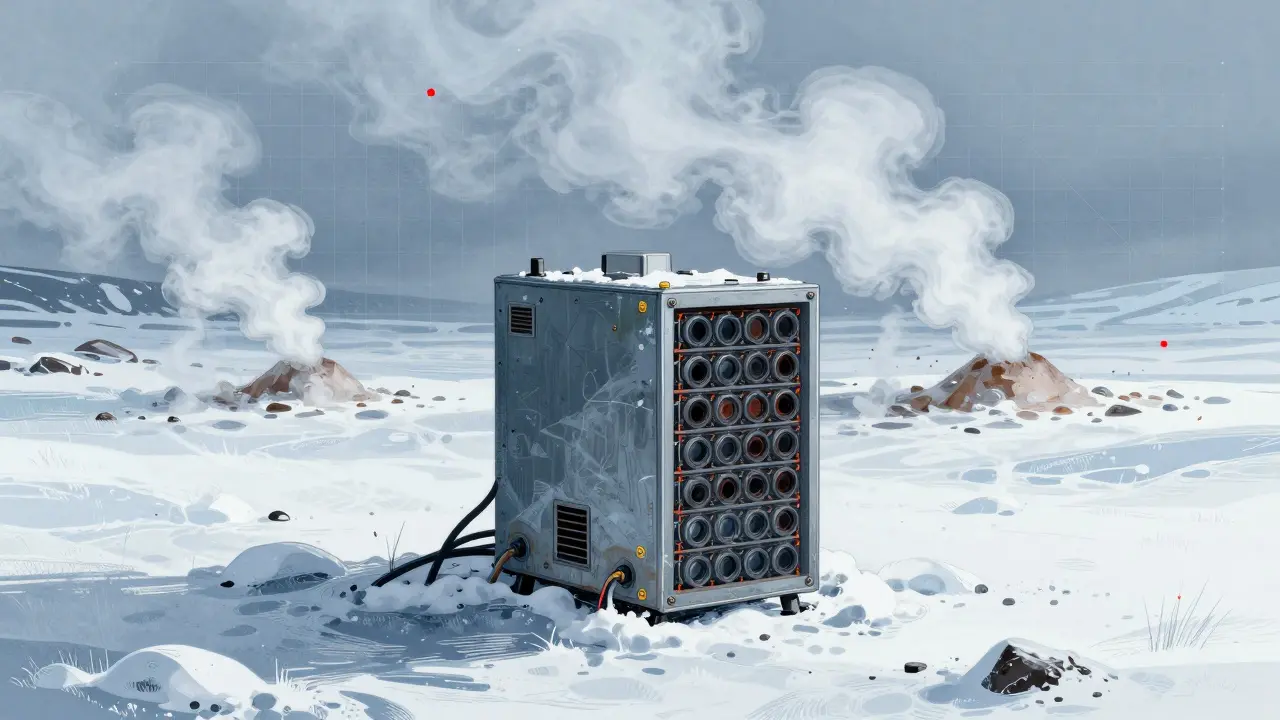
Iceland didn’t set out to be the world’s Bitcoin factory. It just happened. The country has almost no fossil fuels, but it’s sitting on a giant natural battery: geothermal and hydroelectric power. Electricity here costs a fraction of what it does in the U.S. or China. On top of that, the average winter temperature hovers around -5°C. That means you don’t need expensive cooling systems for your mining rigs-they just sit outside and let the Arctic breeze do the work. By 2017, crypto mining was using 90% of all the electricity consumed by Iceland’s data centers. By 2023, mining operations were consuming more power than the entire population of Iceland. That’s not a typo. More than 360 megawatts of electricity-enough to power 180,000 homes-were going straight into Bitcoin and Ethereum rigs. And it wasn’t just small-time operators. Big names like Hive Blockchain Technologies, Bitfury, and Genesis Mining built massive facilities in Reykjanes and Keflavík, drawn by the low costs and clean energy label.The Energy Crisis That No One Saw Coming
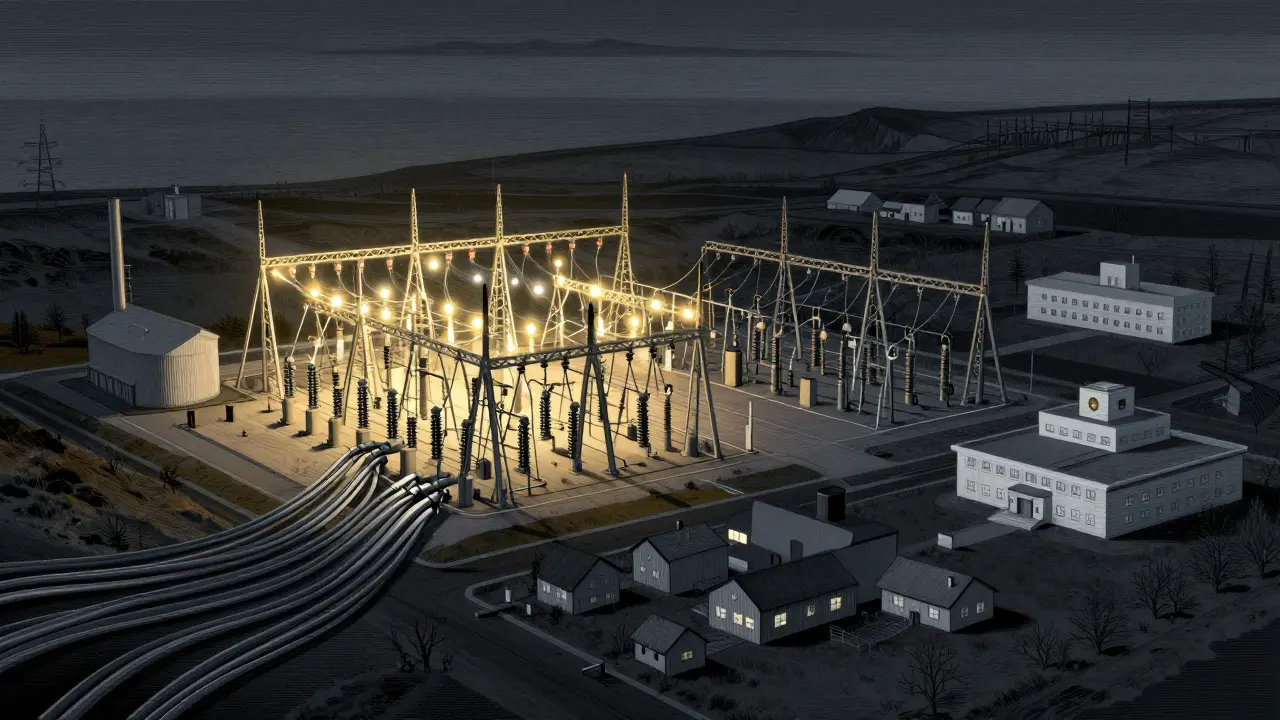
Icelanders didn’t mind at first. Mining brought jobs, foreign investment, and tax revenue. After the 2008 financial collapse, the country was desperate for growth. Crypto mining felt like a modern miracle. But by 2022, things started to crack. The national grid, designed for a population of 370,000 and a few industrial plants, began showing signs of stress. Power outages in rural areas became more frequent. Schools and hospitals started getting warning notices about peak usage. Farmers noticed their electric milking machines ran slower. The government realized: if mining kept growing at this pace, there wouldn’t be enough electricity left for basic services. Landsvirkjun, which generates about 70% of Iceland’s electricity, didn’t just sit back and watch. In early 2024, they quietly stopped approving new mining contracts. Existing miners? They got a letter: “Your power allocation is frozen at current levels. No increases. No new equipment.” It wasn’t a law. It wasn’t a public announcement. It was a utility company saying, “We can’t keep doing this.”How the Restrictions Actually Work
There’s no official ban on crypto mining. But here’s how the restrictions play out in practice:- No new connections. Landsvirkjun won’t hook up any new mining facility to the grid, regardless of how much money they offer.
- Fixed power caps. Existing miners can’t expand. If you’re using 50 MW today, you’re stuck at 50 MW-even if you buy 10,000 more ASICs.
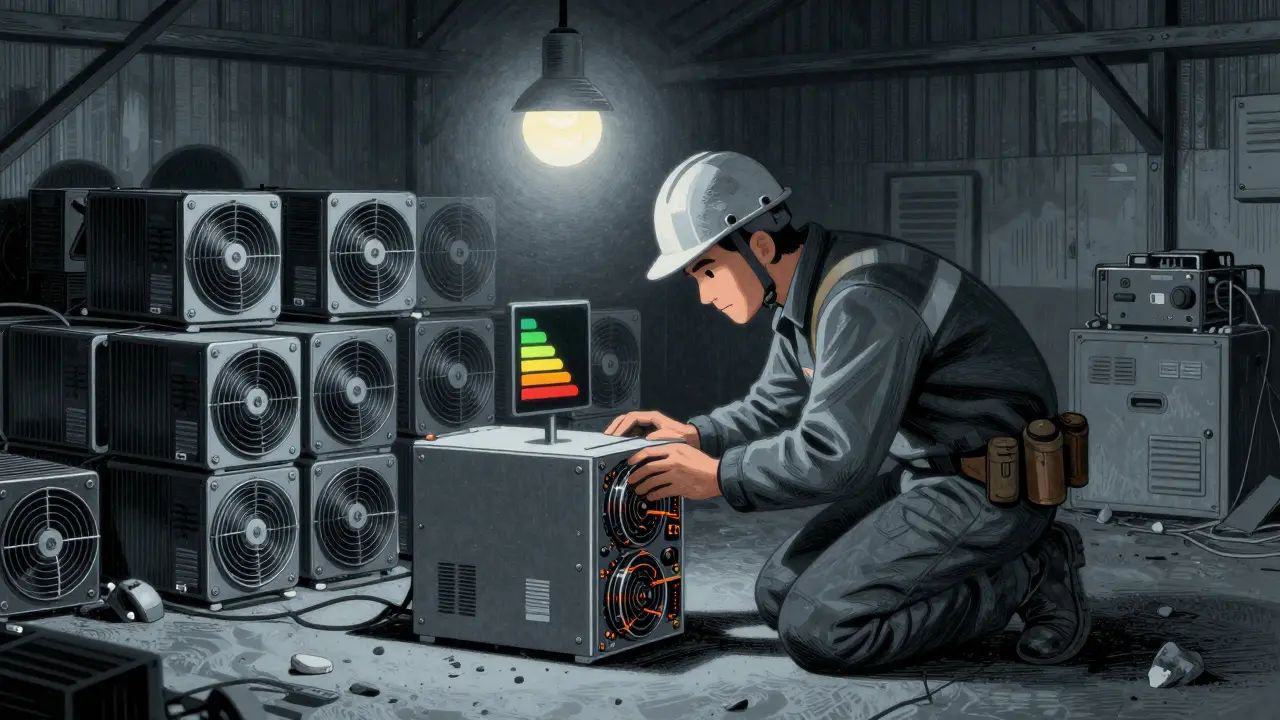
- Energy audits. Miners must prove their equipment is energy-efficient. Older, power-hungry rigs like the Antminer S9 get flagged. Upgrades are mandatory.
- Peak hour restrictions. During winter, when demand spikes, miners must shut down non-essential equipment between 6 PM and 9 AM.
Who’s Getting Hit the Hardest
The restrictions hit smaller operators hardest. A guy running 200 ASICs in a warehouse near Akureyri? He’s out of luck. He can’t get more power, and he can’t afford to upgrade to newer, more efficient models. Many have already shut down. Big players? They’re adapting. Hive Blockchain Technologies spent $42 million upgrading to next-gen rigs that use 30% less power per hash. Bitfury moved some of its operations to Greenland, where they’re negotiating new power deals. Genesis Mining shifted focus to blockchain infrastructure services-smart contracts, node hosting, not just mining. The message is clear: if you want to keep mining in Iceland, you need to be efficient, not just loud.Why the Government Backed the Power Company
The Icelandic government didn’t create these restrictions. But they didn’t stop them either. In March 2024, Prime Minister Katrín Jakobsdóttir publicly said, “We cannot sacrifice our energy security for speculative industries.” That was the green light Landsvirkjun needed. The government’s real fear? Running out of clean power. Iceland prides itself on being 100% renewable. But if mining eats up 60% of the country’s electricity, what’s left for electric cars, green hydrogen projects, or future tech? The country has pledged to be carbon neutral by 2040. Crypto mining was becoming the biggest obstacle. So instead of writing new laws, they let the power company act. It’s smarter this way. Utilities understand load balancing, grid stability, and infrastructure limits better than politicians ever could.