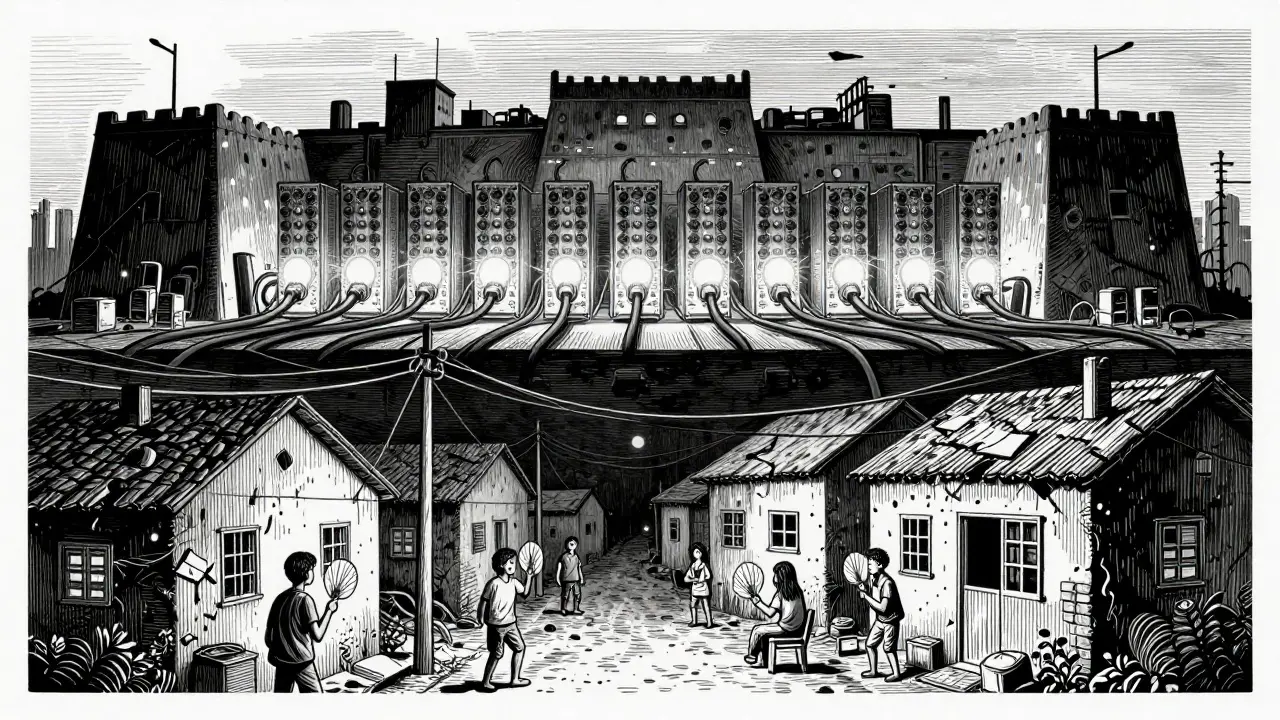
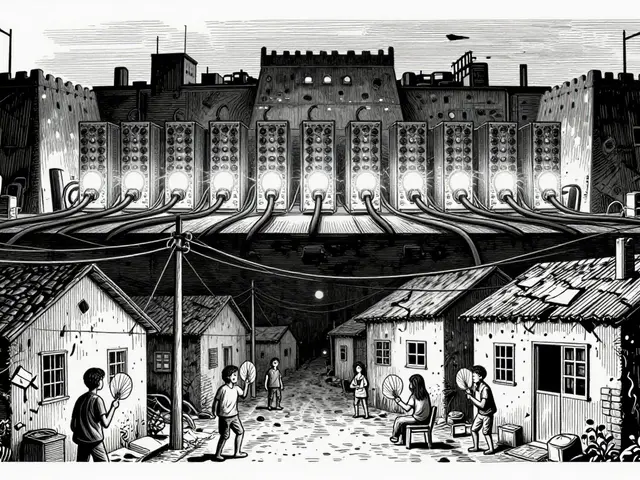
While millions of Iranian families sit in sweltering heat without electricity, massive server farms are humming away in secret locations across the country. These aren't just any data centers; they are industrial-scale Bitcoin mining operations run by the Islamic Revolutionary Guard Corps (IRGC), a powerful paramilitary organization under direct command of Supreme Leader Ali Khamenei that controls vast economic sectors. This isn't a story about rogue hackers or underground tech enthusiasts. It is a state-sponsored cartel systematically draining national resources to bypass international sanctions and fund military activities.
The situation in Iran has evolved from a gray-market industry into a structured monopoly. By 2019, reports indicated that Tehran’s most influential power group had made significant inroads into cryptocurrency mining under direct orders from Supreme Leader Ali Khamenei, the Supreme Leader of Iran who oversees key state institutions and religious foundations. The goal was clear: compensate for losses in dollar channels due to intensifying international sanctions. Today, this operation represents one of the most complex intersections of military-industrial control, energy exploitation, and financial evasion in the modern world.
The Rise of the State-Sponsored Crypto Cartel
To understand how the IRGC took over Iran's crypto landscape, you have to look at the scale of their involvement. Estimates suggest that well over half of all mining hardware in Iran is operated by state-related entities. Current data indicates approximately 180,000 mining devices are active across the country. Of these, only around 80,000 units are in private hands. That leaves a substantial portion-potentially up to 100,000 units-under the direct control of state or quasi-state organizations.
This framework allows the regime to operate with a semblance of legitimacy while commandeering a vast share of the country's energy resources. The IRGC-affiliated organizations, including large religious foundations like Astan Quds Razavi, a massive bonyad or charitable trust under Supreme Leader supervision that manages extensive commercial and industrial assets, have formed what investigative reports describe as a de facto 'cryptocurrency monopoly group.' They profit by systematically plundering national electricity resources, leaving little for civilian use.
| Feature | Licensed Private Miners | IRGC/Affiliated Entities |
|---|---|---|
| Electricity Cost | High tariffs, mandatory payment | Effectively free or unpaid bills |
| Regulatory Oversight | Ministry of Industry, Mines, and Trade | Minimal oversight, military protection |
| Revenue Control | Mandatory sale to Central Bank of Iran | Direct access to global markets/sanctions evasion |
| Hardware Scale | ~80,000 units estimated | ~100,000+ units estimated |
| Location | Industrial zones, public view | Secret military bases, special economic zones |
How the IRGC Bypasses Sanctions with Bitcoin
Cryptocurrency mining has become a vital tool for Iran to bypass international sanctions. Blockchain analytics firms have identified Iran as one of the world's major Bitcoin producers in recent years. The Associated Press reported that both the U.S. Treasury Department and Israeli intelligence have specifically targeted Bitcoin wallets tied to IRGC operations. These wallets are reportedly used to fund proxy groups involved in regional conflicts.
Why Bitcoin? Because it offers two key features that traditional banking does not: direct, intermediary-free transactions and relative anonymity. Unlike bank transfers that require multiple verifications and leave clear audit trails, crypto exchanges occur directly between digital wallets without central oversight. Two-way encryption enables parties to remain largely anonymous. For an entity under heavy sanctions, this is a game-changer.
A prominent example of this strategy is the 175-megawatt Bitcoin mining farm established in Rafsanjan, Kerman Province. Nominally structured as a joint venture between an IRGC-affiliated enterprise and foreign investors-particularly Chinese partners-it was attracted by Iran's extremely low electricity prices. These operations are strategically located in special economic zones or military bases controlled by the IRGC, where they enjoy exclusive electricity supplies and operate with minimal oversight from civilian authorities.
The Energy Crisis: Stealing from the People
The operational advantage enjoyed by IRGC-linked mining operations stems from their ability to access effectively free electricity or simply refuse to pay utility bills entirely. These state-backed miners operate with political connections and armed protection, making them immune to the financial constraints that affect private miners.
In 2022, the Iranian parliament quietly passed legislation allowing the military to establish private power plants and transmission lines. This enabled the IRGC to directly access subsidized electricity and even redirect public electricity resources originally intended for cities and industries toward their secret cryptocurrency mining farms. This infrastructure manipulation has contributed significantly to Iran's ongoing energy crisis.
The impact on the civilian population has been severe. Homes and factories experience power outages for hours or days at a time, especially during summer months when demand peaks. Energy Minister Ali Abadi, Iran's Energy Minister and former IRGC commander who acknowledged the severity of unauthorized crypto mining likened unauthorized crypto mining to 'putting a hand in others' pockets' and called it 'an ugly and unpleasant theft.' However, his background as a former IRGC commander raises serious questions about the government's commitment to addressing mining operations run by his former organization.
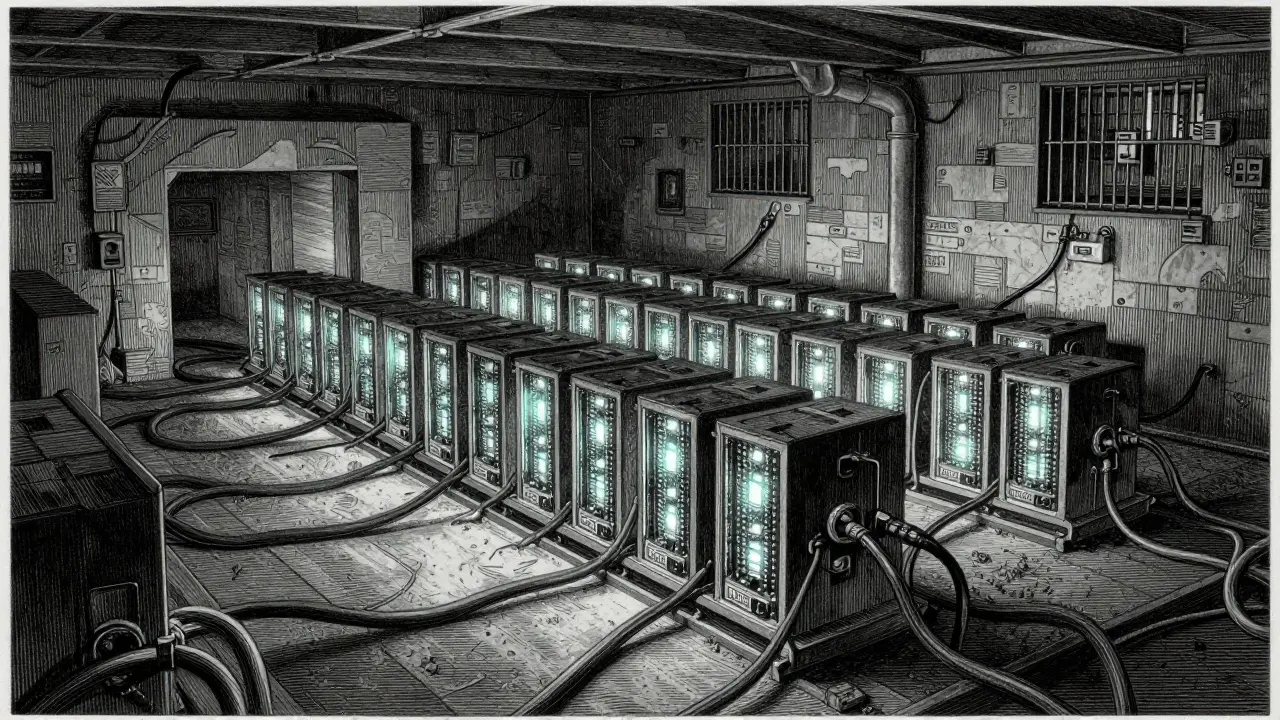
The energy consumption of these industrial-scale Bitcoin farms is staggering. Rows of specialized computer servers, known as ASIC miners, consume electricity on an industrial scale. When these machines run 24/7, they drain the grid faster than residential areas can recharge it. The result is a two-tiered system where state actors exploit national resources for private gain while ordinary citizens face energy shortages and economic hardship.
Legal Gray Areas and Regulatory Failures
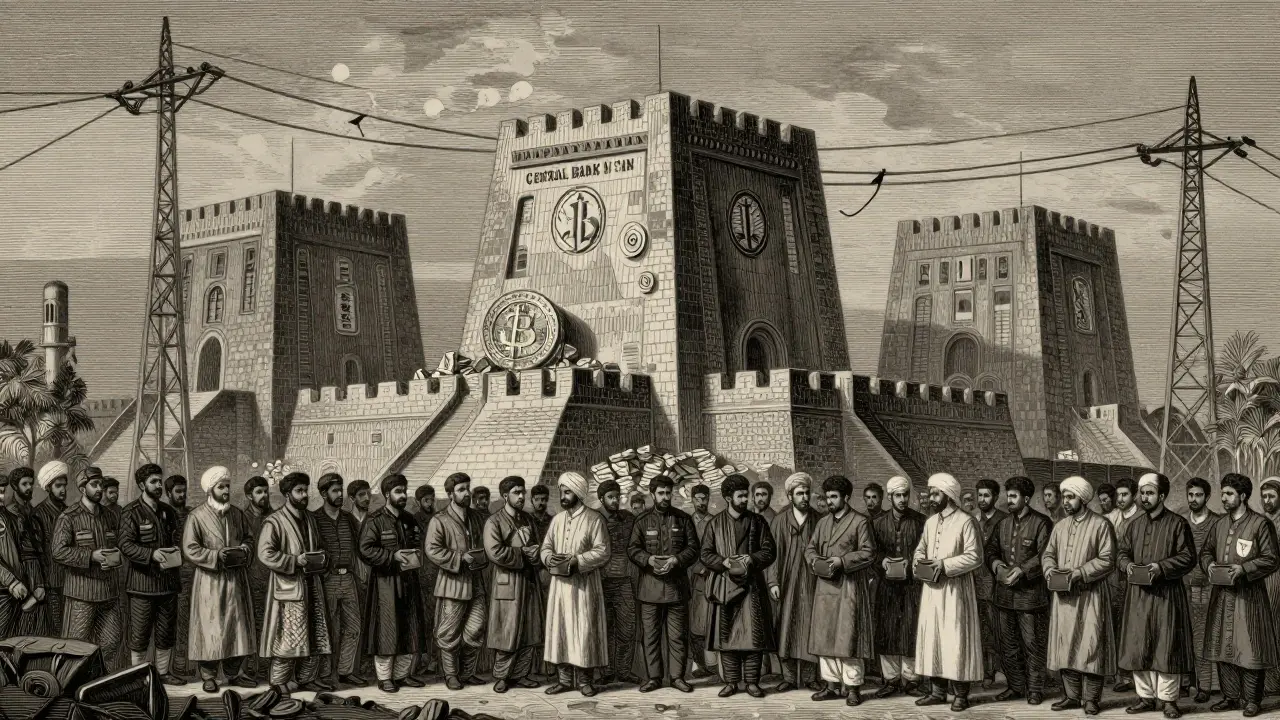
While the Iranian regime officially recognized cryptocurrency mining as a legal industry in 2019, with licensing ostensibly managed by the Ministry of Industry, Mines, and Trade, this regulatory framework primarily serves to consolidate control for regime-affiliated entities rather than create genuine oversight.
Licensed miners are subjected to high energy tariffs and requirements to sell their digital assets directly to the Central Bank of Iran (CBI), the national monetary authority responsible for regulating currency and financial stability in Iran. These conditions have made mining financially unsustainable for many legitimate operators. Consequently, a significant portion of Iran's mining activities have been driven underground.
Recent regulatory developments have attempted to address the sector, but they often backfire or serve dual purposes. On December 27, 2024, the Iranian Central Bank implemented new programs that effectively blocked all Iranian cryptocurrency to rial and vice versa payments through internet websites within Iran. However, by January 2025, the central bank began selectively unblocking cryptocurrency to fiat trader exchanges using their own government API system. This system provides full access to user data, indicating a continued state desire to control and monitor cryptocurrency activities rather than eliminate them entirely.
International cryptocurrency exchanges such as Nobitex remain popular among Iranian citizens, though they operate under stringent regulations. The Central Bank prohibits the use of foreign-mined cryptocurrencies for domestic transactions. Many Iranians circumvent these restrictions by utilizing virtual private networks (VPNs) to access foreign exchanges, avoiding local scrutiny and government control. This cat-and-mouse dynamic continues to evolve as the regime seeks to maintain its monopolistic control over cryptocurrency mining while preventing private citizens from accessing the same sanctions-evasion benefits.
Global Implications and Future Outlook
The current status of unlicensed IRGC cryptocurrency mining represents an ongoing challenge to Iran's energy infrastructure and civilian welfare. The military-industrial complex's cryptocurrency operations continue to expand despite official rhetoric about cracking down on unauthorized mining. The combination of political protection, armed enforcement, and direct access to subsidized electricity ensures that IRGC mining operations remain largely immune to the regulatory pressures applied to private miners.
For the global community, this creates a unique dilemma. On one hand, Bitcoin is often touted as a decentralized, democratic technology. On the other hand, in countries like Iran, it has become a centralized tool for authoritarian regimes to evade sanctions and fund military aggression. International bodies must recognize that supporting the broader crypto ecosystem without addressing these abuses may inadvertently strengthen adversarial states.
As we move further into 2026, the tension between Iran's energy needs and its illicit crypto ambitions will likely intensify. Unless there is a fundamental shift in governance or external pressure forces a change, the IRGC will continue to treat the national grid as its personal ATM. Until then, the lights may stay off for millions, while the servers keep running.
Who controls the majority of cryptocurrency mining in Iran?
The Islamic Revolutionary Guard Corps (IRGC) and affiliated state entities control the majority of mining hardware in Iran. Estimates suggest that out of approximately 180,000 active mining devices, around 100,000 or more are operated by state-related organizations, leaving only about 80,000 in private hands.
How does the IRGC avoid paying for electricity?
The IRGC avoids paying for electricity through political connections and legislative loopholes. In 2022, laws were passed allowing the military to build private power plants and transmission lines. Additionally, their operations are often located in military bases or special economic zones where they can access subsidized electricity or simply refuse to pay utility bills due to armed protection and immunity from civilian oversight.
What is the connection between IRGC crypto mining and international sanctions?
Crypto mining allows the IRGC to bypass international sanctions by generating revenue in Bitcoin, which can be traded anonymously and without intermediaries. This income helps compensate for losses in traditional dollar channels and is reportedly used to fund proxy groups and military activities, making it a critical tool for sanctions evasion.
How does unlicensed crypto mining affect Iranian civilians?
Unlicensed crypto mining contributes significantly to Iran's energy crisis. The massive electricity consumption of industrial-scale mining farms drains the national grid, leading to widespread and prolonged power outages for homes and businesses, particularly during peak summer months.
Is cryptocurrency mining legal in Iran?
Cryptocurrency mining was officially recognized as legal in 2019, but the regulatory framework is heavily skewed. Licensed miners face high tariffs and must sell their assets to the Central Bank, making it unsustainable. Meanwhile, IRGC-operated mines exist in a gray area, operating with minimal oversight and effectively illegal resource extraction.

its really sad to see how the power grid is being abused like this for crypto mining while regular people suffer in the heat. the irgc should be protecting citizens not draining resources for their own gain. it feels like a huge injustice that they get free electricity while families struggle to keep their fridges running during summer.
It is absolutely pathetic that a military organization is prioritizing bitcoin over basic human needs. This is not just corruption, it is a fundamental failure of governance and morality. The IRGC has turned a blind eye to the suffering of its own people in pursuit of illicit gains. One would expect better from any state actor, but this goes beyond negligence into outright exploitation.
I can only imagine how difficult life must be for those living through these blackouts. It is heartbreaking to think about children studying by candlelight or elderly relatives without air conditioning. We need to remember the human cost behind these statistics and support efforts to hold these entities accountable.
thats so unfair to the common ppl who pay their bills on time yet still lose power. the government shoudl do something about this monopoly instead of letting them steal from everyone else. it makes me angry thinking about how much energy could have been used for hospitals or schools instead of servers.
the nature of power is always theft in some form why are we surprised when the state does it openly? bitcoin was supposed to be freedom but here it is funding oppression and war machines. maybe the real question is whether decentralization can ever exist within a centralized dictatorship. i doubt it but its worth pondering.
Oh wow, because nothing says 'democratic values' like a paramilitary group running a secret casino with your electricity bill. Truly inspiring leadership right there.