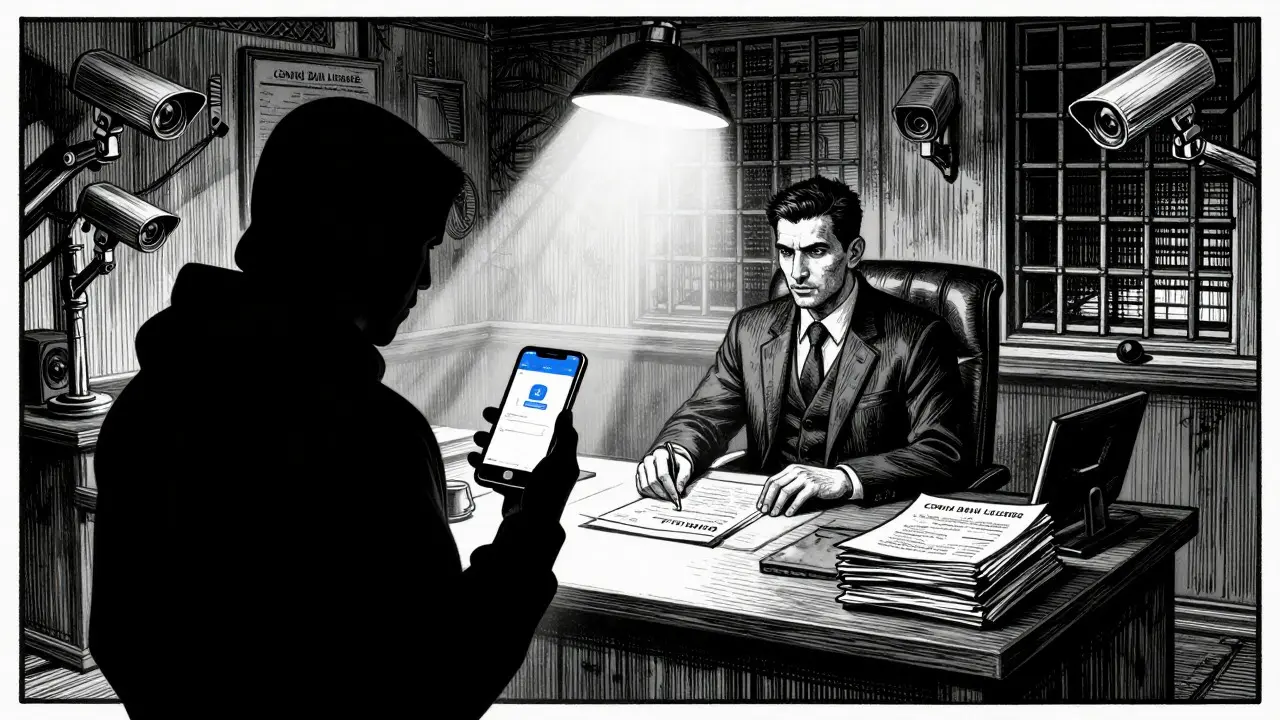
Living under international sanctions changes how a country handles money. For years, Iranians turned to cryptocurrency to bypass financial blockades and protect savings from inflation. But the landscape has shifted dramatically since late 2024. If you are wondering whether crypto is legal or safe to use in Iran today, the short answer is: it is heavily regulated, tightly controlled, and risky for anyone trying to move large amounts of value.
The government no longer ignores digital assets. Instead, it has built a surveillance-heavy framework designed to track every transaction while restricting how citizens can buy, sell, or hold them. This guide breaks down the current rules, what they mean for users, and where the market is heading in mid-2026.
How the Rules Changed in 2025
Until late 2024, the regulatory environment was somewhat ambiguous. People traded freely on local exchanges like Nobitex, and miners operated with little oversight. That changed when the Central Bank of Iran (CBI) blocked all cryptocurrency-to-rial payment channels on December 27, 2024. This move effectively cut off the main way people could convert crypto back into national currency through standard banking systems.
In January 2025, President Masoud Pezeshkian issued a directive that formalized the crackdown. The CBI became the sole authority for licensing and overseeing all crypto activities. Here is what that means in practice:
- Licensing Required: Any business or individual wanting to operate legally in the crypto space must get a license from the Central Bank.
- Government Gateways: All crypto platforms must connect to government-controlled payment gateways. This ensures the state sees every transaction.
- Data Access: The CBI has direct access to all data, statistics, and records related to crypto activity. TRM Labs described this as "unprecedented state surveillance capabilities."
This shift wasn't just about control; it was also about energy. Unauthorized Bitcoin mining had caused rolling power outages in December 2024. The government needed to stop illegal miners from draining the national grid.
Current Restrictions on Users and Traders
If you are an individual looking to trade, the options have narrowed significantly. The most impactful change came in September 2025, when the Central Bank imposed strict caps on stablecoins.
| Restriction Type | Limit | Impact |
|---|---|---|
| Annual Purchase Limit | $5,000 USD equivalent | Prevents large-scale hedging against inflation |
| Maximum Holding Balance | $10,000 USD equivalent | Forces users to diversify or withdraw funds quickly |
| Compliance Deadline | One month from announcement | Existing holders had to reduce balances immediately |
These limits apply to popular stablecoins like Tether (USDT). Why target stablecoins? Because they are the primary tool Iranians use to preserve wealth when the rial loses value. By capping holdings, the government makes it harder for citizens to exit the national currency system entirely.
Additionally, in February 2025, a comprehensive ban on cryptocurrency advertising took effect. You won’t see crypto ads on social media, TV, or billboards. This silence creates an information vacuum, making it harder for new users to learn about risks and opportunities.
The Mining Ban and Energy Crisis
Mining is one of the most contentious areas. While the technology exists, the economic reality is harsh. In 2019, the government required licensed miners to sell their digital assets directly to the Central Bank. At the same time, high energy tariffs were imposed on these operations.
The result? Most legitimate mining moved underground. Miners who didn’t want to deal with low sell prices and high electricity costs went off-grid. This led to the power outages mentioned earlier. Now, enforcement is stricter. The CBI is actively cracking down on unauthorized mining farms, viewing them as threats to national infrastructure rather than just financial participants.
If you are considering mining in Iran, know that you are operating in a hostile environment. Without a license, you risk equipment seizure. With a license, you may find the economics unsustainable due to forced sales and energy costs.
Taxation and Legal Compliance
Regulation isn’t just about restriction; it’s also about revenue. In August 2025, Iran enacted the Law on Taxation of Speculation and Profiteering which imposed capital gains tax on cryptocurrency trading. This was a first for the country.
Now, profits from crypto trades are taxed alongside gold, real estate, and forex. The Ministry of Economic Affairs and Finance plans to integrate crypto tax collection into existing financial reporting systems by Q2 2026. This means your crypto activity will likely show up on official tax forms soon.
For traders, this adds another layer of complexity. You need to keep detailed records of your buys and sells, not just for personal tracking but for legal compliance. Failure to report could lead to penalties under the new speculation laws.
Workarounds and Market Adaptations
Despite the tight controls, the demand for crypto remains high. Iranians are resourceful. When one door closes, they find another window.
After Tether froze 42 Iranian-linked addresses in July 2025, many users panicked. The freeze highlighted the risk of relying on centralized stablecoins. In response, there was a rapid shift toward decentralized alternatives. DAI, a stablecoin running on the Polygon network, saw its usage surge among Iranian users. It offers similar stability to USDT but with less direct exposure to entities that might comply with Western sanctions.
Other common workarounds include:
- VPNs: Many users still access foreign exchanges via virtual private networks to avoid domestic restrictions.
- Decentralized Exchanges (DEXs): Platforms that don’t require identity verification are gaining popularity, though they come with higher technical barriers.
- P2P Trading: Peer-to-peer transactions remain a significant part of the market, often conducted through encrypted messaging apps.
However, these methods carry risks. Using VPNs can be illegal depending on the provider and usage. DEXs can be complex for beginners, leading to lost funds. And P2P trades lack buyer protection.

Geopolitical Risks and Sanctions
You cannot discuss Iran’s crypto market without addressing geopolitics. The United Nations reinstated sanctions through the "snapback mechanism" in September 2025. This directly triggered the Central Bank’s stablecoin restrictions.
There is also concern about secondary sanctions. Economist Mohammad Sadegh Alhosseini warned that if Iranian crypto wallets become easily identifiable, the entire sector could face additional international pressure. Some analysts worry that the Central Bank itself could be held accountable for facilitating sanction evasion.
Furthermore, investigations by groups like the Israeli National Bureau for Counter Terrorist Financing have linked Iranian exchanges to sanctioned entities. This scrutiny increases the likelihood that global companies like Tether will continue freezing accounts associated with Iran.
What Does This Mean for You?
If you are an Iranian resident, the message is clear: proceed with caution. The era of wild west crypto trading is over. The government wants visibility, control, and taxes. Keep your holdings within the $10,000 stablecoin limit, ensure you have proper documentation if you are a business, and consider diversifying into less centralized assets to mitigate freeze risks.
If you are an international observer or investor, understand that Iran’s market is isolated but resilient. It operates largely outside the global mainstream due to sanctions. Engaging with Iranian crypto entities carries significant compliance risks for foreign businesses.
Is it illegal to own cryptocurrency in Iran?
Owning cryptocurrency is not explicitly illegal for individuals, but using it for payments is restricted. The government prohibits the use of foreign-mined cryptocurrencies for domestic transactions. However, holding them for investment purposes is tolerated as long as you comply with reporting and tax requirements.
Can I mine Bitcoin in Iran?
Mining is heavily regulated. Licensed miners must sell their output to the Central Bank at set prices and pay high energy tariffs. Unlicensed mining is illegal and subject to enforcement actions, including equipment confiscation, due to concerns over national energy consumption.
Why did the government limit stablecoin holdings?
The limits aim to prevent capital flight and protect the value of the national rial. Stablecoins like USDT allow citizens to easily move wealth out of the Iranian economy. By capping purchases and holdings, the government tries to maintain monetary control and reduce inflationary pressures.
Are Iranian crypto exchanges safe?
Local exchanges like Nobitex are legal but operate under strict government oversight. They are required to share user data with authorities. While they offer convenience, they pose privacy risks. International exchanges accessed via VPN offer more privacy but may freeze accounts due to sanctions compliance.
Will crypto regulations in Iran loosen in the future?
It depends on geopolitical developments. If nuclear deal negotiations succeed and sanctions are lifted, the need for crypto as a sanction-bypass tool may decrease, potentially leading to different regulations. However, the current trend is toward tighter control and taxation, suggesting restrictions will remain strict through 2027.

the shift to DAI on Polygon is actually pretty smart considering the Tether freezes but most people dont realize that decentralized exchanges have higher slippage and gas fees which eats into your margins when you are trying to hedge against inflation in a volatile market like this
Oh please 🙄 everyone thinks they can outsmart the state with some fancy blockchain tech lol. The government has eyes everywhere now. You think a VPN saves you? They track power consumption patterns to find miners. It’s not a game, it’s a surveillance state nightmare 😱💀
I have been watching these global financial shifts for years and it is clear that the Central Bank of Iran is not just regulating crypto but actively participating in a larger conspiracy to monitor every citizen's movements under the guise of energy conservation
The so-called 'unprecedented state surveillance capabilities' mentioned by TRM Labs are merely the tip of the iceberg. One must consider that the blocking of payment channels was not an accident but a calculated move to force all transactions through government-controlled gateways where data can be harvested and weaponized later. This aligns perfectly with the broader agenda of total societal control seen in other authoritarian regimes.
Furthermore, the taxation laws enacted in August 2025 are clearly designed to crush any remaining economic freedom among the populace. By forcing citizens to report their crypto activities alongside gold and real estate, they create a comprehensive database of wealth distribution. This allows the regime to target specific individuals or groups who might pose a threat to their power structure. It is deeply troubling how easily we accept such infringements on privacy as 'normal' regulation.
We must remain vigilant and question the motives behind these restrictions. Is it truly about preventing capital flight or is it about eliminating the possibility of independent wealth accumulation outside the state's reach? The answer seems obvious to those who look beyond the surface narrative.
so true u guys need to stay safe out there its crazy how fast things change but hey we gotta keep moving forward and finding new ways to protect our savings even if it means using DEXs or P2P trading just be careful!
it really is a complex situation isn't it while i understand the need for caution i also see the resilience of the people involved trying to navigate these strict rules with grace and determination lets hope for better times ahead for everyone affected by these geopolitical tensions