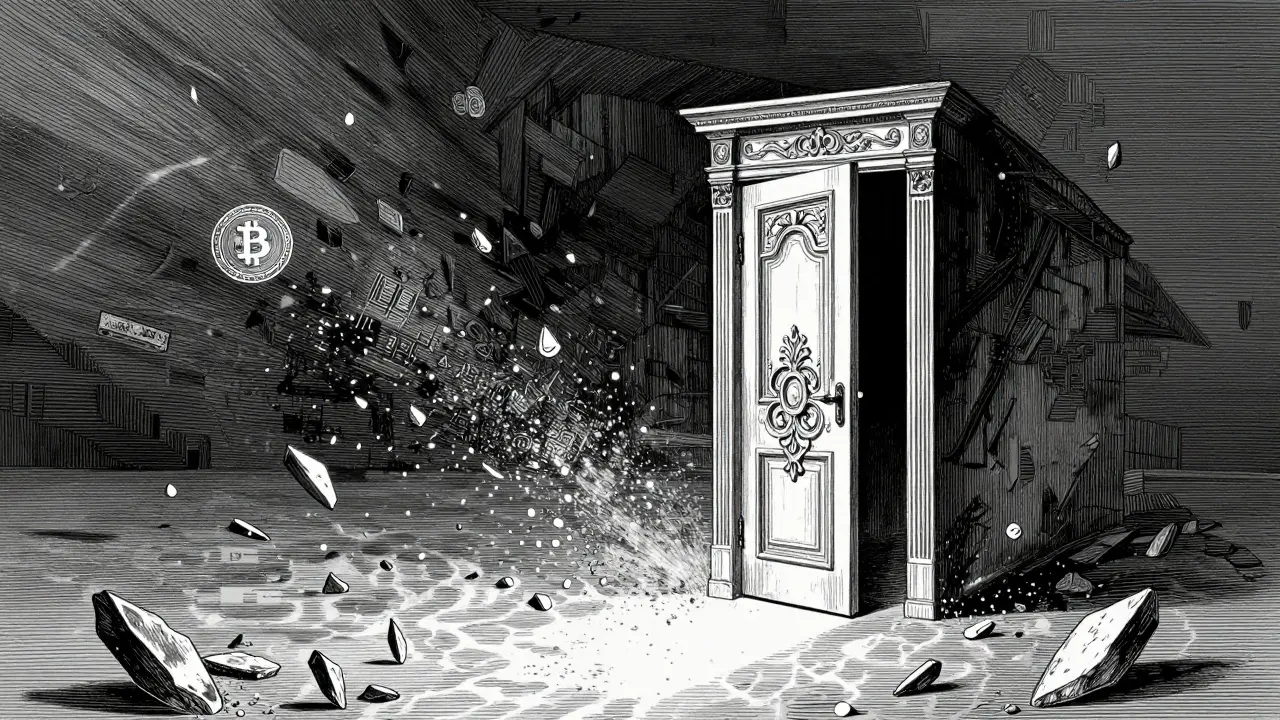
If you're looking for a place to trade your digital assets today, you might have come across the name Kuna.io. However, before you try to create an account or deposit any funds, there is a massive piece of news you need to know: Kuna crypto exchange is no longer operational. The platform officially shut its doors on March 31, 2025. If you're reading this now, the site is essentially a ghost town with a closure notice, and you cannot use it for trading.
Why does this matter? Because Kuna wasn't just any random site; it was a pioneer. It was the first public crypto asset exchange in Ukraine and a major player in Eastern Europe for over a decade. Understanding why it rose to power and eventually collapsed provides a cautionary tale for anyone using regional exchanges today.
Quick Takeaways: The Rise and Fall of Kuna
| Attribute | Details |
|---|---|
| Founded | 2014 by Michael Chobanian |
| Peak User Base | 600,000+ users |
| Core Strength | Fiat-to-crypto pairs for Eastern Europe |
| Closure Date | March 31, 2025 |
| Current Status | Defunct / Non-operational |
The Pioneer of Eastern European Crypto
To understand Kuna, you have to look at the landscape in 2014. Back then, buying Bitcoin in Ukraine wasn't as easy as clicking a button on a global app. Michael Chobanian stepped in to bridge that gap, first with the KUNA Bitcoin Agency and then with the full exchange. For years, it was the go-to spot for anyone in the region to move their local currency into digital assets.
One thing that made Kuna stand out was its 100% reserve ratio. While traditional banks often keep only a tiny fraction of deposits on hand, Kuna claimed to keep every single cent of user funds in reserve. This was a huge selling point for security-conscious traders who were tired of the instabilities of the traditional banking system.
Trading Features and User Experience
At its peak, the platform was designed to be an all-in-one hub. Users could buy, sell, and store assets through a dashboard that provided real-time indicators. It wasn't just about Bitcoin; it supported Ethereum and various stablecoins, offering around 32 different trading pairs. A significant chunk of their volume-over 30%-came from fiat currency pairs, which helped newcomers get started without needing to already own crypto.
They even introduced the "Kuna Code," a system that allowed users to transfer assets between accounts easily. From a design perspective, they actually won the Red Dot Award in 2023, which suggests that on the surface, the app looked great. But as we know, a pretty interface doesn't always mean a smooth experience.
The Red Flags: When Things Went South
If you looked at the reviews from 2023 onwards, the picture gets much darker. While the executives were winning awards, the actual users were struggling. People reported nightmare scenarios with customer support, sometimes waiting over 8 hours just to get a basic question answered. Even worse, withdrawals-the most critical part of any exchange-started taking three or more days.
The reliance on automated bots instead of human support created a wall between the company and its customers. This lack of transparency and operational failure is often a leading indicator that an exchange is struggling with liquidity or regulatory pressure. By the time the closure was announced in early 2025, many users had already been warning others to stay away.
A Legacy of Humanitarian Impact
It would be unfair to talk about Kuna without mentioning its role during the Ukrainian-Russian war. This is where the platform's regional focus became a superpower. Michael Chobanian used the exchange to launch the 'Aid for Ukraine' Crypto Fund, which successfully raised over $75 million for the Ukrainian Armed Forces. This proved that crypto isn't just for speculators; it can be a vital tool for cross-border aid and rapid fund distribution during a crisis.
This humanitarian effort gave Kuna a level of prestige that far outweighed its technical failings. It positioned the exchange as a patriotic entity and a pillar of the local blockchain community, even as its internal operations were crumbling.
Why Regional Exchanges Fail in a Global Market
Kuna's demise is a classic case study in the "Scale or Die" nature of the crypto industry. On one side, you have global giants with massive compliance budgets and technical infrastructure. On the other, you have regional players like Kuna that have great local knowledge but struggle to keep up with evolving global regulations.
As regulatory scrutiny increased worldwide, the cost of staying compliant skyrocketed. For a regional exchange, these costs can eat into margins quickly. Combine that with the operational glitches and the shift toward larger, more stable platforms, and Kuna simply couldn't sustain itself. The closure also took down sister services like KUNA Pay and KUNA Tech, wiping out an entire local ecosystem.
Can I still withdraw funds from Kuna?
No. Kuna officially ceased all operations on March 31, 2025. If you did not withdraw your funds before this deadline, you are likely unable to access them through the standard platform. The website now only displays a closure notice.
Was Kuna a scam?
There is no official evidence that Kuna was a scam in the traditional sense. It was a legitimate business founded in 2014 that served over 600,000 users. However, it suffered from severe operational failures, poor customer support, and liquidity issues toward the end of its life.
Who founded Kuna.io?
The exchange was founded by Michael Chobanian, a prominent figure in the Eastern European crypto scene and former president of the Blockchain Association of Ukraine.
What were the main complaints against Kuna?
The most common complaints included extremely slow customer support, long delays in processing withdrawals (sometimes exceeding 3 days), and an over-reliance on unhelpful automated bots.
Did Kuna support fiat currencies?
Yes, one of Kuna's primary strengths was offering trading pairs with fiat currencies, making it much easier for Ukrainian and Eastern European users to buy crypto using their local money.
What to do next
If you're looking for an alternative to Kuna, the best move is to look for exchanges that have a proven track record of regulatory compliance and transparent reserve reporting (Proof of Reserves). Avoid platforms that have a pattern of delaying withdrawals or ignoring support tickets, as these are the biggest warning signs of a future shutdown.
For those who still have questions about old accounts, your only option is to try contacting their remaining support channels mentioned on the closure notice, though expectations should be low given the platform's history of poor communication.
Oh wow, a "pioneer" that actually knows how to shut down its doors before stealing every last cent. Truly revolutionary stuff right here.
Man, that withdrawal lag is a total red flag for liquidity issues. I feel for the folks who didnt get out in time, its basically a rug pull if the UX is just a ghost town now. Proper proof of reserves shouldve been audited by a third party to avoid this kind of fapi situation with the reserves.
Typical regional failure. :)
It is worth noting that the transition from regional to global compliance is often where these firms fail. The cost of implementing Anti-Money Laundering (AML) and Know Your Customer (KYC) protocols across multiple jurisdictions is immense. For a platform like Kuna, the operational overhead likely exceeded their transaction fee revenue, making the business model unsustainable in the long run. Many users mistakenly equate a professional user interface with financial stability, but as we see here, design awards do not equate to solvent balance sheets. The most critical lesson is that custodial risk is always present unless you move your assets to a hardware wallet. Relying on any exchange for long-term storage is fundamentally risky, regardless of their claimed reserve ratio. The lack of real-time, cryptographically verifiable reserves was the true weakness here. When a company claims 100% reserves but cannot prove it via a public Merkle tree, the claim is essentially meaningless. This serves as a reminder to prioritize transparency over marketing. Always verify the liquidity of an exchange before depositing significant capital. The collapse of regional hubs is a trend we will likely see continue as regulatory moats grow wider.
people who leave money on exchanges deserve to lose it because it is basic common sense to hold your own keys and any professional would know that trusting a company with your funds is a moral failing in the crypto space
Just take a deep breath guys. Its a tough lesson to learn but we can all grow from it. Maybe just look into some cold storage for next time so u dont have to worry bout this stuff
I am literally shaking thinking about the people who lost their life savings here! This is just a total disaster and a complete nightmare for everyone involved! The volatility and the slippage on those final trades must have been absolutely insane!