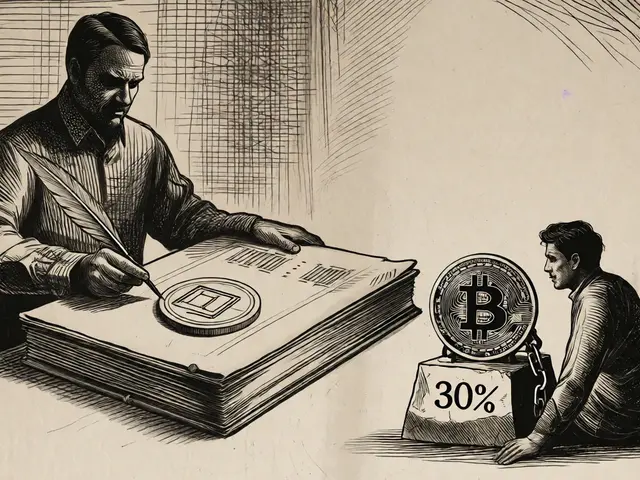
So, you’re an Non-Resident Indian (NRI) holding some Bitcoin or Ethereum, and you’re wondering if you can dodge the taxman in India. Here’s the harsh truth: there are almost no specific crypto tax exemptions for NRIs. In fact, the rules are stricter than they are for traditional investments like mutual funds or real estate. If you thought your non-resident status was a get-out-of-jail-free card for crypto gains, think again.
The landscape changed significantly with updates effective April 1, 2025, and further residency rule shifts coming in 2026. While other asset classes offer NRIs various deductions and rollover benefits, Virtual Digital Assets (VDAs) sit in a high-tax, low-benefit bucket. This article breaks down exactly what you pay, why you don’t get the usual perks, and how to navigate the new 120-day residency rule without getting blindsided by penalties.
The Core Tax Rule: Flat 30% With No Deductions
Let’s start with the biggest pain point. Under Section 115BBH of the Income Tax Act, any profit from transferring VDAs is taxed at a flat rate of 30%. That’s it. It doesn’t matter if you held that coin for two days or ten years. The distinction between short-term and long-term capital gains, which exists for stocks and property, simply vanishes for crypto.
Worse, you can only deduct the cost of acquisition. You cannot offset this gain against losses from other crypto trades. If you made ₹1 lakh profit on Bitcoin but lost ₹50,000 on Ethereum, you still pay 30% tax on the full ₹1 lakh. You also can’t claim expenses like transaction fees, wallet storage costs, or mining electricity bills as deductions. For an NRI managing a global portfolio, this lack of loss set-off is a massive disadvantage compared to residents who might have other income streams to adjust against, though even they face strict limits.
| Feature | Cryptocurrency (VDA) | Traditional Assets (Shares/MF) |
|---|---|---|
| Tax Rate | Flat 30% | Varies (Short-term/Long-term rates) |
| Holding Period Benefit | None | Yes (Lower LTCG rates after 1 year) |
| Loss Set-Off | No (Cannot offset against other income) | Yes (Can offset against other heads) |
| Deductions Allowed | Only Cost of Acquisition | Cost + Indexation (for some assets) |
| Rollover Benefits | Not Applicable | Available under Sections 115F/54 |
Why Section 115F Doesn’t Save You
Many NRIs rely on Section 115F to save tax. This section allows you to reinvest proceeds from selling foreign exchange assets into specified Indian instruments-like bonds, shares, or mutual funds-and defer the tax liability. It’s a powerful tool for wealth preservation.
But here’s the catch: Cryptocurrencies are explicitly excluded from the list of eligible assets for reinvestment under Section 115F. You cannot sell your US-based stock holdings, take the profit, buy Bitcoin in India, and claim a rollover exemption. Similarly, you can’t sell Bitcoin and use the proceeds to buy eligible Indian shares to defer tax. The law treats VDAs as a separate, isolated category with no bridging provisions to traditional tax-saving schemes. If you’re looking for tax-efficient exits, crypto isn’t offering them right now.
The TDS Trap: 1% on Every Sale
Beyond the capital gains tax, there’s Tax Deducted at Source (TDS) under Section 194S. When you sell crypto through an Indian exchange, they must deduct 1% of the sale value as tax. This applies regardless of whether you make a profit or a loss.
For NRIs, this creates cash flow issues. You need to file your Income Tax Return (ITR) to claim back this TDS if your actual tax liability is lower (which is rare given the 30% rate). But if you trade frequently, this 1% gets stuck in the government’s pocket until you file your return. And yes, this applies even if you are a Non-Resident. The threshold for TDS is generally ₹50,000 per financial year for most sellers, but it drops to ₹10,000 for those not filing ITRs in previous years. Keep meticulous records because reconciling this TDS across multiple platforms is a nightmare if you don’t track every transaction ID.

New Residency Rules: The 120-Day Shockwave
This is where things get tricky for 2026. Starting April 1, 2026, India is implementing a new residency test. Previously, you needed to stay in India for 182 days to be considered a resident. Now, if you stay for just 120 days and earn more than ₹15 lakhs from Indian sources, you could be classified as a Resident for tax purposes.
Why does this matter for crypto? Because residency determines the scope of taxation. As a Non-Resident, you are generally taxed only on income accrued or received in India. If you become a Resident due to this new rule, your global crypto gains could potentially fall under Indian tax jurisdiction. Imagine living in Dubai, trading crypto globally, visiting India for four months, and suddenly owing Indian tax on profits made in New York or London. This ambiguity regarding "Indian source" for decentralized transactions is currently being litigated, but the risk is real. If you cross that 120-day mark, consult a tax advisor immediately before making large trades.
Mining, Airdrops, and Gifts: Different Ballgame
Not all crypto acquisitions are treated equally. If you bought Bitcoin, you pay 30% on gains. But what if you mined it, got it as a gift, or received it via an airdrop?
- Mining Rewards: These are often treated as "Income from Other Sources" or business income. They are taxed at your applicable slab rate, not the flat 30%. For high-income NRIs, this could mean paying up to 30-39% (with surcharges), but for others, it might be lower. Crucially, the fair market value at the time of receipt becomes your cost of acquisition.
- Airdrops and Forks: Similar to mining, these are taxable events upon receipt. You must declare the value on the day you received them. If you sell them later, you pay capital gains tax on the difference between the sale price and this recorded value.
- Gifts: If you receive crypto as a gift from relatives, it’s generally tax-free in the hands of the receiver. However, if you sell it later, the cost basis depends on the donor’s original purchase price, not the FMV at the time of the gift. This can lead to higher capital gains taxes if the donor bought low and you sell high.

Practical Strategy for NRIs Today
Given the lack of exemptions, what can you actually do? First, stop expecting tax efficiency from crypto alone. Treat it as a speculative asset with a known 30% tax drag. Second, keep your residency status clear. Track your days in India meticulously using passport stamps and flight tickets. If you are close to the 120-day limit, consider staying out longer to maintain Non-Resident status, thereby limiting Indian tax exposure to only India-sourced gains.
Third, use offshore exchanges carefully. Transactions on foreign platforms may not trigger automatic TDS, but you are still liable to report the income and pay tax if it’s deemed Indian-sourced or if you become a resident. Don’t assume "no TDS" means "no tax." Finally, document everything. Since you can’t offset losses, your primary goal is accurate reporting to avoid penalties. Penalties for under-reporting VDA income can be severe, including fines up to 300% of the tax sought to be evaded.
Frequently Asked Questions
Can NRIs offset crypto losses against other investment gains?
No. Under current Indian tax laws, losses from Virtual Digital Assets (VDAs) cannot be set off against any other head of income, including capital gains from stocks or mutual funds. Nor can you offset crypto losses against crypto gains from different coins. Each profitable transaction stands alone for tax calculation.
Does the 1% TDS apply if I trade on a foreign exchange?
Technically, Section 194S mandates TDS on transfers of VDAs. However, foreign exchanges typically do not deduct TDS for Indian users. As an NRI, you are still responsible for calculating and paying the tax when you file your ITR. Failure to report these transactions can lead to penalties, even if no TDS was deducted at source.
Are crypto gifts from relatives taxable for NRIs?
Receiving crypto as a gift from a relative is generally exempt from tax in the hands of the recipient. However, when you eventually sell that crypto, the capital gains tax will be calculated based on the original donor's cost of acquisition, not the fair market value at the time of the gift. This can result in a larger taxable gain.
What happens if I become a resident due to the 120-day rule?
If you meet the criteria for residency under the new rules effective April 2026, your global income, including crypto gains earned abroad, may become taxable in India. This is a significant shift from the current NRI status, where only India-sourced income is taxed. You should plan your travel and income sources carefully to manage this risk.
Is there any benefit to holding crypto in an NRE account?
NRE accounts hold foreign currency earnings tax-free in India, but crypto gains are not automatically routed through them unless converted to INR. The tax liability arises on the transfer of the asset itself, regardless of the bank account used. The key factor is the nature of the income (capital gains) and your residential status, not the account type.