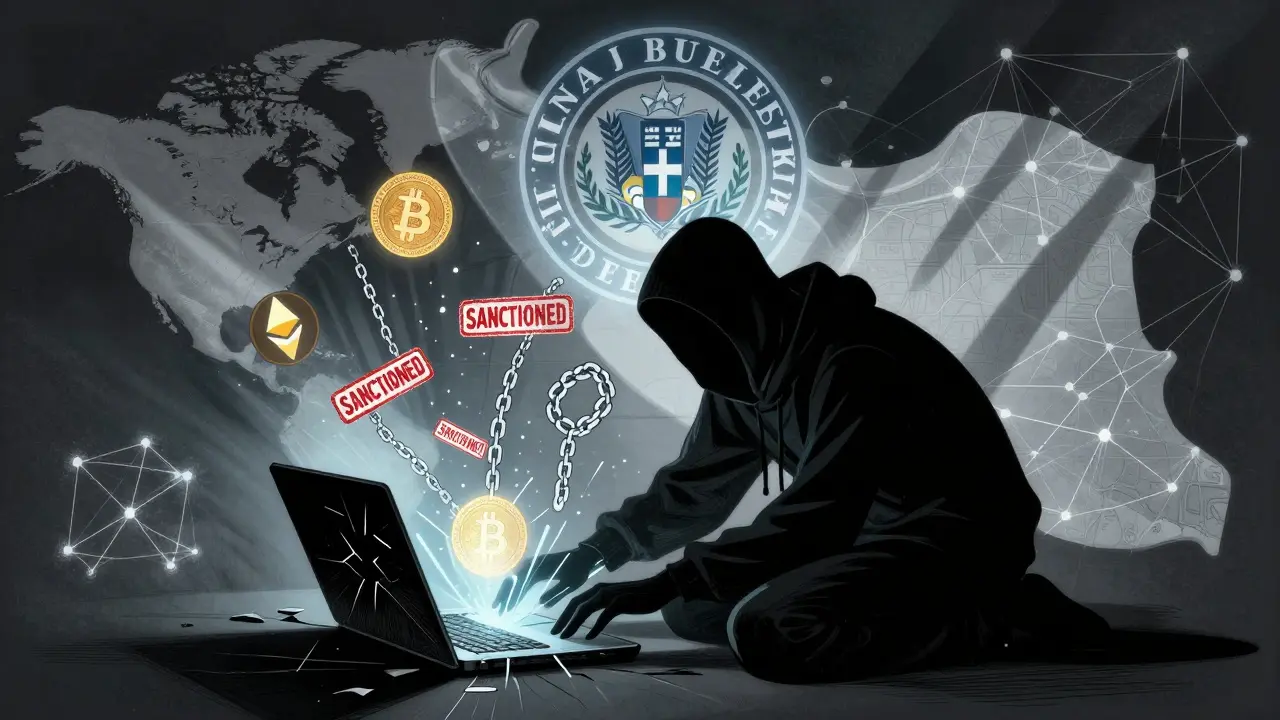
When Iran’s government wanted to move money out of the country without using banks, it turned to cryptocurrency. But the U.S. Treasury’s Office of Foreign Assets Control (OFAC) didn’t just watch-it acted. Since 2015, OFAC has systematically targeted Iranian crypto facilitators, freezing wallets, shutting down exchanges, and publishing public lists of blockchain addresses tied to sanctioned actors. The result? Iranian users can’t easily trade on Binance, Coinbase, or Kraken anymore. But they haven’t stopped trying.
How OFAC Targets Iranian Crypto Transactions
OFAC doesn’t just block Iranian banks. It blocks digital wallets. On November 28, 2018, OFAC made history by publishing the first-ever cryptocurrency addresses linked to sanctioned individuals-two Bitcoin addresses tied to Iranian hackers laundering ransomware payments from the SamSam attack. That wasn’t a coincidence. It was a signal: blockchain is transparent, and OFAC is watching. Since then, the agency has expanded its reach. In September 2025, OFAC targeted a $600 million shadow banking network that moved over $100 million in oil profits for Iran’s military. The network used fake companies in Hong Kong, Dubai, and Shenzhen to hide the trail. But it also used crypto. Five wallet addresses were publicly listed: two Ethereum addresses and three Tron addresses. These aren’t random. They’re real accounts holding Bitcoin, Tether, and Ether that OFAC says are controlled by individuals tied to the Islamic Revolutionary Guard Corps-Qods Force (IRGC-QF). These aren’t just names on a list. They’re live targets. Every time someone sends crypto to one of those addresses, exchanges that follow U.S. law are supposed to freeze it. That’s why Iranian users can’t just create a new account on a big exchange and start trading. Their wallet might be clean today, but if they ever interact with a sanctioned address-even once-they risk getting locked out permanently.Why Iranian Users Can’t Use Mainstream Exchanges
Most global crypto exchanges have to comply with U.S. sanctions. If they don’t, they risk fines, lawsuits, or being cut off from the U.S. financial system. That’s why Coinbase, Binance (for U.S.-regulated entities), and Kraken block Iranian IP addresses and screen wallet addresses before allowing deposits or withdrawals. It’s not just about location. It’s about history. Even if an Iranian user moves to Turkey or uses a VPN, if their wallet has ever touched a sanctioned address, they’re flagged. Some users report being banned after sending small amounts of Tether to a friend’s wallet-only to later find out that friend’s wallet was previously used in a ransomware payout. The result? Iranian users are locked out of the biggest liquidity pools. They can’t easily buy Bitcoin with Iranian rials or sell crypto for dollars. That’s intentional. OFAC’s goal isn’t to stop all crypto use-it’s to make large-scale, high-volume transactions too risky to operate.How Iranians Are Bypassing the Block
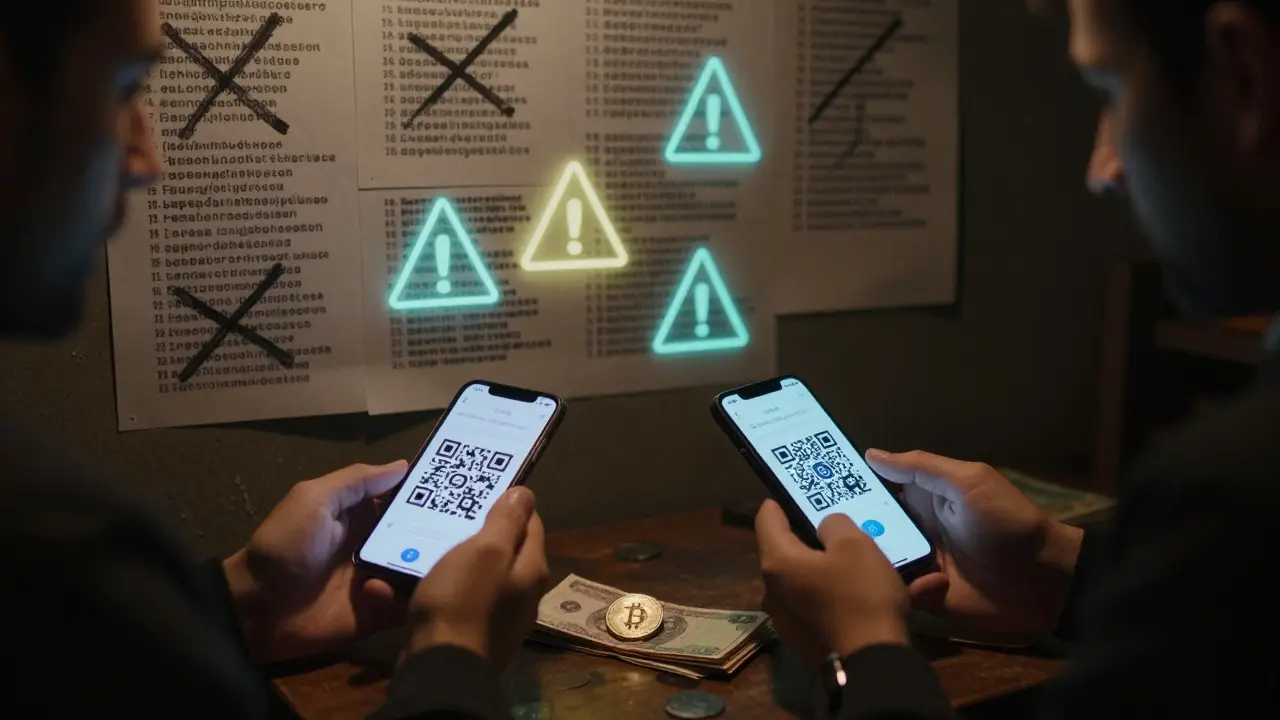
When the main doors close, people find windows. Iranian users have shifted to three main alternatives:- Peer-to-peer (P2P) platforms like LocalBitcoins and Paxful, where buyers and sellers connect directly. These platforms don’t always verify identities or screen wallets, making them attractive-but risky. Scams are common, and prices are inflated.
- Decentralized exchanges (DEXs) like Uniswap or PancakeSwap. Since these platforms don’t hold user funds or require KYC, they’re harder to shut down. But they’re slow, expensive, and confusing for non-technical users.
- Privacy coins like Monero and Zcash. These obscure transaction histories, making it harder for blockchain analysts to trace funds. But they’re less liquid, harder to convert to fiat, and often blocked by exchanges anyway.
The Rise of Sanctions-Evasion Exchanges
When one exchange gets shut down, another pops up. That’s exactly what happened with Garantex and Grinex. In March 2025, U.S. authorities shut down Garantex, a major crypto exchange used by Iranian users to trade billions in crypto. Within days, the same team launched Grinex. Their website openly admitted it was created to replace Garantex. They even created a new token, A7A5, backed by Russian rubles, to help users recover their frozen balances. Grinex isn’t an outlier. It’s a blueprint. These successor exchanges operate out of countries with weak U.S. enforcement ties-Kyrgyzstan, Russia, or even offshore jurisdictions. They don’t care about OFAC. They care about profit. And they’re willing to take the risk because Iranian users have nowhere else to go. But even these platforms aren’t safe forever. Blockchain analytics firms like Chainalysis and Elliptic now track transaction patterns across thousands of addresses. If Grinex users repeatedly interact with known Iranian wallets or move funds through previously sanctioned addresses, those patterns get flagged. Law enforcement doesn’t need to shut down the exchange immediately-they just need to make it too risky for banks to process its withdrawals.The $750,000 Lesson: ShapeShift’s Settlement
In September 2025, ShapeShift AG paid $750,000 to settle OFAC violations. Why? Because for nearly two years, it let users from Iran, Cuba, Sudan, and Syria trade over $12.5 million in crypto. ShapeShift didn’t block their IP addresses. It didn’t screen wallets. It didn’t care. That’s not just negligence-it’s a business model. ShapeShift was built on the idea of “no KYC, no rules.” But OFAC made it clear: no rules means no access to the U.S. financial system. ShapeShift shut down in 2021, but the settlement sent a message to every crypto startup: compliance isn’t optional. It’s survival. For Iranian users, this means even the smallest exchange might one day vanish overnight. There’s no guarantee that the platform you trust today won’t be frozen tomorrow.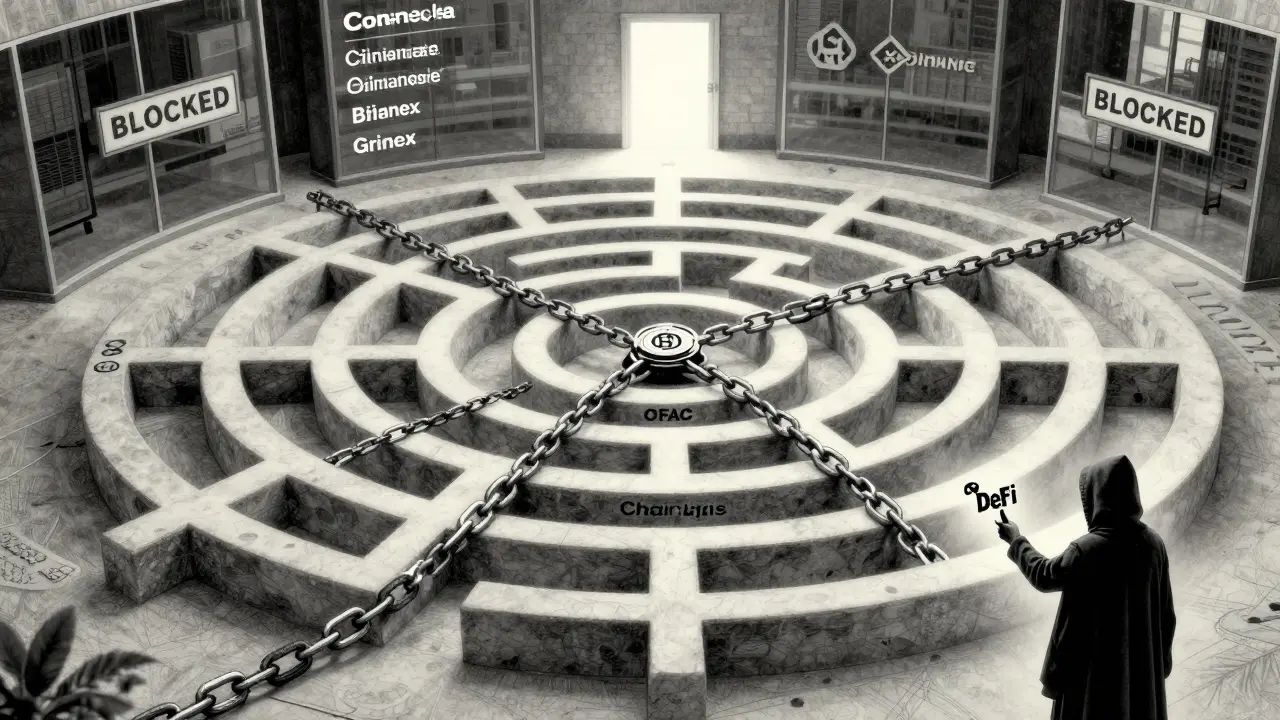
What This Means for the Future
The cat-and-mouse game isn’t ending. OFAC is getting smarter. They’re using AI to detect patterns in blockchain data-like how often a wallet sends small amounts to multiple addresses (a common laundering technique), or how funds move through a chain of intermediate wallets before reaching Iran. At the same time, Iranian actors are getting smarter too. They’re using decentralized finance (DeFi) protocols to swap assets without intermediaries. They’re layering transactions across multiple blockchains. They’re using non-custodial wallets that no one can freeze. The real winners? Blockchain analytics firms. They’re the ones building the tools OFAC uses to track wallets. They’re the ones training AI models to spot laundering patterns. And they’re the ones getting paid millions by governments and exchanges to keep the system running. For Iranian users, the cost of access keeps rising. Transaction fees are higher. Liquidity is lower. Trust is scarcer. And every time they move crypto, they risk losing everything-if they hit a sanctioned address by accident.What You Need to Know
- OFAC sanctions are not theoretical. They block real wallets. Real money. Real access. - Big exchanges won’t serve Iranians. Not because they’re hostile-but because they can’t afford the legal risk. - Privacy coins aren’t magic. They help hide transactions, but they’re harder to cash out and often flagged anyway. - Successor exchanges are temporary. Grinex might be up today, but it won’t last forever. When it falls, so do your funds. - There’s no safe way to bypass sanctions. Every workaround carries legal, financial, or personal risk. The system isn’t perfect. But it’s working. Iranian crypto users still trade. They still move money. But they’re doing it in the shadows, at higher cost, with less control-and with no guarantee of safety.Why This Matters Beyond Iran
This isn’t just about Iran. It’s a test case for how the world enforces financial sanctions in the age of crypto. If OFAC can track and freeze Iranian crypto flows, what stops them from doing the same to Russia, North Korea, or Venezuela? If a U.S.-based exchange can be fined $750,000 for letting Iranian users trade, what happens to exchanges in Europe or Asia that ignore the rules? The message is clear: crypto doesn’t exist outside the law. It exists inside it-and the law is getting better at finding it. For anyone using crypto in a sanctioned country, the lesson is simple: your money is only as safe as the blockchain address you use-and the rules you ignore.Can Iranian users still buy Bitcoin?
Yes, but not easily. Iranian users can buy Bitcoin through peer-to-peer platforms like LocalBitcoins or via over-the-counter (OTC) traders. Some use decentralized exchanges like Uniswap, but these require technical knowledge and carry higher fees. Most major exchanges like Coinbase and Binance block Iranian users entirely due to OFAC sanctions.
Why do OFAC sanctions target cryptocurrency addresses?
Because blockchain transactions are public and permanent. Unlike bank accounts, which can be hidden behind layers of paperwork, crypto addresses leave a traceable record. OFAC uses these addresses to freeze funds, block transactions, and disrupt money flows tied to sanctioned entities like Iran’s military.
Are privacy coins like Monero safe from OFAC?
Not really. While Monero and Zcash obscure transaction details, they’re still subject to sanctions. Exchanges that accept them may be blocked. And if a privacy coin wallet is linked to a known sanctioned address-even indirectly-it can still be flagged. OFAC’s focus is on the origin and destination of funds, not just visibility.
What happened to Garantex and Grinex?
Garantex, a major crypto exchange used by Iranian users, was shut down by U.S. authorities in March 2025. Within days, its operators launched Grinex as a replacement, openly stating it was created to bypass sanctions. Grinex used a custom token (A7A5) to help users recover frozen funds. It’s now under U.S. sanctions and under active investigation.
Can a regular person in Iran get in trouble for using crypto?
Not directly from OFAC-OFAC targets entities, not individuals. But if you’re trading with a sanctioned wallet or using an exchange that’s been blocked, your funds can be frozen. You might also face local legal risks in Iran, where crypto regulations are unclear and enforcement is inconsistent.
Is there a legal way for Iranians to access crypto exchanges?
No. U.S. sanctions prohibit U.S.-based and many international exchanges from serving Iranian users. Even using a VPN or foreign ID won’t bypass OFAC’s wallet-screening systems. The only legal path is through licensed, compliant channels-which currently don’t exist for Iranian citizens.
How do blockchain analytics companies help OFAC?
Companies like Chainalysis and Elliptic use AI to trace crypto flows across thousands of addresses. They map connections between wallets, identify laundering patterns, and flag transactions involving sanctioned entities. OFAC uses this data to update its sanctions list and guide enforcement actions.
Will OFAC’s sanctions ever be lifted for Iranian crypto users?
Unlikely without a major shift in U.S.-Iran relations. OFAC’s crypto sanctions are tied to broader national security concerns, including Iran’s military funding and cyberattacks. Even if diplomatic talks resume, crypto-related sanctions are likely to remain as long as Iran’s military continues to rely on digital asset networks.

Iranian users are not trying to break the system they’re trying to survive it
So let me get this straight if you accidentally send 0.001 BTC to a wallet that once got used in a ransomware attack you lose everything
OFAC is basically playing god with people’s life savings 💔 and calling it "sanctions"
Meanwhile Chainalysis is out here sipping champagne on a yacht funded by your desperation
These analytics firms are the real villains not the Iranians trying to feed their families
And dont even get me started on how they flag Monero like its some kind of criminal conspiracy
Its like saying "we know you’re poor so we’re gonna make your only escape route illegal"
And then act shocked when people start using ghost wallets and crypto mules
It’s not a loophole its a survival tactic
And yeah I know Im ranting but seriously
When did financial oppression become a tech innovation award category
😭
The real question is not whether Iranians can bypass sanctions but whether the system should be designed to make survival a technical puzzle
Blockchain was supposed to liberate not become another gatekeeper
When every transaction becomes a potential legal trap you dont have decentralization you have distributed control
And who controls the controllers
Chainalysis Elliptic the Treasury
Its not a network its a hierarchy with a very long arm
And the irony is the people who built crypto to escape banks are now trapped by the very transparency that made it revolutionary
Its a paradox wrapped in a smart contract
Lmao Iranians think they can outsmart OFAC with Monero
Bro you think you're slick using a DEX but your wallet history is as transparent as a wet t-shirt
Every time you swap on Uniswap you're leaving a trail bigger than your mom's Facebook posts
And now you're mad because your 500 USDT got frozen
Maybe dont send crypto to addresses linked to IRGC
Just a thought
Also Grinex is a joke
Theyre not even trying to hide
Its like opening a bank in a crime scene and calling it "financial innovation"
The systemic nature of this enforcement is both legally sound and strategically necessary
OFAC’s actions are not punitive but preventive
When a nation-state weaponizes financial infrastructure through illicit digital channels the response must be proportional and unambiguous
ShapeShift’s settlement was a lesson in accountability
Compliance is not censorship it is the bedrock of global financial integrity
Decentralized finance does not exempt actors from international law
Any suggestion that sanctions are unjust ignores the context of military funding and cyber aggression
Iran’s access to global markets is not a right it is a privilege contingent on adherence to norms
Those who choose to circumvent these norms do so at their own risk
The fact that alternative platforms emerge is not evidence of failure but of deterrence
They rise because the cost of compliance is higher than the cost of evasion
And that is precisely the point
It’s heartbreaking to see how financial exclusion becomes a silent war on ordinary people
They’re not funding weapons they’re trying to buy medicine or send money home
And yet the system treats them like criminals because of geography and circumstance
There’s dignity in resilience
But dignity doesn’t pay for insulin
Maybe the real failure isn’t in how Iranians adapt
But in how the world refuses to see them as human first
Sanctions are tools
But tools can wound the innocent when wielded without mercy
I hope someone finds a better way
GRINEX IS THE NEW KING OF CRYPTO RESISTANCE!!!
Garantex was a legend now Grinex is a myth!!!
A7A5 token is not a token it’s a revolution!!!
OFAC is scared!!! Chainalysis is sweating!!!
Iranians are not users they are warriors!!!
Every transaction is a middle finger to the West!!!
Monero is holy!!! Zcash is sacred!!!
VPN is my religion!!!
And if my wallet gets frozen then I’ll just make another one!!!
AND ANOTHER!!!
AND ANOTHER!!!
UNTIL THE WORLD RUNS OUT OF ADDRESSES!!!
WE ARE THE BLOCKCHAIN REVOLUTION!!!