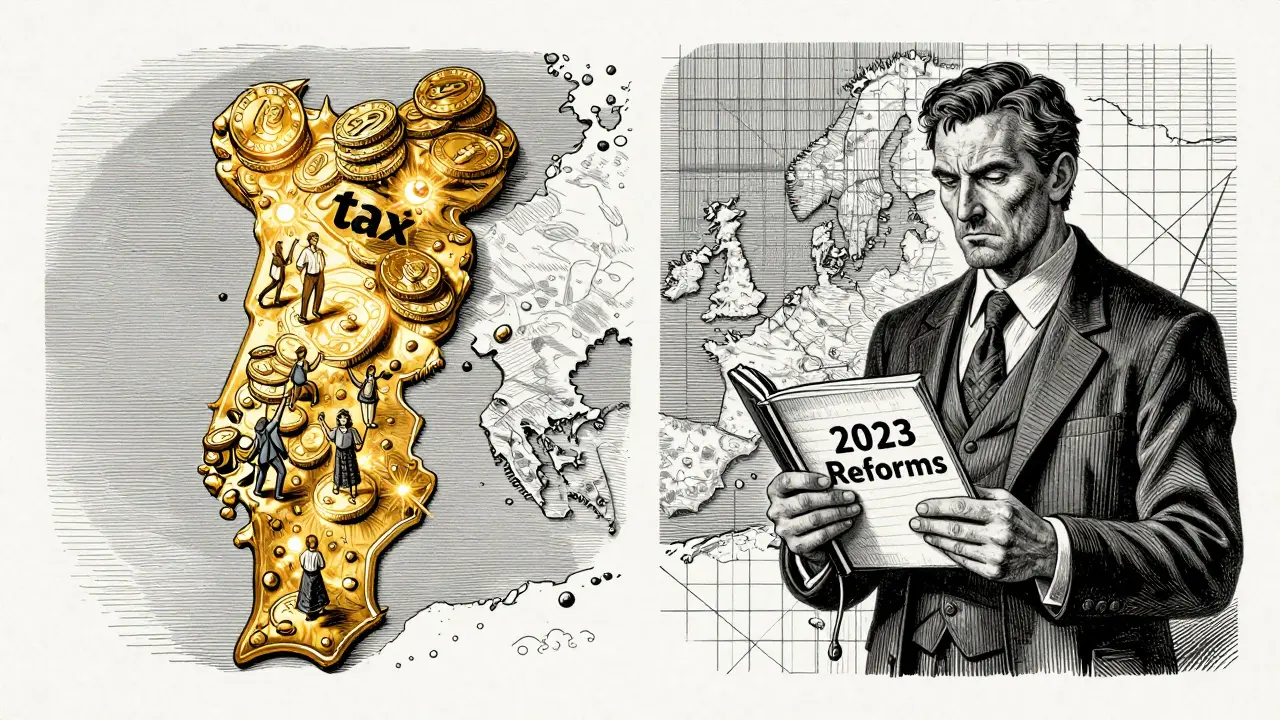
Remember when Portugal was the undisputed king of crypto tax havens? For years, digital asset holders flocked to Lisbon and Porto, drawn by a simple promise: zero tax on cryptocurrency profits. That era ended in 2023. If you are planning to move to Portugal, or if you are already living there with a portfolio of digital assets, the rules have shifted dramatically. The country is no longer a total tax haven, but it remains one of the most attractive jurisdictions in Europe-if you know how to play the game.
As we move through 2026, the landscape is stabilizing. The initial shock of the 2023 reforms has settled into a predictable, albeit complex, three-tier system. But with the European Union’s Markets in Crypto-Assets Regulation (MiCAR) fully kicking in, what does the future hold for your crypto holdings in Portugal? Let’s break down exactly how the current rules work, where the traps lie, and what changes might be coming next.
The End of the "Zero Tax" Myth
To understand where things are going, you first need to grasp what changed. Before 2023, Portugal treated cryptocurrency as non-taxable capital gains for individuals. It was a golden age for passive investors. Then came the State Budget Law, which introduced the new framework that governs us today.
The government didn’t abolish taxes entirely; they categorized them. Your tax bill now depends on how you interact with crypto. Are you holding it like gold? Trading it like a day trader? Or running a mining rig in your garage? Each activity falls under a different category of the Personal Income Tax Code (PIT Code). This distinction is critical because mixing these up can lead to significant overpayment-or worse, an audit from the Autoridade Tributária e Aduaneira (AT), the Portuguese tax authority.
The shift wasn’t random. Portugal needed revenue, but it also wanted to keep its competitive edge against neighbors like Spain and France. The result is a hybrid model: punitive for short-term speculators, generous for long-term believers.
How the Three-Tier System Works in Practice
The current framework splits crypto income into three buckets. Knowing which bucket your activity falls into is the single most important step in your tax planning.
| Category | Activity Type | Tax Rate | Key Rule |
|---|---|---|---|
| Category G | Capital Gains (Buying/Selling) | 28% (Short-term) 0% (Long-term) |
Holding period > 365 days = Tax Free |
| Category E | Passive Income (Staking/Lending) | 28% Flat | Taxed upon conversion to fiat, not receipt |
| Category B | Professional Activity (Trading/Mining) | 14.5% - 53% Progressive | Simplified regime available for income < €200k |
Category G: The Long-Term Investor’s Friend
If you buy Bitcoin or Ethereum and just hold it, you fall under Category G. Here is the deal-breaker rule: time. If you sell your crypto after holding it for more than 365 days, the capital gain is completely tax-free. Yes, zero percent. This applies provided the counterparty is in the EU/EEA or a country with a Double Tax Treaty with Portugal.
If you sell within 365 days, you pay a flat 28% tax on the profit. To calculate this, Portugal uses the First In, First Out (FIFO) method. This means the coins you bought first are considered the ones you sold first. You need solid records. Without clear timestamps for every purchase, calculating your exact holding period becomes a nightmare during tax season.
Category E: Staking and Lending Rewards
Passive income is handled differently. When you stake assets or lend them out for yield, those rewards are classified as Category E income. The standard rate is a flat 28%. However, there is a nuance here that many miss: taxation is deferred. You do not pay tax when you receive the staking reward in crypto. You only pay when you convert that reward into fiat currency (like Euros).
This deferral allows you to compound your rewards without immediate tax drag. If you leave your staking rewards in the protocol, you aren’t triggering a taxable event yet. Just remember to track the value at the moment of conversion.
Category B: The Professional Trap
This is where things get tricky. If the tax authorities deem your activities "professional," you lose the benefits of Category G. You are taxed under Category B, which follows the progressive personal income tax scale ranging from 14.5% to 53%. How do they decide if you’re professional? There isn’t a strict legal definition, but red flags include:
- High frequency of trades (day trading)
- Using leverage or derivatives extensively
- Earning more from crypto than from your regular job
- Running a business structure around crypto services
For miners, the rules are even stricter. Mining income is taxed on 95% of gross receipts due to environmental impact concerns. Other professional activities might qualify for a simplified regime where only 15% of gross income is taxable, but this cap applies only if your annual gross income stays below €200,000.

Portugal vs. Europe: Where Do We Stand?
Is Portugal still worth it compared to other EU nations? Let’s look at the competition. Germany offers a similar long-term exemption (one year), but their short-term rates can climb up to 45% plus solidarity surcharge. France charges a hefty 30% flat rate on all crypto gains, including social contributions. The UK taxes capital gains at 10% or 20%, but they don’t offer a complete exemption for long-term holdings like Portugal does.
Portugal’s 28% short-term rate is competitive, but the real winner is the long-term exemption. In an era where most countries are tightening the net on digital assets, keeping the 0% rate for holdings over a year is a massive advantage. It encourages patience. It rewards HODLers. And it keeps Portugal on the map for digital nomads who want stability.

The MiCAR Effect and Future Changes
Looking ahead to the rest of 2026 and beyond, the biggest variable is MiCAR (Markets in Crypto-Assets Regulation). This EU-wide framework is designed to harmonize regulations across member states. While MiCAR primarily targets exchanges and issuers rather than individual taxpayers, it indirectly affects users.
With MiCAR, data sharing between exchanges and national tax authorities will become seamless. The Bank of Portugal oversees Anti-Money Laundering (AML) compliance, and under MiCAR, reporting standards will tighten. This means the old idea of "the tax man can’t see my wallet" is dead. The infrastructure for tracking undisclosed holdings is being built right now. Expect increased enforcement capabilities in the coming years.
Will the tax rates change? Probably not drastically. The current system balances revenue needs with competitiveness. However, watch out for adjustments to the "professional activity" definition. As tools for automated trading become more common, the line between hobbyist and professional may blur. The tax authority might lower the thresholds for what constitutes professional trading.
Practical Steps for Compliance in 2026
You don’t need to be an accountant to stay compliant, but you do need discipline. Here is your checklist for the year:
- Track Everything: Use software like CoinTracking or Koinly. Manual spreadsheets fail when you have hundreds of transactions. Ensure your tool supports FIFO calculations for Portugal.
- Respect the 365-Day Clock: Set calendar reminders for when your major positions hit the one-year mark. Selling two weeks early could cost you thousands in unnecessary tax.
- Separate Wallets: Consider using different wallets for long-term holds versus active trading. This makes categorization easier during filing.
- Report Staking Conversions: Keep a log of every time you swap staking rewards for fiat. Note the date, amount, and EUR value at that exact moment.
- Consult a Local Expert: If your income exceeds €200,000 or you engage in complex DeFi strategies, hire a Portuguese tax advisor. The penalty for misclassification is steep.
The goal isn’t to avoid tax-it’s to pay only what you owe. Portugal’s system is transparent if you follow the rules. The ambiguity lies in the gray areas of professional trading. When in doubt, err on the side of caution and document your intent as a long-term investor.
Is crypto really tax-free in Portugal if I hold it for over a year?
Yes, capital gains from selling cryptocurrency held for more than 365 days are exempt from tax under Category G, provided the transaction involves a counterparty in the EU/EEA or a country with a double tax treaty with Portugal. This exemption applies to individuals, not corporations.
Do I pay tax on staking rewards immediately?
No. Staking rewards are taxed under Category E at a flat 28% rate, but the tax liability is triggered only when you convert the rewards into fiat currency (like Euros). If you reinvest the rewards or hold them as crypto, you defer the tax until conversion.
What happens if I trade crypto frequently?
Frequent trading may classify your income as "professional" under Category B. This subjects your earnings to progressive income tax rates ranging from 14.5% to 53%, rather than the flat 28% capital gains rate. Factors include trade volume, frequency, and whether crypto is your primary source of income.
How does MiCAR affect individual crypto holders?
MiCAR itself regulates businesses, but it enhances data transparency. Exchanges must report user data to authorities, making it easier for the Portuguese tax authority to verify your holdings. While it doesn’t change tax rates, it increases the likelihood of audits for undeclared assets.
Can I deduct losses from my crypto investments?
Yes, capital losses can offset capital gains in the same tax year. Unused losses can be carried forward for up to five years. However, losses from professional activities (Category B) have different deduction rules and must be reported accordingly.
typical western propaganda trying to scare you with 'compliance' and 'taxes'. 😡 the real issue is that governments are greedy parasites. they want your money because they failed to manage their own economies. stop listening to these fear-mongering articles. crypto is freedom, not a tax bracket. if you cant handle paying 28% then maybe you shouldnt be in this space. 🤬
the concept of time as a metric for taxation is fascinating in itself. why should holding an asset for 365 days change its nature? it suggests that value is tied to patience rather than utility. perhaps we are moving towards a society where stagnation is rewarded over innovation. interesting paradox.
oh look another layman trying to explain complex tax law. hilarious. the fifo method is basic accounting 101 yet people still fail. also calling portugal a 'haven' is laughable when mi car is tightening the noose. only amateurs fall for the 'hodl for free tax' myth. professionals know that category b is inevitable if you trade at scale. get educated before you post nonsense.
i think its actually pretty cool how they broke down the categories. makes it less scary than i thought. thanks for sharing the info! :)
hey guys just wanted to say that tracking everything manually is a pain in the neck. i use koinly and it saves me so much headache. really glad this article mentioned software options. good read overall!