
Think about how many times you've had to reset a password this year or how much personal data you've handed over to a website just to prove you're over 18. Most of us have just accepted that our digital lives are scattered across dozens of corporate servers, creating massive "honey pots" of data that hackers love. In 2022 alone, over 4,000 data breaches exposed 1.2 billion records. It's a broken system. But there is a way to flip the script: Decentralized Identifier is a W3C-standardized type of identifier that lets you own and control your digital identity without needing a central authority like Google or a government agency to vouch for you. Also known as DID, this technology moves the power from the platform to the person.
The Core Components of the DID Ecosystem
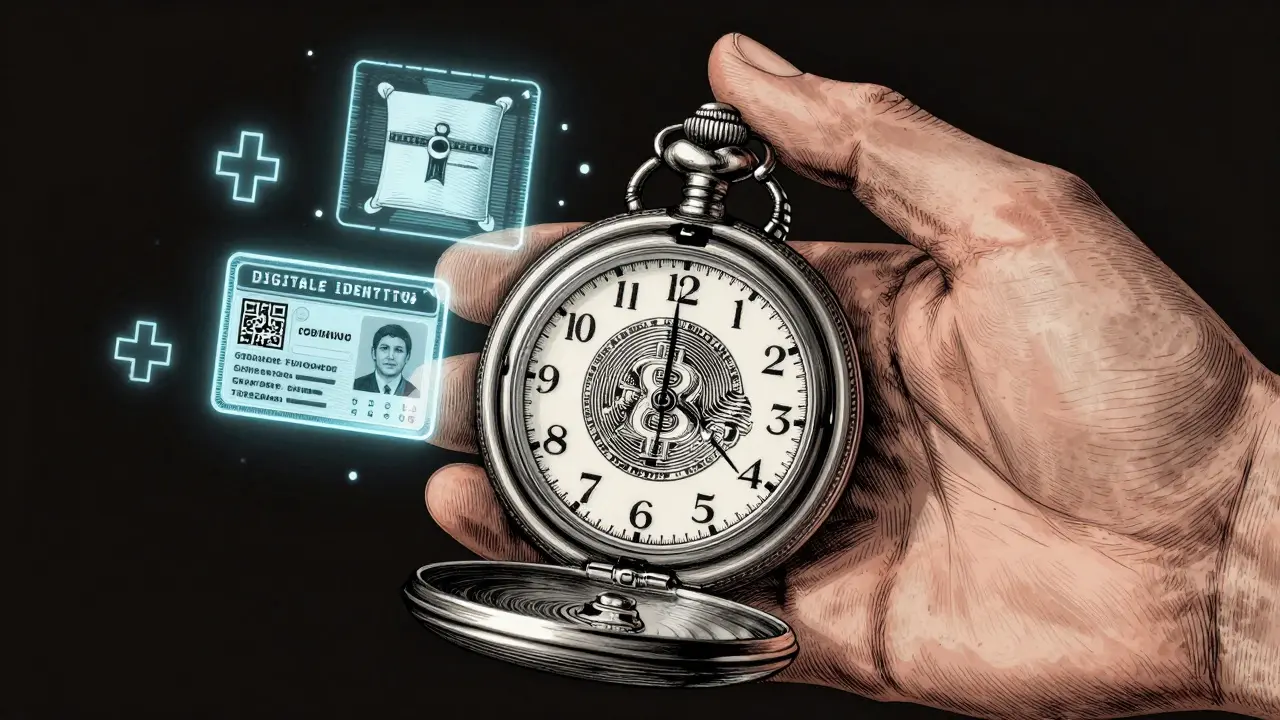
Before we look at how this works in the wild, we need to understand the three-part engine that makes it possible. You can't have one without the others. First, you have the DID itself, which is essentially a digital passport number stored on a blockchain. Second, there are Verifiable Credentials, which are cryptographically signed digital versions of real-world documents, like a diploma or a driver's license, that can be instantly verified without contacting the issuer. Finally, you have the Digital Identity Wallet, which is a secure app, such as Microsoft Authenticator or Trust Wallet, where you store these credentials and choose exactly what to share.
Imagine you're at a bar. Instead of handing over your entire driver's license-which reveals your home address, full name, and exact birth date-you simply show a QR code from your wallet. The bar's scanner confirms a "Yes" for the attribute "Over 21" without ever seeing your address. That is the magic of selective disclosure.
High-Impact Use Cases Across Industries
DIDs aren't just a theoretical concept for tech enthusiasts; they are being deployed in sectors where trust and security are non-negotiable. The shift is most visible in three main areas: government, finance, and healthcare.
Government and Public Services
Governments are moving away from clunky portals and toward "mobile-first" identity. A prime example is the European Blockchain Services Infrastructure (or EBSI), which is an EU-wide project allowing citizens to share professional credentials across borders instantly. In the U.S., the State of Colorado launched a DID-based driver's license system in June 2024, which already has 150,000 active users. Instead of spending three to five days on manual cross-border verification, these systems can confirm identity in under two minutes.
Financial Services and KYC
Banking is perhaps the most eager adopter. The traditional Know Your Customer (KYC) process is a nightmare of paperwork and redundant checks. By using DIDs, a user can complete a KYC check with one bank and carry that "verified" status to another institution without re-submitting every document. Mastercard's Identity Check Mobile has already scaled this to 8.7 million users across 32 countries, drastically reducing the friction of opening new accounts.
Healthcare and Patient Data
Healthcare is a goldmine for data breaches, but DIDs allow patients to hold their own medical records. Instead of a hospital "owning" your record, you carry your immunization history or prescription list in your wallet. When you visit a new specialist, you grant them temporary access to specific records. This eliminates the risk of a single hospital breach exposing millions of patient files.
| Feature | Centralized (Traditional) | Decentralized (DID) |
|---|---|---|
| Control | Owned by the provider (e.g., Google) | Owned by the individual |
| Data Storage | Centralized Databases (Honeypots) | Distributed Ledgers / Local Wallets |
| Verification Speed | Days (Manual/API requests) | Milliseconds (Cryptographic) |
| Privacy | Full data disclosure required | Selective disclosure (Zero-Knowledge) |
| Security Score (Gartner 2024) | 3.2 / 5 | 4.6 / 5 |
The Technical Reality: How It Actually Works
If you look under the hood, a DID follows a specific URI format: did:method:idstring. There are over 120 methods available. For example, did:ethr is used for Ethereum-based identifiers, while did:key provides a simple public key identifier. The process isn't about storing your name on a blockchain-that would be a privacy disaster. Instead, the blockchain stores the public key and the DID document, which tells the verifier how to communicate with you.
The efficiency is staggering. Testing by the Sovrin Foundation showed that verification processes take about 387 milliseconds on average. Compare that to a bank calling a university to verify a degree, which can take a week. However, it's not all sunshine. Interoperability is still a hurdle; currently, only about 65% of the leading frameworks can talk to each other seamlessly. It's like having two different brands of phone chargers that almost, but not quite, fit the same port.
Adoption Hurdles and the "Human" Factor
If DIDs are so much better, why isn't everyone using them? The gap is mostly behavioral. While Fortune 500 companies love centralized IAM (Identity and Access Management) solutions for their 92% onboarding success rate, DIDs have a steeper learning curve. MIT's Human-Computer Interaction Lab found that non-technical users need 35-40 hours of training to feel proficient with DID systems, compared to just 12 hours for traditional Single Sign-On (SSO) systems.
There is also the "lost key" problem. In a centralized system, you click "Forgot Password" and an admin resets it. In a decentralized system, if you lose your private keys, you lose your identity. This is why 78% of current implementations now use "social recovery" mechanisms, allowing a circle of trusted friends to help you recover your account without a central authority.
The Road to 2027 and Beyond
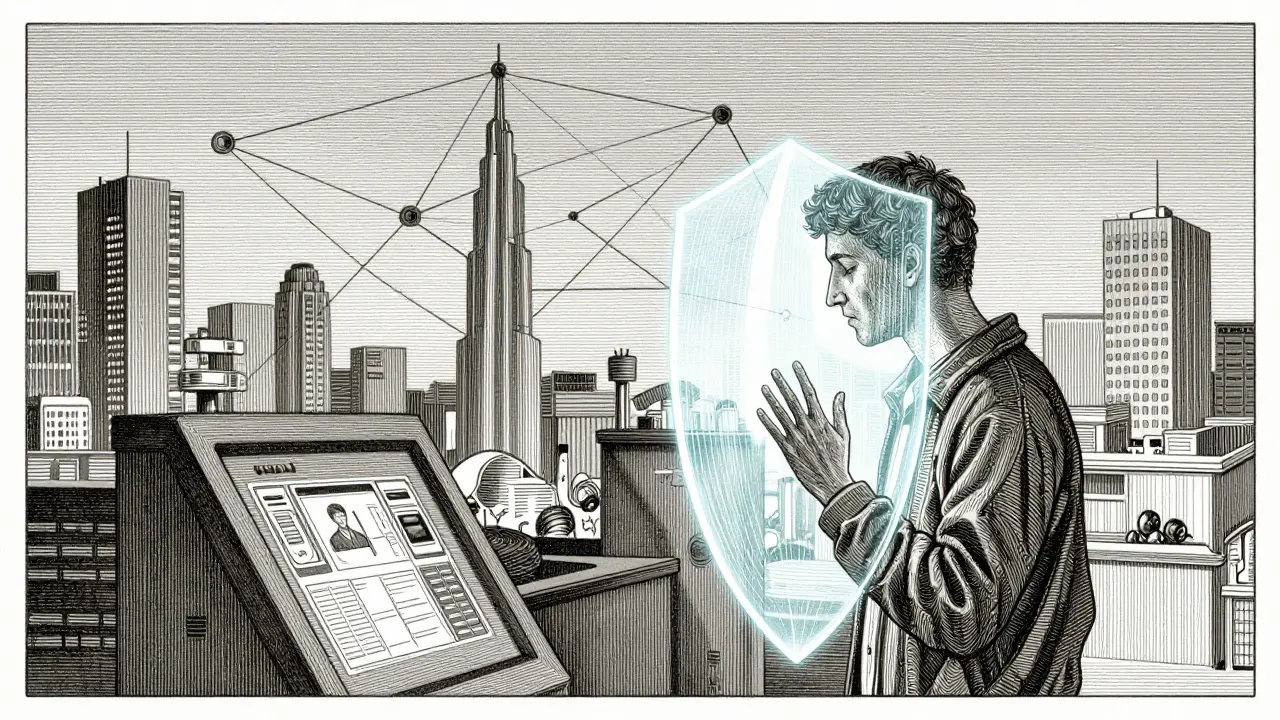
We are moving toward a world where your identity is a portable asset. By 2027, Gartner predicts that 40% of large enterprises will use DID-based solutions for at least one major business process. We are already seeing the rise of quantum-resistant DID methods to stay ahead of future computing threats, and JPMorgan Chase is currently piloting AI-integrated identity verification to stop sophisticated deepfake fraud.
The regulatory push is the final catalyst. The EU's eIDAS 2.0 regulation, effective September 2024, basically mandates that public services must support verifiable credentials. When the law requires it, adoption ceases to be a choice and becomes a standard.
Is my personal information stored on the blockchain?
No. This is a common misconception. Only the DID (the identifier) and the public key are stored on the ledger. Your actual personal data (like your name or address) stays in your encrypted digital identity wallet on your own device. You only share specific pieces of that data when you choose to.
What happens if I lose my phone or my private keys?
Unlike early crypto wallets, modern DID systems use social recovery or guardian-based recovery. You can designate a few trusted contacts (friends, family, or a professional service) who can collectively vouch for you to help you regenerate your access without needing a central password reset button.
How is a DID different from a username and password?
A username and password are owned by the service provider; they can delete your account or lock you out at any time. A DID is owned by you. It uses public-key cryptography to prove who you are, meaning you don't have to trust a company to "remember" you; you prove your identity mathematically.
Can DIDs really stop identity theft?
They significantly reduce it by eliminating "data honeypots." Most identity theft happens when a giant database of millions of users is hacked. With DIDs, there is no central database to hack. The data is distributed across millions of individual wallets, making a massive, single-point-of-failure breach nearly impossible.
Which companies are actually using this right now?
Major players include Microsoft with their ION project, Mastercard with Identity Check Mobile, and various EU member states through the EBSI initiative. Many financial institutions are also adopting the standard to streamline their KYC and AML (Anti-Money Laundering) compliance processes.
Next Steps for Implementation
If you're a business owner or developer looking to move toward decentralized identity, don't try to build a ledger from scratch. Start by exploring existing frameworks like Hyperledger Indy or Sovrin. The typical deployment timeline is 12-16 weeks, but the real challenge is user training. Focus on creating a simple UI that hides the cryptographic complexity from the end-user.
For individuals, the easiest way to start is by using a compatible identity wallet and looking for services that support W3C standards. As eIDAS 2.0 rolls out and more governments adopt these systems, you'll likely find that your physical wallet is replaced by a digital one that you-and only you-control.

most people dont realize how much the w3c standards actually matter here because without a common language these wallets are just fancy silos. if you're looking into this check out the difference between peer dids and the ones on a ledger because it changes the trust model entirely. honestly the real bottleneck isn't the tech but the legacy systems in banks that just can't keep up with a cryptographic handshake
oh great so we just trade a corporate password for a private key that we'll definitely lose within a week. revolutionary stuff really
This is a total paradigm shift in how we view the digital soul! Imagine the liberation of finally severing the umbilical cord connecting us to these data-hungry behemoths. We are talking about the democratization of existence itself where we finally hold the keys to our own kingdom. It is almost poetic that the solution to the chaos of the internet is a mathematical certainty. I can see a future where we just glide through the world with our identities humming in our pockets, free from the prying eyes of some server farm in Virginia. It's not just about data, it's about dignity and the sacred right to be seen only as we choose to be seen. We've been prisoners in a glass house for decades and this is the hammer that breaks the walls. The journey will be messy and the learning curve is a mountain, but the view from the top is going to be breathtaking. Let's embrace this digital rebirth with open arms and a fierce desire for autonomy. It's high time we stopped asking for permission to exist online and just started existing. This is the dawn of the sovereign individual in the age of silicon!
the social recovery part sounds really promising for non-techies
I agree with the sentiment regarding recovery mechanisms. In the UK, we are seeing similar movements toward digital identity frameworks that prioritize a balance between security and user accessibility. It is a prudent approach to ensure that the transition does not alienate those who are less digitally literate.
Imagine actually thinking people will trust their 'friends' to recover their identity 🙄 such a naive take on human nature 💅
A quaint attempt to modernize the digital wasteland, though the prose lacks the necessary intellectual rigor to truly dissect the systemic failure of centralization. This entire discourse is merely a superficial gloss over a fragmented infrastructure that remains hopelessly pedestrian in its execution.
too many words for something that basically just means more apps to update
The comparison between traditional identity and DID is quite illuminating. It appears the transition will be gradual but necessary for long-term data integrity.