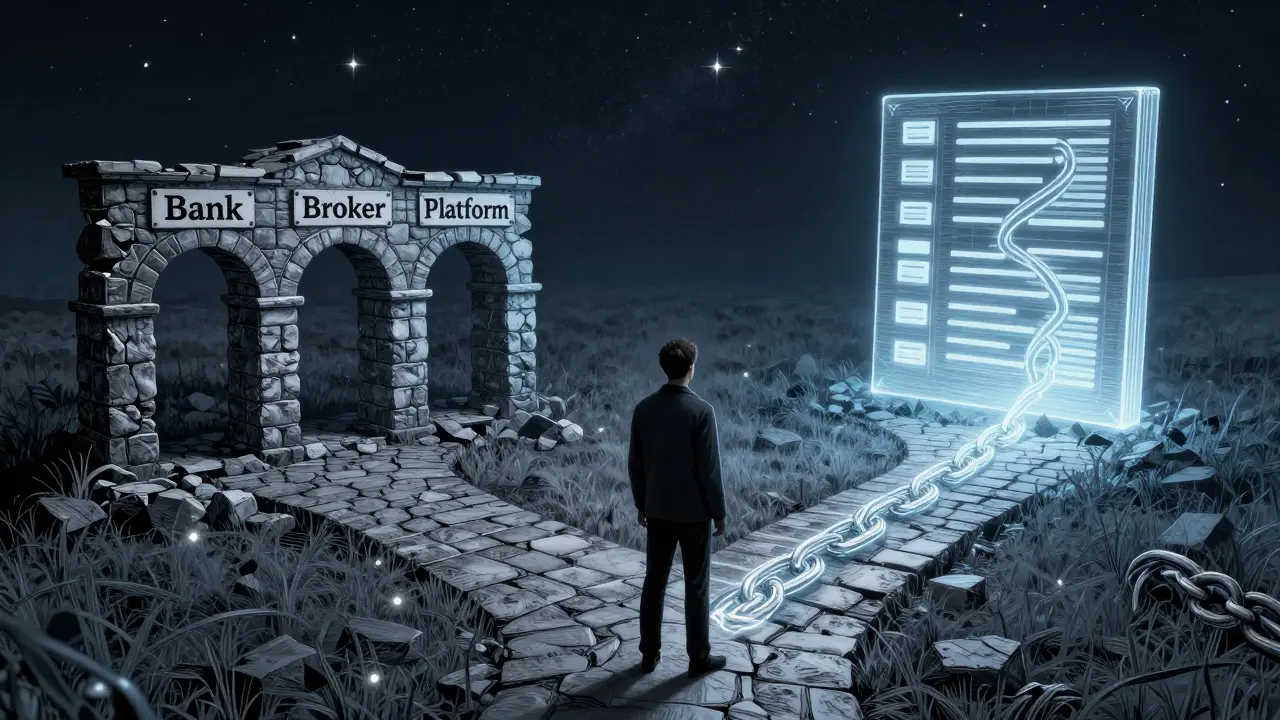
For decades, middlemen have been the invisible hands behind almost every transaction you make. Banks process your payments. Platforms take a cut of your music royalties. Advertisers pay Google and Facebook to reach you. Lawyers hold your escrow funds. These intermediaries didn’t just make things easier-they made themselves essential. But blockchain is changing that. It doesn’t just streamline processes. It removes the need for them entirely.
What Blockchain Actually Removes
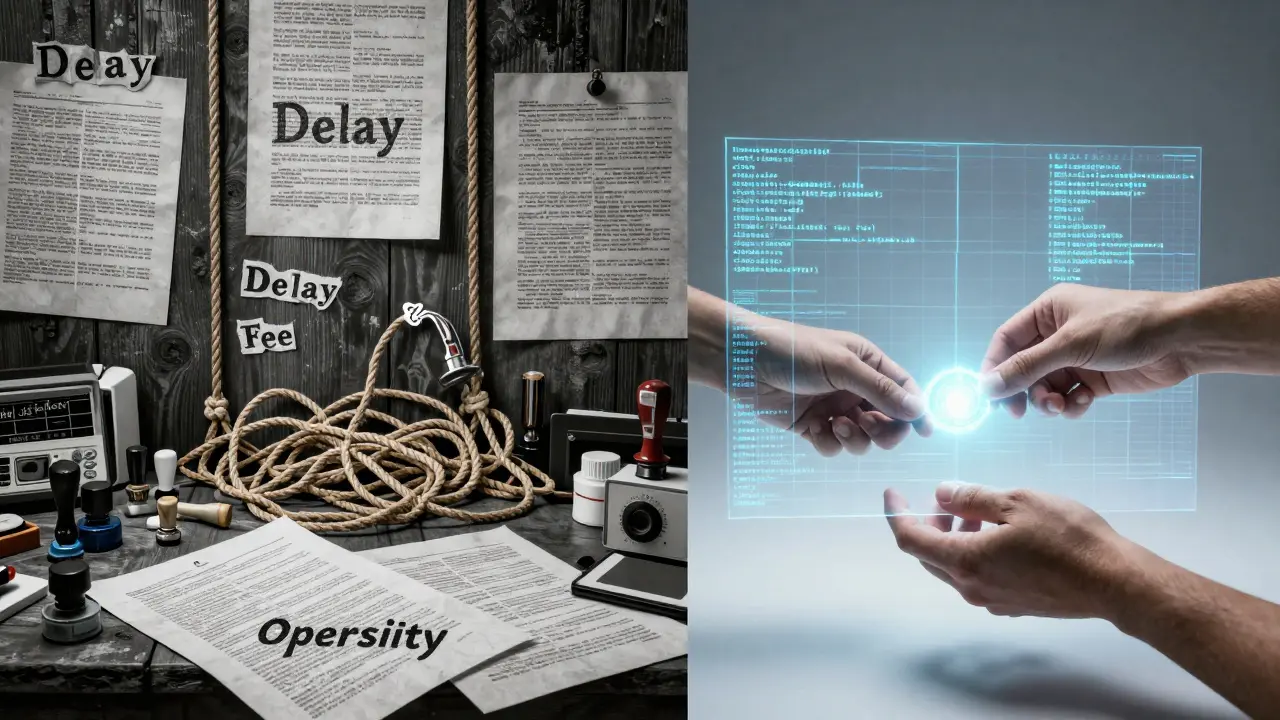
Blockchain isn’t just a fancy database. It’s a shared, tamper-proof ledger that lets people transact directly with each other without needing a bank, broker, or platform to verify the deal. The first real example? Bitcoin. Launched in 2009, it let two strangers send money to each other without a bank approving the transfer. No middleman. No fee. No delay. That was the breakthrough.Today, that same idea is being used everywhere. In cross-border payments, traditional systems involve five or more intermediaries: your bank, an intermediary bank, the recipient’s bank, currency converters, and compliance checks. Each adds time and cost. A $1,000 transfer might cost $65 and take three days. With blockchain, that same transfer can happen in under 10 minutes for less than $1. The World Bank found that blockchain-based payments can cut costs from 6.5% to under 1% of the transaction value.
Smart contracts take this further. These are self-executing agreements coded into the blockchain. If a condition is met, the contract triggers automatically. No lawyer. No escrow agent. No manual approval. For example, a freelance designer can set up a smart contract that releases payment only after the client approves the final design. The money moves instantly-no chasing invoices, no payment delays.
Where It’s Already Working
- Music Royalties: Traditional music distribution involves 7 to 11 middlemen-labels, distributors, collecting societies, banks. Royalties can take 18 months to reach artists. Blockchain platforms like Tune.fm cut that to 24 hours. One independent artist reported earning $2,300 from 47,000 streams in March 2023 through blockchain, compared to $800 via Spotify. The difference? No middlemen taking 25-40% cuts.
- Digital Advertising: Google and Facebook take 20-35% of every ad dollar. Blockchain-based ad networks like Basic Attention Token (BAT) let advertisers pay users directly for attention. Advertisers save money. Users get paid. No middleman siphoning off value.
- Supply Chains: Walmart uses blockchain to track food from farm to shelf. Before, verifying a shipment’s origin took days. Now, it takes seconds. No third-party auditor. No paperwork delays. Suppliers, distributors, and retailers all see the same verified data in real time.
- Real Estate: In places like Sweden and Georgia, property titles are now recorded on blockchain. No notaries. No land registries. No waiting weeks for paperwork. A buyer and seller can transfer ownership with a digital signature, verified by the network.
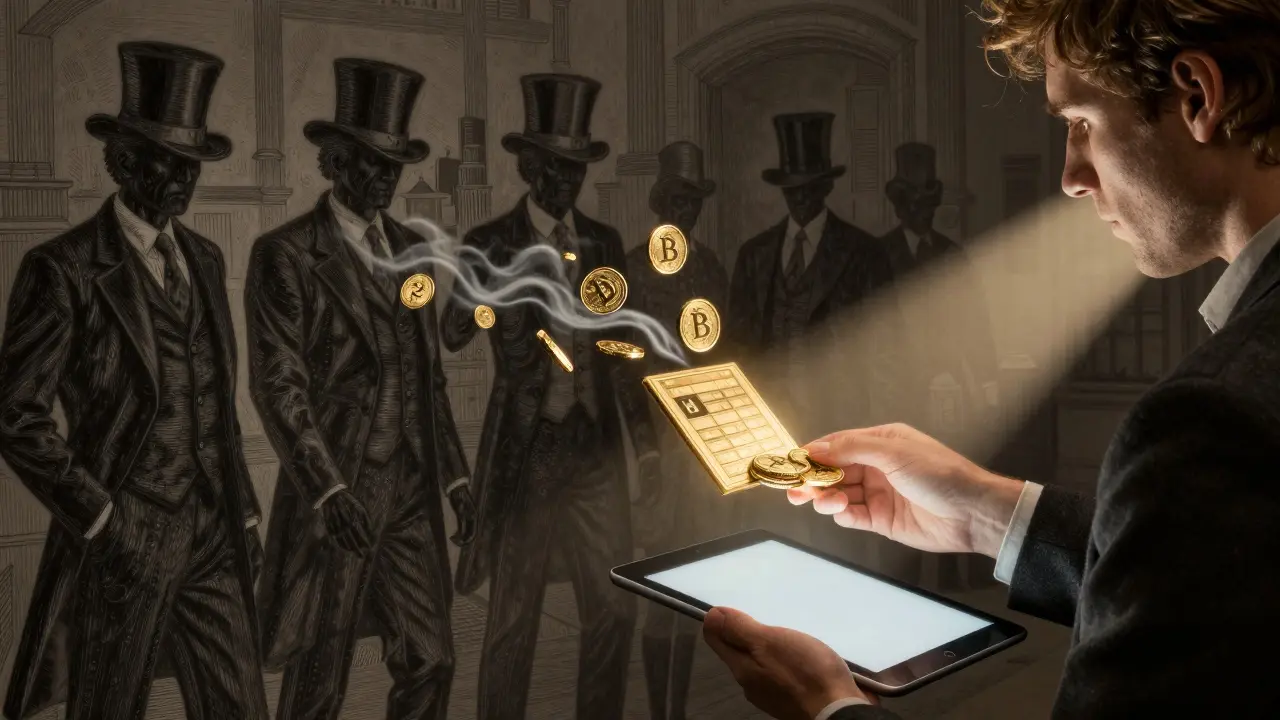
The Hidden Cost of Removing Middlemen
It sounds perfect, right? No fees. No delays. No gatekeepers. But here’s the catch: when you remove the middleman, you don’t remove responsibility-you redistribute it.Before, if you sent money to the wrong account, the bank could reverse it. Now? Blockchain transactions are final. Once confirmed, they can’t be undone. Over 3.7 million ETH (worth billions) has been lost forever because people forgot their private keys. No customer service line. No help desk. You’re on your own.
And while blockchain eliminates some middlemen, it often creates new ones. Companies like Chainlink provide data feeds to smart contracts. Wallet providers like MetaMask manage your keys. Exchanges like Coinbase act as gateways between crypto and fiat. These aren’t traditional middlemen, but they’re still gatekeepers. The difference? You choose them. You can switch. You can avoid them-if you know how.
There’s also the learning curve. Setting up a wallet, understanding gas fees, interacting with dApps-it’s not intuitive. ConsenSys Academy estimates it takes 80-120 hours of training for a business professional to become proficient. That’s not a small barrier.
Why It’s Not Replacing Everything
Blockchain doesn’t solve every problem. It thrives in high-trust-cost environments. Cross-border payments? Perfect. Music royalties? Perfect. But what about a divorce settlement? A disputed insurance claim? A contract that needs interpretation?Human judgment still matters. Courts don’t run on smart contracts. Disputes still need judges. Regulations still need compliance officers. Even JPMorgan, one of the biggest banks in the world, uses its own blockchain system-JPM Coin-but only for internal institutional transfers. They didn’t remove intermediaries. They built their own.
That’s the real story: blockchain isn’t about eliminating all middlemen. It’s about replacing the ones that add cost, delay, and opacity with ones that add transparency, speed, and efficiency. The future isn’t middleman-free. It’s middleman-reconfigured.
Getting Started
If you want to try blockchain-based disintermediation, here’s how to begin:- Get a wallet: Download MetaMask (for Ethereum) or Trust Wallet (for multiple chains). These hold your crypto and let you interact with dApps.
- Understand gas fees: Every transaction on Ethereum costs a small fee in ETH. As of Q2 2023, the average was $0.42. On faster chains like Solana, it’s often less than a penny.
- Start small: Use a decentralized music platform like Audius to upload a track. Or try a peer-to-peer marketplace like OpenSea to buy a digital collectible. You’ll feel the difference in speed and control.
- Learn the risks: Never share your private key. Never click random links. Lost keys mean lost funds. There’s no recovery.
The Bigger Picture
By 2027, the World Economic Forum predicts 10% of global GDP will be stored on blockchain. That’s $12 trillion. But that doesn’t mean banks are gone. It means they’re changing. Financial institutions aren’t being replaced-they’re being forced to adapt. The same way ATMs didn’t kill banks, blockchain won’t kill intermediaries. It will kill the ones that don’t add real value.Blockchain’s power isn’t in removing people. It’s in removing unnecessary friction. It’s about giving you direct control over your money, your data, and your contracts. No more waiting. No more hidden fees. No more opaque systems.
That’s the real promise. Not a world without middlemen. A world where the middlemen you do have are transparent, efficient, and optional.
Can blockchain really remove all middlemen?
No-not all of them. Blockchain removes intermediaries that exist only to verify, record, or facilitate transactions. But it doesn’t replace roles that require human judgment, legal interpretation, or customer service. Instead, it replaces inefficient middlemen with more transparent, automated ones. Some traditional players, like banks and ad platforms, are even building their own blockchain systems to stay relevant.
What’s the biggest risk of removing middlemen with blockchain?
The biggest risk is irreversible transactions. If you send crypto to the wrong address, there’s no undo button. No bank to call. No customer service rep to help. You lose it forever. That’s why managing your private keys and understanding how wallets work is critical. Also, smart contracts can have bugs-like the 2016 DAO hack that lost $60 million-so always verify the code before interacting.
Is blockchain faster than traditional systems?
Yes, in most cases. Cross-border bank transfers take 2-5 days. Blockchain can do it in under 10 minutes. Music royalties that took 18 months now arrive in 24 hours. Property title transfers that took weeks are done in minutes. But speed depends on the blockchain. Bitcoin confirms in 10 minutes. Ethereum takes 12-15 seconds. Solana does it in under a second. Layer-2 solutions like Polygon make it even faster and cheaper.
Do I need to be tech-savvy to use blockchain for disintermediation?
You don’t need to be a developer, but you do need to learn the basics. Setting up a wallet, understanding gas fees, and recognizing phishing scams are essential. Many platforms now have simple interfaces-like buying crypto on Coinbase or uploading music to Audius. But if you’re managing your own keys or interacting with smart contracts, expect a learning curve. Most users need 80-120 hours of training to feel confident.
Which industries benefit most from blockchain disintermediation?
Industries with high transaction costs, slow processes, and multiple intermediaries benefit the most. Finance (cross-border payments), music and digital content (royalties), supply chains (tracking goods), advertising (ad spend transparency), and real estate (title transfers) are the top five. McKinsey estimates blockchain could save $1.5 trillion annually in these sectors by 2027. The common thread? Too many middlemen adding cost without adding clear value.
Are there legal or regulatory issues with removing middlemen?
Yes. Many countries still regulate financial transactions through banks and licensed entities. Removing intermediaries can clash with anti-money laundering (AML) and know-your-customer (KYC) rules. The EU’s MiCA regulation (effective 2024) tries to create clear rules for crypto, but the U.S. still has a patchwork of agency rules. Businesses using blockchain must still comply with local laws-even if the tech itself is decentralized.
So I’ve been thinking about this a lot lately-like, really thinking. Blockchain doesn’t erase middlemen, it just makes them visible. And honestly? That’s the real win. When you can see who’s taking a cut, you can decide if they’re worth it. I used to hate paying platform fees until I realized the service they provided was basically invisible. Now? I’d rather pay a transparent 5% to someone who actually shows up than a hidden 30% to a ghost. It’s not about removing people-it’s about removing the illusion.
Been using Audius for my music and it’s wild how fast I get paid compared to Spotify. No waiting months. No mystery numbers. Just a number I can see and trust. Also the fans can tip directly which feels way more human. I don’t need a label to connect with my people anymore
Everyone acts like blockchain is this revolutionary force but let’s be real-most people still use Coinbase like a bank. They don’t even hold their own keys. The ‘removal’ of middlemen is mostly marketing. The new middlemen just have better branding and more memes.
If you’re considering diving into blockchain for disintermediation, start with education before you touch any wallet. Seriously. I’ve seen too many people lose money because they clicked a ‘free NFT’ link or sent ETH to a contract without reading the fine print. The technology is powerful, but it’s not magic. It’s code. And code can have bugs. And humans can make mistakes. That’s why I always recommend starting with small, low-stakes experiments-like uploading a single track to Audius or buying one NFT from a verified collection. Learn gas fees. Learn how to read a wallet address. Learn what ‘approve’ actually means in a smart contract. Once you’ve done that, you’re not just a user-you’re a participant. And that changes everything. The barrier isn’t the tech-it’s the mindset. Most people want to be spoon-fed. Blockchain asks you to cook for yourself.
My aunt tried to send crypto to pay her grandson’s tuition and sent it to the wrong address. She cried for three days. No one could help her. That’s the human cost of ‘efficiency.’ We’re trading customer service for autonomy, and not everyone’s ready for that.
Blockchain removed the middleman… so now I have to be the middleman. Cool. Thanks, tech.
THEY SAID NO MIDDLEMEN BUT NOW I HAVE TO MANAGE MY OWN KEYS AND I FORGOT MINE AND LOST MY ENTIRE LIFE SAVINGS AND I’M JUST A SINGLE MOM TRYING TO BUY GROCERIES AND NOW I’M LIVING IN MY CAR AND IT’S ALL BLOCKCHAIN’S FAULT
I love how blockchain makes everything feel like a DIY project. You don’t need a bank? Cool. Now you need a 12-step process to send $10 to your cousin. And if you mess up? You’re on your own. I get the theory. I just don’t want to be the IT department for my own finances.
Let’s not romanticize this. The people who benefit most from blockchain disintermediation are those who already have capital, technical literacy, and time to waste troubleshooting wallet errors. Meanwhile, the elderly, the underbanked, and the non-tech-savvy get left with a system that’s faster, cheaper, and utterly inaccessible. This isn’t liberation-it’s a new form of exclusion dressed up as innovation. And yes, I’ve seen the stats. I’ve read the reports. But real life doesn’t run on whitepapers. It runs on people who need help. And right now, blockchain doesn’t help them-it confuses them.