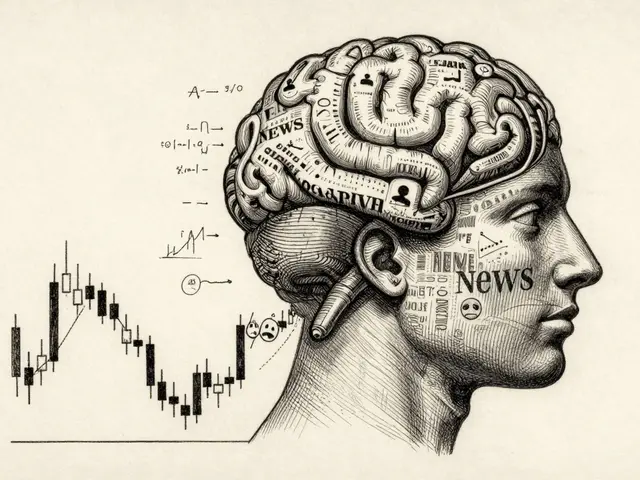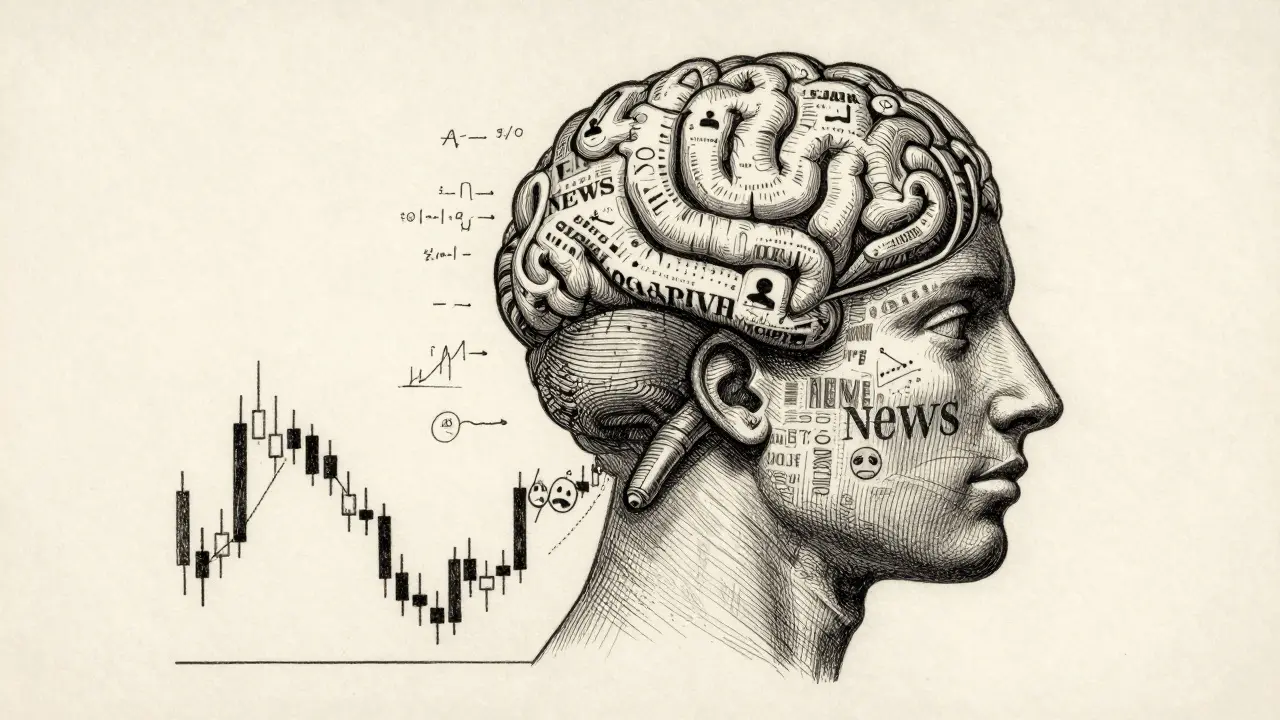
Ever wondered why a stock or cryptocurrency suddenly moons even when the financial reports look mediocre? Or why a market crashes despite a string of positive news? The missing piece of the puzzle is usually human emotion. While charts tell you what happened, Sentiment Analysis is a computational process that analyzes text from news, social media, and reports to determine if the general mood is bullish or bearish. By turning raw human emotion into a numerical score, traders can spot market inflection points before they show up on a price chart.
How Sentiment Analysis Actually Works
At its core, this isn't magic; it's math. Traders use Natural Language Processing (or NLP), a branch of AI that helps computers understand, interpret, and manipulate human language, to scan millions of data points. Imagine a bot reading 10 million tweets and 4,000 news articles in under five minutes. It doesn't just look for keywords like "buy" or "sell"; it looks for context, intensity, and intent.
Most professional systems create what's called a date-entity-sentiment tuple. This basically means the AI identifies a specific asset (the entity), the exact time the comment was made (the date), and whether the mood was positive or negative (the sentiment). For example, a tool like Sentdex generates these scores for thousands of equities, allowing a trader to see a real-time "mood meter" for a specific ticker.
Why Sentiment Beats Traditional Indicators
Traditional tools like Moving Averages or the Relative Strength Index (RSI) are lagging indicators. They tell you what the price did. Sentiment analysis, however, is a leading indicator. It tracks the psychological shift that causes the price to move.
Take the 2021 GameStop short squeeze as a prime example. Long before the stock surged 1,700%, retail investor sentiment on Reddit's WallStreetBets had reached extreme bullish levels. If you were only looking at P/E ratios or technical charts, you would have missed the move. But if you were tracking sentiment, the signal was screaming "buy" days before the explosion.
| Feature | Technical Analysis | Sentiment Analysis |
|---|---|---|
| Data Source | Price and Volume | News, Social Media, Blogs |
| Nature | Lagging (Reactive) | Leading (Predictive) |
| Focus | Market Patterns | Human Psychology |
| Weakness | Slow to react to news | Prone to "noise" and sarcasm |
Using Sentiment as a Contrarian Signal
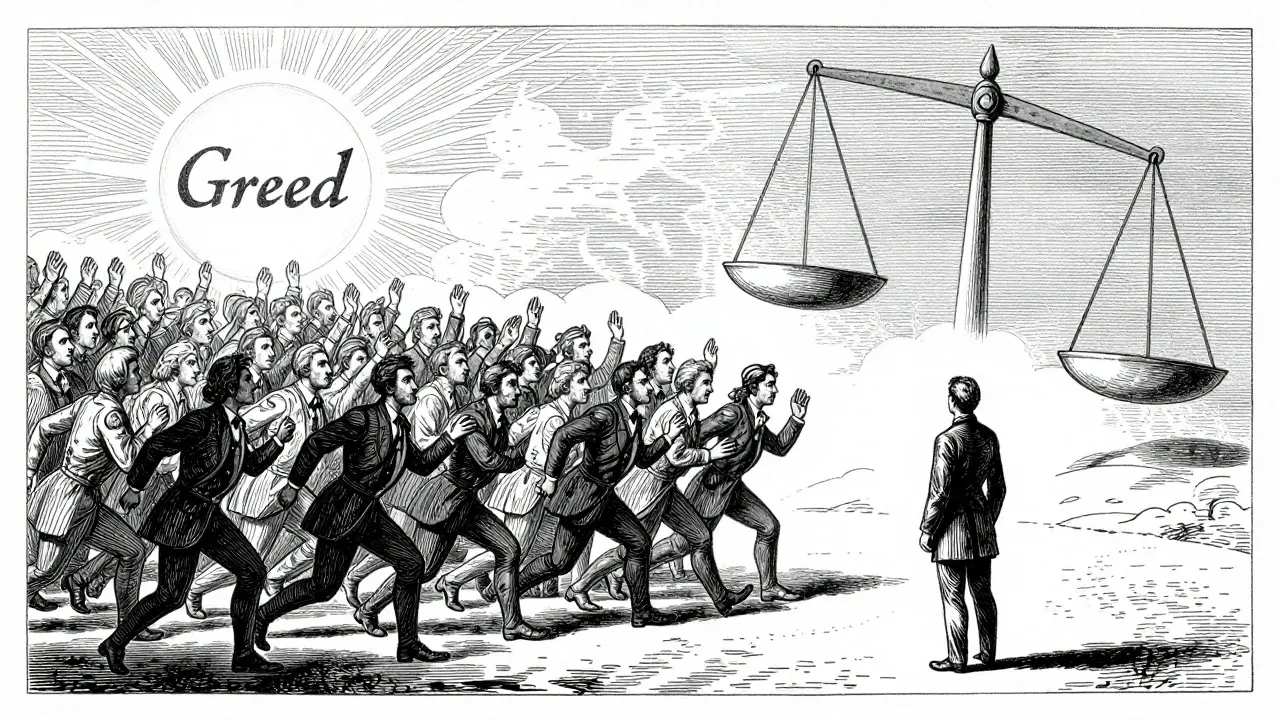
Here is the secret that most professional quantitative traders use: sentiment analysis is often most powerful when used in reverse. When everyone is overwhelmingly bullish, the market is often primed for a crash. This is known as contrarian trading.
Consider the CNN Fear & Greed Index. When this index climbs above 80 (extreme greed), it has historically preceded S&P 500 corrections of at least 5% within 30 days in about 83% of cases since 2015. Similarly, data from the American Association of Individual Investors (AAII) shows that when bullishness exceeds 55%, market tops often follow. When the crowd is too happy, it's usually time to be cautious.
The Technical Side: Tools and Implementation
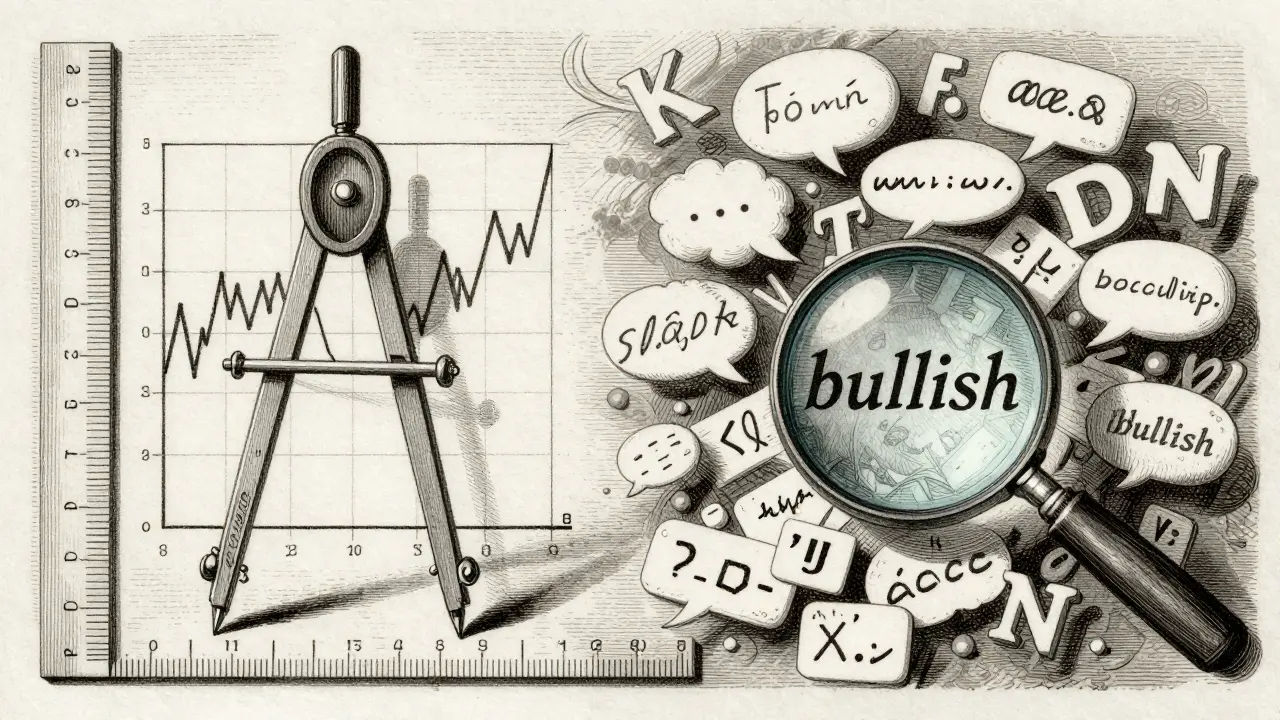
Depending on your budget and skill level, there are three main ways to get this data into your trading strategy:
- Retail Platforms: Many traders use built-in tools like the Volatility Index on the thinkorswim platform to gauge market fear.
- Third-Party Vendors: Services like PsychSignal or Accern provide refined sentiment feeds. Accern's SentimentGPT, for instance, uses generative AI to better detect nuance and sarcasm, which are the traditional enemies of NLP.
- Custom Pipelines: Advanced traders build their own systems using Python and libraries like spaCy or TensorFlow to scrape data from X (Twitter) or Telegram.
A highly effective strategy is the "sentiment divergence" approach. This happens when the price of an asset makes a new high, but the sentiment score fails to reach a new peak. This gap suggests that while the price is rising, the conviction behind the move is fading-a classic signal that a trend reversal is coming.
The Pitfalls: When Sentiment Fails
Sentiment analysis isn't a crystal ball. It has a massive weakness: it struggles during extreme macroeconomic shifts. During the March 2020 COVID-19 crash, many sentiment-based systems failed miserably. Why? Because fundamental fear and liquidity crises overwhelmed social media chatter. In those moments, the VIX (Volatility Index) spikes, and the sheer speed of the drop makes sentiment scores irrelevant.
There is also the problem of manipulation. A 2023 MIT study revealed that about 41% of retail investor sentiment on social media is deliberately manipulated by coordinated groups (bots and paid shills). If you rely solely on a "bullish" sentiment score for a low-cap cryptocurrency, you might just be falling for a coordinated pump-and-dump scheme.
Future Trends in Market Psychology
We are moving beyond just text. The next frontier is multimodal analysis. J.P. Morgan has already started using speech analytics to analyze the tone and vocal patterns of CEOs during earnings calls. They found that the way a CEO speaks can predict earnings surprises with 12% more accuracy than just analyzing the transcript of what they said.
By 2026, we expect to see sentiment analysis integrate real-time geopolitical event mapping. Instead of just knowing people are "scared," the AI will understand that a specific conflict in a specific region is causing a sentiment contagion across multiple asset classes, from oil to semiconductor stocks.
Is sentiment analysis better than technical analysis?
Neither is "better"; they solve different problems. Technical analysis tells you the mathematical trend of the price, while sentiment analysis tells you the psychological state of the buyers and sellers. The most successful traders use sentiment as a secondary confirmation tool to validate what they see on the charts.
Can I use sentiment analysis for cryptocurrency trading?
Yes, and it is actually more popular in crypto than in equities. Because cryptocurrencies are driven heavily by community hype and social media trends, sentiment analysis accounts for roughly 30% of algorithmic trading signals in the crypto space.
How do I handle "noise" and sarcasm in sentiment data?
This is the hardest part of NLP. Modern tools use Large Language Models (LLMs) like GPT-based architectures to understand context. To minimize noise, it's best to use weighted sentiment, where posts from verified experts or accounts with high historical accuracy carry more weight than random bot accounts.
What is a contrarian sentiment strategy?
A contrarian strategy involves trading against the crowd. When sentiment reaches an extreme positive (overbought psychology), you look for sell opportunities. When it reaches extreme negative (extreme fear), you look for buying opportunities. This is based on the idea that extremes are unsustainable.
Which tools are best for beginners?
Beginners should start with free or low-cost indicators like the CNN Fear & Greed Index or the Volatility Index on their brokerage platform. Before paying for expensive feeds like Sentdex, try understanding how a sentiment divergence works on a basic chart.
Next Steps for Your Trading Strategy
If you're looking to integrate sentiment into your workflow, don't start by automating everything. First, try the "manual check." When you see a strong technical signal to buy, check the sentiment. If the sentiment is already at a 10-year high, be careful-you might be buying the top. If the sentiment is neutral or slightly bearish while the price is stabilizing, you might have found a high-probability entry point.