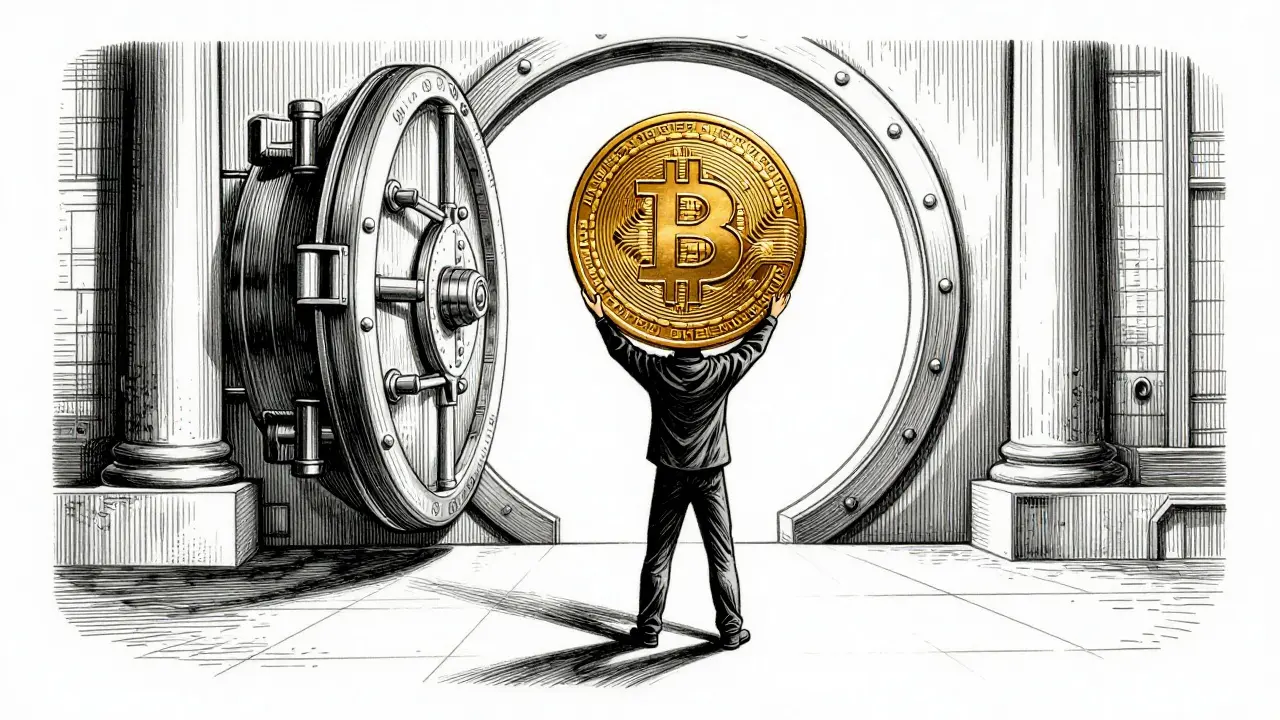
Imagine you want to buy a house. In one scenario, you pay the full price in cash today and take the keys immediately. In the other, you sign a contract promising to buy it six months from now at a fixed price, putting down only a small deposit. If the market crashes, the first buyer loses value but keeps the house. The second buyer might lose their entire deposit or even owe more money if the contract forces liquidation.
This is the core difference between Spot Trading and immediate asset purchase at current market price and Futures Trading contract-based trading with leverage and deferred settlement. For anyone navigating the volatile world of cryptocurrency in 2026, understanding this distinction isn't just academic-it's the difference between building wealth and losing your capital overnight.
The Core Mechanism: Ownership vs. Contract
When you trade on the spot market, you are buying the actual asset. If you buy Bitcoin (BTC) on a spot exchange like Coinbase or Binance Spot, that BTC belongs to you. You can withdraw it to your private wallet, stake it, or hold it for ten years without worrying about expiration dates. The transaction settles almost instantly, typically within seconds on crypto exchanges. Your profit or loss is determined solely by the price difference between when you bought and when you sell.
Futures trading works differently. You aren't buying the coin; you're betting on its future price movement through a standardized contract. These contracts have an expiration date-daily, weekly, monthly, or quarterly. Most crypto futures are "cash-settled," meaning no actual coins change hands. Instead, the exchange pays out the difference in USDT or another stablecoin based on whether the price moved in your favor. This structure allows for complex strategies but removes the concept of true ownership.
| Feature | Spot Trading | Futures Trading |
|---|---|---|
| Ownership | You own the underlying asset | You hold a derivative contract |
| Settlement | Immediate (T+0) | At contract expiration or manual close |
| Leverage | Typically 1x (no leverage) | Up to 100x or more |
| Direction | Long only (buy low, sell high) | Long and Short (profit from up or down moves) |
| Expiration | None (hold indefinitely) | Fixed dates (must roll over or settle) |
| Risk Profile | Lower (max loss = initial investment) | Higher (liquidation risk, margin calls) |
Leverage and Margin: The Double-Edged Sword
The most significant operational difference between these two markets is leverage. In spot trading, if Bitcoin is priced at $60,000, you need $60,000 to buy one BTC. Your exposure is limited to what you put in. If the price drops to zero, you lose 100% of your capital, but you cannot owe the exchange money.
In futures trading, you use Margin collateral required to open and maintain a leveraged position. With 10x leverage, you only need $6,000 to control a $60,000 position. This amplifies gains: a 10% rise in Bitcoin’s price doubles your equity. However, it also amplifies losses. A 10% drop wipes out your entire $6,000 margin. This triggers Liquidation forced closure of a position when margin falls below maintenance requirements, where the exchange automatically sells your position to cover the debt.
Consider this real-world scenario: Trader A buys 1 BTC on spot for $60,000. Trader B opens a long futures position for 1 BTC using 10x leverage ($6,000 margin). If Bitcoin drops 5% to $57,000:
- Trader A has a paper loss of $3,000 (5%). They still own the BTC and can wait for recovery.
- Trader B has lost $3,000 of their $6,000 margin (50%). Their account is dangerously close to liquidation thresholds. Many exchanges will force-close the position before the drop reaches 10%, locking in the total loss.
This mechanism makes futures trading highly efficient for capital but extremely dangerous for inexperienced users. The psychological pressure of watching a liquidation price approach often leads to panic selling, exacerbating losses.
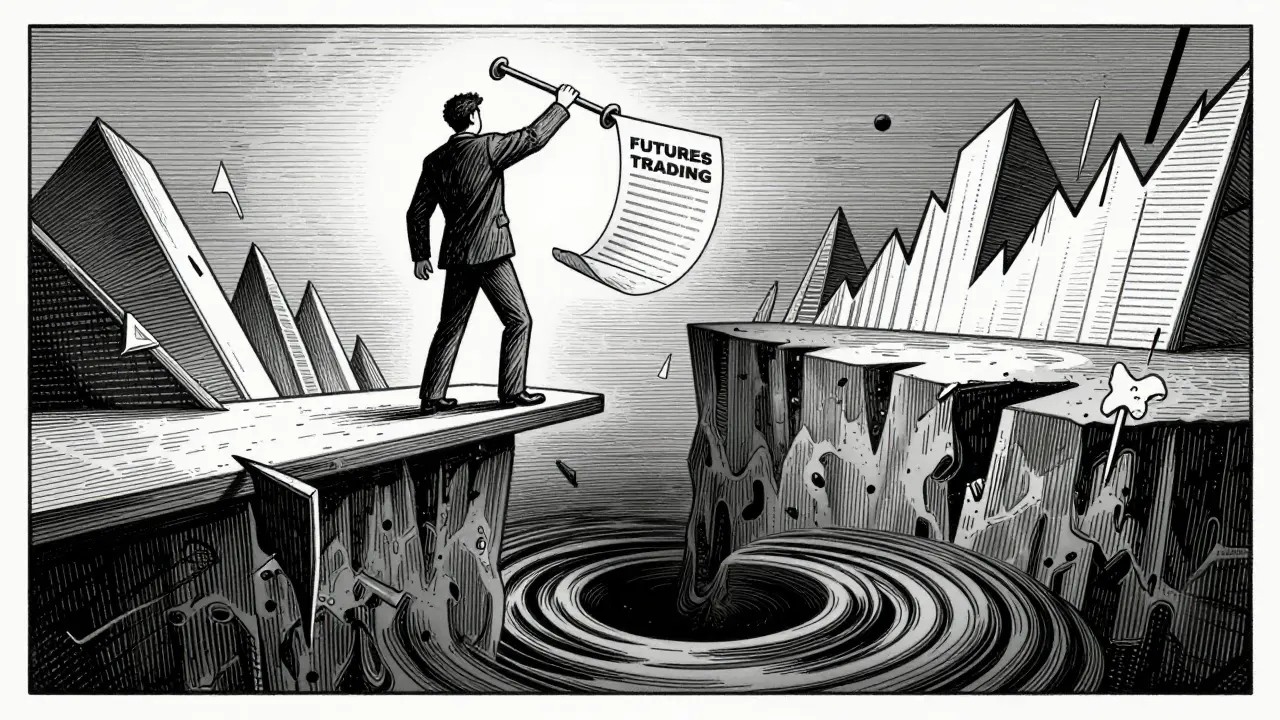
Trading Direction: Going Long vs. Going Short
Spot trading restricts you to a bullish strategy. You can only make money if the price goes up. If you believe the market is crashing, your best option is to sell your assets and sit in stablecoins, missing out on potential profits from the decline itself.
Futures trading enables bilateral speculation. You can go long (betting prices will rise) or short (betting prices will fall). This flexibility is crucial during bear markets or high-volatility events. For example, during a market correction, a futures trader can short Bitcoin, profiting as the price drops. This capability attracts institutional hedgers who use futures to protect their spot holdings against downside risk-a strategy known as Hedging using derivatives to offset potential losses in existing positions.
However, shorting carries unique risks. Since there is theoretically no limit to how high an asset’s price can rise, losses from short positions can exceed your initial margin if not managed carefully. Spot traders never face this specific risk because they simply hold the asset.
Pricing Dynamics: Spot Price vs. Futures Premium
Why do futures prices differ from spot prices? The futures price includes the cost of carry: interest rates, storage fees (minimal for crypto), and expected dividends or yield. In crypto, this is heavily influenced by funding rates in perpetual futures contracts.
When the futures price is higher than the spot price, the market is in contango, indicating bullish sentiment. When it’s lower, it’s in backwardation, suggesting bearishness. Traders monitor these spreads to gauge market mood. For instance, if Bitcoin spot is $60,000 but the quarterly futures contract trades at $62,000, investors expect prices to rise. Arbitrageurs exploit these differences, ensuring prices eventually converge as the contract nears expiration.

Who Should Use Which Strategy?
Your choice depends on your experience, risk tolerance, and goals.
Choose Spot Trading if:
- You are a beginner learning the basics of cryptocurrency markets.
- You prefer long-term investing ("HODLing") without stress about expiration dates.
- You want direct ownership and control over your private keys.
- You have low risk tolerance and cannot afford to lose more than your initial investment.
Choose Futures Trading if:
- You are an experienced trader comfortable with complex financial instruments.
- You want to hedge existing spot positions against market downturns.
- You seek to profit from both rising and falling markets.
- You understand margin mechanics, liquidation risks, and can manage emotional discipline under pressure.
Many professional traders use a hybrid approach. They hold core positions in spot for long-term growth while using small futures positions to speculate on short-term volatility or hedge against sudden crashes. This diversification balances stability with opportunity.
Common Pitfalls to Avoid
New traders often underestimate the speed of crypto markets. A 10% swing in Bitcoin can happen in minutes during news events. In spot, this is manageable. In futures with 50x leverage, it’s catastrophic. Always start with low leverage (2x-5x) if you must trade futures, and never risk more than you can afford to lose.
Another mistake is ignoring funding rates in perpetual futures. Even if the price doesn’t move, you may pay or receive periodic fees based on market sentiment. Over time, these costs can erode profits significantly.
Finally, avoid emotional trading. Set stop-loss orders in futures to limit downside. In spot, decide your exit strategy before buying. Discipline beats luck every time.
Can I lose more than my initial investment in spot trading?
No. In standard spot trading, your maximum loss is limited to the amount you invested. If the asset price drops to zero, you lose your entire principal, but you do not owe the exchange additional funds. This differs from leveraged futures trading, where poor risk management can lead to liquidation and total loss of margin.
What is the safest way to start trading cryptocurrencies?
Begin with spot trading using established platforms like Coinbase, Kraken, or Binance. Start with small amounts, focus on major assets like Bitcoin or Ethereum, and learn to read charts and market trends. Avoid leverage until you have consistently profitable spot trading experience and understand risk management principles.
How does leverage work in futures trading?
Leverage allows you to control a larger position with a smaller amount of capital. For example, 10x leverage means you need only 10% of the position's value as margin. While this amplifies potential profits, it also magnifies losses. A 10% adverse price move with 10x leverage results in a 100% loss of your margin, triggering liquidation.
Can I use futures trading to hedge my spot portfolio?
Yes. Hedging involves taking an opposite position in futures to offset potential losses in your spot holdings. For instance, if you own Bitcoin in spot and fear a price drop, you can open a short futures position. If prices fall, profits from the short futures position compensate for losses in your spot portfolio, stabilizing your overall net worth.
What happens if I don't close a futures contract before expiration?
Most crypto futures are cash-settled. At expiration, the contract closes automatically, and the profit or loss is calculated based on the final settlement price versus your entry price. The resulting balance is credited or debited to your account. Perpetual futures do not expire but require monitoring of funding rates to avoid unexpected costs.
Listen up, you absolute maniacs who think 100x leverage is a strategy. It's not a strategy, it's suicide with extra steps. I've seen too many newbies blow their life savings in minutes because they couldn't handle the volatility. If you can't stomach losing your entire margin without crying to your mom, stay the hell away from futures. Spot trading is for people who want to sleep at night and actually own something real. You don't own shit in futures; you own a debt contract that's actively trying to eat your face off. Wake up and trade like adults or get out of the market entirely.
Typical American weakness right there Scott. You're scared of risk because you lack discipline. Real traders dominate the market by using every tool available, including leverage. The system is rigged against the passive holder anyway. Why let institutional whales dictate your returns when you can short them into oblivion? This country needs strong operators who aren't afraid to bet big on their convictions. Weak hands go home. Strong hands take control.
You both are missing the point entirely. The market doesn't care about your feelings or your national pride. It's a zero-sum game where one person's gain is another's loss. I've watched geniuses lose everything because they thought they were smarter than the algorithm. And yes, spot holders are just bag-holders waiting for a rescue that will never come. But futures traders are gamblers with better math skills. Neither side is winning long term. The house always wins. Stop pretending you have an edge when you're just feeding the liquidity pool.
Hey guys, let's keep it chill here :) I've been trading since 2017 and honestly, I use both depending on the season. When the market is quiet, I spot buy and hold. When things get crazy volatile, I hedge with small futures positions. It's all about balance and enjoying the ride. No need to get aggressive or cynical. We're all just trying to make some money in a weird digital world. Stay safe out there! :)
Your simplistic dichotomy between 'ownership' and 'derivatives' reveals a profound lack of understanding regarding modern financial engineering. The concept of 'true ownership' in crypto is a myth perpetuated by retail investors who fail to grasp the nuances of custodial risk versus counterparty risk. In reality, holding spot assets on centralized exchanges exposes you to significant systemic vulnerabilities, including exchange insolvency and regulatory seizure. Futures markets, particularly those with robust clearinghouses, offer superior capital efficiency and risk mitigation through sophisticated hedging strategies such as delta-neutral positioning. Your reliance on anecdotal evidence and emotional appeals demonstrates a fundamental ignorance of quantitative finance principles. One must consider the cost of carry, funding rate arbitrage opportunities, and the impact of basis trading on overall portfolio performance. To suggest that spot trading is inherently safer is intellectually dishonest and ignores the substantial opportunity costs associated with idle capital. Furthermore, the notion that liquidation is solely a function of user error disregards the structural design of perpetual swaps which are engineered to extract value from leveraged participants via funding mechanisms. A truly educated investor understands that derivatives are not merely speculative instruments but essential tools for price discovery and risk transfer in efficient markets. Your perspective is regrettably limited to the paradigm of traditional equity investing, failing to adapt to the unique characteristics of decentralized asset classes. It is imperative to elevate your discourse beyond binary thinking and engage with the complex interplay of macroeconomic factors influencing crypto valuations. Until you comprehend these dynamics, your advice remains dangerously naive and potentially detrimental to those who might heed it.
This article is so boring. Who has time to read all this stuff? Just give me the ticker symbols and tell me when to buy. I'm tired of reading textbooks when I could be making money. Also why does everyone act like they know what they are doing? Half of you are probably losing money and hiding it. Whatever. I'll just stick to meme coins.
Let us breathe together. Fear is natural. Greed is natural. Balance is key. Start small. Learn deeply. Protect your peace. The market is a mirror. What do you see?
I noticed you didn't mention tax implications 🧐 That's a huge part of the difference! Spot gains are capital gains, but futures can be treated differently depending on your jurisdiction 📉 Did you check your local laws before posting this? Just wondering 😊