Ethereum Rollups: How Layer 2 Solutions Solve Scalability and Speed
When you hear Ethereum rollups, a scaling solution that processes transactions off the main Ethereum chain to reduce fees and congestion. Also known as Layer 2, it’s what keeps Ethereum usable when demand spikes—without requiring a complete network overhaul. Think of it like adding express lanes to a highway. Ethereum’s main chain (Layer 1) can only handle about 15-30 transactions per second. That’s fine for a quiet neighborhood, but not for a global financial network. Rollups take hundreds or thousands of transactions off-chain, bundle them up, and submit one proof back to Ethereum. The result? Lower fees, faster confirmations, and the same security as the main chain.
There are two main types: optimistic rollups, a type of Layer 2 that assumes transactions are valid unless challenged within a waiting period, and ZK-rollups, a more advanced type that uses cryptographic proofs to verify transactions instantly. Optimistic rollups, like Arbitrum and Optimism, are simpler to build on but require a 7-day challenge window before funds can be withdrawn. ZK-rollups, like zkSync and Starknet, achieve finality in minutes because they prove correctness mathematically—no waiting. That’s why DeFi apps and NFT platforms are slowly shifting toward ZK-rollups for speed-critical uses.
But rollups aren’t magic. They still rely on Ethereum for security and data availability. If Ethereum goes down, so do the rollups. And while fees are low, you still need ETH to pay for the final on-chain transaction. That’s why some users still get stuck with high gas costs during peak times—especially on optimistic rollups where the batch submission can get expensive. What matters most is understanding which rollup fits your needs: if you’re trading NFTs daily, ZK-rollups win. If you’re holding long-term and want the widest app support, optimistic rollups still lead.
What you’ll find here aren’t theory papers or marketing fluff. These are real reviews and breakdowns of platforms and tokens that live on or interact with rollups. From ZKE Exchange’s shaky claims about ZK tech, to how transaction finality impacts your trading strategy, this collection cuts through the noise. You’ll see what’s working, what’s risky, and what’s outright fake—because in crypto, knowing how rollups work isn’t just helpful. It’s how you avoid losing money.
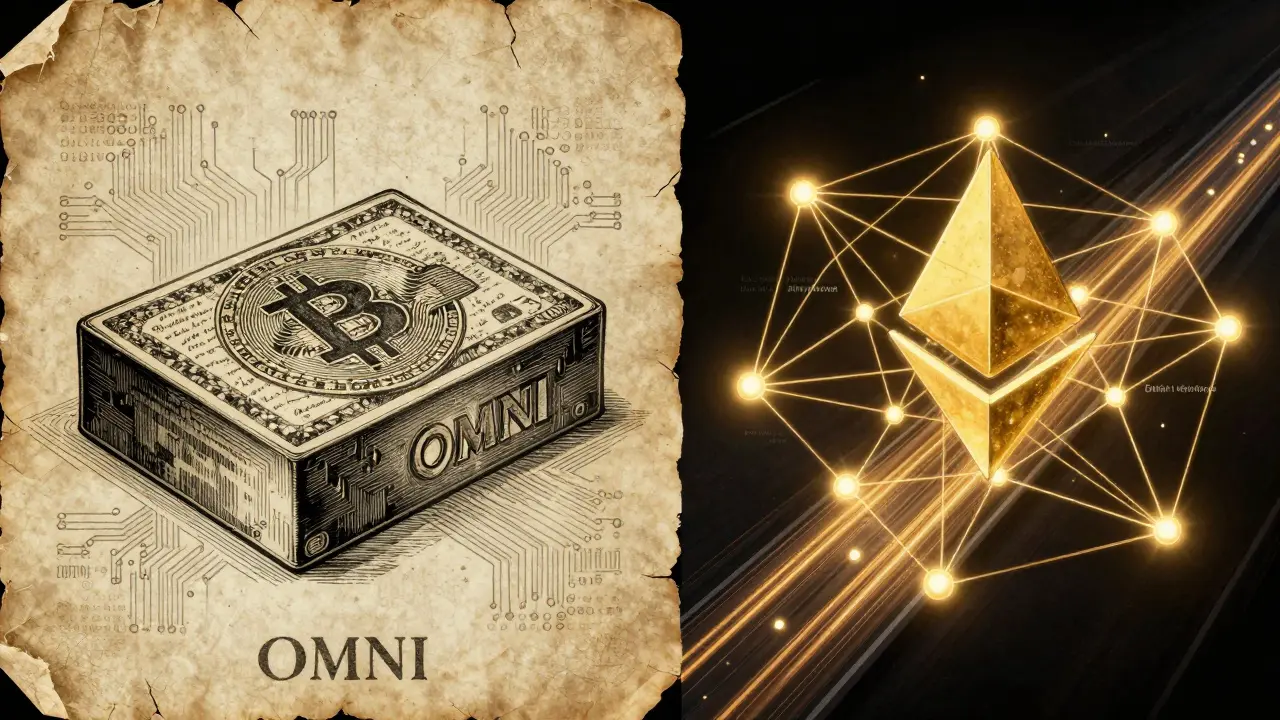
What is Omni Network (OMNI) Crypto Coin? Understanding the Two Projects Behind the Same Ticker
Omni Network (OMNI) refers to two separate crypto projects: an old Bitcoin-based token protocol and a new Ethereum rollup interoperability network. Learn the key differences, why confusion costs investors money, and which one actually matters today.