US CBDC: What It Is, Why It Matters, and What You Need to Know
When people talk about a US CBDC, a digital version of the US dollar issued by the Federal Reserve. Also known as a digital dollar, it’s not crypto—it’s government money in digital form, designed to replace cash and complement bank accounts. Unlike Bitcoin or Ethereum, a US CBDC wouldn’t be decentralized. It would be controlled, tracked, and managed by the Federal Reserve, making it more like an electronic version of the bills in your wallet—but with full visibility to the government.
A central bank digital currency, a state-backed digital money issued by a nation’s central bank isn’t just a tech experiment. Countries like China, Sweden, and the Bahamas have already launched theirs. The US is watching closely. Why? Because if the dollar goes digital, it could reshape payments, banking, and even how you spend your paycheck. A Federal Reserve digital dollar, the proposed US version of a CBDC under development by the Federal Reserve would let you hold digital dollars directly with the Fed, bypassing banks. That sounds great—until you realize it means the government could freeze payments, limit spending, or even program expiration dates on your money.
People often confuse digital currency, any form of money that exists electronically, including both CBDCs and cryptocurrencies with crypto. But crypto is open, permissionless, and often volatile. A US CBDC is closed, controlled, and designed for stability. That’s why it’s not a replacement for Bitcoin—it’s a replacement for cash. And while crypto enthusiasts cheer for decentralization, regulators see CBDCs as a way to enforce rules, track taxes, and stop crime. The tension between freedom and control is real.
What’s happening now? The Fed is still testing. No official launch date exists. But behind the scenes, they’re working with banks, tech firms, and lawmakers to figure out how to build it without breaking the economy. Meanwhile, scams are already popping up—fake apps claiming to offer "early access" to the digital dollar. You won’t get a CBDC through a Telegram group or a Twitter giveaway. It’ll come through your bank—or the Fed’s official app, if one ever launches.
What you’ll find in these posts aren’t predictions or hype. They’re real breakdowns of what’s actually out there: exchange reviews that warn you about platforms pretending to support CBDCs, airdrop scams tied to fake digital dollar claims, and deep dives into how regulation is shaping crypto’s future. You’ll learn why some platforms are shutting down as CBDC plans heat up, and how stablecoins are being used as testing grounds for government-controlled money. This isn’t about getting rich overnight. It’s about understanding what’s coming—and protecting yourself before it arrives.
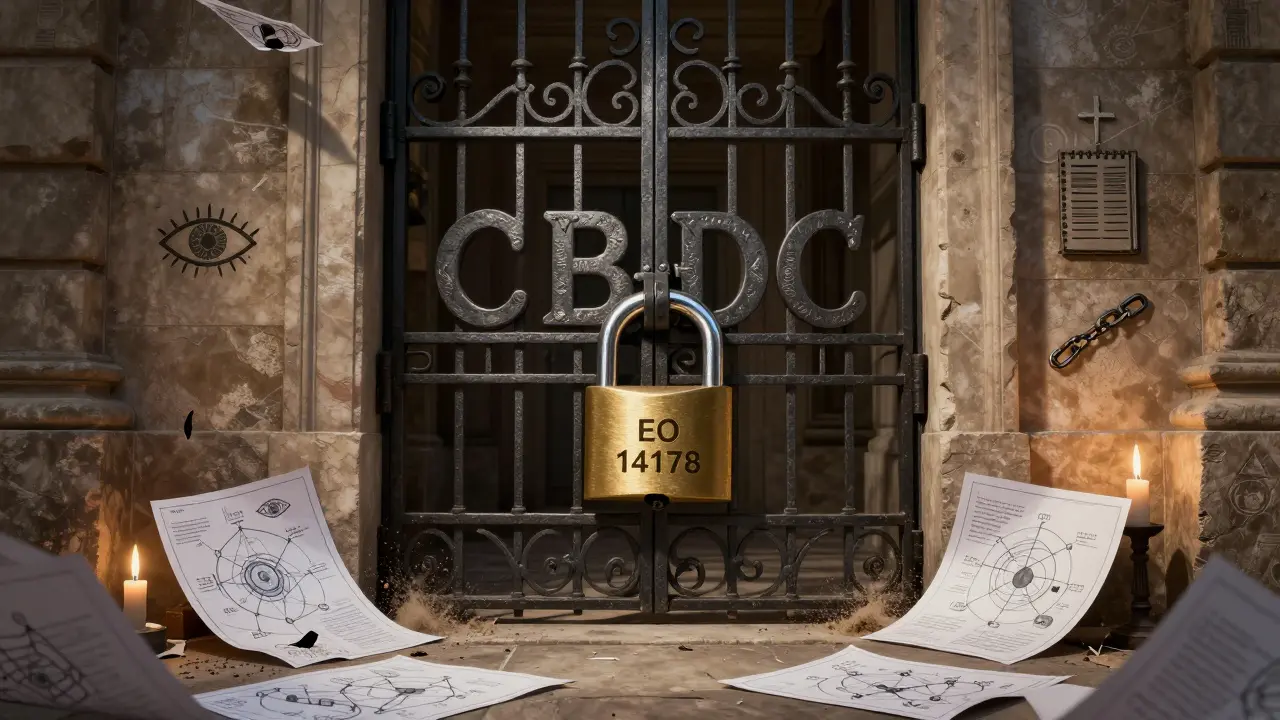
US CBDC Development Halted: Why There Will Be No Digital Dollar
The U.S. has officially halted all development of a digital dollar after President Trump issued Executive Order 14178 in 2025. While other countries move forward with central bank digital currencies, the U.S. is now the only major economy standing still.