
Global CBDC Development Comparison Tool
United States
No CBDCStatus: Officially halted under Executive Order 14178 (2025)
Select Country
Select a country to compare
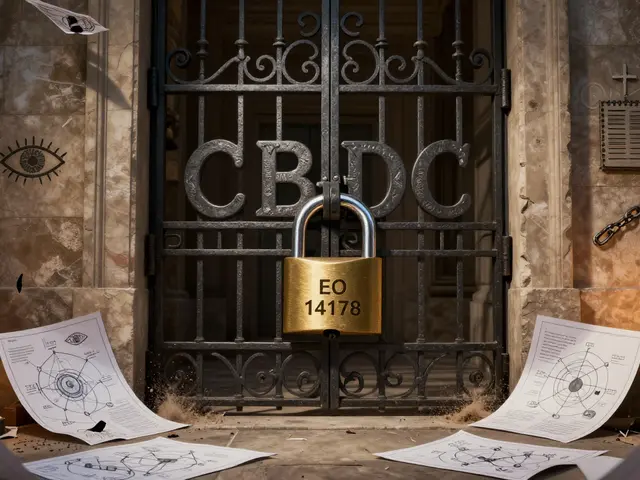
The United States is not building a digital dollar. Not now. Not under this administration. In early 2025, President Donald Trump signed Executive Order 14178, shutting down every federal effort to develop a central bank digital currency (CBDC). This wasn’t a delay. It wasn’t a pause. It was a full stop. The so-called "FedCoin"-a government-backed digital version of the U.S. dollar-is officially off the table.
What Was the Digital Dollar Supposed to Be?
Before the halt, the U.S. had spent years studying a digital dollar. The Federal Reserve, Treasury Department, White House, and other agencies formed a multi-agency working group in March 2023. Their job? To figure out how a U.S. CBDC could work. They looked at privacy, security, infrastructure, and even how it might interact with global payments. The goal wasn’t to replace cash overnight. It was to prepare for a future where digital money is the norm. But here’s the thing: the U.S. never got past the research phase. No pilot program launched. No test version rolled out to banks or consumers. Even as other countries moved forward, the U.S. stayed stuck in planning mode. And now, that planning is over.Why Did the U.S. Stop?
The official reason? Concerns over financial surveillance and civil liberties. The administration argued that a digital dollar could give the government too much control over how people spend their money. Think about it: if every transaction is recorded on a government ledger, it’s easier to track, freeze, or block payments. In a country where banks already file over 26 million suspicious activity reports per year, adding a digital layer could amplify those powers. That’s not just theoretical. In 2022 alone, the IRS and Treasury used financial data to flag millions of transactions for review. A CBDC would make that process faster, deeper, and harder to avoid. For many Americans, that’s a red flag-not a feature. There’s also political symbolism. The Biden administration had pushed CBDCs as part of a broader agenda to modernize finance. Trump’s order was a clear break. It wasn’t just about policy-it was about rejecting the previous administration’s vision. The message was simple: if the government doesn’t need to issue digital money, then it shouldn’t.What’s Happening Elsewhere?
While the U.S. stepped back, the rest of the world kept going. As of 2025, 134 countries and currency unions are working on CBDCs. Fifty-three are running live pilot programs. Eleven have already launched full digital currencies-including Nigeria’s eNaira, Jamaica’s Jam-Dex, and the Bahamas’ Sand Dollar. Even Europe didn’t wait. The European Central Bank is deep into its digital euro pilot, testing how wholesale transactions between banks could settle using blockchain and central bank money. Germany, the UK, and Mexico are all in development. China’s digital yuan has been in use since 2020 and now handles billions in daily transactions. The U.S. is now the only major economy not pursuing a CBDC. Among the G-20, 19 countries are actively exploring digital currencies. The U.S. is alone.
What Does This Mean for Businesses and Investors?
For financial institutions, the U.S. halt creates a gap. Many investors want to trade tokenized assets-stocks, bonds, real estate-on blockchain platforms. But without a sovereign digital dollar, there’s no trusted, government-backed digital cash to settle those trades. That’s where private companies step in. Fnality International, a consortium backed by State Street and other major banks, is building a private digital dollar system. It’s not a CBDC. It’s a stablecoin backed by U.S. dollars held in reserve. But it’s not the same thing. It’s not issued by the Fed. It’s not legal tender. And it’s not immune to regulatory crackdowns. State Street has said that having a "high-credit, quality digital cash asset" is essential for institutional adoption. Without it, U.S. firms may lag behind global competitors who can settle transactions instantly using central bank digital money.Will Private Stablecoins Fill the Void?
Maybe. But it’s risky. Stablecoins like USDC and USDT are already used widely-but they’re not regulated like bank deposits. If one fails, there’s no federal backstop. The new administration is pushing for clearer rules for private digital assets, but those rules aren’t in place yet. And here’s the catch: private stablecoins don’t solve the same problems as a CBDC. They don’t help unbanked households. They don’t reduce cross-border payment costs. They don’t give the government tools to deliver emergency aid directly to citizens during a crisis. The U.S. is betting that innovation from Silicon Valley and Wall Street can replace what the government won’t build. That’s a gamble. And it’s one that other countries aren’t taking.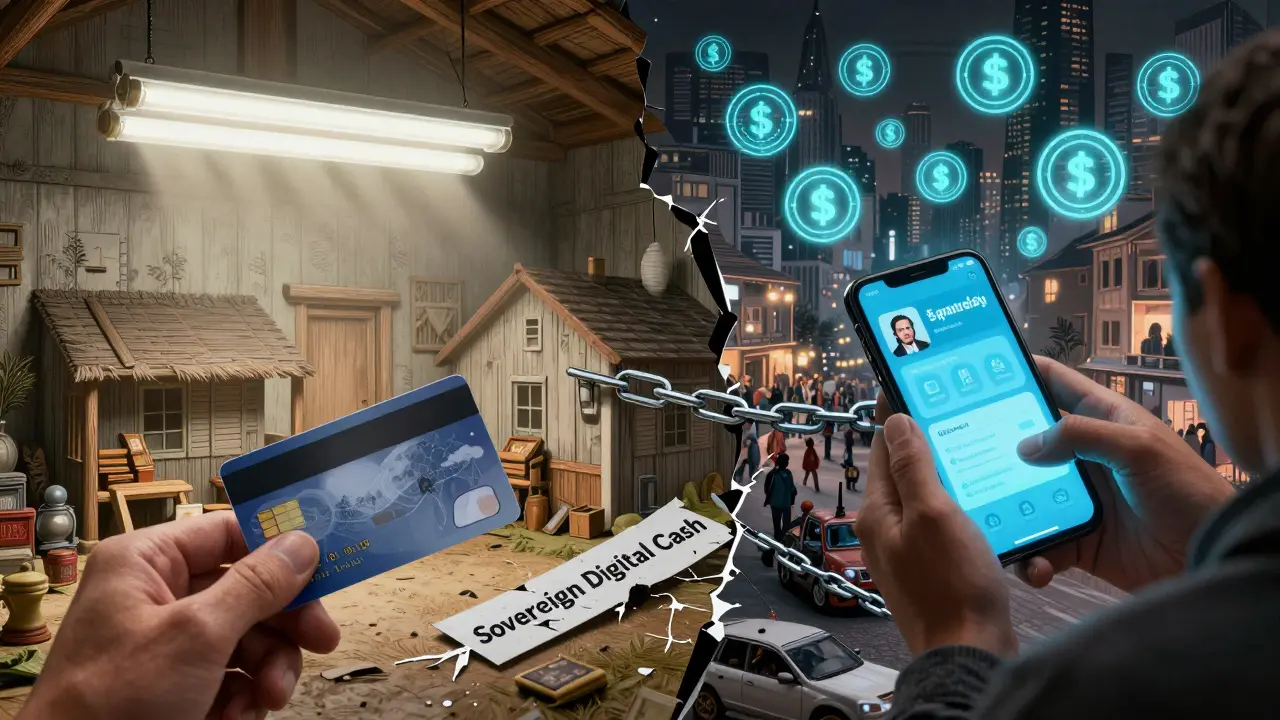
What About Financial Inclusion?
Sixty-two percent of central banks around the world say financial inclusion is their top reason for pursuing CBDCs. In places like Nigeria and Jamaica, digital currencies have helped people without bank accounts send and receive money using just a phone. In the U.S., over 5% of households-about 17 million people-are still unbanked or underbanked. Many of them rely on expensive check-cashing services and prepaid cards. A digital dollar could have changed that. But now, there’s no plan to address it. The administration argues that private fintech apps like Cash App and PayPal already serve this need. But those apps still rely on traditional banks. They’re not direct access to central bank money. And they’re not guaranteed to stay free or accessible.What’s Next?
The digital dollar is dead-for now. But that doesn’t mean the conversation is over. If a future administration reverses this order, the research from the last five years still exists. The infrastructure, the studies, the pilot designs-they’re all sitting in federal servers. For now, the U.S. is choosing a different path: let private companies innovate, regulate them loosely, and hope they don’t break the system. It’s a hands-off approach that could save privacy, but it might also leave the U.S. behind in the next wave of global finance. The rest of the world is moving forward. The U.S. is standing still. And the question isn’t whether a digital dollar will come back. It’s whether the country can afford to wait.Is the digital dollar completely canceled?
Yes, under Executive Order 14178 signed in early 2025, all U.S. government efforts to develop a central bank digital currency (CBDC) have been halted. The Federal Reserve has confirmed it will not issue a digital dollar so long as its current chair remains in office. There are no active development projects or pilot programs underway.
Why did the U.S. stop developing a digital dollar?
The primary reason cited was concern over government surveillance and civil liberties. Officials argued that a digital dollar could enable excessive monitoring of financial transactions, building on existing systems that already require banks to file over 26 million reports annually. The administration also viewed the CBDC as a policy priority of the previous administration and chose to reverse it as part of a broader regulatory reset.
Are other countries still building digital currencies?
Yes. As of 2025, 134 countries and currency unions are working on CBDCs. Fifty-three are running live pilot programs, and 11 have fully launched digital currencies. Major economies like the European Union, China, Japan, Australia, and all BRICS nations are actively developing or testing their own versions. The U.S. is now the only G-20 country not pursuing a CBDC.
Can private stablecoins replace a digital dollar?
They can partially fill the gap, but they’re not the same. Private stablecoins like USDC and USDT are issued by companies, not the government. They rely on bank reserves and are subject to corporate risk and regulatory uncertainty. A digital dollar would be direct, sovereign money-backed by the full faith and credit of the U.S. government. Stablecoins don’t offer the same security, accessibility, or policy tools.
Will the U.S. ever create a digital dollar again?
It’s possible, but not soon. Any future administration would need to reverse Executive Order 14178, rebuild political support, and restart years of research. There’s no active plan or timeline. The infrastructure and studies still exist, but without political will, they’re just files on a server.
How does this affect international trade and finance?
The U.S. is falling behind in global digital finance. Countries using CBDCs can settle cross-border payments faster, cheaper, and without relying on the U.S. dollar-based SWIFT system. Without a digital dollar, U.S. banks may lose competitiveness in tokenized asset markets and international settlements. Private solutions like Fnality may help, but they can’t replicate the authority or reach of a sovereign currency.
Stop overthinking. Just let the market decide.
Other countries? They're building digital dystopias. We're preserving liberty.
lol what a joke. one day usdc crashes and suddenly everyone's like 'where was the fed??'
also i miss the days when my bank didn't flag me for buying 3 energy drinks