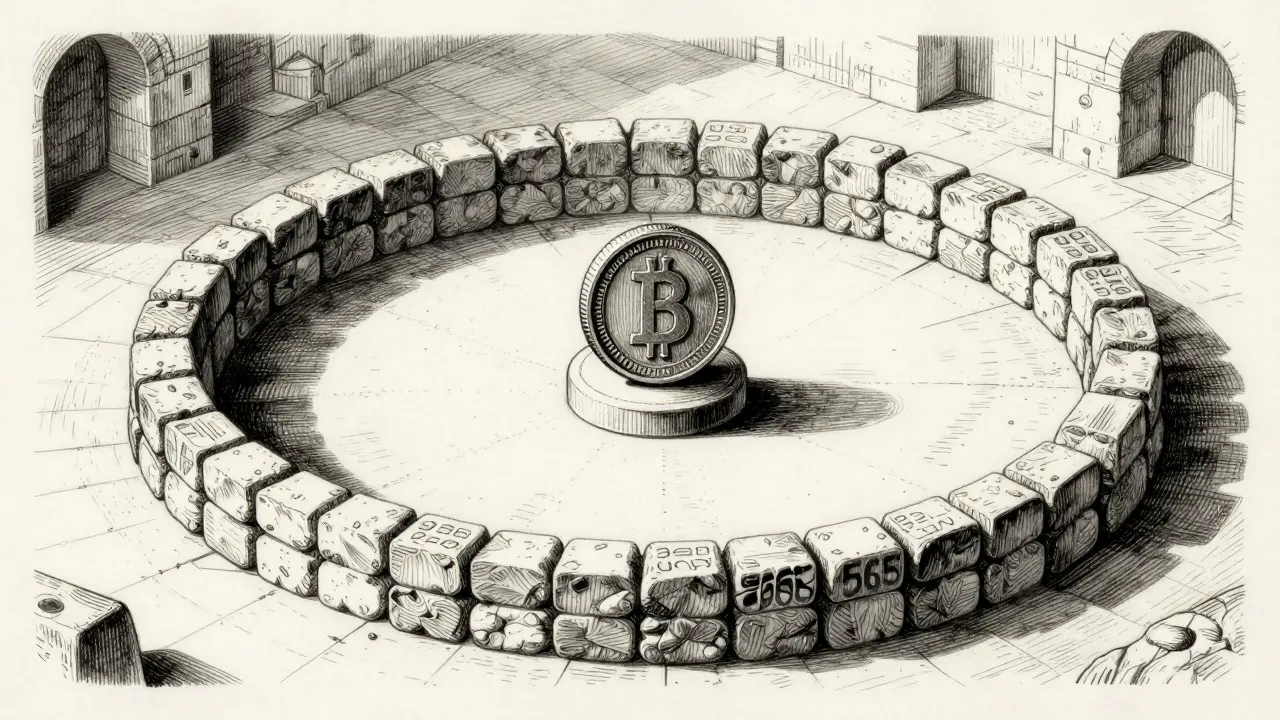
You might remember the headlines from a few years ago claiming that Portugal was a completely tax-free haven for digital assets. While the country remains incredibly friendly toward investors, the landscape shifted in 2023. By 2026, we have a clear, structured system that many consider the best balance between regulation and freedom in Europe. If you are holding your assets for the right amount of time, you can still walk away with 100% of your profits. But missing the deadline by even a single day means you owe the state money.
This guide breaks down exactly how the 365-day rule works, what qualifies as taxable income, and how you handle your paperwork without getting flagged by the tax authority.
The Core Rule: One Year Matters
The entire system hinges on a single metric: time. Under the Portuguese Personal Income Tax Code, capital gains from cryptocurrency are divided into two buckets based on how long you held the asset before selling it. If you hold your tokens for less than 365 days, the profit is considered short-term. If you wait longer than 365 days, the profit is long-term.
Here is the critical part regarding long-term holdings. When you sell a crypto asset you have owned for more than a year, the gain is tax-exempt. That means zero percent tax. You keep every cent of appreciation. This exemption applies to the conversion of crypto into fiat currency like Euros or US Dollars after the holding period expires. It creates a massive incentive to adopt a "buy and hold" strategy rather than chasing daily market moves.
Portugal, as a jurisdiction, defines cryptocurrency taxation under a dual-tier framework. The policy distinguishes between active traders and passive investors to encourage long-term stability in the financial sector. Unlike previous years, the tax exemption now explicitly requires a minimum holding period to apply for capital gains.
What Happens With Short-Term Gains?
If you flip coins quickly-say you buy Bitcoin in January and sell in June-the government classifies that profit as short-term capital income. These profits fall under Category G of the tax code. The standard treatment for these gains is a flat tax rate of 28%. This is simpler than some neighboring countries where progressive brackets might push your effective tax rate much higher if you earn a lot.
However, you do have some flexibility here. Instead of accepting the automatic 28% lump sum, you can choose to integrate these short-term gains into your total yearly income. This combined income is then taxed according to the ordinary income tax brackets. If your total income is low, the marginal rate applied to these gains might be lower than 28%. Conversely, if you already earn a high salary, integrating the gains might push you into a higher bracket, making the flat 28% rate the smarter choice.
For example, imagine you made 10,000 Euros in crypto profit this year by selling after six months. If you treat it as separate capital income, you pay 2,800 Euros in tax immediately. If you add that 10,000 Euros to your regular salary and your personal tax bracket is only 20%, you would pay less. Always run the numbers with a specialist before filing.

Avoiding the Trap of Professional Status
Holding crypto for a year isn't the only way to stay in the favorable zone. You also need to watch how you interact with the market. The tax authorities look closely at whether your activities constitute a professional business. This falls under Category B (Self-Employment Income). If the tax agency decides you are a professional trader, miner, or validator, the rules change drastically.
Activities often flagged as professional include high-frequency day trading, running mining farms, or providing paid services using crypto. If classified this way, your earnings are taxed progressively as normal business income. Rates range from 14.5% all the way up to 53% depending on your total annual earnings. This is significantly worse than the 28% cap for casual short-term investors.
To avoid this classification, most individual investors stick to occasional trading. There isn't a hard number of transactions that triggers this, but doing it multiple times a week consistently raises red flags during audits. Stick to strategic investments and let the compounding work for you.
Passive Income and Staking Rewards
Many people forget that staking rewards, yield farming returns, or interest from crypto lending platforms are treated differently than capital gains. Even if you hold the underlying asset for five years, the rewards you earn while holding them are usually taxed the moment they are received.
These passive streams fall under Category E (Capital Income). The law imposes a flat 28% tax on staking rewards and similar passive income. It does not matter how long you hold the original token; the reward itself is income. You cannot defer this tax until you sell. As soon as the wallet credits the interest, the tax liability exists.
| Type of Activity | Tax Category | Rate | Condition |
|---|---|---|---|
| Long-Term Sale (>365 days) | Exempt | 0% | Hold for 1+ year |
| Short-Term Sale (<365 days) | Category G | 28% Flat | Sell within 1 year |
| Staking / Lending Interest | Category E | 28% Flat | Upon receipt |
| Professional Trading | Category B | 14.5% - 53% | Business income |

Keeping Records and Reporting
You might hear whispers that if you don't tell the bank, they won't find out. That is a dangerous mindset. The realization principle means taxes are triggered when you convert crypto to fiat or spend it on goods. You must report this on your annual tax return filed with the Autoridade Tributária e Doméstica.
To calculate your liability accurately, you need detailed records. You must know the exact acquisition date, the price you paid in Euros at that time, and the sale price. This calculation establishes the holding period. If you bought Ethereum three different times over a year, you need to track each purchase separately. Many users use specialized software like CoinTracking or Koinly to import their transaction history and generate reports compatible with Portuguese filings.
Don't overlook cross-border issues. If your wallets are hosted outside the European Economic Area (EEA), there are sometimes additional complexities. Furthermore, if you move residency to Portugal, you generally only become subject to tax once you establish fiscal residency there, typically meaning spending more than 183 days in the country.
How Portugal Compares to Neighbors
By 2026, the context of European regulation has settled somewhat thanks to frameworks like MiCA, but tax laws remain national. Compared to neighbors, Portugal offers distinct advantages for long-term holders. Germany offers a similar one-year exemption, but the administrative burden in Berlin can feel heavier than in Lisbon.
France charges a uniform 30% tax on all crypto profits regardless of how long you hold. They do not give the 365-day pass. Spain sits somewhere in the middle with rates between 19% and 28%, but they lack the clarity Portugal now provides for the long-term exemption. Italy imposes a 26% CGT flat tax.
This makes Portugal particularly attractive for digital nomads relocating for lifestyle and tax efficiency. The certainty of the 365-day rule eliminates the ambiguity found in older interpretations of French or Spanish tax codes. For someone managing a portfolio globally, this predictability alone saves thousands in compliance costs.
Does swapping one crypto for another trigger taxes?
Generally, no. Converting one cryptocurrency directly into another cryptocurrency is not viewed as a taxable event because you did not realize fiat gains. Taxes are usually triggered only when you convert to traditional currency like Euros.
When does the 365-day clock start?
The clock starts on the day you acquire the asset. The holding period ends on the day before you dispose of it. To be safe, ensure at least 366 days pass between your purchase and your sale to guarantee you clear the threshold.
Are NFTs taxed the same way?
Not necessarily. Unique non-fungible tokens are often not classified as standard crypto assets. Depending on the intent, they could be taxed as movable property sales under different sections of the law, though recent guidelines suggest they may follow similar capital gains rules if treated as investment assets.
Do I need to declare crypto assets even if I didn't sell?
Portugal operates on a realization basis. You only report when you sell or exchange. However, you must declare your total wealth for specific thresholds if required by annual declarations, but simply holding usually incurs no immediate tax obligation.
Can I claim losses to offset gains?
Yes, capital losses can often be carried forward to offset future capital gains. You need to maintain precise records of loss-making trades to prove the loss occurred within a valid tax year to apply against subsequent profits.
Holding assets fundamentally changes your relationship with money itself. We tend to view currency as a tool rather than a store of value historically. The thirty-six-five-day rule forces us to reconsider what patience actually means in modern finance. Most people lack the discipline to sit on gains when the market fluctuates wildly every day. Portugal has inadvertently created a system that rewards stoicism over speculation. It is interesting how the government uses tax policy to shape investor behavior directly. We often complain about regulations without seeing the protective intent behind them sometimes. Short termism is killing financial stability across many different sectors globally today. Staking rewards complicate this narrative because they blur the lines of capital gains entirely. One must distinguish between earning interest and holding principal correctly though. The distinction matters immensely when you file your returns near the deadline. Missing a single day could alter your entire financial trajectory permanently. This creates an existential risk for those who trade on impulse rather than plan. We need to build systems that track our holdings automatically to survive this. Ultimately the state decides the rules of the game whether we like it or not.
You really need to lock in that calendar reminder for your sell date immediately.
Discipline is the key ingredient here guys dont skip it. This strategy beats chasing pump and dump schemes any day of the week. Trust me you will thank yourself later when you see zero tax.
Keep your records organized and dont let greed take over your portfolio management.
honestly this 365 day thing sounds super manageable once you get used to it. i guess the main headache is just tracking the exact purchase timestamps for everything.
seems like a lot easier than dealing with US short term capital gains rates. hopefully the local tax offices dont change their minds again soon though.
The structural framework provided by Lisbon appears quite comprehensive indeed.
One must observe the stipulations regarding professional status very closely though. Passive income classifications remain a point of contention for many advisors. It is prudent to seek counsel before executing large liquidations.
Compliance ensures longevity within the jurisdiction naturally.
Just hope the treasury doesnt decide to change the laws before you cash out next year.
waiting a full year really does pay off in the end i think
just remember to keep proof of the buy date always
paperwork can be annoying sometimes
better safe than sorry with the authorities
its great that people are finally getting clarity on this situation
i know taxes cause a lot of stress for individuals trying to migrate
staying calm and following the rules helps everyone stay safe
wish you all the best with your filings soon
Glad to see Portugal still has good options for investors worldwide.
Just follow the rules and wait one year for the tax free win. Life is much better when you keep your profits too. Positive vibes for anyone moving there to live soon.