
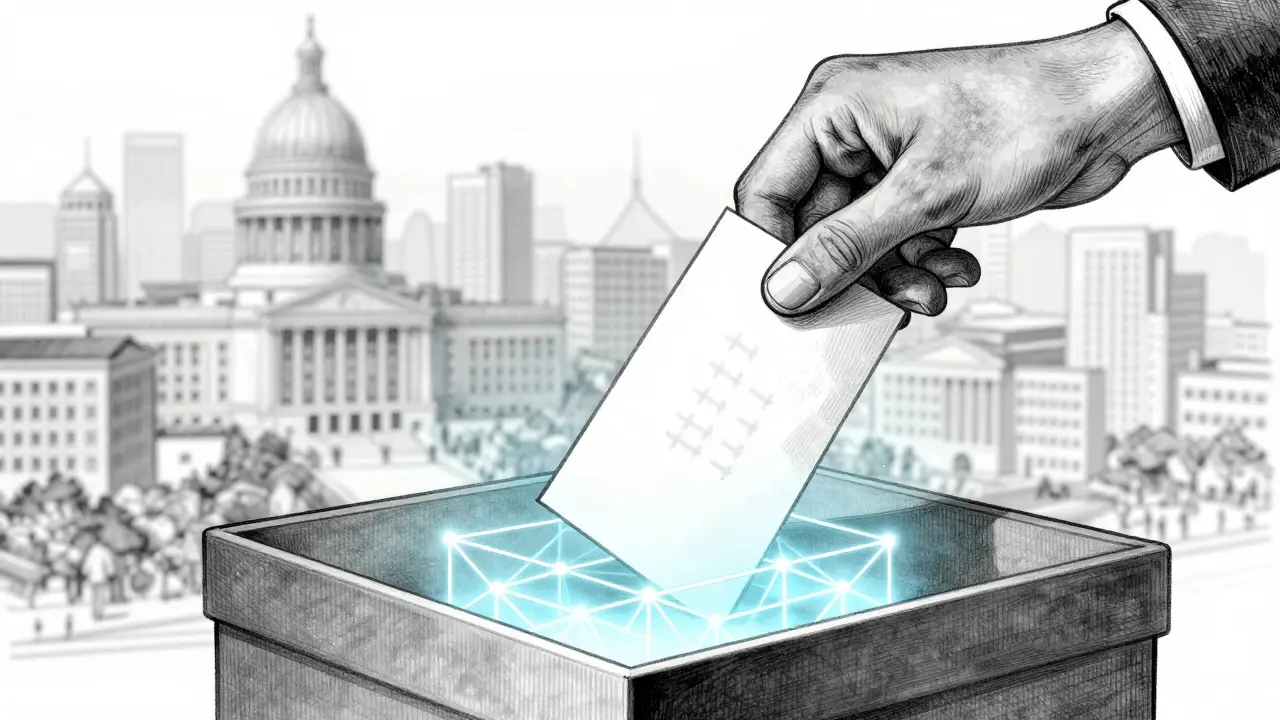
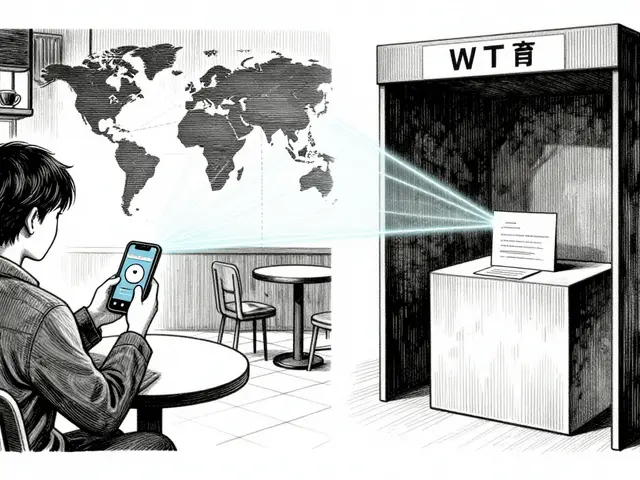
Imagine casting your vote from a coffee shop in Tokyo while living in New York, knowing with absolute certainty that your choice was recorded correctly and couldn't be altered by anyone-not hackers, not politicians, not even the election officials themselves. For years, this has been the seductive promise of blockchain electoral systems. But as we move through 2026, the reality is far more nuanced than the hype suggests.
The dream of immutable, transparent voting ledgers has captivated technologists and democrats alike since the early days of Bitcoin. Yet, despite billions in investment and countless pilot programs, blockchain hasn't replaced paper ballots or traditional electronic voting machines (EVMs) in major national elections. Why? Because securing a vote is harder than securing a bank transaction. In banking, if you make a mistake, you can reverse it. In an election, there are no do-overs.
How Blockchain Voting Actually Works
To understand where this technology is heading, you first need to grasp how it functions today. Unlike a centralized database where one server holds all the votes, a blockchain system distributes copies of the ledger across many nodes. This makes it incredibly difficult for any single actor to tamper with the results without detection.
A typical modern implementation relies on five core components:
- Voter Identity Verification: Using digital certificates or biometrics to ensure only eligible citizens can vote.
- Distributed Ledger Nodes: Servers (often Ethereum-based) that maintain the record. These require significant resources-minimum 4GB RAM and 100GB storage per node-to handle the load securely.
- Smart Contracts: Code written in languages like Solidity that automatically processes ballots according to pre-set rules.
- User Interface: A web or mobile app where voters cast their choices.
- Cryptographic Mixing: Protocols that separate the voter's identity from their vote, ensuring anonymity while preventing double-voting.
The magic happens through cryptography. When you vote, your choice is encrypted using AES-256 standards. Zero-knowledge proofs allow the system to verify you are eligible to vote without revealing who you are. Once recorded, the vote is hashed into the blockchain. If someone tries to change a vote later, the hash changes, alerting every node in the network to the tampering attempt.
| Feature | Traditional Electronic Voting Machines (EVMs) | Blockchain Electoral Systems |
|---|---|---|
| Data Structure | Centralized Database | Distributed Ledger |
| Transparency | Low (Black Box) | High (Publicly Verifiable) |
| Security Risk | Single-point failure vulnerability | Reduced attack surface (~73% lower risk) |
| Auditability | Requires physical recount | Instant cryptographic verification |
| Cost (National Pilot) | $200,000 - $500,000 | $500,000 - $2,000,000 |
| Deployment Time | 3-6 Months | 6-12 Months |
The Current State: Pilots and Real-World Tests
It’s easy to think blockchain voting is already everywhere, but the truth is, it’s still largely experimental. As of 2026, no major nation uses pure blockchain for its entire presidential or parliamentary election. However, several key players are pushing the boundaries.
Estonia remains the gold standard. While their i-Voting system isn’t purely blockchain-based, it pioneered remote digital voting in 2005. In the 2019 parliamentary elections, 44% of all votes were cast digitally. Estonian users report high satisfaction; one user noted voting from Thailand in just 47 seconds with full transaction verification. Estonia’s model shows that remote voting is possible, but it relies heavily on a trusted central authority, which blockchain aims to remove.
In the United States, experiments have been mixed. The 2020 West Virginia mobile voting pilot, which used blockchain technology, processed only 144 votes across two counties. It was hailed as a success for military and overseas voters but failed to scale due to throughput limitations. More recently, the 2024 Colorado municipal elections pilot processed over 12,000 votes with 100% auditability and zero security incidents. This suggests the technology works well for smaller, localized elections where volume is manageable.
Corporate governance is actually leading the charge here. Nasdaq’s Linq platform has processed thousands of blockchain votes annually since 2015. Shareholder voting doesn’t require the same level of secrecy as democratic elections, making it a safer testing ground. About 45% of current blockchain voting implementations are in corporate settings, compared to only 10% in national elections.

Why Isn’t Everyone Using It Yet?
If blockchain is so secure, why haven’t we adopted it nationwide? The hurdles are technical, social, and legal.
Scalability is the biggest bottleneck. Ethereum, the most common platform for these systems, processes about 15 transactions per second. A national election in a country like the US or India requires processing tens of thousands of votes per minute during peak hours. Current tech simply can’t keep up without massive upgrades or layer-2 solutions that add complexity.
Identity management is a nightmare. How do you prove you are who you say you are online without compromising privacy? Biometric data leaks are catastrophic. If a database of facial scans or fingerprints is hacked, you can’t change your face like you change a password. Experts warn that the front-end interface-the app on your phone-is often the weakest link. If malware infects your device before you click "submit," the blockchain records a corrupted vote as valid.
Complexity breeds distrust. Professor John Doe of Stanford’s Center for Democracy argues that blockchain introduces more attack vectors than it eliminates, particularly in authentication. For the average voter, understanding cryptographic verification is impossible. If you can’t verify it yourself, do you trust it? User feedback from Sierra Leone’s 2018 trial showed 87% satisfaction with transparency, but 63% worried about technical barriers for non-digital natives.
The Road Ahead: Hybrid Models and Regulation
Looking toward 2030, the consensus among experts is shifting from "pure blockchain" to "hybrid systems." The future likely involves combining blockchain’s transparency with traditional paper trails. MIT researchers are developing end-to-end verifiable systems where voters receive a receipt they can check against a public ledger, ensuring their vote was counted without revealing their choice.
Regulation is also catching up. The European Union’s eIDAS 2.0 framework, effective June 2026, establishes certification standards for blockchain voting. This could accelerate adoption in EU member states. Conversely, the US Election Assistance Commission currently prohibits blockchain for federal elections due to NIST security concerns. The National Institute of Standards and Technology (NIST) concluded in March 2024 that no current implementation meets federal standards for nationwide deployment.
Market analysts predict the blockchain voting market will grow from $187.5 million in 2023 to $1.2 billion by 2028. Gartner forecasts that 15% of national elections will include some blockchain component by 2030. However, Forrester warns that adoption will remain limited to niche applications like absentee voting, military ballots, and local referendums until scalability and security issues are fully resolved.
The most promising path forward is incremental. Start with low-stakes, high-convenience scenarios. Let military personnel and overseas citizens vote via blockchain because they already face unique challenges. Refine the technology, build public trust, and then expand. Estonia’s ongoing refinement serves as the leading model: don’t boil the ocean; start with a cup of water.
Frequently Asked Questions
Is blockchain voting completely anonymous?
Yes and no. Your identity is verified before you vote, but once the vote is cast, cryptographic mixing protocols separate your identity from your choice. The blockchain records the vote, but not who cast it. However, if your personal device is compromised before submission, your anonymity could be at risk.
Can blockchain votes be hacked?
The blockchain ledger itself is extremely resistant to hacking due to its distributed nature. However, the surrounding infrastructure-such as the voter’s smartphone, the internet connection, or the authentication server-can be vulnerable. Hackers might not alter the blockchain directly but could manipulate the vote before it reaches the chain.
Why hasn’t the US adopted blockchain voting federally?
The US Election Assistance Commission prohibits it because current systems do not meet federal security standards set by NIST. Concerns include scalability issues, lack of universal digital literacy, and the inability to provide a paper trail for recounts. Most states prefer proven methods like paper ballots with optical scanners.
What is the difference between Estonia’s i-Voting and blockchain voting?
Estonia’s i-Voting uses a centralized server managed by the state, secured by strong encryption. Blockchain voting uses a decentralized ledger where no single entity controls the data. Estonia’s system is faster and easier to manage but relies on trust in the government; blockchain reduces reliance on central authority but adds technical complexity.
When will blockchain voting be widely available?
Widespread use in national elections is unlikely before 2030-2035. We will likely see gradual adoption in local elections, shareholder meetings, and specialized voting groups (like military personnel) over the next few years as technology scales and regulations mature.
Hey folks, Bill here! 👋 Just wanted to chime in on the scalability issue mentioned. It’s not just about Ethereum being slow; it’s about the specific consensus mechanisms used for voting. Proof-of-Stake is way faster than PoW, but you still have that finality delay. I’ve been looking into Layer-2 rollups like Optimism or Arbitrum for this exact use case. They can handle thousands of TPS, which solves the bottleneck for national elections. The key is keeping the settlement layer secure while moving the heavy lifting off-chain. 🚀
The fundamental flaw in this entire discourse is the assumption that decentralized verification equates to democratic integrity. One must consider the ontological implications of removing the physical act of voting from the civic sphere. When we outsource our sovereignty to algorithmic ledgers, we are essentially engaging in a form of digital feudalism where the code is law, and the voter is merely a data point. The jargon-heavy technocrats fail to see that trust is not a cryptographic property but a social contract rooted in tangible presence. We cannot audit a soul with a hash function.
I really appreciate the balanced view here, Joshua. It’s easy to get caught up in the tech hype, but you’re right that trust is huge. My grandma still votes by mail because she doesn’t trust computers, and honestly? I get it. If I can’t hold a paper ballot in my hand, do I really feel like I participated? It’s not just about security; it’s about that human connection to the process. We need to make sure we don’t leave older generations behind in this digital rush.
stop making excuses for bad tech if its broken fix it dont hide behind 'social contracts' and 'ontological implications' nobody cares about your philosophy when your vote gets stolen by malware on your phone the front end is weak period simple as that
i totally agree with diana!! its so frustrating how they keep saying blockchain is safe when ur phone is literally full of trackers and ads lol. how can u trust an app from some random company to record ur vote securely?? its crazy. i mean estonia is cool but thats a whole different level of gov efficiency we dont have here. feels like theyre selling us a dream while ignoring the basic security holes in our daily devices. scary stuff tbh
Let’s cut through the noise for a second. The real killer isn’t the blockchain itself-it’s the identity layer. You can have the most immutable ledger in the universe, but if the gatekeeper (the biometric scanner or the digital ID cert) is compromised, the whole house of cards collapses. Think about it: in banking, if your account is hacked, you reverse the transaction. In voting, there is no undo button. That asymmetry is terrifying. We’re trying to solve a transparency problem with technology that actually amplifies the attack surface at the user endpoint. It’s like building a fortress with a screen door.
You people are all missing the point because you are too busy worshipping at the altar of Silicon Valley. This is nothing more than a Trojan horse for corporate control. Look at Nasdaq using it first. Why? Because shareholders are easier to manipulate than voters. They want to normalize this so that by the time they roll it out nationally, you won't even notice the subtle shifts in how votes are weighted. It's dystopian garbage wrapped in green energy slogans. Wake up!
hey kamal chill out man no need to be so dramatic. look i know its scary but maybe we should look at the hybrid models mentioned in the article. mit is working on receipts u can check. that sounds pretty solid to me. in india we have huge turnout so scalability is key. if blockchain can help count votes faster without errors why not try it in small towns first? lets not throw the baby out with the bathwater ok?
I think the hybrid approach makes the most sense. Pure blockchain seems too risky for now, especially with the NIST concerns. But having a paper trail that can be cryptographically verified? That sounds like a win-win. It keeps the accountability of paper but adds the efficiency of digital counting. I’d love to see more pilots like Colorado’s before we go national. Slow and steady wins the race here.
actually everyone here is wrong because zero knowledge proofs are already solved problems and the reason it isnt adopted is pure political sabotage by incumbents who want to keep the old corrupt systems in place. its not about security its about power. the tech has been ready for years but the elites refuse to let go of their grip on the narrative. stop listening to nist and start trusting the math