
Imagine walking into a bar and proving you are over 21 without handing over your driver's license. You don't reveal your name, address, or birthdate-just the fact that you meet the age requirement. This isn't science fiction anymore. It is the promise of Decentralized Identity, a technology that puts control of your personal data back in your hands instead of leaving it with tech giants and government databases.
For decades, we have lived in a world where every website, bank, and app demands our passwords and personal details. These centralized systems are convenient but incredibly fragile. When one company gets hacked, millions of users suffer. In 2024, weak or compromised credentials caused 81% of all data breaches, according to Verizon's Data Breach Investigations Report. That is a staggering number. But as we move through 2026, a new model is taking hold. It uses blockchain not for currency, but for trust.
What Exactly Is Decentralized Identity?
To understand where this is going, you first need to know what it is. Traditional identity management relies on a central authority. Google knows who you are because you log in with a Google account. Your bank knows who you are because they store your records in their private database. If that database is breached, your identity is exposed.
Decentralized Identity (DID) flips this script. Instead of storing your data on a server owned by a corporation, you store it in a digital wallet on your own device. When you need to prove who you are, you generate a cryptographic proof. This proof verifies your claim without revealing unnecessary information. Think of it like showing a bouncer a sticker that says "Verified Adult" rather than handing them your entire life history.
This concept originated from the Sovrin white paper in 2016, authored by Christopher Allen and supported by the Linux Foundation's Hyperledger project. Back then, it was theoretical. Today, it is practical. As of 2025, 67% of Fortune 500 companies were piloting decentralized identity solutions, according to Okta's Identity Security Report. The shift is happening faster than most people realize.
The Technical Backbone: DIDs and Verifiable Credentials
You might wonder how this actually works under the hood. It relies on two main standards developed by the World Wide Web Consortium (W3C).
First, there are Decentralized Identifiers (DIDs). A DID is a unique code that identifies you on a distributed ledger, like a blockchain. Unlike a username on Facebook, no single company controls your DID. You create it, you manage it, and you can use it anywhere. By July 2024, the W3C ratified the DID Specification 1.0, creating a universal language for these identifiers.
Second, there are Verifiable Credentials (VCs). These are digital documents issued by trusted authorities. For example, a university issues you a degree VC. A government issues you a passport VC. You store these VCs in your digital wallet. When an employer asks for proof of your education, you share the specific credential, not your entire transcript. The W3C released the Verifiable Credentials Data Model 2.0 in November 2024, making these credentials interoperable across different platforms.
| Feature | Centralized Identity | Decentralized Identity |
|---|---|---|
| Data Control | Held by corporations/governments | Held by the user |
| Security Model | Passwords + Central Database | Cryptographic Keys + Blockchain |
| Breach Impact | Massive exposure (millions affected) | Minimal (no central honeypot) |
| Privacy | Full data disclosure required | Selective disclosure (share only what's needed) |
| Speed (TPS) | High (100-500 TPS) | Moderate (15-35 TPS) |
Why Security Matters More Than Speed
If you look at the table above, you might notice that decentralized systems are slower. Traditional systems handle 100 to 500 transactions per second (TPS), while decentralized networks currently manage 15 to 35 TPS. For high-volume social media apps, this speed difference matters. But for identity verification, security trumps speed.
Consider the 2023 Okta breach, which exposed 36 million users. In a centralized system, attackers target the big database. In a decentralized system, there is no big database to steal. IBM Security estimates that enterprises using decentralized identity reduce identity-related breach costs by an average of $3.8 million per incident. That is a massive saving.
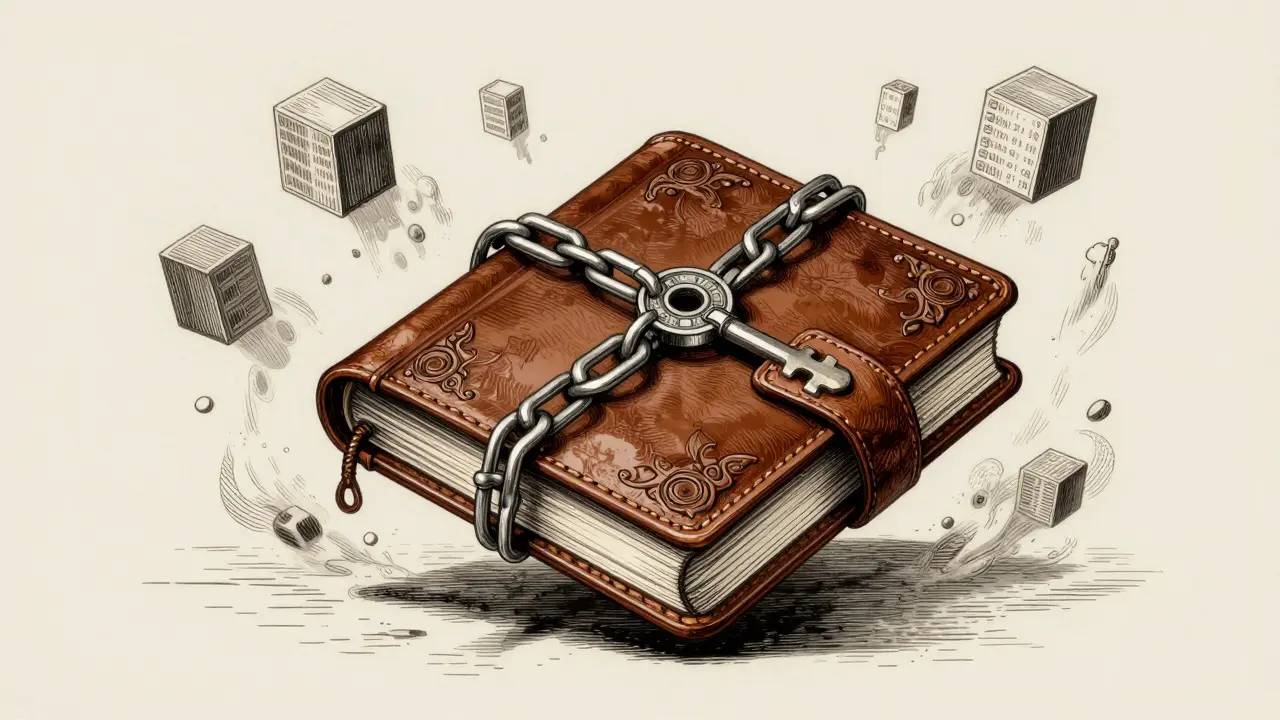
The secret sauce here is cryptography, specifically zero-knowledge proofs (ZKPs). ZKPs allow you to prove a statement is true without revealing the underlying data. For instance, you can prove you have enough money in your bank account to rent a car without showing the exact balance. Currently, 78% of decentralized identity solutions use zk-SNARKs, a type of ZKP, while newer zk-STARKs are growing rapidly at a 35% quarterly adoption rate. This technology reduces fraud by 92%, according to Javelin Strategy's 2025 Identity Fraud Report.
Real-World Use Cases: Beyond the Hype
It is easy to get lost in the technical jargon. Let's talk about how this affects real people. Healthcare and finance are leading the charge.
In healthcare, sharing patient records is notoriously slow and insecure. Doctors often fax records or email unencrypted PDFs. With decentralized identity, patients control their medical history. They grant temporary access to specialists via verifiable credentials. One Reddit user in the r/DecentralizedID community reported cutting data request processing time by 90% after implementing DIDs for healthcare records. Patients now decide exactly who sees what, and for how long.
In finance, Know Your Customer (KYC) processes are painful. Opening a bank account can take five days because banks duplicate efforts to verify your identity. With decentralized identity, you verify yourself once. Then, you share that verified status with any bank. This cuts onboarding time from five days to just 90 minutes. Financial services lead enterprise adoption at 38%, followed by healthcare at 29% and government at 24%, according to Deloitte's 2025 Global Identity Management Survey.
The Challenges We Still Face
Despite the progress, decentralized identity is not perfect. The biggest hurdle is implementation complexity. Integrating with legacy IT systems is hard. One CTO shared on Reddit that integrating DIDs with their HR system took six months instead of the promised three, costing an extra $375,000. Organizations typically need 35-50% more development resources initially to get this right.
Interoperability is another issue. There are currently 47 distinct DID methods, and they do not always play nice together. While the W3C is working on standards, many systems remain siloed. Additionally, key recovery is a major concern. If you lose your private key, you lose your identity. Dr. Lorrie Cranor from Carnegie Mellon University warned in her 2025 Senate testimony that without standardized recovery mechanisms, users could face permanent digital exclusion. Most modern solutions use "social recovery wallets," where trusted contacts help you regain access if you lose your keys, addressing this in 68% of implementations.
User education is also lagging. Only 28% of consumers understand what decentralized identity is, according to Pew Research Center. Until people feel comfortable managing their own digital keys, adoption will remain uneven.
Regulatory Tailwinds and Market Growth
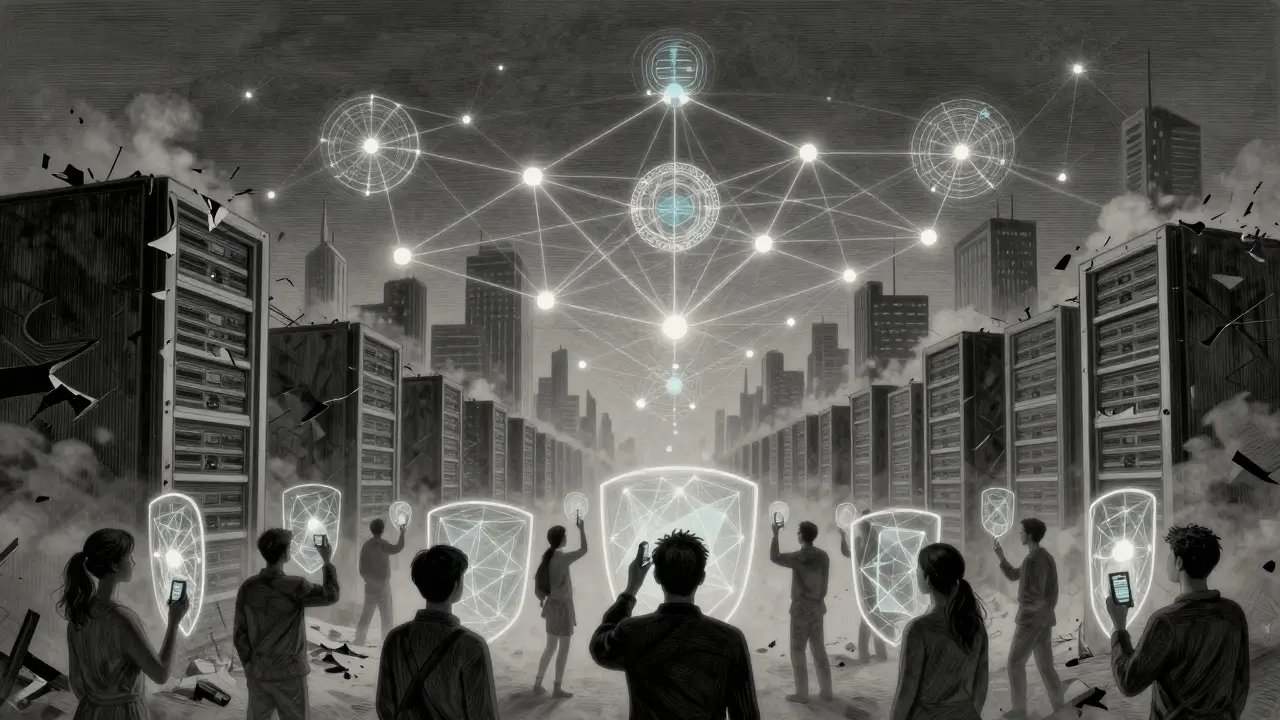
Governments are finally catching up. The European Union launched its Digital Identity Wallet framework in January 2025, mandating support for decentralized identity standards. Singapore released its Trust Framework v3.0 in April 2025. Even California has a pending Decentralized Identity Act. These regulations force companies to adopt secure, user-centric identity models.
The market reflects this momentum. The decentralized identity sector was valued at $4.9 billion in Q1 2025. MarketsandMarkets projects it will grow to $41.7 billion by 2030, a compound annual growth rate of 53.5%. Major players like Microsoft, with Entra Verified ID holding 32% market share, and IBM Verify Decentralized ID with 24%, are investing heavily. Microsoft plans to integrate decentralized identity directly into Windows 12 later this year.
What Comes Next? AI and Convergence
Looking ahead to 2027 and beyond, expect to see decentralized identity merge with artificial intelligence. AI can analyze behavioral patterns to provide adaptive authentication, making login seamless yet secure. The Identity Defined Security Alliance predicts that 73% of identity professionals will deploy AI-enhanced decentralized systems by 2027.
We will also see consolidation in the technical stack. The Linux Foundation plans to merge Hyperledger Indy with Aries into a unified framework by mid-2026. This will simplify development and improve interoperability. Gartner predicts that by 2027, 60% of enterprises will have moved from centralized stores to decentralized models, reducing identity-related breaches by 45%.
The future of identity is not about forgetting who you are. It is about remembering that you own it. As the technology matures, the password will become a relic of the past, replaced by a secure, private, and user-controlled digital existence.
Is decentralized identity safe for everyday users?
Yes, it is generally safer than traditional passwords. Because there is no central database to hack, the risk of mass data breaches drops significantly. However, users must protect their private keys. Losing your key means losing access to your identity, though social recovery wallets are mitigating this risk in most modern implementations.
How does decentralized identity differ from blockchain cryptocurrency?
While both use distributed ledger technology, decentralized identity focuses on authentication and data ownership, not financial transactions. Cryptocurrency tracks value; decentralized identity tracks trust and attributes. You don't need to buy tokens to use decentralized identity, although some networks may use small fees for transaction validation.
Will I still need passwords in the future?
Likely not for most interactions. As decentralized identity becomes standard, you will log in using biometric scans or hardware keys that trigger cryptographic proofs. Passwords will be phased out because they are the weakest link in cybersecurity, responsible for the majority of data breaches.
What happens if my phone breaks or I lose my digital wallet?
This is a critical challenge known as key recovery. Modern systems use multi-factor recovery methods, such as designating trusted friends or family members as guardians. If you lose access, these guardians can collectively authorize a reset. Some systems also allow backup codes stored in secure physical locations.
Are there laws regulating decentralized identity?
Yes, regulations are emerging globally. The EU's Digital Identity Wallet framework is already effective, and countries like Singapore and potentially California are establishing legal frameworks. These laws aim to ensure that decentralized identity systems are secure, interoperable, and respect user privacy rights.