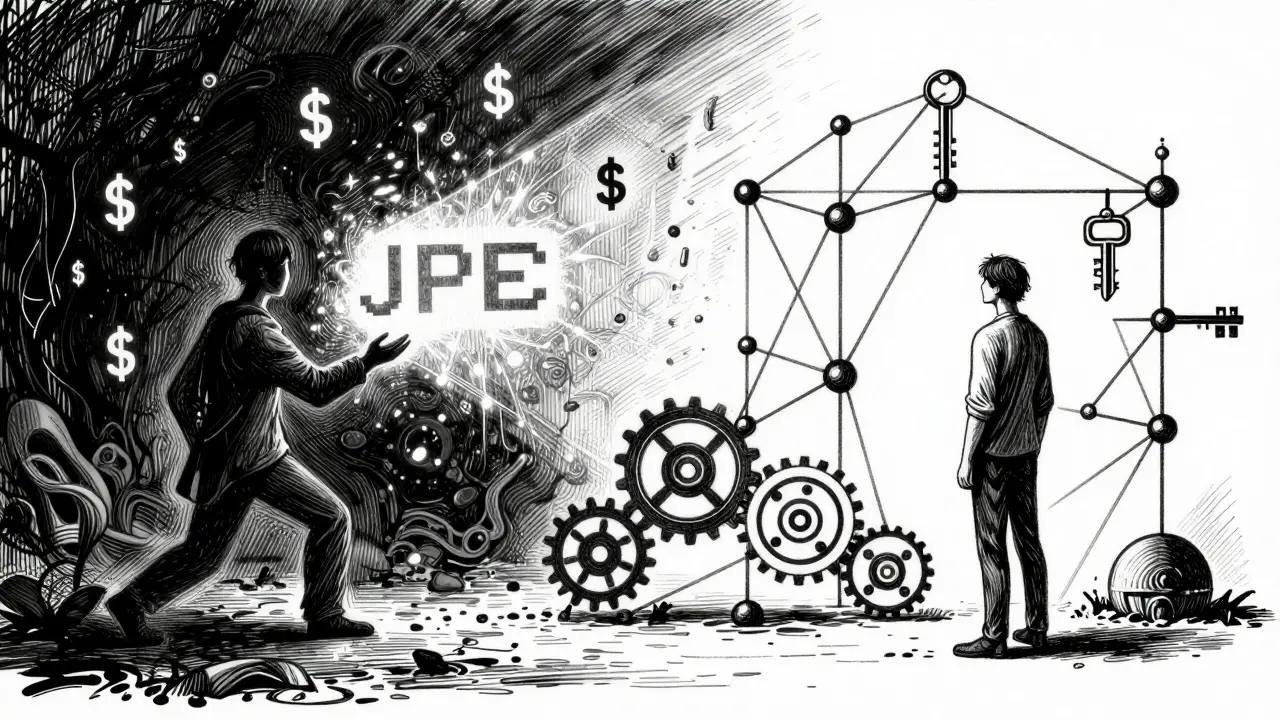
Remember when buying a digital image meant paying $69 million for a JPEG? That era of wild speculation is over. But if you think blockchain art died with the hype, you’re missing the real story. The market has shifted from gambling to building. Today, blockchain digital art is about utility, sustainability, and genuine creative control. We are moving past the 'right-click save' debate into a world where digital assets have tangible value, automatic royalty structures, and deep integration with artificial intelligence.
The Shift from Speculation to Utility
The narrative around digital collectibles changed drastically between 2021 and 2025. Early adopters bought tokens hoping for quick flips. Now, the focus is on what those tokens actually do. This shift is reflected in the data. While pure speculative revenue for NFTs dipped to an estimated $479.1 million by 2026, the broader digital art ecosystem is booming. Projections show the market growing at a compound annual growth rate (CAGR) of 17.3%, expanding from $5.8 billion in 2025 to nearly $17.72 billion by 2032.
Why the divergence? Because buyers want more than a picture. They want access. A modern digital artwork might grant entry to exclusive physical events, unlock private community channels, or provide fractional ownership in real-world assets like vintage wine or real estate. This is the concept of utility-driven NFTs, which combine artistic value with functional benefits such as membership access or asset ownership rights. When an artist releases a collection today, they aren't just selling files; they are launching a service layer attached to that file.
AI Integration: The New Creative Engine
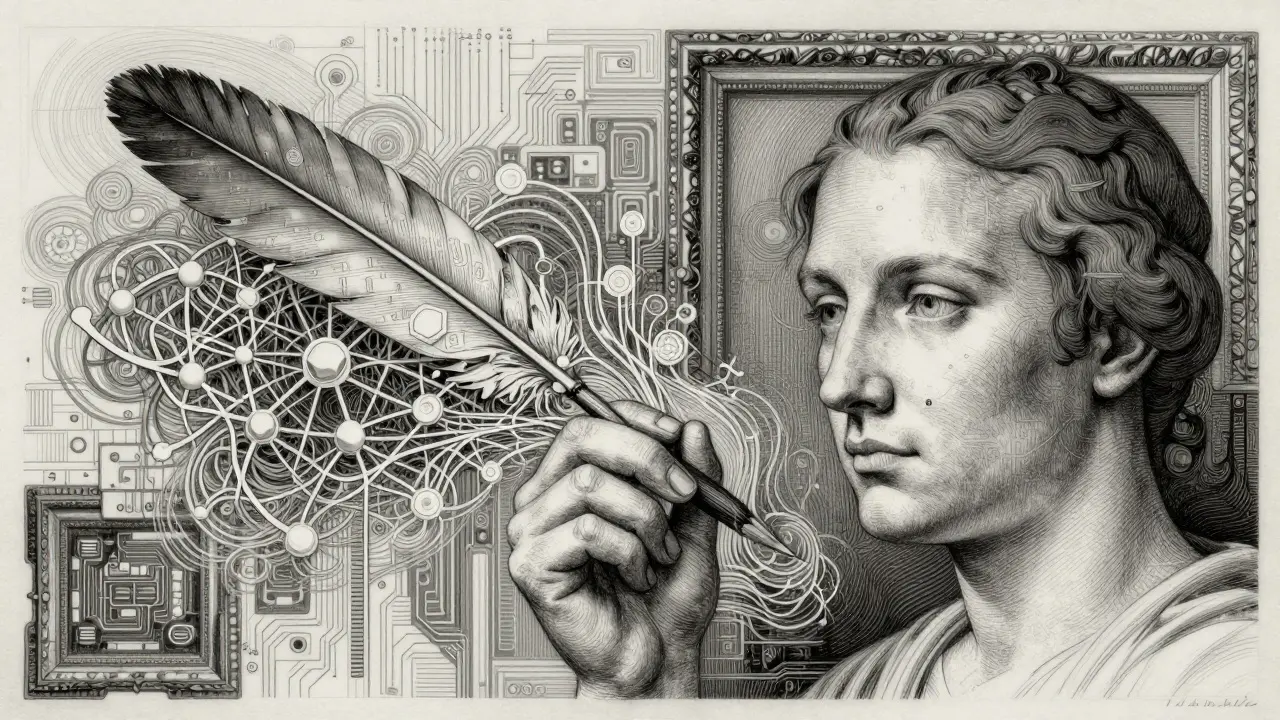
If blockchain provides the infrastructure for ownership, Artificial Intelligence is providing the engine for creation. The fusion of AI and blockchain is creating dynamic artworks that evolve over time. Static images are being replaced by generative pieces that change based on real-time data feeds, weather patterns, or viewer interactions.
Leading figures in this space include artists like Refik Anadol, who uses massive datasets to create immersive installations, and Takashi Murakami, who integrates AI tools into his workflow. For the average creator, tools like Adobe’s Generative Fill allow for rapid prototyping and texture generation. This doesn't replace human creativity; it amplifies it. You define the vision; the AI helps execute the complex visual elements. The resulting work is then minted on-chain, ensuring that even if the code evolves, your specific version and its provenance remain recorded permanently.
Solving the Sustainability Crisis
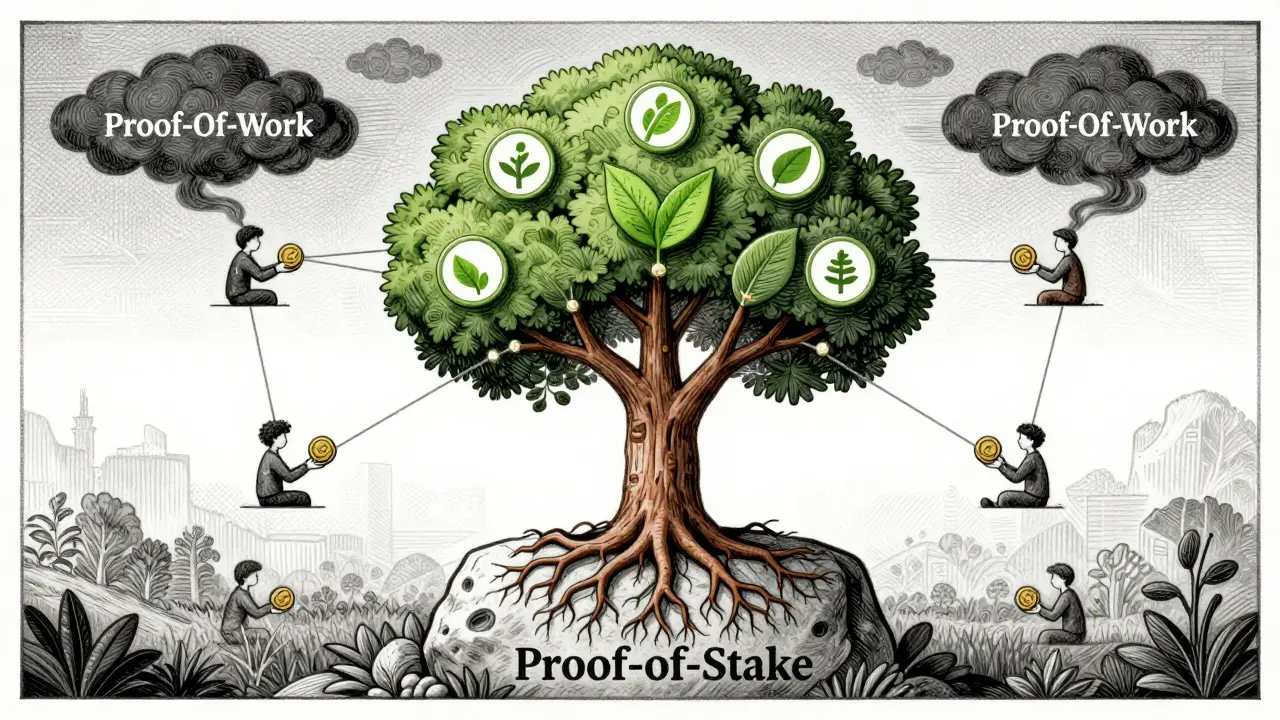
You can’t talk about the future of blockchain art without addressing the elephant in the room: energy consumption. The early days of Ethereum relied on Proof-of-Work, a process that consumed vast amounts of electricity. Critics argued that digital art was inherently environmentally destructive. That argument no longer holds water.
Most major platforms have migrated to Proof-of-Stake consensus mechanisms. This switch reduced energy usage by approximately 99.95%. Networks like Solana and Polygon offer high throughput with minimal environmental impact. Even Ethereum’s Layer-2 solutions, such as Arbitrum and Optimism, allow for cheap, green transactions. Platforms like OpenSea have launched sustainability-focused collections to highlight this transition. As a buyer or artist, you can now verify the carbon footprint of a transaction directly through blockchain analytics tools. Green credentials are becoming a selling point, not a liability.
Smart Contracts and Automatic Royalties
One of the most persistent promises of blockchain art was fair compensation for creators. In the traditional art world, if a painting sells for millions years after it was created, the original artist sees none of that money. Blockchain changes this through smart contracts.
Smart contracts are self-executing contracts with the terms of the agreement directly written into code, enabling automatic royalty payments upon resale. When you buy a piece of digital art, a portion of every subsequent sale is automatically routed back to the creator’s wallet. No intermediaries, no legal battles, no delays. While enforcement across different marketplaces remains a technical challenge, the industry standard is shifting toward on-chain royalty standards that make opting out difficult for secondary markets. This ensures that long-term appreciation benefits the person who made the art, not just the speculator who flipped it.
Technical Barriers and User Experience
Despite these advancements, friction remains. For a non-technical artist, setting up a cryptocurrency wallet, understanding gas fees, and navigating multi-chain environments can feel like learning a new language. The learning curve typically ranges from two to four weeks for basic functionality, with advanced features requiring months of dedicated study.
However, user experience is improving rapidly. Wallet abstraction technologies are hiding the complexity of private keys behind familiar login interfaces. Marketplaces are integrating fiat on-ramps, allowing users to buy art with credit cards without ever touching crypto. The goal is invisibility: the blockchain should work in the background, securing ownership while the user focuses on the art itself. If you still have to send ETH to a string of random characters to buy a poster, the platform isn't ready for mainstream adoption yet.
| Feature | Traditional Digital Art | Blockchain Digital Art |
|---|---|---|
| Ownership Verification | Metadata only (easily altered) | Immutable ledger record |
| Royalties | None on resales | Automatic via smart contracts |
| Market Access | Local galleries, limited reach | Global, 24/7 marketplaces |
| Environmental Impact | Physical shipping/packaging | Low (with Proof-of-Stake chains) |
| Utility | Visual display only | Access, staking, fractional ownership |
Institutional Adoption and Legitimacy
The skepticism from traditional institutions has largely evaporated. Sotheby’s and Christie’s now regularly include NFTs in their auctions, signaling that digital art is a legitimate asset class. This isn't just about tech bros; it's about museums, universities, and corporations recognizing digital culture as valuable heritage.
Gartner forecasts that blockchain technology’s business value will exceed $3.1 trillion by 2030. This foundational support means that digital art won't be a niche hobby forever. It will become integrated into education, corporate branding, and government archives. We are seeing the rise of digital galleries like Saatchi Art and Artnet connecting global networks of buyers and sellers seamlessly. The barrier to entry is lowering, but the quality bar is rising. Only work with genuine artistic merit and utility will survive the next decade.
What Comes Next?
The future of digital art on blockchain is not about replacing physical art. It’s about expanding the definition of what art can be. Imagine owning a fraction of a famous painting, trading animated skins in a video game that retain value outside the game, or collecting data-driven portraits that reflect the history of our cities. The technology is maturing. The environmental concerns are being addressed. The economic models are stabilizing. For artists, this is the best time to experiment. For collectors, it’s the best time to look beyond the price tag and evaluate the utility and cultural significance of the work. The revolution didn't die; it just got to work.
Is investing in blockchain digital art risky?
Yes, there is inherent risk due to market volatility and technological changes. However, the risk profile has shifted from pure speculation to evaluating utility and long-term value. Look for projects with clear use cases, strong communities, and sustainable blockchain foundations rather than chasing viral trends.
How do I start creating digital art on blockchain?
Begin by setting up a compatible cryptocurrency wallet like MetaMask or Phantom. Choose a low-fee blockchain network such as Polygon or Solana for testing. Familiarize yourself with marketplace interfaces like OpenSea or Magic Eden. Start with simple static images before experimenting with generative or AI-integrated works.
Are NFTs still bad for the environment?
No, not anymore. The majority of major blockchains have switched to Proof-of-Stake consensus, reducing energy consumption by over 99%. Always check which network a project uses; avoid legacy Proof-of-Work chains unless they have significant carbon offset initiatives.
What is the difference between an NFT and a regular digital file?
A regular digital file can be copied infinitely with no proof of origin. An NFT is a unique token on a blockchain that verifies ownership, authenticity, and provenance. While anyone can copy the image, only one person owns the verified original linked to the blockchain record.
Will AI replace human artists in the blockchain space?
Unlikely. AI serves as a tool for enhancement and automation, similar to how Photoshop changed graphic design. Human curation, conceptual depth, and emotional connection remain critical drivers of value in the art market. The most successful projects combine human vision with AI efficiency.