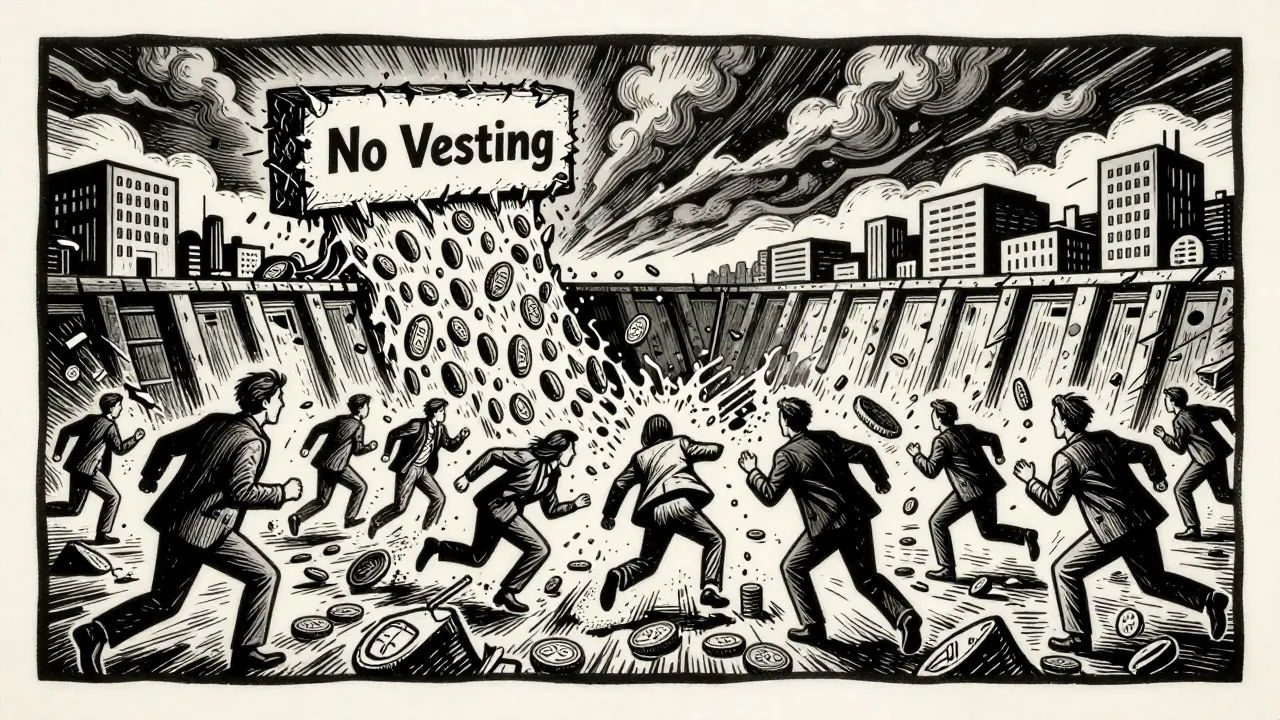
Imagine you just invested in a promising new cryptocurrency project. The team raises millions, and suddenly, thousands of tokens become available on the open market all at once. What happens next? Prices crash. Investors panic. The project loses credibility. This scenario played out repeatedly during the early days of Initial Coin Offerings (ICOs) when teams could dump their entire token allocation immediately after launch. To prevent this chaos, the industry adopted vesting schedules. These mechanisms control when and how tokens are released to team members, advisors, and investors, ensuring that everyone stays committed to the project’s long-term success rather than chasing quick profits.
Why Vesting Schedules Matter in Crypto
Vesting isn't just a bureaucratic hurdle; it is a fundamental trust signal. In traditional startups, equity vesting ensures founders don’t leave with half the company after six months. In the crypto world, where tokens are liquid assets that can be sold instantly on global exchanges, the stakes are even higher. Without vesting, there is nothing stopping a developer from selling their entire stake the day the token launches, leaving retail investors holding the bag.
A well-designed vesting schedule aligns incentives. It tells the market that the team believes in the future value of the token because they are locked into holding it for years. For investors, it provides a predictable supply curve, reducing the risk of sudden inflation spikes caused by mass sell-offs. For regulators, structured vesting demonstrates an effort to comply with securities laws by preventing short-term speculation and promoting long-term investment behavior.
Core Components of a Vesting Schedule
Understanding ICO vesting requires breaking down three key terms: Cliff, Vesting Period, and Release Rate. These components work together to create a timeline for token availability.
- The Cliff: This is the initial waiting period where no tokens are released. If a schedule has a one-year cliff, the recipient gets zero tokens for the first 12 months. If they leave or the project fails before then, they get nothing. After the cliff expires, a lump sum-usually representing the tokens earned during that first year-is released all at once.
- The Vesting Period: This is the total duration over which the remaining tokens are distributed. Common periods range from two to four years. The clock starts ticking either at the token generation event (TGE) or after the cliff ends, depending on the specific contract design.
- The Release Rate: This defines how frequently tokens unlock after the cliff. Most modern schedules use monthly releases. Some older models used quarterly or annual drops, but monthly is preferred now for better liquidity management and smoother price impact.
For example, a standard "1-year cliff, 3-year vest" structure means: Wait 12 months. Unlock 25% of the total allocation. Then, unlock the remaining 75% in equal monthly installments over the next 36 months. This simple math creates a predictable drip-feed of supply rather than a flood.
Common Vesting Structures in ICOs
While every project customizes its tokenomics, most ICOs fall into one of three structural categories. Knowing these helps you evaluate whether a project’s incentives are healthy or risky.
| Structure Type | Cliff Period | Vesting Duration | Best For | Risk Level |
|---|---|---|---|---|
| Standard Linear | 6-12 Months | 24-48 Months | Core Team Members | Low |
| Accelerated/Back-loaded | 12 Months | 36-60 Months | Long-term Retention | Very Low |
| Milestone-Based | Variable | Tied to Goals | Advisors & Partners | Medium |
| Investor Tiered | 3-6 Months | 12-24 Months | Early Backers | Medium-High |
1. The Standard Linear Model
This is the most common approach, borrowed directly from Silicon Valley startup culture. It typically features a one-year cliff followed by linear monthly vesting over three years. This structure is fair and transparent. It rewards loyalty without being overly punitive. If a team member contributes consistently, they see steady token growth. If they quit early, they lose significant potential earnings, which discourages job-hopping.
2. The Back-Loaded Model
Influenced by corporate structures like Amazon’s RSU plans, some blockchain projects use back-loaded vesting. Here, smaller percentages vest in the first two years, and larger chunks unlock in years three and four. This heavily incentivizes staying power. It signals to the market that the team expects the project to mature significantly before the bulk of their wealth becomes accessible. However, this can frustrate employees who want earlier liquidity, so it must be communicated clearly upfront.
3. Milestone-Based Vesting
Instead of time, these schedules tie unlocks to achievements. Tokens release only when the team hits targets like launching the mainnet, securing a major partnership, or reaching 100,000 active users. This is excellent for accountability but introduces complexity. What if a milestone is subjective? Disputes can arise. Smart contracts struggle with off-chain data, so these often require a trusted oracle or manual governance vote to trigger releases, adding administrative overhead.

Allocation-Specific Norms
Not everyone gets the same deal. Different stakeholders have different roles, risks, and expectations. Here is what is typical for each group in a 2026 ICO landscape.
Team and Founders
The core team usually receives 15% to 25% of the total token supply. Because they hold the keys to the project’s direction, their vesting is the strictest. Expect a 12-month cliff and a 3-to-4-year vesting period. Any deviation from this-such as a shorter cliff or immediate partial release-should raise red flags. It suggests the founders might plan to exit early. Security experts consistently recommend longer locks for founders to prove skin-in-the-game.
Advisors
Advisors typically receive 3% to 7% of the supply. Their role is guidance, not daily execution, so their vesting is lighter. A 3-to-6-month cliff followed by 12-to-18 months of vesting is standard. Since advisors often juggle multiple projects, locking them up for four years is unrealistic and counterproductive. Shorter schedules acknowledge their part-time contribution while still preventing immediate dumping.
Private and Public Investors
Investor allocations vary wildly based on when they bought in. Private sale participants, who buy at the lowest price, usually face stricter vesting to prevent arbitrage against public buyers. A 3-to-6-month cliff and 12-to-24-month vesting is common. Public sale tokens, however, are often fully vested immediately upon listing. This creates an imbalance: private investors wait, while public holders can sell instantly. Sophisticated projects now try to align these timelines more closely to reduce post-launch volatility.
Smart Contracts: The Enforcer
In traditional companies, vesting is tracked in spreadsheets and enforced by HR departments. In crypto, it is code. Smart contracts deployed on blockchains like Ethereum, Solana, or BNB Chain automate the entire process. When the vesting conditions are met-whether time-based or milestone-based-the contract automatically releases tokens to the recipient’s wallet.
This automation brings massive benefits. First, transparency. Anyone can view the vesting contract address on a block explorer and verify exactly when tokens will unlock. There are no hidden deals. Second, immutability. Once deployed, the rules cannot be changed unless the contract includes a governance upgrade mechanism, which itself must be voted on. Third, efficiency. No manual transfers mean no human error and no fees associated with individual transactions. The gas cost is paid once per batch release, not per user.
However, smart contracts are only as good as their code. Bugs or poorly designed logic can lead to frozen funds or premature releases. Audits by firms like CertiK or OpenZeppelin are essential. Always check if the vesting contract has been audited before trusting your tokens to it.

Red Flags to Watch For
As an investor or participant, you should scrutinize the vesting schedule in any whitepaper or tokenomics document. Look out for these warning signs:
- No Cliff: If team tokens start unlocking immediately, the risk of a dump is high. A cliff is non-negotiable for credible projects.
- Short Vesting Periods: Anything less than 12 months for team allocations suggests a lack of long-term commitment.
- Opaque Allocations: If the project doesn’t clearly state what percentage goes to team, advisors, and treasury, avoid it. Transparency is key.
- Unaudited Contracts: Never trust unaudited vesting logic. Code bugs can result in lost funds.
- Excessive Team Allocation: More than 25% for the team is aggressive. Combined with short vesting, it’s a major risk factor.
The Future of Vesting: DAOs and Hybrid Models
The landscape is evolving. With the rise of Decentralized Autonomous Organizations (DAOs), we are seeing community-vested tokens. Instead of a fixed schedule, token holders vote on acceleration or deceleration of vesting based on project performance. This adds a layer of democratic accountability but also complexity. Additionally, hybrid models combining time and milestones are becoming popular. For instance, 50% of tokens vest linearly over three years, while the other 50% unlock only when specific revenue targets are met. This balances predictability with performance incentives.
Regulatory pressure is also shaping vesting. Jurisdictions like Switzerland and the US are pushing for clearer compliance frameworks. Projects aiming for institutional adoption are adopting vesting structures that mirror traditional venture capital, including longer lock-ups and stricter reporting requirements. As crypto matures, vesting schedules will likely become more standardized, rigorous, and legally robust.
What is a cliff in an ICO vesting schedule?
A cliff is an initial period, usually 6 to 12 months, during which no tokens are released to the recipient. If the person leaves or the project fails before the cliff ends, they receive nothing. After the cliff expires, a lump sum of tokens-typically representing the first year's worth of vesting-is released all at once.
How long do typical ICO vesting periods last?
For core team members, vesting periods typically last between 24 and 48 months. Advisors often have shorter periods of 12 to 18 months. Investors may face 12 to 24 months of vesting depending on their entry round. These durations are designed to align incentives with the project's long-term development goals.
Are ICO vesting schedules enforced by law or code?
In the crypto space, vesting is primarily enforced by smart contracts on the blockchain. These automated programs release tokens according to pre-defined rules without human intervention. While legal agreements exist between parties, the actual transfer of tokens is governed by the immutable code of the smart contract, provided it is correctly implemented and audited.
Why do some projects use milestone-based vesting instead of time-based?
Milestone-based vesting ties token releases to specific achievements, such as launching a product or hitting user adoption targets. This ensures that stakeholders are rewarded for actual progress rather than just the passage of time. It encourages accountability and aligns payouts with tangible value creation, though it can be harder to implement technically due to the need for verifying off-chain events.
Is it normal for private investors to have longer vesting than public buyers?
Yes, this is common but controversial. Private investors buy tokens at a discount, so projects impose vesting to prevent them from immediately selling against public buyers who paid full price. However, this creates supply imbalance. Modern best practices suggest aligning vesting timelines more closely across all investor classes to ensure fairer market dynamics and reduce post-launch volatility.