Imagine trying to buy a coffee with Bitcoin in Algiers. In 2024, it was risky but possible. Today, in mid-2026, doing so could land you in prison for up to a year. That is the reality of the underground crypto market in Algeria, which operates as a direct response to the country's comprehensive criminalization of digital assets under Law No. 25-10.
This shadow economy didn't appear overnight. It evolved from one of the largest cryptocurrency markets in the Middle East and North Africa (MENA) region into a clandestine network. Despite severe legal penalties-including fines ranging from 200,000 to 1 million Algerian dinars ($1,540 to $7,700)-the demand for decentralized finance remains high. This article breaks down how this underground ecosystem functions, the specific laws driving it, and the risks traders face daily.
The Legal Wall: Understanding Law No. 25-10
To understand the underground market, you first need to understand what pushed it there. On July 24, 2025, Algeria enacted Law No. 25-10, a legislation that explicitly criminalizes eight categories of cryptocurrency activity. This was a massive escalation from the previous 2018 Financial Law, which banned crypto but lacked clear enforcement mechanisms.
The new law defines crypto assets as 'virtual instruments used as means of exchange via a computer system, without support from a central bank.' Under Article 6 bis, published in the Official Journal, the following activities are strictly prohibited:
- Issuing new tokens
- Purchasing or selling digital assets
- Using crypto as payment for goods or services
- Holding virtual currencies (even passive ownership)
- Trading for speculation
- Promoting crypto through advertising or content creation
- Operating exchange platforms
- Mining operations
The penalties are steep. First-time offenders face imprisonment from two months to one year and significant fines. Repeat offenses see these penalties doubled. This creates a legal environment where simply having a wallet on your phone can be considered a criminal act. The government justifies this by citing the need to prevent money laundering, curb terrorism financing, and protect citizens from fraud and 'uncontrolled speculation,' aligning with guidance from the Financial Action Task Force (FATF).
How the Underground Market Operates
If official channels are closed, how do people trade? The underground market relies on three primary mechanisms: peer-to-peer (P2P) networks, international exchange access, and stablecoin usage.
Peer-to-Peer Trading Networks
Most transactions happen person-to-person. Users connect through encrypted messaging apps like Telegram or Signal, often using code words to avoid detection. These networks are compartmentalized; you might know your counterparty, but they don't know who they got their coins from. This limits the damage if one link in the chain is exposed to authorities.
International Exchange Access
Since local exchanges are banned, users rely on global platforms. However, accessing these sites requires bypassing state-level internet censorship. Many Algerians use Virtual Private Networks (VPNs) to mask their IP addresses and appear as if they are browsing from other countries. This adds a layer of technical complexity that filters out casual users, leaving mostly sophisticated traders in the mix.
Stablecoins for Value Preservation
With the Algerian Dinar facing inflationary pressures, many users turn to stablecoins like USDT (Tether) or USDC. These assets pegged to the US dollar offer a way to preserve wealth outside the traditional banking system. Because they are less volatile than Bitcoin or Ethereum, they serve as a practical tool for savings rather than just speculative trading.
Risks for Participants: Beyond the Fine Print
Participating in the underground market is not just about breaking the law; it involves navigating a minefield of operational and financial risks.
| Risk Type | Description | Potential Consequence |
|---|---|---|
| Legal | Criminal prosecution under Law 25-10 | Prison time (up to 1 year), heavy fines, permanent criminal record |
| Financial | Asset seizure and lack of recourse | Total loss of funds if hacked or scammed; no insurance or legal protection |
| Operational | Surveillance and infiltration | Exposure of entire trading network to law enforcement |
| Technical | Use of unregulated platforms | Higher fees, slower settlement times, increased vulnerability to hacks |
One major issue is the premium pricing. Because supply is limited and risk is high, sellers charge higher rates. You might pay more for Bitcoin in Algiers than the global average because the seller needs compensation for the danger they are taking. Additionally, there is no customer support. If you send money to a scammer, there is no police station that will help you recover it-they will likely arrest you instead.
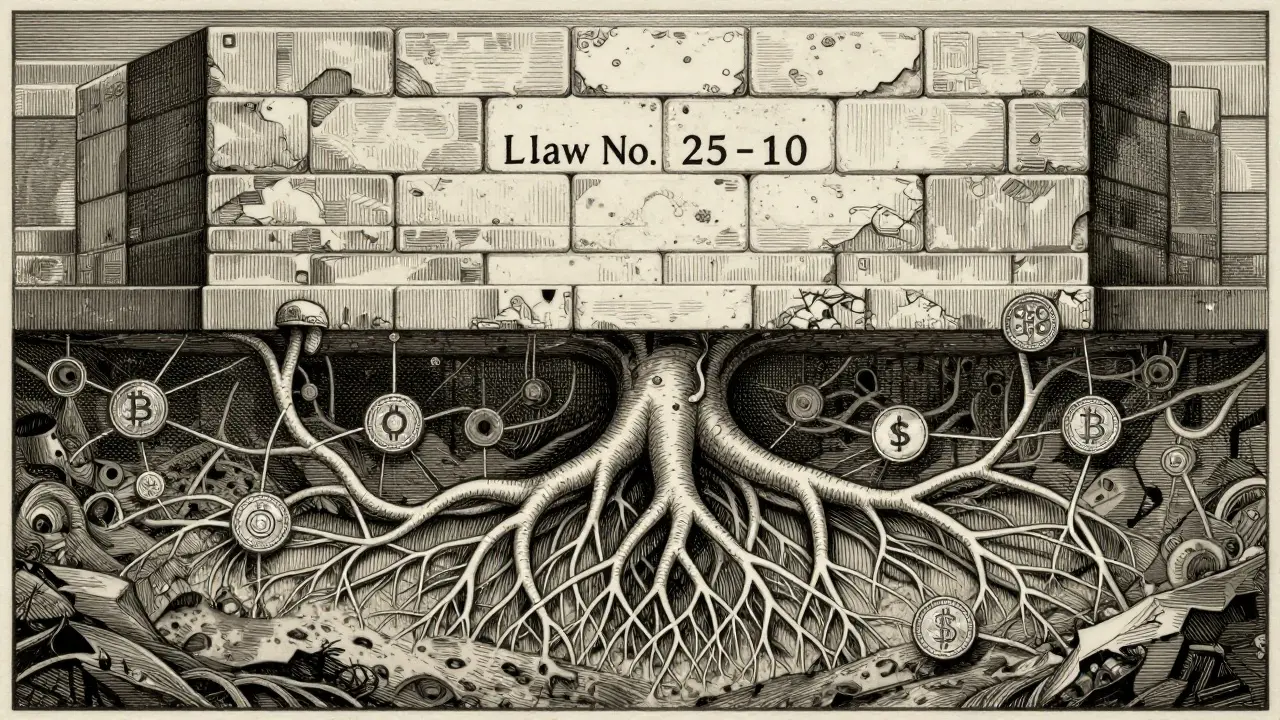
Market Dynamics: The China Parallel
Experts often compare Algeria’s situation to China’s comprehensive crypto ban in 2021. When China cracked down, the market didn’t disappear; it went underground and became more concentrated among sophisticated users. A similar pattern is emerging in Algeria.
Amir Haddadi, a North Africa-based fintech analyst, noted that Algeria’s move sends a clear message: the country does not intend to participate in the global experiment of decentralized finance. However, critics argue that complete prohibition drives activity into the shadows rather than eliminating it. This reduces regulatory oversight and potentially increases illicit financial flows.
The shift has also stifled innovation. Blockchain technology has been a driver for tech development in regions with supportive policies. By banning all aspects of crypto, including mining and development, Algeria risks deterring investment in its broader digital economy. Young developers who might have built startups are now forced to look abroad or operate in secrecy.
The Future Outlook: Enforcement vs. Technology
What happens next? The sustainability of the underground market depends on two factors: enforcement intensity and technological advancement.
If the government lacks the resources to monitor every digital transaction, the market may stabilize at reduced levels. However, if enforcement capabilities improve-through better internet monitoring tools or international cooperation-the cost of participation will rise further.
On the flip side, technology evolves quickly. Privacy-focused cryptocurrencies and decentralized exchange protocols make it harder for governments to track transactions. As these tools become easier to use, even non-technical users may find ways to bypass restrictions. Yet, the learning curve remains high. Navigating VPNs, secure wallets, and P2P escrow services requires skills that many average citizens do not possess.
For now, the underground crypto market in Algeria persists. It is a testament to the demand for financial alternatives in an economy with strict capital controls. But it is a dangerous game, played in the shadows, with real-world consequences for those caught.
Is it illegal to hold cryptocurrency in Algeria?
Yes. Under Law No. 25-10, enacted in July 2025, holding virtual currencies is strictly prohibited. Even passive ownership can lead to criminal charges, fines, and imprisonment.
What are the penalties for trading crypto in Algeria?
Penalties include imprisonment from two months to one year and fines ranging from 200,000 to 1 million Algerian dinars ($1,540 to $7,700). Repeat offenses face doubled penalties.
How do people buy crypto in Algeria despite the ban?
Users rely on peer-to-peer (P2P) networks via encrypted apps, use VPNs to access international exchanges, and trade stablecoins like USDT to preserve value. These methods carry high legal and security risks.
Why did Algeria ban cryptocurrency?
The government cites the need to prevent money laundering, curb terrorism financing, protect monetary sovereignty, and shield citizens from fraud and uncontrolled speculation, aligning with FATF guidelines.
Is the underground crypto market growing or shrinking?
While exact numbers are unknown due to its clandestine nature, experts believe the market has shifted underground rather than disappeared. It is likely smaller and more concentrated among sophisticated users compared to pre-2025 levels.

It is absolutely laughable that people think they can outsmart a government with some encrypted messaging apps. The state has the resources to track every single transaction if they actually wanted to. This isn't freedom, it's just stupidity meeting inevitable consequences.
You are missing the fundamental point about economic necessity here. When a currency loses its value due to inflation and capital controls, people do not simply stop trying to preserve their wealth. They adapt. It is not about outsmarting anyone; it is about survival in an economy that offers no other viable options for savings. The aggression you display ignores the human element of financial desperation.
I have been following this situation closely... and it seems like a classic case of prohibition creating a black market. The penalties are severe... yes... but so is the risk of losing everything to inflation. People will always find a way... whether through P2P networks or stablecoins. It is fascinating how technology bridges these gaps... even when laws try to tear them down.
It’s wild to see how similar this is to what happened in China back in 2021. The market didn’t vanish, it just went deeper underground. I’ve talked to folks who use Telegram groups for trades, and the trust factor is huge. You don’t know your counterparty, but you need to trust them enough to send cash or crypto. It’s a dangerous game, sure, but hey, when the official system fails you, you improvise. 🤷♂️
the reality is that banning crypto doesn't stop the demand for financial tools it just pushes them into the shadows where there is zero protection for the user. i feel bad for the average person who gets scammed because they cant go to the police without getting arrested themselves. it creates a cycle of fear and vulnerability that hurts the most innocent people first.