
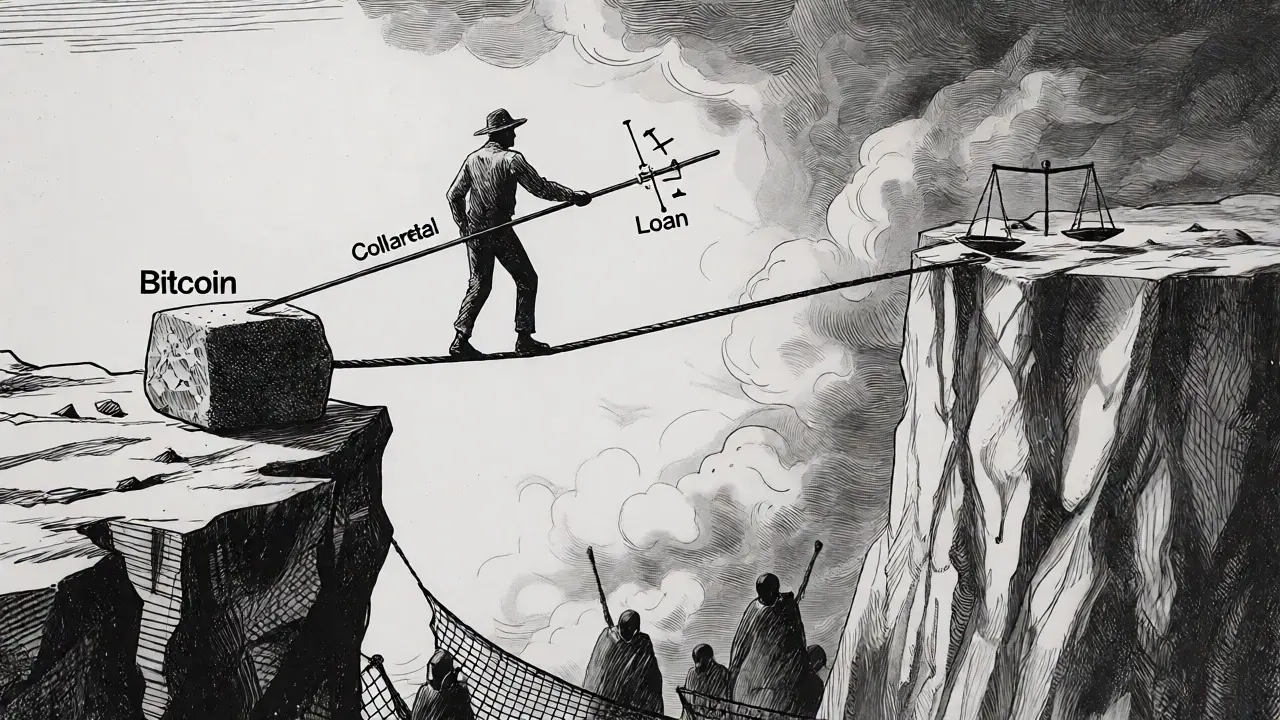
You own Bitcoin. It’s sitting in your wallet, doing absolutely nothing while the market chops sideways. You need cash for a car repair or maybe you want to buy that new laptop, but selling your BTC triggers a taxable event and kills your potential upside if the price rips higher next month. This is the exact pain point crypto borrowing solves. Instead of selling, you use your digital assets as security for a loan. You get liquidity now, keep your coins, and avoid the tax man until you actually sell. But it’s not free money. It’s a high-wire act with specific rules about how much you can borrow, what happens when prices drop, and who holds your keys. If you don’t understand the mechanics of collateral and liquidation, you could lose your stack faster than you said "HODL."
The Core Concept: Why Borrow Against Crypto?
Think of it like a pawn shop, but for digital gold. In traditional finance, you might take out a home equity line of credit (HELOC) against your house. You don’t sell the house; you just borrow against its value. Crypto-backed loans work on the same principle. You deposit cryptocurrency such as Bitcoin or Ethereum into a platform-controlled wallet, and they give you fiat currency (like USD) or stablecoins in return. The primary draw here is tax efficiency. In many jurisdictions, taking out a loan isn't a taxable event, whereas selling an asset is. Plus, if Bitcoin goes from $60k to $100k while you’re holding the loan, you still own the Bitcoin. You’ve effectively leveraged your position without capping your gains.
But there’s a catch. Because crypto is volatile, lenders are nervous. They won’t let you borrow dollar-for-dollar. If you put up $10,000 worth of ETH, you might only get $5,000 in cash. This gap is your safety buffer. If the market tanks and your collateral value drops too low, the lender doesn’t call you to ask for more money-they automatically sell your crypto to cover their loss. That’s the game you’re playing.
Loan-to-Value (LTV): The Magic Number
The most critical metric you’ll encounter is the Loan-to-Value (LTV) ratio. It’s a percentage that tells you exactly how much you can borrow against your collateral. If a platform offers a 50% LTV, you can borrow half the value of your deposited crypto. Some aggressive platforms push this to 80% or even 90%, but that’s dangerous territory. Higher LTV means less collateral required for the same loan amount, which sounds great until volatility hits.
Here’s the math: You deposit 1 BTC valued at $60,000. With a 50% LTV, you borrow $30,000. Your collateral covers the loan twice over. If BTC drops to $45,000, your collateral is still worth enough to cover the $30,000 loan plus interest. But if you had a 90% LTV, you’d have borrowed $54,000. A drop to $55,000 puts you underwater. Most platforms require you to maintain a minimum collateralization ratio, often called the maintenance margin. If your collateral value falls below this threshold-say, 110% or 120% of the loan value-you face liquidation.
| Platform Type | Typical LTV Range | Risk Profile | Best For |
|---|---|---|---|
| DeFi Protocols (e.g., Aave) | 50% - 75% | High (Smart contract & market risk) | Tech-savvy users wanting transparency |
| CeFi Platforms (e.g., Coinbase) | 60% - 90% | Medium (Counterparty risk) | Users wanting ease of use |
| Traditional Banks | 50% - 60% | Low (Regulatory compliance) | Institutional clients & large holders |
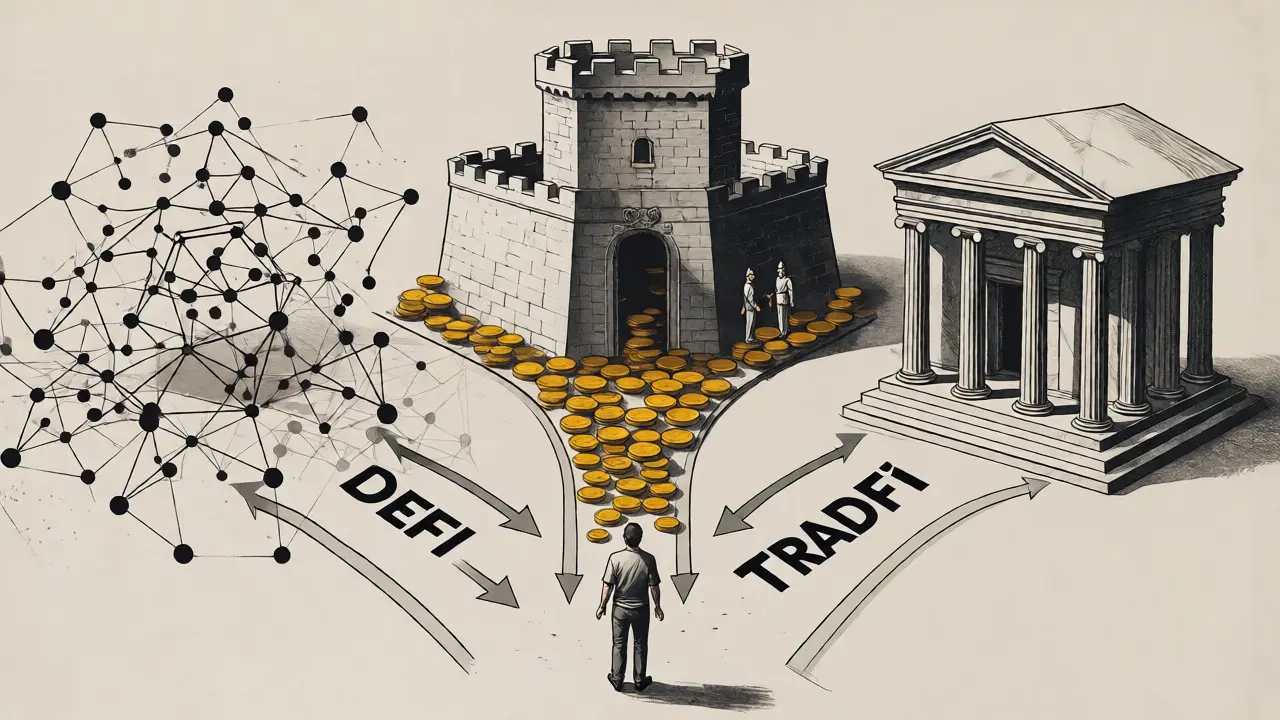
Where to Borrow: DeFi vs. CeFi vs. TradFi
You have three main roads to take, each with distinct trade-offs. First, there’s Decentralized Finance (DeFi). Platforms like Aave and Compound run on smart contracts. No human touches your money. You connect a wallet, deposit collateral, and borrow instantly. There’s no KYC (Know Your Customer) check, which appeals to privacy advocates. However, you bear the risk of smart contract bugs. If the code has a flaw, your funds could be drained regardless of market conditions.
Then there’s Centralized Finance (CeFi). Think Celsius, BlockFi, or services offered by major exchanges like Kraken. These companies hold your crypto in custodial wallets. They offer user-friendly interfaces, customer support, and often higher LTVs. But remember 2022? When Celsius and Voyager collapsed, millions of users lost access to their funds because these platforms took excessive risks with user deposits. CeFi introduces counterparty risk-if the company goes bankrupt, you become an unsecured creditor in bankruptcy court. Your crypto might be gone.
Finally, Traditional Finance (TradFi) is entering the space. Swiss banks like Sygnum and German neobanks like Solaris offer "Lombard loans" backed by crypto. They are conservative, requiring lower LTVs (often 50-60%) and strict KYC. But they offer regulatory clarity and integration with traditional banking services. If you’re managing significant wealth and want to sleep well at night, this is the safest bet, albeit the slowest to onboard.
The Liquidation Trap
This is where dreams go to die. Liquidation is the automatic sale of your collateral by the lender to repay the loan when the value of your collateral drops below a certain threshold. It’s not a warning; it’s an action. On DeFi protocols, liquidations happen via bots scanning the blockchain in real-time. If your health factor drops below 1.0, a bot triggers the sale. You typically pay a penalty fee (often 5-10%) on top of the market price discount.
Imagine you borrow $10,000 against $20,000 of ETH. The liquidation threshold is 110%. If ETH drops so your collateral is worth $11,000, you’re liquidated. You lose your ETH, pay fees, and walk away with nothing but the debt cleared. During the May 2021 crash, ETH dropped 50% in days. Thousands of borrowers were liquidated because they didn’t monitor their positions. Automated alerts are your best friend here. Set notifications for when your collateral value hits 120% of your loan value, giving you time to add more collateral or repay part of the loan before the hammer falls.
Interest Rates and Hidden Costs
Borrowing isn’t cheap. Interest rates vary wildly based on the asset type and market demand. Stablecoin loans (borrowing USDC or USDT against BTC) often carry lower rates, around 5-12% APR, because the collateral is volatile but the debt is stable. Borrowing volatile assets (like ETH against BTC) can cost 10-20% APR. Some platforms offer fixed rates, others variable. Variable rates fluctuate with supply and demand pools. If everyone wants to borrow ETH, the rate spikes.
Watch out for origination fees, early repayment penalties, and spread costs. Some platforms charge a one-time setup fee. Others make money on the spread between the interest they earn on your collateral (if they lend it out) and the interest they charge you. Always read the fine print on whether you can repay early without penalty. Flexibility matters if you expect to refinance or if rates drop.
How to Start Borrowing Safely
If you’re ready to try this, follow a structured approach to minimize risk:
- Choose your platform wisely: Assess your comfort with technical complexity versus counterparty risk. DeFi for control, CeFi for convenience, TradFi for security.
- Calculate your maximum safe LTV: Don’t max out. If the platform allows 80%, aim for 50-60% initially. This gives you breathing room during volatility.
- Set up monitoring: Use tools like Zapper or DefiLlama for DeFi, or built-in alerts for CeFi. Never rely solely on manual checks.
- Understand the tax implications: Consult a tax professional. While borrowing isn’t usually taxable, liquidation events can be complex. Ensure you know how your jurisdiction treats crypto-collateralized loans.
- Have an exit strategy: Know exactly how you will repay the loan. Will you sell other assets? Earn income? Refinance? Don’t assume the market will save you.
Key Risks to Keep in Mind
Beyond liquidation, consider these factors. Smart contract risk in DeFi means code vulnerabilities. Counterparty risk in CeFi means insolvency. Regulatory risk means laws can change overnight, potentially freezing assets or changing tax treatment. Also, consider opportunity cost. If you’re paying 10% interest to hold Bitcoin, but Bitcoin stays flat for two years, you’ve paid 20% for nothing. Compare the cost of borrowing against the expected appreciation of your collateral. If the latter doesn’t clearly outweigh the former, selling might be better.
Do I have to sell my crypto to get a loan?
No, the main benefit is that you don’t sell. You lock up your crypto as collateral and receive cash or stablecoins. You retain ownership of the underlying asset unless you default or get liquidated.
What happens if the crypto market crashes while I have a loan?
If the value of your collateral drops below the maintenance threshold, the lender will automatically sell some or all of your collateral to repay the loan. This is called liquidation, and it usually includes a penalty fee.
Is crypto borrowing taxable?
Generally, taking out a loan is not a taxable event because you haven’t sold the asset. However, if you are liquidated, that sale may trigger capital gains taxes. Always consult a tax advisor for your specific situation.
Can I borrow any cryptocurrency?
Most platforms accept major assets like Bitcoin and Ethereum as collateral. Some support altcoins, but liquidity and volatility issues mean fewer options. You can often borrow stablecoins (USDC, USDT) or fiat currencies against these collaterals.
What is a good Loan-to-Value (LTV) ratio?
For beginners, staying below 50% LTV is safer. Experienced users might tolerate 60-70%. Anything above 80% is highly risky due to market volatility. Lower LTV provides a larger buffer against price drops.
Yo, this is solid stuff!! Seriously though, people sleep on the LTV math until they get wrecked... I've seen folks push 85% LTV thinking they're geniuses, then a tiny dip wipes 'em out completely. It's like playing Russian roulette with your stack, but instead of a gun, it's a smart contract bot that doesn't care about your feelings or your dreams. Keep those ratios low, fam, and always have an exit plan ready before you even click 'borrow'. Don't let greed blind you to the volatility, because the market will humble you faster than you can blink.
I appreciate the clarity in explaining the tax implications, which is often overlooked by newcomers to the space.
It is crucial for users to understand that while borrowing against assets provides liquidity without triggering immediate capital gains taxes, the risk of liquidation transforms that debt into a realized loss event. This distinction requires careful planning and consultation with financial advisors who specialize in digital assets, as regulations vary significantly across jurisdictions.
Bro i literally got rekt last year cause i thought i was smarter than the algo. I put up my ETH at like 70% ltv and boom market dumps 10% overnight and i lost everything. The bots are so fast man, you cant even react. Its not fair!!! Why do they charge us fees when its their fault for letting us borrow too much?? Im still mad about it honestly. Shoulda listened to my buddy who said keep it under 50%. Stupid me.
I absolutely agree with the sentiment regarding the dangers of high leverage, but I feel compelled to point out that many retail investors are being systematically misled by these platforms that prioritize volume over user safety, creating an environment where the average person is set up to fail from day one because they lack the institutional tools to monitor their positions effectively.
Furthermore, the argument that DeFi offers transparency is somewhat hollow when you consider that the majority of users do not audit the smart contracts themselves and rely entirely on the reputation of the protocol, which has been proven fragile time and again during periods of extreme market stress when liquidity dries up and slippage becomes catastrophic for smaller borrowers who cannot afford the penalties associated with forced liquidations.
The Western financial institutions are merely repackaging predatory lending practices under the guise of innovation to extract wealth from developing nations. When we speak of "counterparty risk" in CeFi, we must acknowledge that these entities are unregulated monopolies operating in a grey area designed to protect the elite while exposing the common citizen to total ruin. The collapse of Celsius was not an accident; it was a calculated move by centralized authorities to consolidate control over digital assets, ensuring that only those with existing capital could participate meaningfully in the new economy. We must remain vigilant against these neocolonial financial structures that mimic traditional banking abuses without offering any of the consumer protections found in established markets.
Stop gambling 🎰
People need to realize that borrowing against volatile assets is just speculation disguised as utility 📉 If you need cash sell the asset don't leverage it unless you know exactly what you are doing 😤 Most people don't read the fine print and end up losing their shirts 👕 Keep it simple stay safe and don't trust the banks or the protocols blindly 🙅♂️
Great guide! Really helpful for anyone trying to navigate this mess 💪 But hey, don't forget to check if your platform allows partial repayments without crazy fees! That saved my neck once when rates spiked unexpectedly. Always have a backup plan, guys! You got this! 🚀