You’ve probably seen the term DAO thrown around in crypto Twitter or Discord servers. Maybe you saw a headline about a group buying a rare comic book or funding a startup with millions of dollars, all without a CEO signing checks. It sounds like science fiction, but it’s real tech running on blockchains right now.
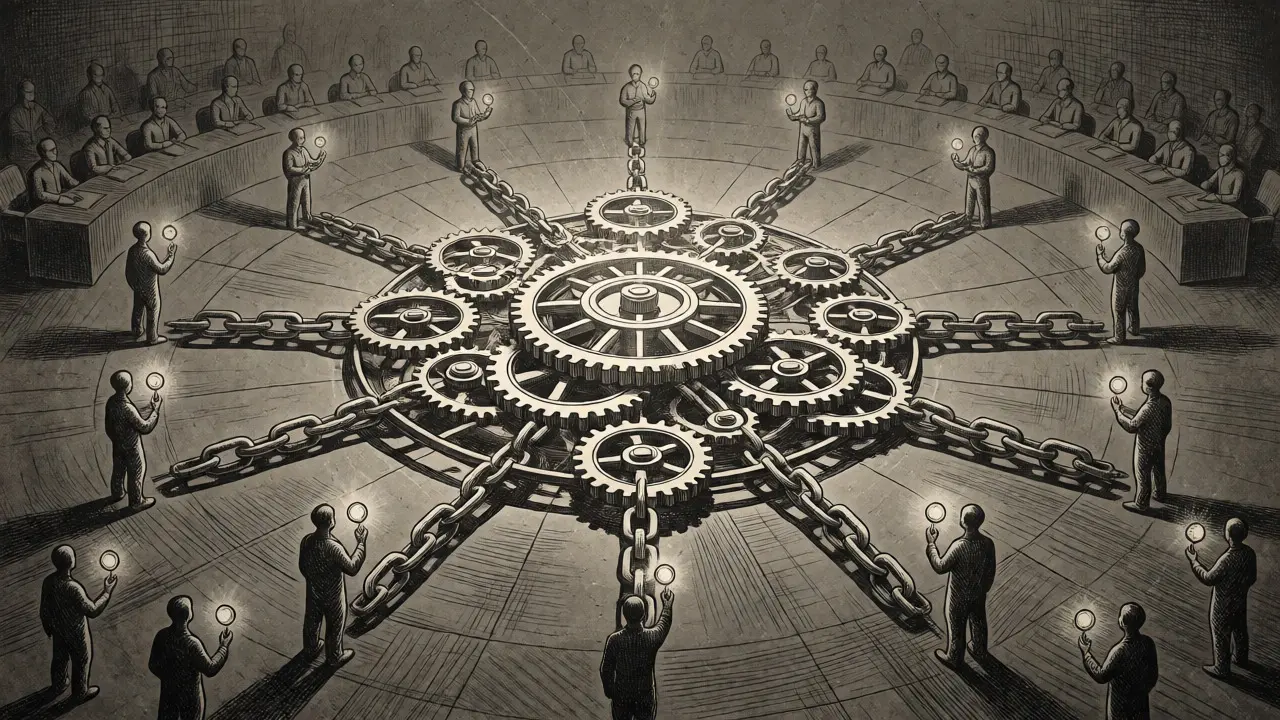
So, what exactly is a DAO? In simple terms, a Decentralized Autonomous Organization (DAO) is a community-led entity that operates without a central boss. Instead of a board of directors making secret decisions, members vote on proposals using digital tokens. The rules are written into code-smart contracts-that automatically execute when conditions are met. Think of it as a club where the rulebook is unchangeable unless the members agree to change it, and the bank account is visible to everyone.
The Core Idea: No Bosses, Just Code
Traditional companies have hierarchies. You have a CEO, managers, and employees. Information flows down; money flows up. A DAO flips this. There is no single point of failure or control. If you hold a governance token, you have a say. This structure relies on three main pillars:
- Smart Contracts: These are self-executing programs on the blockchain. They handle the treasury, track votes, and enforce rules automatically.
- Governance Tokens: These aren’t just investments; they’re membership cards. Holding them gives you voting power. More tokens usually mean more influence, though some DAOs use one-person-one-vote systems to keep things fair.
- Transparency: Every transaction, proposal, and vote is recorded on the blockchain. Anyone can audit the books at any time.
This setup aims to solve trust issues. You don’t need to trust a human accountant not to steal funds; you trust the code. But remember, code is only as good as its programmers. Bugs happen, which we’ll get to later.
The concept isn’t new. It started gaining traction around 2016 with The DAO, an Ethereum-based project that raised $150 million before being hacked due to a code vulnerability. That incident split the Ethereum network into two chains: Ethereum and Ethereum Classic. Today, however, the technology has matured significantly. As of late 2023, over 10,000 active DAOs manage billions in assets, ranging from small social clubs to massive financial protocols like Uniswap.
How Do You Actually Participate?
If you want to join a DAO, you first need to understand how membership works. It’s rarely as simple as clicking “Join.” Most require you to acquire governance tokens. For example, if you want a voice in Uniswap’s future, you buy UNI tokens. These tokens let you propose changes or vote on existing ones.
Voting often happens off-chain to save gas fees. Platforms like Snapshot allow users to sign messages with their wallets to cast votes without paying high transaction fees every time. Once a vote passes, the smart contract executes the decision on-chain. This hybrid approach balances cost and security.
Here’s a typical workflow for a member:
- Connect your wallet: Use tools like MetaMask or Ledger to connect to the DAO’s interface.
- Review proposals: Read the details carefully. Some proposals are complex technical upgrades; others are simple budget allocations.
- Cast your vote: Choose Yes, No, or Abstain. Your voting weight depends on how many tokens you hold.
- Wait for execution: If the proposal passes and meets quorum requirements, the smart contract carries out the action, such as moving funds or changing parameters.
One common frustration for newcomers is the learning curve. Setting up a wallet, understanding gas fees, and navigating interfaces can take hours. A survey by Consensys Academy found that new participants spend an average of 17 hours getting comfortable with the basics. Don’t be discouraged; once you get the hang of it, it becomes second nature.

Types of DAOs: Not All Are Created Equal
People often assume DAOs are all about finance, but they come in various flavors. Understanding the type helps you know what to expect regarding risk and reward.
| DAO Type | Primary Goal | Example | Key Feature |
|---|---|---|---|
| Protocol DAO | Manage decentralized apps (DeFi) | Uniswap, Aave | Governs software updates and fee structures |
| Investment DAO | Pooled capital for ventures | The LAO, PleasrDAO | Members vote on which startups or NFTs to buy |
| Social DAO | Community building | Friends With Benefits | Tokens act as access passes to exclusive chats/events |
| Philanthropy DAO | Fund public goods | GitcoinDAO | Distributes grants via quadratic funding mechanisms |
Protocol DAOs dominate the landscape, accounting for over half of all activity. They manage critical infrastructure like lending platforms and exchanges. Investment DAOs, like PleasrDAO, made headlines by collectively purchasing Edward Snowden’s NFT for $5.4 million. Social DAOs are less about profit and more about networking, functioning almost like paid online communities.
The Good, The Bad, and The Ugly
DAOs offer exciting possibilities, but they aren’t perfect. Let’s break down the pros and cons honestly.
The Upside:
- Global Coordination: People from different countries can collaborate seamlessly. ConstitutionDAO raised $47 million in 72 hours to bid on a copy of the U.S. Constitution, proving how fast global communities can mobilize.
- Transparency: You can see exactly where every dollar goes. No hidden expenses.
- Low Overhead: Without offices and middle managers, operational costs drop significantly.
The Downsides:
- Slow Decision-Making: While fast for fundraising, executing changes takes time. Voting periods often last 7-14 days. In a crisis, this delay can be costly. When Beanstalk Farms was hacked in 2022, the slow governance process contributed to a $182 million loss.
- Voter Apathy: Most members don’t vote. Studies show participation rates often hover between 3% and 15%. This leads to "whale dominance," where a few large holders control outcomes.
- Regulatory Uncertainty: Governments are still figuring out how to classify DAOs. The SEC has warned that many DAO tokens might be unregistered securities, which could lead to legal headaches.
A major challenge is the "oracle problem." Smart contracts live on the blockchain and can’t easily verify real-world events. If a DAO needs to know the price of Bitcoin or whether a sports game happened, it relies on external data feeds called oracles. If those feeds are manipulated, the DAO suffers.
Legal Wrappers and Real-World Integration
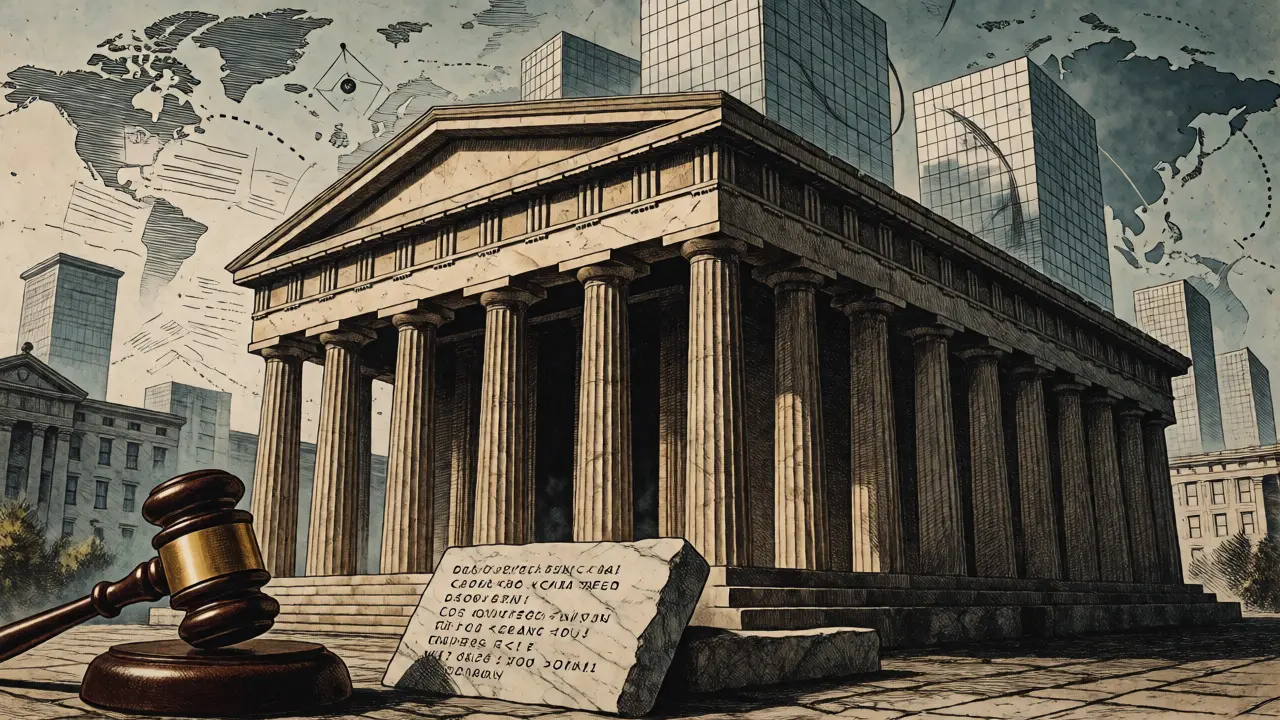
For years, DAOs existed in a legal vacuum. If a DAO entered a contract with a traditional company, who was liable? Was it the code? The members? To fix this, jurisdictions like Wyoming passed laws recognizing DAO LLCs. Now, a DAO can register as a legal entity, allowing it to open bank accounts, hire employees, and sue in court.
As of 2024, about 31% of top DAOs use legal wrappers. This trend signals maturation. Institutions like BlackRock and Fidelity are starting to explore DAO structures, suggesting that these organizations might coexist with traditional corporations rather than replace them entirely.
Another innovation is the rise of subDAOs. Large organizations like Aave create smaller, specialized groups to handle specific tasks, like managing a new product line. This allows for faster decision-making within the broader ecosystem while maintaining overall alignment.
Is Joining a DAO Worth It for You?
If you’re curious about joining, start small. Look for established DAOs with clear documentation and active communities. MakerDAO, for instance, has robust governance portals that score highly for clarity. Avoid projects with vague roadmaps or anonymous teams until you gain more experience.
Consider your goals. Are you looking for passive income through staking rewards? Or do you want active involvement in shaping a protocol? Remember that holding tokens doesn’t guarantee profits. Many DAO tokens fluctuate wildly based on market sentiment and governance news.
Finally, keep an eye on regulatory developments. The SEC is expected to release clearer guidelines on DAO classification soon. This could either legitimize the space or impose strict compliance burdens. Staying informed is key to navigating this evolving landscape.
Do I need to be a coder to join a DAO?
No, you don’t need to write code. Most DAOs provide user-friendly interfaces for voting and treasury management. However, basic familiarity with crypto wallets like MetaMask and understanding gas fees is essential. Tools like Snapshot simplify the voting process so non-technical users can participate easily.
Can a DAO go bankrupt?
Yes. While the code itself doesn’t go bankrupt, the treasury can run dry if spending exceeds revenue or if asset values crash. Additionally, if a critical bug freezes the smart contract, the DAO may become unable to operate effectively, rendering it functionally insolvent even if funds remain locked.
How are DAO taxes handled?
Tax treatment varies by jurisdiction and is currently complex. In the US, the IRS hasn’t issued definitive guidance specifically for DAOs. Generally, individuals may owe taxes on rewards received or gains from selling tokens. Legal wrappers like DAO LLCs can help clarify liability, but consulting a tax professional familiar with crypto is highly recommended.
What happens if the majority votes poorly?
If a bad proposal passes, the consequences depend on the implementation. Some actions are reversible via subsequent votes, while others, like spending treasury funds, are final. This highlights the importance of thorough debate and sometimes emergency pause mechanisms built into the smart contracts.
Are DAOs secure?
Security depends on the code quality and audits. Well-audited DAOs with battle-tested contracts are relatively safe. However, smart contract vulnerabilities remain a risk. High-profile hacks have occurred, so always check if a DAO’s contracts have been audited by reputable firms before depositing significant funds.