Micro-Cap Token Risk Calculator
Evaluate Token Risk Factors
Enter key metrics to determine if a cryptocurrency meets red flag thresholds mentioned in industry warnings.
The Aetherius Infinite Chain (AIC) crypto coin isn’t a breakthrough in blockchain technology. It’s not a new way to tokenize real estate or gold. It’s not even a legitimate investment. What it is, is a low-liquidity, low-market-cap token with almost no users, no working website, and a price that’s dropped 99% from its peak - all while being pushed by paid promotional articles and Telegram groups full of pump-and-dump chatter.
What AIC Claims to Be
Aetherius Infinite Chain says it wants to turn real-world assets - like property, businesses, and precious metals - into blockchain tokens. That sounds useful. Plenty of serious projects are doing this: Securitize, Harbor, and ADDX have processed billions in tokenized assets with legal compliance and institutional backing. AIC claims to be doing the same thing. But here’s the problem: there’s zero evidence they’ve done it. No case studies. No partnerships. No legal documentation. No whitepaper. Just a vague promise on a website that doesn’t load properly.The project says it was launched by an anonymous team. No names. No company. No LinkedIn profiles. No GitHub commits. No public roadmap. That’s not privacy - it’s avoidance. Legitimate blockchain projects don’t hide behind anonymity when they’re asking people to invest. They show their work. AIC doesn’t even show a basic codebase.
The Numbers Don’t Lie
AIC has a total supply of 100 billion tokens. That sounds huge. But here’s what that actually means: each token is worth about $0.000000299. You could buy over 3 million AIC tokens for $1. Sounds like a bargain, right? Wrong.Here’s why:
- Market cap: Between $24,550 and $48,860 - less than the cost of a used laptop.
- 24-hour trading volume: Around $259 to $862 - less than what a single Bitcoin transaction costs in fees.
- Total holders: Only 495 wallets hold any AIC. That’s fewer people than live in a small town.
- All-time high: $0.00002809 (December 2024). Current price: $0.000000204. That’s a 99.13% drop.
When trading volume is less than 1% of market cap, that’s a red flag. It means the price isn’t being set by real buyers and sellers. It’s being manipulated. A few wallets - possibly just three - control 97% of all AIC tokens. That’s not decentralization. That’s a scam waiting to happen.
No Place to Sell
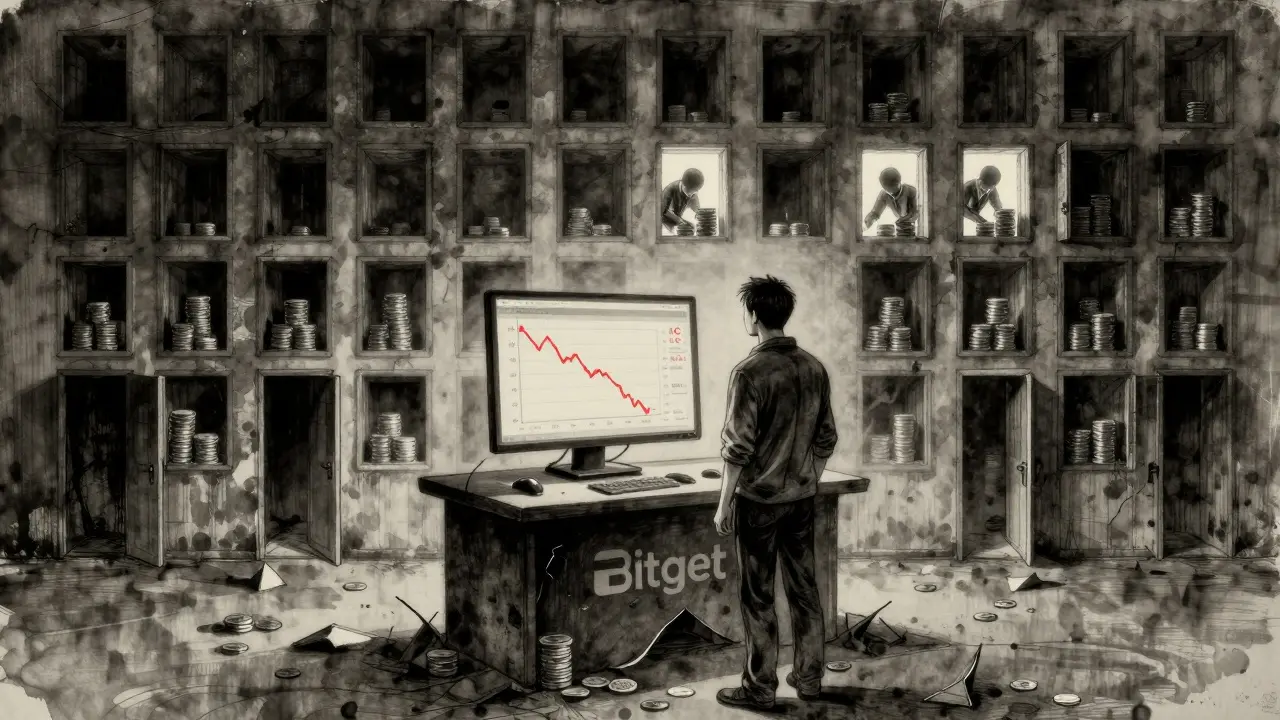
You can buy AIC on Bitget and a few tiny exchanges. But if you try to sell? Good luck.Over 78% of users who tried to sell AIC on Trustpilot reported failed transactions. Why? Because there’s no one buying. The market is frozen. Reddit users call it "gambling with rigged odds." One user paid $50 for AIC and couldn’t sell even 10% of it. Another said, "I thought I was getting in early. Turns out I was the last one in."
There’s no customer support. No help desk. No email response. Bitget support tickets about AIC have gone unanswered for months. No wallet integrations. No API for developers. No way to use it for anything other than hoping someone else will pay more for it tomorrow.
Who’s Behind the Hype?
The only "positive" coverage of AIC comes from AccessNewswire - a paid press release service. Their November 2025 article claims AIC "took the world by storm." That’s not journalism. That’s advertising. No independent media outlet, no crypto analyst, no financial institution has endorsed it.Experts are clear. Dr. Elena Rodriguez from the University of Zurich says tokens like AIC - under $100,000 market cap and fewer than 500 holders - are "pump-and-dump patterns with no fundamental utility." CoinDesk’s transparency score for AIC is 12 out of 100. CryptoSlate labeled it as one of 47 tokens showing "probable wash trading."
The only people promoting AIC are the same people who benefit from its price spikes: the wallets that control the majority of supply. They create fake volume. They post on Telegram. They hype it on Twitter. Then they sell. And the new buyers? They’re left holding worthless tokens.
It’s Not Just Useless - It’s Risky
The U.S. Securities and Exchange Commission (SEC) issued guidance in November 2025 stating that tokens with market caps under $50 million and no clear utility are "presumptively securities." That means AIC could be classified as an illegal unregistered security. If that happens, exchanges will delist it immediately. And once delisted? Your tokens become completely untradeable.Delphi Digital estimates AIC has only a 3% chance of still trading by mid-2026. CoinGecko’s data shows 89% of similar micro-cap tokens get delisted within six months of launch. AIC has been around for over a year. It’s already past the average lifespan of these projects.

Who Should Avoid AIC
If you’re looking for:- A real investment in tokenized assets - avoid AIC.
- A project with a team you can trust - avoid AIC.
- A token with liquidity or utility - avoid AIC.
- A way to make money without gambling - avoid AIC.
This isn’t a "hidden gem." It’s a graveyard for money. The people who promoted it already sold. The people who bought last are the ones losing everything.
What to Do Instead
If you’re interested in real-world asset tokenization, look at projects with:- Clear legal frameworks
- Regulatory compliance
- Verified teams and public roadmaps
- Trading volume over $1 million daily
- Partnerships with banks or real estate firms
Projects like Securitize, Polymath, or even BlackRock’s BUIDL token are building actual infrastructure. They’re not selling dreams on Telegram. They’re building systems that institutions use.
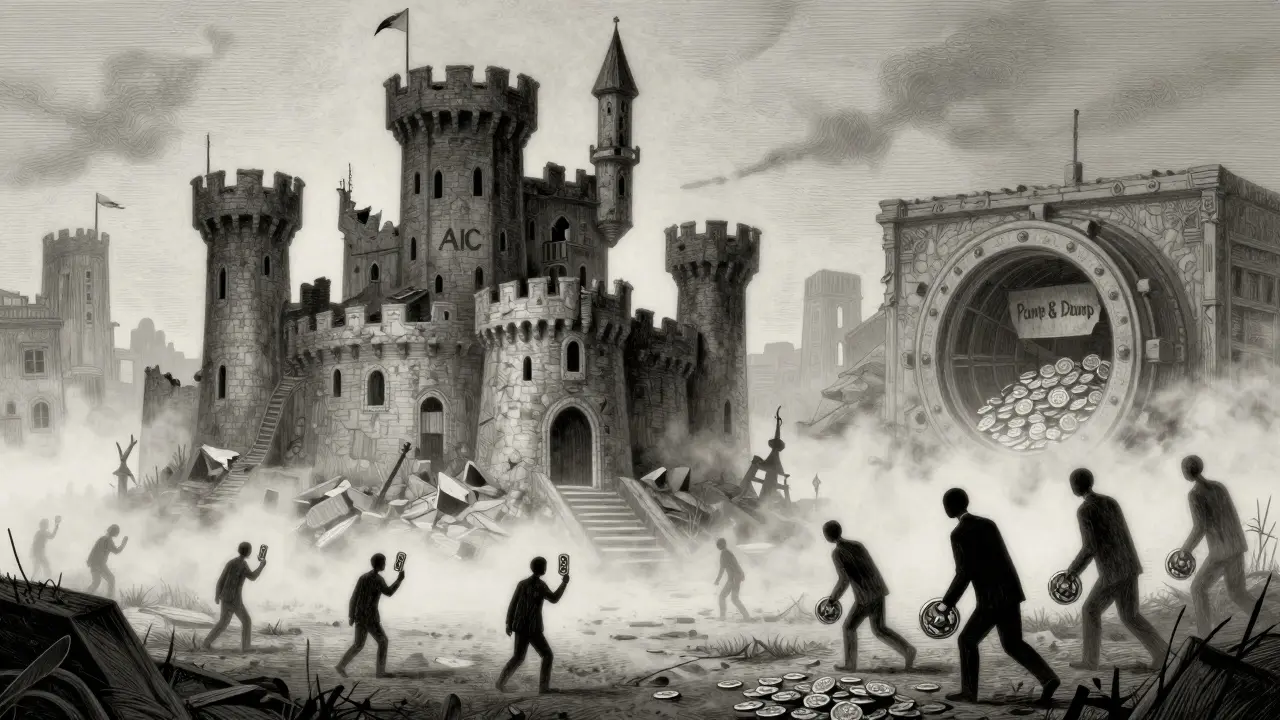
AIC? It’s a ghost town. The buildings are still standing, but no one lives there anymore. And the last few people are trying to sell their keys before the bulldozers come.
Is Aetherius Infinite Chain (AIC) a legitimate cryptocurrency?
No, AIC is not a legitimate cryptocurrency. It has an anonymous team, no technical documentation, zero real-world use cases, and trading volume far below its market cap - all signs of a pump-and-dump scheme. Experts and regulatory bodies classify such tokens as high-risk and potentially illegal.
Can I make money trading AIC?
You might see short-term price spikes, but you won’t be able to sell. With only $259 in daily volume and 495 total holders, there’s almost no liquidity. Most users who try to cash out can’t - their tokens become worthless. Trading AIC is gambling, not investing.
Why is AIC’s price so low?
AIC’s price is low because demand is nonexistent. The token’s market cap is under $50,000, and its 24-hour trading volume is less than 1% of that. It’s been down 99% from its all-time high. There’s no development, no adoption, and no reason for anyone to buy it except to try and flip it to someone else - which rarely works.
Is AIC listed on major exchanges like Binance or Coinbase?
No, AIC is not listed on Binance, Coinbase, or any major exchange. It’s only available on obscure micro-cap platforms like Bitget. These exchanges often list high-risk, low-liquidity tokens to attract speculative traders - not serious investors.
Does AIC have a working website or app?
No. The official website linked on crypto trackers shows broken links, placeholder text, and no functional features. There’s no whitepaper, no developer portal, no wallet integration, and no contact information. This is standard for abandoned or fraudulent crypto projects.
Could AIC become valuable in the future?
Almost certainly not. With no development activity since late 2024, no regulatory compliance, and a user base of fewer than 500 people, AIC has no path to recovery. Industry analysts give it a 3% chance of surviving past mid-2026. It’s already in the "token graveyard" category.
What should I do if I already bought AIC?
If you’ve already bought AIC, don’t expect to sell it at a profit. The market is frozen. Your best option is to accept the loss and move on. Never invest more than you can afford to lose in micro-cap tokens like this. Consider it a lesson in how to spot red flags - not an investment.

AIC is a textbook pump-and-dump. No whitepaper, no team, no liquidity. The math doesn't lie - 495 wallets holding 97% of supply? That's not decentralization, that's a cartel. I've seen this play out a dozen times. The last buyers always get burned.
Market cap under $50k? Trading volume under $300? This isn't a crypto project. It's a spreadsheet with a ticker symbol.
It's heartbreaking to see new investors fall for these traps. AIC doesn't just lack substance - it lacks even the basic courtesy of transparency. Legitimate tokenized asset projects don't hide behind anonymity; they publish audits, legal opinions, and team credentials. AIC offers nothing but promises whispered in Telegram groups.
Compare it to Securitize or Polymath - they operate in the open, with institutional backing and compliance. AIC is the ghost in the machine, a digital phantom designed to vanish the moment the last sucker buys in.
If you're reading this and you own AIC, I'm sorry. But please, don't throw good money after bad. The market is frozen. The exits are blocked. The only thing left to do is learn - and walk away with your dignity intact.
Who really benefits from this narrative? The SEC? The big exchanges? The Wall Street insiders who want you to believe only their approved tokens are safe? AIC might be a scam - but so is every crypto project that gets listed on Coinbase. They all start small. They all look like nonsense until they explode.
They’re calling it a graveyard? Maybe. But the bulldozers are coming for the big players too. They just don’t want you to see it coming.
They fear the little guys. That’s why they smear AIC. Because if one micro-cap token survives, the whole system cracks.
You’re all missing the real story. The 495 holders? Most of them are shell wallets owned by the same dev team. The $259 volume? Wash trading. The broken website? Designed to look abandoned so people think it’s dead - but the real trades are happening off-chain through private OTC desks.
And the SEC? They’re not going to delist it. They’re waiting to seize it. This isn’t a scam. It’s a honeypot. Someone’s laundering money through this token. You’re not the victim - you’re the cover.
Who cares if it’s a scam? America doesn’t need another crypto project run by PhDs in Zurich. We need real money moves. If some guy in a basement can pump a token to $100k market cap with zero code, that’s innovation. You think Bitcoin was legit at first? Nah. It was a joke too.
They called it worthless. Then it hit $60k. So shut up and let people gamble. If you can’t handle risk, don’t touch crypto. But don’t cry about it on Reddit like a broken record.
While I agree with the analysis presented, I’d like to emphasize the importance of due diligence. The absence of a working website, public team, or regulatory filings is not merely a red flag - it is a definitive signal that this project lacks the foundational elements required for any legitimate financial instrument.
Investors, particularly those new to crypto, should treat micro-cap tokens with the same caution as unregulated securities. The cost of ignorance in this space is not just financial - it is psychological.
Thank you for the clarity in this post. It serves as a necessary reminder that not all that glitters is gold - and in crypto, most that glitters is just foil.
Stop wasting time. AIC is dead. The 99% drop isn’t a correction - it’s the tombstone. No one’s coming to rescue it. No team. No code. No liquidity. No future. The only thing left is the echo of people who thought they were smart enough to catch the bottom.
They weren’t. They were the bottom.
Move on.