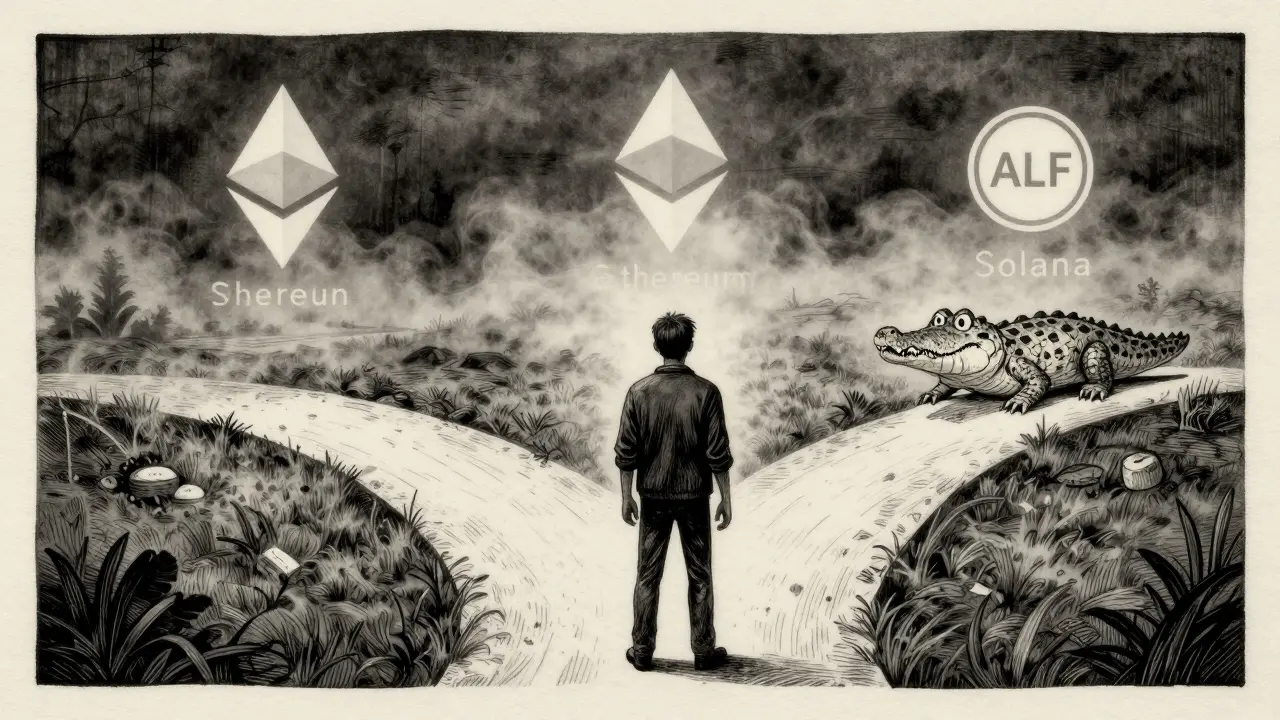
Buying a cryptocurrency should feel like investing in technology or joining a community. With ALF Token (ALF), it feels more like trying to solve a mystery where the clues contradict each other. You want to know what this coin is, but every major data source tells you a different story. Is it a utility token on Ethereum? A meme coin inspired by Matt Furie’s art? Or something built on Solana?
The short answer is that ALF Token is a micro-cap cryptocurrency with extremely low liquidity and no clear, verified identity. As of early 2026, there is no single authoritative whitepaper, audit report, or development team publicly associated with the project. This article breaks down the conflicting information so you can understand the risks before putting any money into this asset.
The Identity Crisis: Three Different Stories for One Ticker
In the crypto world, ticker symbols are not always unique, but usually, one version dominates the market cap. For ALF, three distinct narratives exist simultaneously, which is a major red flag for investors looking for clarity.
Narrative 1: The Ethereum Utility Token
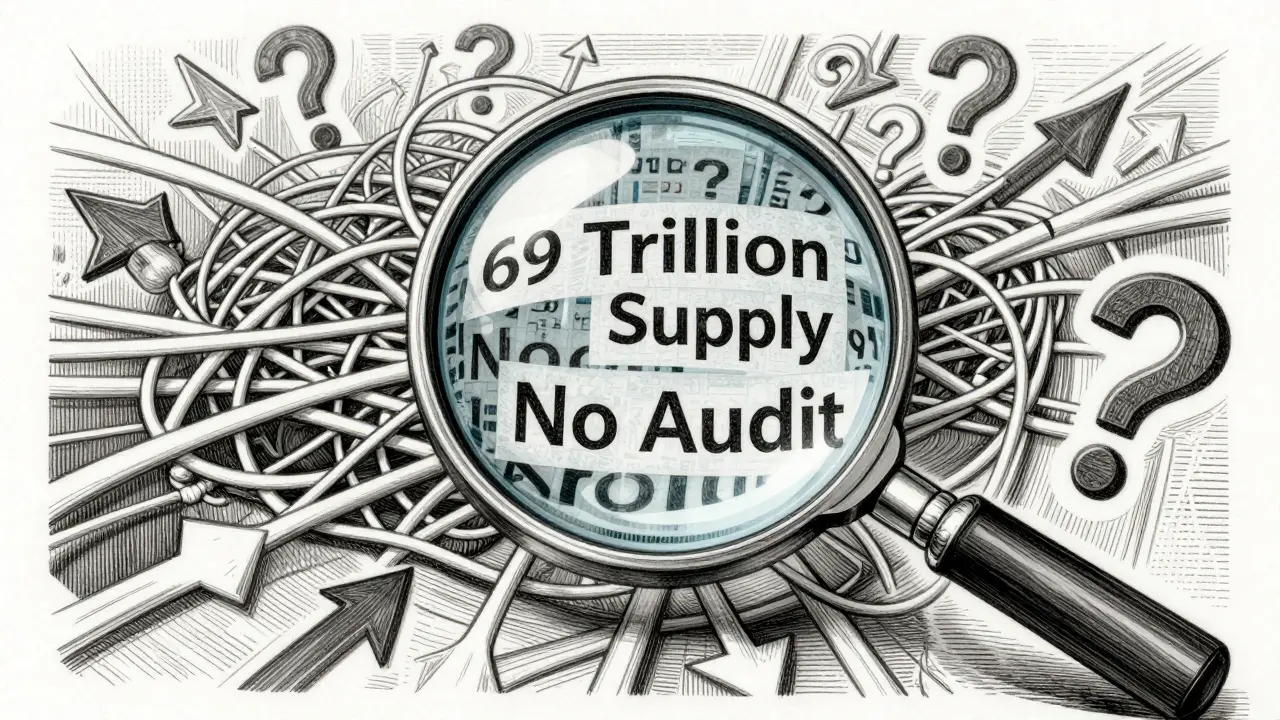
Sources like Phantom.com and CoinGecko describe ALF as a "next-generation utility token" designed to power a "dynamic and community-driven ecosystem" on the Ethereum blockchain. They cite a total supply of 69 trillion tokens. However, they do not explain what the utility actually is. There is no mention of specific applications, DeFi integrations, or governance functions. It is just a vague promise of an "ecosystem" without concrete details.
Narrative 2: The Meme Coin
CoinMarketCap offers a completely different description. Here, ALF is listed as a meme coin inspired by "Alf the crocodile," a character created by artist Matt Furie. This aligns ALF with the broader genre of internet-culture-driven tokens like DOGE or SHIB. If this were true, the value would be driven purely by social sentiment and viral marketing, not technical utility. Yet, even this narrative lacks a verified official website or social media presence from the creators.
Narrative 3: The Fictional Universe
Some aggregators, such as Blockspot.io, present an elaborate fictional backstory involving a "mystical planet Aetheron" and characters called "Aetherians." While storytelling is common in NFT projects and some gaming tokens, using fantasy lore to mask a lack of technical substance is often a tactic used to attract retail investors who might miss the absence of real-world use cases.
Blockchain Confusion: Ethereum vs. Solana
If you cannot agree on what the token *is*, you certainly cannot agree on where it lives. This is critical because you need to know which wallet and network fees to expect.
- Ethereum Claim: Most sources (Phantom, CoinGecko, MEXC) list ALF as an ERC-20 token on Ethereum. This implies higher transaction fees and slower speeds unless Layer 2 solutions are involved.
- Solana Claim: CoinSwitch lists ALF as a token on the Solana blockchain, citing "high-speed and low-cost transactions." Solana tokens are SPL tokens, which are technically incompatible with Ethereum wallets without a bridge.
This discrepancy suggests either two different tokens sharing the same symbol (which happens frequently in crypto) or significant data errors on aggregator sites. Without a verified contract address, you have no way of knowing which one is the "real" ALF, if either is legitimate.
| Attribute | Ethereum Narrative (Phantom/CoinGecko) | Meme Narrative (CoinMarketCap) | Solana Narrative (CoinSwitch) |
|---|---|---|---|
| Blockchain | Ethereum | Unspecified | Solana |
| Total Supply | 69 Trillion | Not Specified | Not Specified |
| Primary Use Case | Vague "Utility" | Meme/Community | Web3 Transactions |
| Verified Contract | No | No | No |
| Audit Status | None Found | None Found | None Found |

Market Metrics: The Danger of Micro-Caps
Let’s look at the numbers. In cryptocurrency, price alone means nothing without context regarding supply and liquidity. ALF Token exhibits the classic characteristics of a "dust" asset-coins that exist on ledgers but have negligible economic activity.
Price and Market Cap Discrepancies
Data from CoinStats.app shows a price hovering around $0.0000009, with a market capitalization of roughly $90,000. Other sources like Blockspot.io report a market cap near $1.1 million, while Phantom claims nearly $1 million. These variations are likely due to stale data feeds or differing circulating supply calculations. Regardless of the exact figure, ALF ranks outside the top 7,000 cryptocurrencies globally. This places it in the "long tail" of the market, where projects often go dormant or fail entirely.
Liquidity Risks
Liquidity refers to how easily you can buy or sell an asset without affecting its price. ALF’s daily trading volume ranges from $3,000 to $172,000 across different platforms. To put this in perspective, if you tried to sell $50,000 worth of ALF tokens, you could potentially crash the price by 50% or more because there simply aren’t enough buyers in the order book. This is known as slippage, and it is a primary risk for micro-cap holders.
Security Red Flags: What’s Missing?
When evaluating any cryptocurrency, especially one with ambiguous origins, you must look for standard security benchmarks. ALF Token fails almost all of them.
- No Smart Contract Audit: Reputable projects hire firms like CertiK or Hacken to review their code for vulnerabilities. No audit reports are linked or referenced for ALF. This means the code could contain backdoors allowing developers to drain funds.
- No Verified Team: There are no LinkedIn profiles, GitHub repositories, or public identities associated with the development team. Anonymous teams are common in early-stage crypto, but combined with low liquidity and unclear utility, they significantly increase the risk of a "rug pull" (where developers abandon the project and take the remaining funds).
- No Official Documentation: There is no accessible whitepaper or technical documentation that explains the tokenomics, distribution schedule, or roadmap. The descriptions found on aggregators appear to be copy-pasted marketing fluff rather than independent analysis.
- Low Community Engagement: Healthy crypto projects have active communities on Telegram, Discord, or X (formerly Twitter). Searches for ALF Token yield minimal discussion, suggesting a lack of organic user interest.
How to Verify Cryptocurrencies Yourself
You don’t have to trust aggregators blindly. Here is how you can perform your own due diligence on any obscure token like ALF.
Step 1: Find the Contract Address
Every token has a unique string of characters called a contract address. If you cannot find this on a reputable site like Etherscan (for Ethereum) or Solscan (for Solana), do not buy it. Aggregators sometimes list fake tokens with similar names.
Step 2: Check Holder Distribution
Use a block explorer to see who holds the tokens. If the top 10 wallets hold more than 50% of the supply, the project is highly centralized. A few individuals could dump their holdings and crash the price instantly.
Step 3: Look for Liquidity Locks
Legitimate projects often lock their liquidity pools for a set period (e.g., 1 year) to prove they cannot remove the underlying funds. If the liquidity is unlocked, the developers can withdraw all the ETH or SOL backing the token at any time.
Conclusion: Proceed with Extreme Caution
ALF Token (ALF) does not currently meet the standards for a safe investment. The conflicting narratives regarding its purpose, the dispute over its blockchain infrastructure, and the complete absence of security audits create a high-risk environment. While some traders may speculate on micro-cap tokens hoping for a sudden viral spike, this is closer to gambling than investing.
If you are looking for exposure to the Ethereum ecosystem, established utility tokens with clear use cases offer better risk-adjusted returns. If you enjoy meme culture, stick to tokens with verifiable communities and transparent histories. For ALF specifically, the lack of transparency suggests it is best to avoid until credible, verifiable information emerges.
Is ALF Token a scam?
While we cannot definitively label it a scam without legal proof, ALF Token exhibits many characteristics of high-risk or fraudulent projects. These include anonymous developers, unverified smart contracts, conflicting information about its fundamental nature, and extremely low liquidity. Investors should treat it as highly speculative and potentially unsafe.
Which blockchain is ALF Token on?
There is no consensus. Major aggregators like CoinGecko and Phantom list it on Ethereum, while others like CoinSwitch claim it is on Solana. This discrepancy suggests either multiple tokens share the ALF symbol or data errors exist. You must verify the specific contract address for the version you intend to trade.
What is the total supply of ALF?
Sources conflict on this metric. Some report a supply of 69 trillion tokens, while others cite 100 billion. Given the inconsistencies in other data points, these figures should not be trusted without direct verification from a block explorer.
Can I buy ALF Token on Coinbase or Binance?
No. ALF Token is not listed on major regulated exchanges like Coinbase, Binance, or Kraken. It appears only on smaller, less regulated platforms or decentralized exchanges (DEXs), which increases the risk of fraud and poor execution.
Why is the price of ALF so low?
The price is extremely low (fractions of a cent) because the token has very little market demand and high supply. Low price does not mean "cheap"; it reflects the lack of confidence and liquidity in the asset. With a market cap under $1 million, it is considered a micro-cap coin.
I appreciate this incredibly thorough breakdown of the ALF token situation! It is so refreshing to see a piece that actually dives into the technical discrepancies rather than just hype. The point about the conflicting blockchain narratives-Ethereum versus Solana-is particularly insightful, as it highlights a critical due diligence step many retail investors overlook. We must always remember that transparency is the cornerstone of any legitimate decentralized ecosystem. I believe that by educating ourselves on these red flags, we can foster a more secure and trustworthy environment for all participants in the Web3 space. Let's keep supporting high-quality analysis like this!
Great write-up. As someone who has been auditing smart contracts for a few years, I can confirm that the lack of an audit report is usually the biggest warning sign. Without a verified contract address on Etherscan or Solscan, you are essentially blindfolded. Always check the holder distribution too; if the top wallets hold more than 50% of the supply, run.
The author’s assertion that ALF Token lacks utility is fundamentally flawed because it ignores the speculative nature of meme coins. While the article correctly identifies the absence of a whitepaper, it fails to recognize that market sentiment often drives value more effectively than technical documentation. Furthermore, the distinction between Ethereum and Solana implementations is irrelevant if the community decides to rally behind one narrative. The data presented here is merely a snapshot of a dynamic market, not a definitive judgment on the asset's potential.
Sure, Tracy, until you lose your entire portfolio to a rug pull because you trusted "sentiment" over code. The fact that CoinGecko and CoinSwitch list different blockchains for the same ticker isn't a "dynamic market," it's a data error or a scam. You don't invest in mystery boxes.
Ugh, why do people even bother writing all this? Just say it's trash and move on. So tired of reading long articles about coins that don't matter anyway.
This is typical weak thinking. Real men don't read warnings, they take risks. If you can't handle the volatility, stay out of crypto. This token is probably going to moon and you're all sitting here crying about audits. Pathetic.
I think Andrew might be joking, but seriously, please don't listen to him. The advice in the original post is solid. Checking for liquidity locks is something everyone should do. It's better to be safe than sorry.
:( The sheer amount of contradictory information available regarding the ALF token is truly disheartening for anyone seeking clarity in the digital asset space, especially when major aggregators fail to provide consistent data points such as blockchain compatibility or total supply figures, which ultimately leads to a fragmented understanding of the project's fundamental structure and viability within the broader cryptocurrency ecosystem :(
We must consider the philosophical implications of trust in decentralized systems 🌿 When a project cannot define its own identity, it reflects a deeper crisis of authenticity in our digital interactions ✨ I encourage everyone to look beyond the price charts and examine the human element behind these tokens, asking themselves if the community feels genuine or manufactured 💫 Perhaps the real lesson here is not about avoiding ALF, but about cultivating a mindset of critical inquiry and emotional resilience in the face of uncertainty 🙏