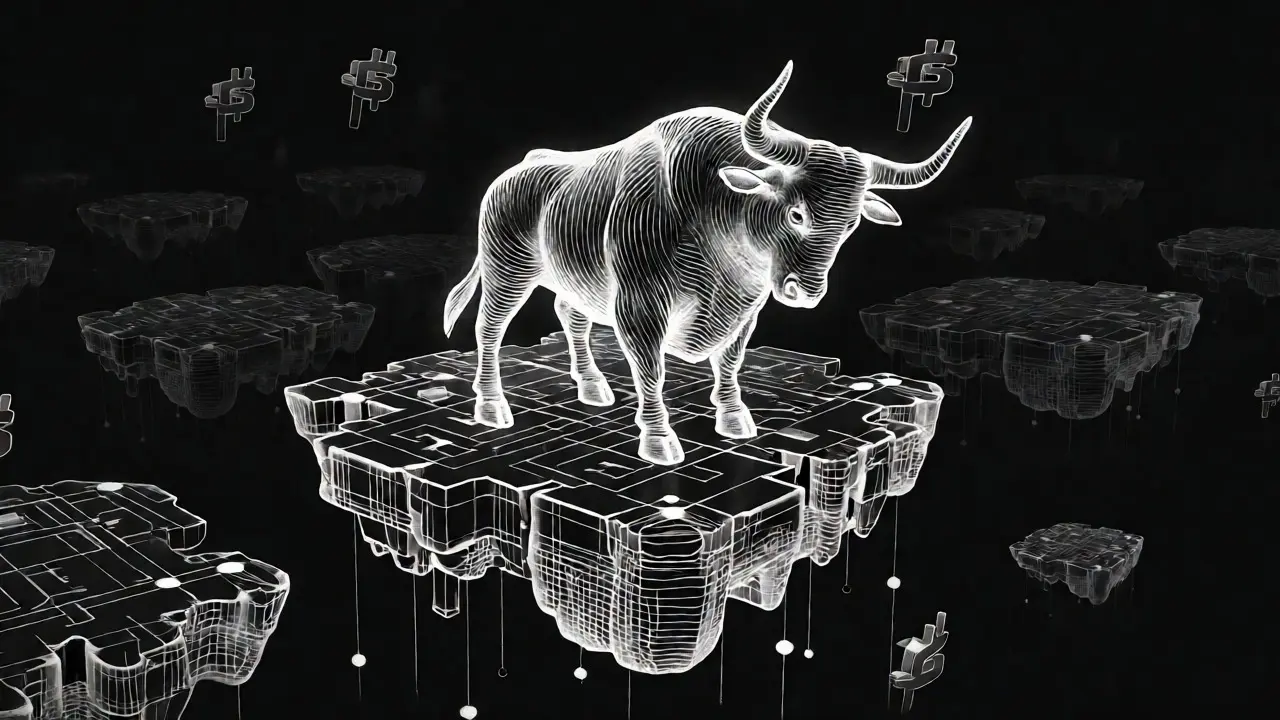
Imagine checking your portfolio and seeing a token with a market cap of exactly zero dollars. That’s not a glitch; that’s Bull Token, also known by its ticker BULL. It sounds counterintuitive for a cryptocurrency to have no circulating supply reported while still trading, but this is the reality for many micro-cap assets on the blockchain. If you’ve stumbled upon this token while scrolling through decentralized exchanges or social media feeds, you’re probably asking: what is it, why does it exist, and is it worth looking at beyond the hype?
This isn’t Bitcoin, where institutional money flows daily. This isn’t even Ethereum, where smart contracts power billions in value. Bull Token is a specific type of asset: a community-driven meme token on the BNB Chain. But here’s the catch-"BULL" is a crowded ticker. Several unrelated projects use similar names, leading to confusion about which contract address actually matters. In this guide, we’ll cut through the noise, focus on the specific asset associated with bulltoken.finance, and break down whether this speculative asset has any real substance behind its flashy branding.
The Identity Crisis: Which BULL Are We Talking About?
Before you buy anything, you need to know exactly what you’re buying. The crypto world is rife with name collisions. When you search for "Bull," you might find Bullcoin, a legacy project with a 1 billion max supply, or Bull Market ($BULL), a Solana-based token. These are completely different animals.
The subject of our deep dive is the Bull Token linked to the API identifier bull-token-2 on CoinGecko. It operates on BNB Chain (formerly Binance Smart Chain) using the BEP-20 standard. Its official contract address is 0x2243267f01efc579871eca055027e5214bbe5f14. Why does this matter? Because if you paste the wrong address into your wallet, you could end up holding a worthless IOU instead of the intended token. Always verify the contract address on BscScan before interacting.
Origins and The "Community-Driven" Claim
Bull Token launched in 2024. Unlike major projects backed by venture capital firms or named tech founders, this project claims to be "100% community-driven." The website states that ownership was renounced, meaning the developers gave up control over the smart contract. They also claim liquidity was burned at creation, implying that the pool of tokens backing the price can’t be pulled out by the team in a sudden rug pull.
However, transparency is often more promise than proof in the meme coin sector. There is no publicly listed founder biography, no audited code repository linked prominently, and no detailed whitepaper explaining the economic model beyond basic bullet points. For an investor, this creates a gap between marketing claims and verifiable facts. You aren’t investing in a team’s roadmap; you’re investing in a community’s momentum, which is notoriously fickle.
Tokenomics: The 1,000 Trillion Elephant in the Room
Let’s look at the numbers, because they are staggering. The total supply of Bull Token is reported as 1,000 trillion BULL. To put that in perspective, Bitcoin has a capped supply of 21 million. This massive number allows the price per token to appear incredibly small-often less than $0.000000000001. Psychologically, this makes buyers feel like they can own millions of tokens for a few dollars, but it doesn’t change the underlying value.
| Attribute | Bull Token (BULL) | Bitcoin (BTC) | Dogecoin (DOGE) |
|---|---|---|---|
| Blockchain | BNB Chain (BEP-20) | Bitcoin Network | Proof-of-Work |
| Total Supply | 1,000 Trillion | 21 Million | Unlimited (Inflationary) |
| Primary Utility | Meme/Speculation | Store of Value/Payment | Meme/Payment |
| Liquidity Depth | Extremely Low (~$60) | Billions | Hundreds of Millions |
The mechanics are simple but opaque. The site claims a deflationary mechanism where 2% of every sale increases liquidity and another 2% rewards holders. But without a clear mathematical breakdown or audit, how do you know this works? Is it a tax? Does it apply to buys too? The ambiguity here is a red flag for anyone who prefers concrete data over vague promises.
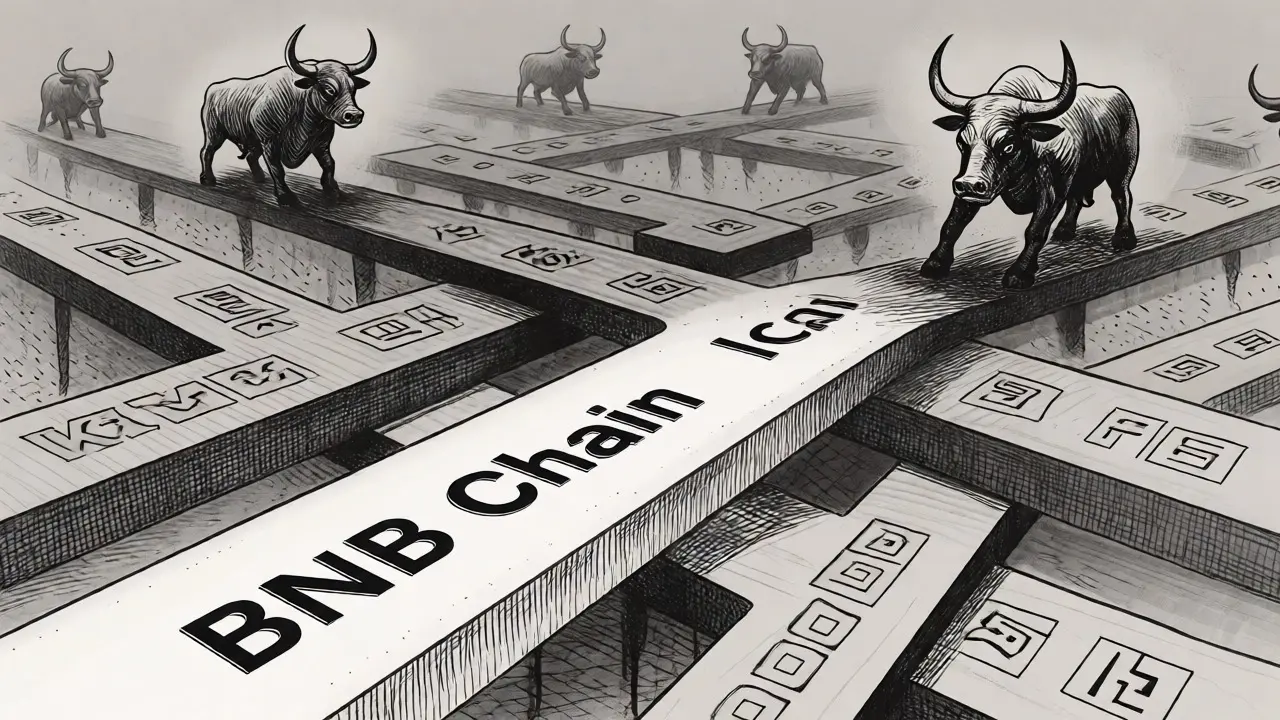
Liquidity: The Biggest Risk Factor
If you plan to trade Bull Token, you need to understand liquidity. As of October 2026, the 24-hour trading volume was approximately $1.49. Yes, one dollar and forty-nine cents. This means there is virtually no active market. The depth of liquidity-the amount of money available to buy or sell without moving the price drastically-is around $62 on either side of the current price.
What does this mean for you? If you buy $100 worth of BULL, you might instantly crash the price when you try to sell, simply because there aren’t enough buyers on the other side. This is called slippage, and in illiquid markets, it can eat up your entire profit margin or principal. Most trading happens on PancakeSwap v2, the primary decentralized exchange on BNB Chain. Without centralized exchange listings like Binance or Coinbase, you’re stuck in the wild west of DeFi, where execution risk is high.
How to Buy Bull Token Safely
Despite the risks, if you want to test the waters, here is the step-by-step process to acquire BULL without getting burned by technical errors:
- Set Up a Compatible Wallet: Use MetaMask or Trust Wallet configured for BNB Chain.
- Fund Your Wallet: Buy some BNB to cover gas fees. Do not send ETH; it won’t work.
- Verify the Contract: Copy the address
0x2243267f01efc579871eca055027e5214bbe5f14from BscScan. Never trust a link from a random Telegram group. - Connect to PancakeSwap: Go to the official PancakeSwap site and connect your wallet.
- Select Pair: Choose WBNB as the input and paste the BULL contract address as the output.
- Adjust Slippage: Given the low liquidity, you may need to set slippage tolerance higher (e.g., 5-10%) to get the transaction through, but be aware this costs you value.
- Execute and Monitor: Confirm the transaction on BscScan immediately.

Security and Due Diligence Checklist
Renounced ownership is good, but it doesn’t make a token safe. Malicious code can still exist within a renounced contract. Before committing significant funds, check these specific items on BscScan:
- Verified Source Code: Is the green checkmark present? If not, you can’t read the code.
- Holder Distribution: Are the top 10 wallets holding 90% of the supply? If so, one person selling can wipe out the market.
- Liquidity Lock/Burn: Look for transactions showing LP tokens sent to a dead address (burned).
- Tax Functions: Check if the contract has functions to change taxes dynamically. If the owner can still call them, the "renounced" claim might be misleading regarding future changes.
There are no independent audits from firms like CertiK or Hacken listed for this specific contract. This places the burden of security entirely on you. Treat promotional terms like "safe" and "deflationary" as marketing slogans until proven on-chain.
Verdict: Speculation, Not Investment
Bull Token is a classic example of a micro-cap meme coin. It offers the thrill of potential exponential gains due to its tiny market cap, but it carries the severe risk of total loss due to negligible liquidity and lack of fundamental utility. It is not a competitor to established chains or major meme coins like Dogecoin or Shiba Inu. If you choose to engage, do so with money you are prepared to lose, and prioritize verifying the contract address above all else.
Is Bull Token (BULL) the same as Bullcoin?
No. Bull Token (BULL) on BNB Chain is distinct from Bullcoin, which is a separate project often found on older blockchains or with different tickers. Always verify the contract address 0x2243267f01efc579871eca055027e5214bbe5f14 to ensure you are dealing with the correct asset.
Why does Bull Token have such a low price?
The price is low because the total supply is extremely high, reported at 1,000 trillion tokens. This large supply dilutes the value per individual token, allowing the price to remain in the sub-nanocent range while maintaining a theoretical fully diluted valuation.
Where can I buy Bull Token?
Bull Token is primarily traded on decentralized exchanges, specifically PancakeSwap v2 on the BNB Chain. It is generally not listed on major centralized exchanges like Binance or Coinbase due to its low trading volume and market cap.
Is the liquidity burned?
The project claims that liquidity was burned at creation, which prevents the developers from withdrawing the liquidity pool. However, investors should independently verify this by checking the liquidity pair address on BscScan to confirm the LP tokens were sent to a dead address.
What are the main risks of investing in BULL?
The primary risks are extreme illiquidity (difficulty selling without crashing the price), lack of a verified team or audit, and the speculative nature of meme coins. With daily volumes under $2, exiting a position can be challenging and costly due to slippage.