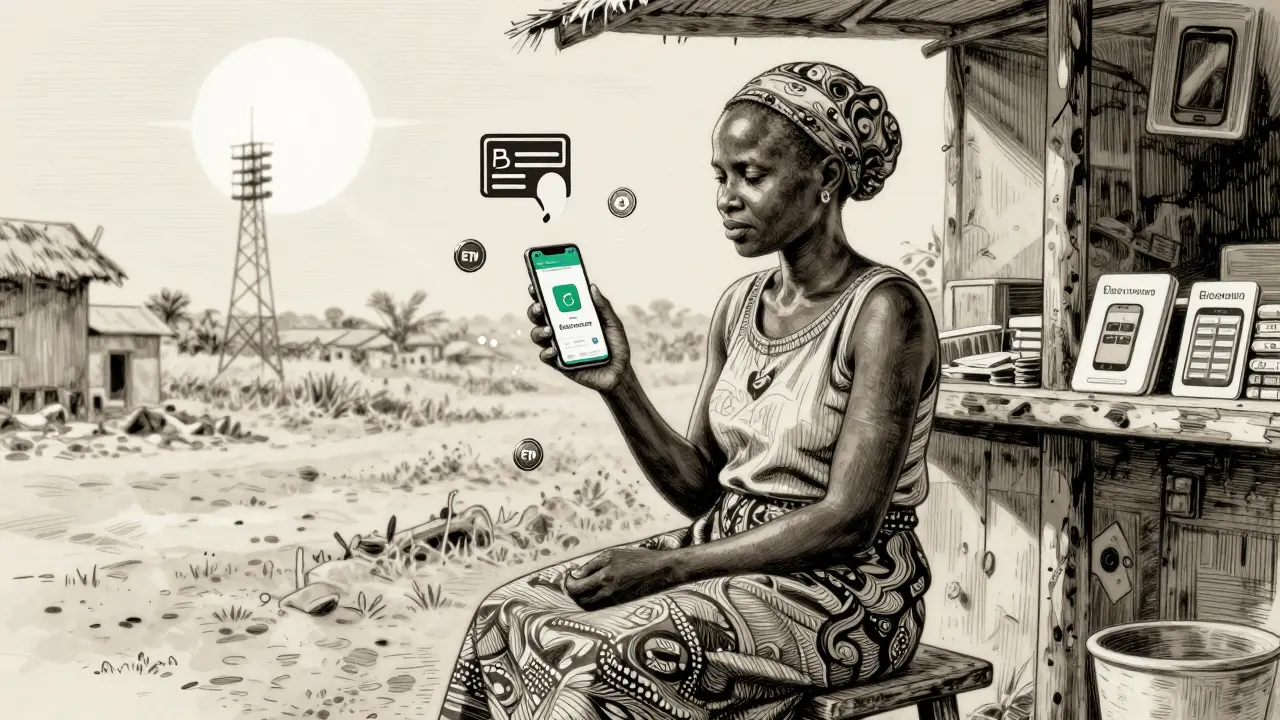
Mobile Data Cost Comparison Tool
See how much you could save when buying mobile airtime with Electroneum compared to traditional methods in developing countries. Calculate real-world costs for users in Nigeria, Ghana, Kenya, and other regions where ETN is accepted.
Why this matters: For users in unbanked regions, 0.1 cents might seem small, but it's the difference between being able to send money home or not. Electroneum's near-zero fees and fast transactions make financial services accessible to 1.4 billion people without bank accounts.
Most cryptocurrencies are built for traders, investors, or tech-savvy users. But Electroneum (ETN) was built for people who don’t have bank accounts, don’t own computers, and just have a smartphone. Launched in 2017, it’s not another altcoin chasing hype-it’s a tool designed to help over 1.4 billion unbanked people around the world send money, buy airtime, or get paid for small jobs-all through their phone.
How Electroneum Works (No Mining Required)
When you hear "mining" in crypto, you think of powerful computers solving complex math problems. Electroneum doesn’t work that way. Its mobile app used to call it "simulated mining," but that’s misleading. You don’t actually mine ETN. Instead, you earn small amounts just by opening the app daily. It’s a rewards system, not cryptography. The real work happens on the backend, where a network of trusted validators-like universities and Web3 companies-processes transactions.
In 2019, Electroneum ditched its old proof-of-work system and switched to something called Proof of Responsibility (PoR). Then, in 2022, it upgraded again to a full Layer 1 blockchain that’s compatible with Ethereum’s smart contracts. That means developers can build apps on it using the same tools they use for Ethereum. Transactions now settle in about 5 seconds, and fees are almost nothing-often less than a penny. That’s faster and cheaper than Ethereum, which can take 15-20 seconds and cost dollars in gas during busy times.
Why Electroneum Exists: Serving the Unbanked
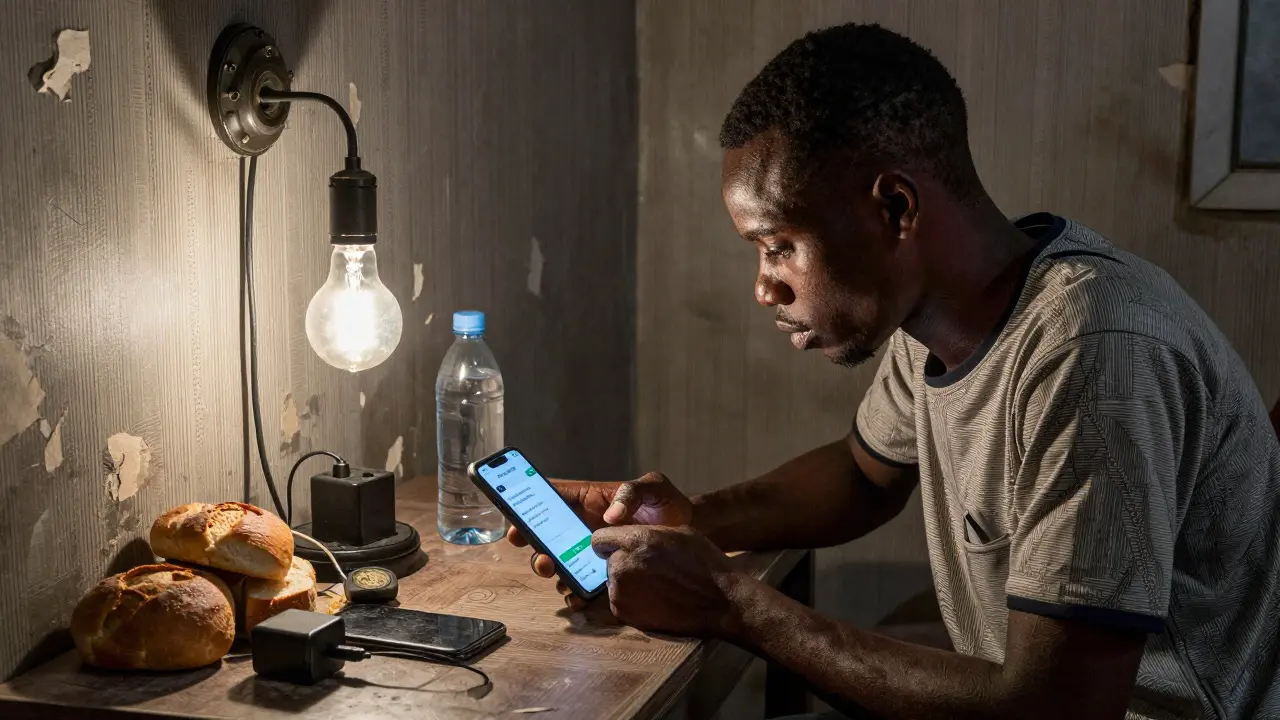
Think about someone in rural Kenya who can’t open a bank account but has a $30 Android phone. How do they pay for data, send money to family, or get paid for freelance work? Traditional remittance services charge 5-10% and take days. Mobile money services like M-Pesa work well in some places, but they’re tied to local carriers and can’t send money across borders easily.
Electroneum steps in here. It lets users top up their mobile airtime with ETN. In Nigeria, Ghana, and other African countries, people use the app to buy data bundles instantly. No middlemen. No long waits. No high fees. And because ETN is digital, it can move across borders just as easily as a text message.
The platform also includes AnyTask, a freelance marketplace where people can offer services like graphic design, translation, or virtual assistance. Buyers pay with credit cards, but sellers get paid in ETN. That’s huge for someone who can’t get a PayPal account or a bank wire. In Kenya, users report earning $2-$3 per month through AnyTask. That’s not life-changing money-but in places where the average daily income is under $3, it’s meaningful.
How ETN Is Used: More Than Just a Coin
ETN isn’t just a currency you hold. It’s the fuel for the whole system:
- Gas fees: Every transaction on the Electroneum blockchain burns ETN. That means the supply slowly shrinks over time, which can help support value.
- Collateral: You can lock up ETN to borrow other crypto assets on DeFi platforms built on the network.
- Payments: Merchants in supported regions accept ETN for goods-from food to phone repairs.
- Token economy: NFTs and digital marketplaces on Electroneum use ETN as their only payment method.
This tight integration makes ETN more useful than coins that exist only to be traded. You can’t spend Bitcoin at your local market in Uganda-but you can spend ETN to refill your phone there.
How It Compares to Other Cryptocurrencies
Let’s put Electroneum side-by-side with other coins people know:
| Feature | Electroneum (ETN) | Ethereum (ETH) | Stellar (XLM) | Bitcoin (BTC) |
|---|---|---|---|---|
| Transaction Speed | ~5 seconds | 15-20 seconds | 3-5 seconds | 10+ minutes |
| Average Fee | $0.001-$0.01 | $1-$50 | $0.001 | $1-$10 |
| Consensus | IBFT (Validator-based) | Proof of Stake | Consensus Protocol | Proof of Work |
| Mobile App | Yes, core feature | Third-party only | Third-party only | Third-party only |
| Target Users | Unbanked, mobile users | Developers, investors | Cross-border payments | Store of value |
| Real-World Use | Airtime, freelance pay, small purchases | DeFi, NFTs, smart contracts | Bank transfers, remittances | Investment, speculation |
Electroneum doesn’t compete with Bitcoin for price or with Ethereum for developer tools. It competes with mobile money services-and it wins on cost and cross-border flexibility.
Problems and Criticisms
Electroneum isn’t perfect. Critics point out three big issues:
- Not fully decentralized: Only a few known validators run the network. Purists say that goes against crypto’s original idea of open, permissionless systems.
- Limited exchange access: ETN is mostly listed on ProBit Global. You won’t find it on Binance, Coinbase, or Kraken. That makes it hard to buy or sell in large amounts.
- Low liquidity: With a price around $0.00122 as of 2023, even a $100 trade can move the market. That scares off serious investors.
Then there’s the "mining" confusion. Many users think they’re actually mining coins like Bitcoin. Dr. Garrick Hileman from Cambridge’s Alternative Finance Center called it misleading. It’s not mining-it’s a gamified reward system. That’s fine for beginners, but it risks backlash if people feel tricked.
And the app? Users on Trustpilot give it a 3.2/5. Many say it’s functional but clunky. Compared to sleek wallets like Trust Wallet or MetaMask, Electroneum’s interface feels outdated.

Who Should Use Electroneum?
Electroneum isn’t for day traders. It’s not for people who want to get rich off crypto flips. It’s for three groups:
- People without bank accounts who need to pay for mobile data or send money home.
- Freelancers in developing countries who want to get paid for small online jobs without PayPal or Stripe.
- Curious beginners who want to try crypto without buying expensive coins or dealing with complex wallets.
If you live in Nigeria, Ghana, Kenya, or parts of Southeast Asia, and you use your phone for everything, ETN could be the most practical crypto you’ll ever touch.
The Road Ahead
Electroneum’s team is pushing hard to grow. By late 2024, they plan to expand mobile top-up services to over 50 countries. They’re also adding new categories to AnyTask-like ordering food, buying medicine, and paying for construction materials. That’s not just crypto. That’s financial infrastructure.
They’ve also made a smart move by going EVM-compatible. That means Ethereum developers can build on Electroneum without learning a whole new system. It’s a bridge between the world of big DeFi and the world of unbanked users.
But growth depends on one thing: merchants. Right now, only a few thousand businesses accept ETN. If that number jumps to 50,000, adoption will explode. If it doesn’t, ETN will stay a niche tool for a small group.
As Dr. Neha Narula from MIT said, "The cryptocurrencies that will ultimately succeed are those solving real problems for real people." Electroneum is trying to do exactly that. Whether it succeeds depends not on price charts-but on whether a mother in Accra can buy her kid’s school data bundle with a tap.
Still... if this thing lets my cousin in Lagos buy airtime without paying 12% to some middleman, I’ll shut up. For now.
Let’s stop pretending crypto is only for Wall Street. This? This is real change.
I’ve seen this movie before. They give you a free phone, then charge you 50% on every transaction. They’re not helping the unbanked-they’re banking on them.