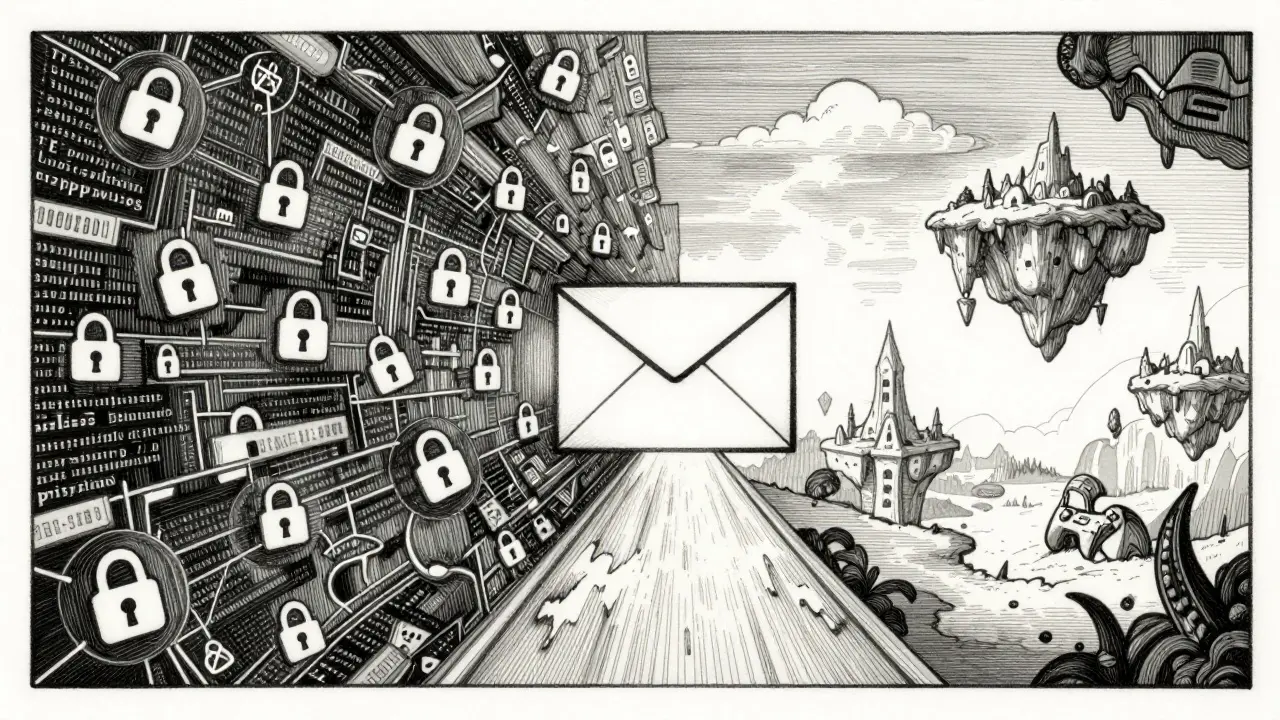
Imagine playing a blockchain game where you don't actually have to know what a blockchain is. No seed phrases to memorize, no confusing wallet extensions, and no spending twenty minutes setting up an account just to play a simple puzzle game. This is the core promise of GameSwift is a modular blockchain network specifically designed for the gaming industry that uses an 'invisible blockchain' approach to onboard non-crypto players. Also known as GSWIFT, it aims to strip away the friction that usually stops regular gamers from trying Web3 titles.
The Problem GameSwift Solves
For years, blockchain gaming has been stuck in a loop. Developers build games, but only 'crypto-natives' play them because the entry barrier is too high. If you have to explain what a gas fee is to a player before they can start the first level, you've already lost them. Gabe Lee, the CEO and a former Unity Technologies executive, recognized that the biggest hurdle wasn't the tech-it was the user experience.
GameSwift tackles this by hiding the complex parts of the chain. Using GameSwift ID, users can register via email in about 17 seconds. Compare that to the traditional 3-to-5-minute ordeal of creating a wallet and securing a private key. By making the blockchain invisible, they've managed to attract over 150,000 monthly active users, with a staggering 70% of them being people who have never touched crypto before.
How the Technology Actually Works
Under the hood, GameSwift isn't just a simple app; it's a sophisticated piece of infrastructure. It's built on the OP Stack from Optimism, meaning it's part of the Superchain ecosystem. This allows it to talk to other OP-based chains like Base, making it easier for assets to move around.
To keep things fast and cheap, they use zkEVM (Zero-Knowledge Ethereum Virtual Machine) technology. This is a big deal because it reduces gas costs by roughly 40% compared to the Ethereum mainnet and shaves 200-300ms off transaction execution times. For a gamer, a 300ms delay is the difference between a smooth hit and a laggy miss.
The ecosystem is split into four main pillars:
- Chain Infrastructure: The L2 network that handles the heavy lifting.
- Web3 Infrastructure: Tools like GS Pay for payments and GS Vault for staking.
- Platform: The hub where gamers find and launch titles.
- Gaming Studio: A dedicated arm to help developers build and port games.
Understanding the GSWIFT Token
The GSWIFT token is the fuel for this entire machine. Primarily, it acts as a gas token to pay for transactions on the network. However, its utility is a point of heavy debate among analysts. While it enables the network to function, some critics argue it lacks enough 'demand drivers' to sustain a high price over the long term.
| Attribute | Value |
|---|---|
| Total Supply | 771.11 Million GSWIFT |
| Circulating Supply | 360.76 Million (46.8%) |
| Current Price (Approx) | $0.001298 USD |
| Market Cap | $451.96K |
| Public Sale Price | $0.0144 |
Looking at the numbers, the token has faced a rough ride, dropping over 80% from its public sale price. The allocation is heavily weighted toward ecosystem development (35%) and the team (25%), which some investors see as a red flag, while others see it as necessary for long-term growth.

Comparing GameSwift to the Giants
When you put GameSwift next to heavy hitters like Immutable X or Polygon, the trade-offs become clear. Polygon is a general-purpose scaling solution; it does everything. Immutable X is an NFT powerhouse. GameSwift, however, is hyper-focused on the onboarding experience.
| Feature | GameSwift | Immutable X | Polygon |
|---|---|---|---|
| Non-Crypto User Base | ~70% | ~45% | ~35% |
| Transactions Per Second (TPS) | 3,500 | 9,000 | 7,000 |
| Finality Time | 2 Seconds | 15 Minutes | 2.5 Seconds |
| Game Library Size | ~45 Games | 300+ Games | 800+ Games |
While GameSwift can't compete with Polygon's billions in market cap or Immutable X's massive library of games, its speed of finality (2 seconds) and its ability to attract casual players are its winning cards. If you're a developer, porting a game to GameSwift takes about 40 hours-roughly a third of the time it takes for other blockchain integrations.
The AI Angle: GS Force Launcher
One of the most unique parts of the ecosystem is the GS Force Launcher. It's not just for starting games; it's a decentralized compute market. Users can rent out their GPU power to others for AI processing. If you share your hardware, you earn 85% of the revenue, while 15% goes to those staking GSWIFT in GS Pay.
It's a clever way to create utility for the token beyond just gas fees. However, it's not without risk. AI researchers have raised concerns about hardware integrity and security when allowing remote AI processing on personal machines. It's a high-reward feature, but it requires trusting the platform's security layers.

The Risks and Reality Check
Is everything sunshine and rainbows? Not exactly. The project is in a precarious spot. On one hand, you have the technical achievement of a seamless login and fast transactions. On the other, you have a small market cap and a limited number of games. Without a "killer app" or a partnership with a major studio like Ubisoft or EA, the network risks becoming a ghost town.
Furthermore, the "invisible blockchain" approach has caught the eye of regulators. The SEC has mentioned that hiding the blockchain might accidentally create "unregistered securities" if game assets are tokenized in a certain way. This legal gray area is something any potential investor or developer needs to keep an eye on.
Future Outlook: What's Next?
The roadmap for 2026 looks ambitious. They are planning Layer-3 rollups, which would allow individual games to have their own dedicated chains for even more speed. Perhaps most exciting is the announced integration with Steam. If GameSwift can successfully bridge the gap between the world's largest PC gaming platform and Web3, the user growth could be exponential.
Whether GSWIFT becomes a gaming staple or remains a niche experiment depends on two things: more games and better token utility. The tech is there, but the ecosystem needs to grow from a small village into a city.
What exactly is the 'invisible blockchain' approach?
It's a design philosophy where the blockchain elements (wallets, gas fees, private keys) are hidden from the user. Players interact with a familiar interface-like signing up with an email-while the blockchain handles the ownership and transactions in the background.
Is GSWIFT a good investment?
Investing in GSWIFT is high-risk. While the technology for onboarding is industry-leading, the token has lost over 80% of its value since the public sale, and the market cap is very low compared to competitors. It's a speculative play on the growth of Web3 gaming.
How do I start playing games on GameSwift?
You need to download the GameSwift Launcher, which is compatible with Windows 10+ and macOS 11+. From there, you can create a GameSwift ID using your email and jump into available titles without needing a separate crypto wallet.
What are the hardware requirements for the GS Force Launcher?
For a smooth experience, you'll need at least an Intel Core i5-8400 or AMD Ryzen 5 1600 CPU, 8GB of RAM, and an NVIDIA GTX 1060 or equivalent GPU.
Can developers easily move their games to GameSwift?
Yes, the SDK is designed to be efficient. On average, it takes about 40 hours to port an existing game, which is significantly faster than building a custom blockchain integration from scratch.
Next Steps for Users
- For Casual Gamers: Download the launcher and try a title like 'Crypto Legends' to see if the invisible blockchain experience fits your style.
- For Crypto Investors: Research the current circulating supply and the upcoming Layer-3 roadmap before deciding on a position.
- For Developers: Check the SDK documentation and the $500,000 monthly grant program to see if your project qualifies for funding.

this invisible blockchain stuff sounds pretty chill. honestly if i dont have to deal with seed phrases i might actually try a web3 game for once.
really cool to see them focusin on the onboarding side of things! most of these projects totaly forget that regular ppl hate wallets. hope it takes off soon.
lol a 2 second finality is fine but who actually cares about the blockchain part if its invisible anyway? sounds like just another way to say its a database with a fancy name lol.
Actually, the technical distinction between a centralized database and a zkEVM-powered L2 is profound, regardless of the UI layer. The GS Force Launcher is the most interesting part here because decentralized compute is a burgeoning sector, though the security concerns regarding remote GPU execution are entirely valid and often overlooked by retail investors who only care about the price ticker. Most people fail to realize that providing raw compute without a TEE (Trusted Execution Environment) is a massive risk for the client. Furthermore, the tokenomics are predictably skewed toward the team, which is a common pattern in these modular stacks, yet it doesn't necessarily preclude a recovery if the Steam integration actually manifests into a tangible API partnership rather than just a vague roadmap promise. It's a classic high-risk, high-reward play where the infrastructure is solid but the economic incentive layer is currently underdeveloped and frankly quite fragile given the current market cap.
just sounds like a way to play games and earn stuff without the headack of crypto.
omg an 80 percent drop?? i cant even imagine the panic in the group chats when that happened!! absolute carnage!!
When we consider the intersection of accessibility and decentralized ownership, we must acknowledge that the 'invisible' layer is not merely a technical convenience but a philosophical shift in how we conceptualize digital property, suggesting that for a technology to truly integrate into the human experience, it must move beyond the friction of its own existence and become a seamless utility that serves the user without demanding they first become a student of the system's internal mechanics, which is exactly what GameSwift seems to be attempting by removing the cognitive load of wallet management and gas fees from the initial user journey.
The Steam integration would be a total game changer for them. Fingers crossed!
As long as this tech is developed and hosted in the US and doesn't let foreign entities control our gaming infrastructure, I'm all for it. We need to keep our tech lead.