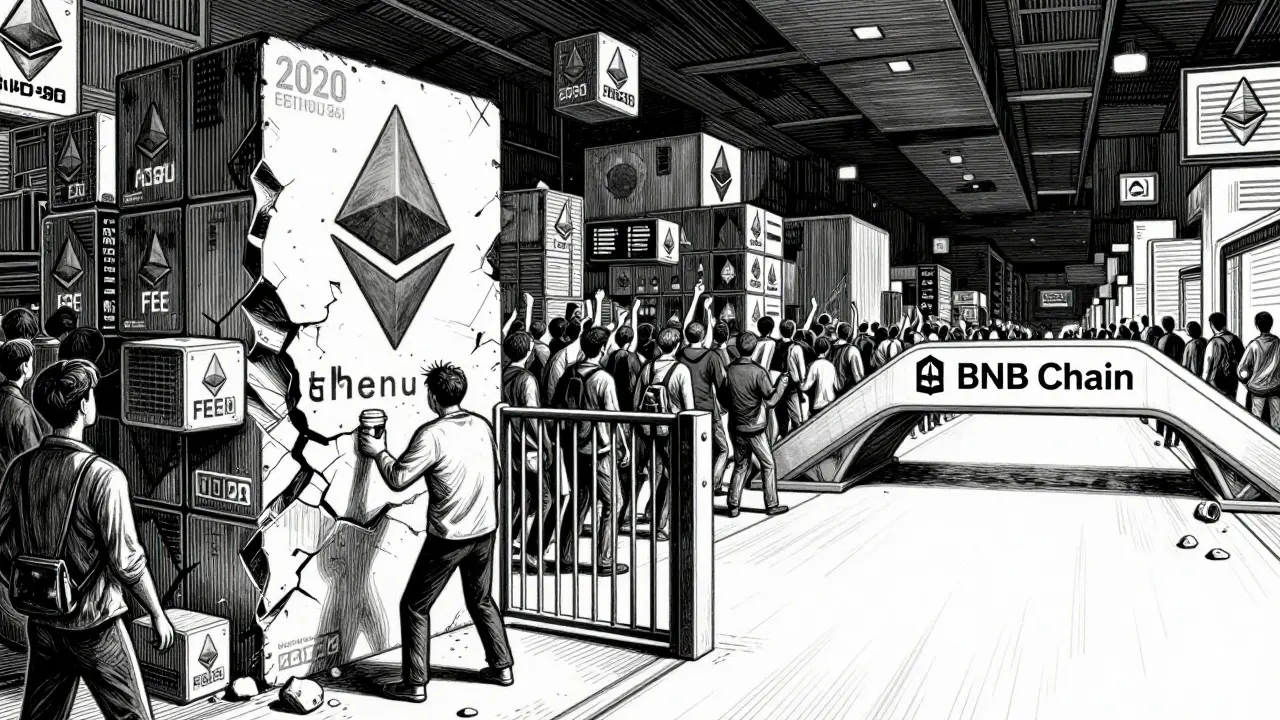
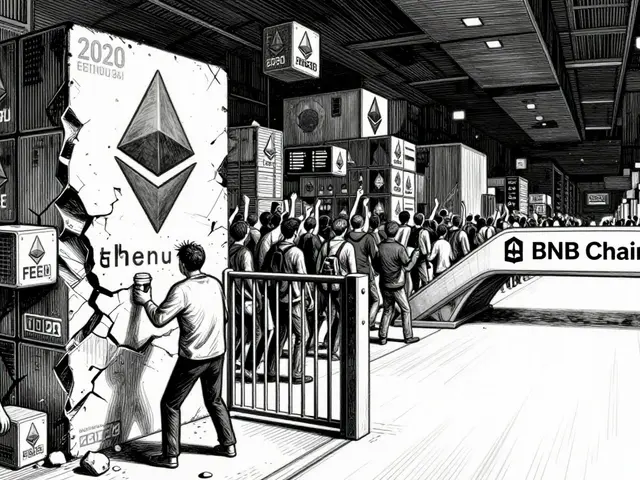
Imagine trying to buy a cup of coffee but having to pay $50 in transaction fees just to process the payment. That was the reality for many crypto users on Ethereum back in 2020. Network congestion made simple trades expensive and slow. Enter PancakeSwap, a decentralized exchange built on the Binance Smart Chain (now BNB Chain) that launched in September 2020 as a faster, cheaper alternative to Ethereum-based platforms like Uniswap. It didn't just solve the fee problem; it created an entire ecosystem where you can trade, earn interest, play games, and vote on platform decisions-all without handing your money over to a centralized company.
If you've seen the ticker symbol CAKE flashing on your screen or heard friends talking about "farming" yields, you're looking at the heart of this system. But what exactly is it? Is it just another coin, or is there more going on under the hood? Let's break down how PancakeSwap works, why the CAKE token matters, and whether it fits into your crypto strategy.
The Core Concept: Decentralized Trading Without the Headache
At its simplest level, PancakeSwap is a place to swap one cryptocurrency for another. Unlike traditional exchanges like Coinbase or Binance, where a company holds your funds and matches buyers with sellers using an order book, PancakeSwap uses smart contracts. These are self-executing codes on the blockchain that handle the trade automatically.
This model is called an Automated Market Maker (AMM). Instead of waiting for someone else to buy what you want to sell, you trade against a pool of liquidity provided by other users. If you want to swap USDT for ETH, you pull from a shared pool containing both tokens. The price is determined mathematically based on the ratio of assets in the pool. This means trading happens 24/7, instantly, and without needing permission from anyone.
Why does this matter? Because it removes the middleman. You never leave custody of your assets until the exact moment of the swap. Your wallet connects directly to the protocol. For many users, this sense of control-and the significantly lower fees compared to Ethereum-is the main draw. While Ethereum gas fees can spike during busy periods, transactions on BNB Chain typically cost fractions of a cent, making small trades viable.
Understanding the CAKE Token: More Than Just Currency
CAKE is the native utility token of the PancakeSwap ecosystem, issued as a BEP-20 token on the BNB Chain with a maximum supply of 450 million tokens. Think of CAKE not just as something you hold, but as fuel for the engine. It has several critical jobs within the platform:
- Governance: Holding CAKE gives you a voice. You can vote on proposals that affect the future of the platform, such as changing fee structures, adding new blockchains, or adjusting reward rates. This aligns with the decentralized ethos-users decide how the platform evolves.
- Rewards: When you provide liquidity or stake your tokens, you often get paid in CAKE. It’s the primary incentive for people to keep the platform running smoothly.
- Access: CAKE is used to participate in Initial Farm Offerings (IFOs), which are new token launches. It also powers features like the lottery, prediction markets, and NFT marketplace.
- Discounts: Active traders can use CAKE to reduce trading fees, creating a direct financial benefit for holding the token.
One key aspect of CAKE is its deflationary mechanism. The team burns (permanently destroys) CAKE tokens regularly. This burning happens through weekly purchases funded by a portion of the platform's trading fees, as well as from revenue generated by lotteries, NFT sales, and prediction markets. As the circulating supply decreases while demand remains steady or grows, basic economics suggests upward pressure on value. It’s a way to combat inflation and reward long-term holders.
How to Earn: Yield Farming and Staking Explained
You don’t have to be a trader to make money on PancakeSwap. In fact, many users engage in passive income strategies known as yield farming and staking. Here is how these mechanisms work in plain English.
Liquidity Pools and Impermanent Loss
To start earning, you can become a Liquidity Provider (LP). You deposit equal values of two tokens (for example, $100 worth of CAKE and $100 worth of BNB) into a pool. In return, you receive LP tokens that represent your share of that pool. Every time someone trades against that pool, they pay a 0.17% fee. Those fees are distributed pro-rata to all LPs. So, if you own 1% of the pool, you get 1% of the fees.
However, there is a catch called impermanent loss. If the price of one token in your pair changes drastically compared to the other, you might end up with less value than if you had just held those tokens in your wallet. This risk is real and needs to be calculated before providing liquidity to volatile pairs.
Syrup Pools and Fixed-Term Locking
If impermanent loss sounds risky, there’s a simpler option: Syrup Pools. Here, you simply stake your CAKE tokens (or LP tokens) to earn rewards. The platform offers flexible staking, where you can withdraw anytime, and fixed-term locking.
Fixed-term locking is interesting because it boosts your returns. By locking your CAKE for periods ranging from a few weeks up to 52 weeks, you earn a higher Annual Percentage Yield (APY). There are no performance fees for this. Additionally, locked CAKE gives you boosted voting power in governance and better access to IFOs. It’s a commitment device that rewards patience.
| Mechanism | Risk Level | Primary Reward | Best For |
|---|---|---|---|
| Providing Liquidity | High (Impermanent Loss) | Trading Fees + CAKE | Active participants who understand market dynamics |
| Syrup Pool Staking | Low (Price Volatility Only) | CAKE Tokens | Long-term holders wanting passive income |
| Fixed-Term Locking | Low (Locked Capital) | Boosted APY + Governance Power | Users confident in CAKE's long-term value |
| IFO Participation | Medium (New Project Risk) | New Tokens | Investors looking for early entry into new projects |
Beyond Swapping: The Full DeFi Ecosystem
PancakeSwap has evolved from a simple swap interface into a comprehensive DeFi hub. Why stay on one app when you can do everything in one place? The platform integrates several services that increase the utility of CAKE and keep users engaged.
NFT Marketplace: You can mint, buy, and sell NFTs here. CAKE is used to pay for listings and purchases. The platform even hosts exclusive collections and charity auctions, tapping into the digital art and collectibles trend.
Prediction Markets: Gamified finance allows users to bet on the outcome of events, such as whether Bitcoin will be above or below a certain price at a specific time. It’s speculative, yes, but it adds a layer of entertainment and additional use cases for the token.
Lottery: A weekly lottery where tickets are bought with CAKE. Part of the ticket revenue goes to burn CAKE, reinforcing the deflationary model. Winners receive CAKE prizes.
Futures Trading: For more advanced users, PancakeSwap offers perpetual futures contracts. This allows for leveraged trading, meaning you can amplify gains (and losses) without owning the underlying asset. It brings institutional-grade tools to the decentralized world.
Multi-Chain Expansion: Not Just BNB Anymore
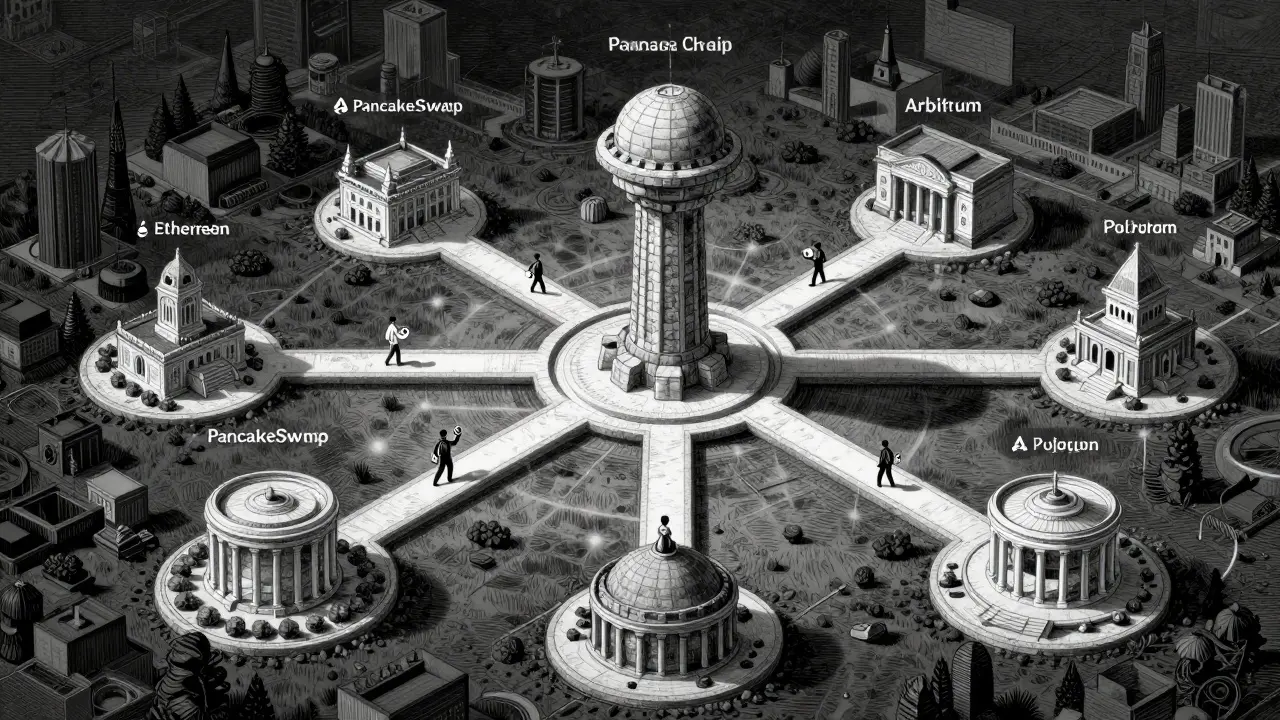
Originally built solely on Binance Smart Chain, PancakeSwap recognized the limitations of being tied to one network. Today, it operates across 12 different blockchain networks, including Ethereum, Arbitrum, Polygon, and others. This multi-chain approach is strategic. It reduces reliance on a single ecosystem, captures users from different communities, and enhances capital efficiency. Whether you prefer the security of Ethereum or the speed of Arbitrum, PancakeSwap aims to meet you where you are.
Risks and Considerations
No investment is without risk. Before diving in, consider these factors:
- Smart Contract Risk: Even though PancakeSwap is audited and widely used, bugs in code can exist. Always verify contract addresses yourself.
- Market Volatility: Crypto prices swing wildly. CAKE’s value is tied to both general market sentiment and the platform’s success.
- Anonymous Team: The creators remain anonymous. While the project is open-source and community-governed, some investors prefer known founders for accountability. However, the transparent operations and strong community trust have mitigated this concern for most users.
- Regulatory Uncertainty: DeFi regulations are still evolving globally. Keep an eye on legal developments in your jurisdiction.
PancakeSwap proved that you don’t need a famous CEO to build a leading exchange. By focusing on low fees, high usability, and a rewarding tokenomics model, it captured millions of users. Whether you’re swapping tokens, farming yields, or just collecting NFTs, understanding how CAKE powers this machine is essential for navigating the modern crypto landscape.
Is PancakeSwap safe to use?
PancakeSwap is considered one of the safer decentralized exchanges due to its long track record since 2020, regular audits, and large user base. However, like any DeFi platform, it carries inherent risks such as smart contract vulnerabilities and the responsibility of securing your own private keys. Always double-check URLs to avoid phishing sites.
What is the difference between PancakeSwap and Uniswap?
Both are automated market makers (AMMs), but they operate on different blockchains. Uniswap is primarily on Ethereum, which often means higher gas fees. PancakeSwap started on BNB Chain, offering much lower transaction costs. Today, PancakeSwap supports multiple chains, including Ethereum, making it a versatile competitor.
How do I buy CAKE tokens?
You can buy CAKE on major centralized exchanges like Binance, Coinbase, or Kraken, then transfer them to a compatible wallet like MetaMask or Trust Wallet. Alternatively, you can swap other cryptocurrencies for CAKE directly on the PancakeSwap website using their decentralized interface.
What is impermanent loss?
Impermanent loss occurs when the price of tokens deposited in a liquidity pool changes relative to each other. If one token pumps or dumps significantly, you may end up with less value than if you had simply held the tokens in your wallet. This risk is temporary if prices revert, but can become permanent if you withdraw during divergence.
Does CAKE have a max supply?
Yes, the maximum total supply of CAKE is capped at 450 million tokens. However, the circulating supply is actively reduced through regular token burns funded by trading fees and platform revenue, making it a deflationary asset over time.
Can I use PancakeSwap on mobile?
Yes, PancakeSwap has a dedicated mobile app available for iOS and Android devices. It offers full functionality, including swapping, staking, and accessing the NFT marketplace, optimized for on-the-go trading.
Oh, absolutely delightful! 🍰✨ It is simply *quintessential* that we discuss the nuances of decentralized finance in such a refined manner. The notion that one might prefer the 'simplicity' of centralized exchanges is quite pedestrian, don't you think? True connoisseurs of crypto understand that sovereignty is not just a feature; it is an aesthetic. To hold your own keys is to breathe the air of freedom, whereas trusting a corporation is akin to breathing smog. I find the deflationary mechanics of CAKE to be particularly elegant, almost like a well-composed symphony where every note (or token burn) contributes to the grand crescendo of value. One must appreciate the artistry involved in algorithmic governance. It is not merely code; it is poetry written in Solidity. 🎻💎
The fundamental flaw in this narrative is the reliance on BNB Chain's security assumptions, which are inherently inferior to Ethereum's proof-of-stake consensus mechanisms. While transaction costs are lower, the opportunity cost of potential bridge exploits or validator centralization cannot be ignored. Furthermore, the impermanent loss calculation presented here is grossly oversimplified and fails to account for volatility-adjusted returns relative to a static hedging strategy. Most retail participants lack the quantitative literacy to manage these risks effectively, leading to systemic fragility within the liquidity pools. The tokenomics model relies heavily on continuous inflow of new capital to sustain APYs, resembling a Ponzi structure more than a sustainable yield generation protocol. Without rigorous stress testing against black swan events, the entire ecosystem remains precarious.
I see your point about the risks, but I think the low barrier to entry makes it accessible for many people who want to try DeFi without spending $50 on gas fees. It’s a good starting place.
Accessibility does not equate to safety. Lowering barriers often increases exposure to unsophisticated actors who exacerbate market inefficiencies. You are conflating user experience with financial robustness. A platform that prioritizes ease of use over cryptographic rigor is inviting failure. The 'good starting place' argument is dangerous because it normalizes suboptimal security practices among retail investors. They learn bad habits early, assuming that smart contracts are infallible. This creates a false sense of security that will eventually lead to significant capital destruction when the inevitable exploit occurs. Do not mistake convenience for competence.
It is amusing how everyone blindly follows the herd into these so-called 'innovative' platforms without questioning the underlying economic viability. The anonymous team aspect is not a feature; it is a massive red flag that any rational investor would avoid. Trust based on open-source code alone is naive. Code can be audited, but intent cannot. Until there is accountability from the founders, this entire project is built on sand. I suppose some people prefer their financial instruments to be as opaque as the people running them. How quaint.
i mean its kinda sus that the team is anon tbh. like why hide if u r doing good work? feels sketchy to me. also the whole burning thing seems like marketing hype to keep prices up. ppl should be careful out there dont get rug pulled lol
Oh my gosh!! I totally agree with being cautious!!! 😲 But honestly?? I love the community vibes on PancakeSwap!! It’s so exciting to participate in the lotteries and NFT mints!! 🎟️🖼️ I know there are risks, but isn’t life all about taking chances?! Plus, the UI is super user-friendly which makes me feel safe-ish!! 😅 Just remember to double-check those links!! Stay safe out there friends!! 💕✨
While enthusiasm is commendable, it is imperative to maintain a disciplined approach to risk management. Emotional decision-making often leads to poor financial outcomes. Users should ensure they have a comprehensive understanding of the smart contract interactions before deploying capital. Due diligence is not optional; it is a requirement for participation in decentralized finance. Please prioritize security protocols and verify all contract addresses independently.