
You see the ticker SETH on a chart, and it looks like Ethereum. But when you check the price, it’s not quite matching ETH. Or worse, you buy what you think is "Synthetix sETH" but end up with a completely different token called "Sether." This confusion is rampant in the DeFi space right now. If you are trying to understand what sETH actually is, you need to know that it isn’t just another altcoin. It is a derivative, a financial instrument built on top of Ethereum that lets you trade the price of Ether without actually holding any Ether.
As of late 2026, the landscape for synthetic assets has matured, but the risks haven't gone away. This guide breaks down exactly how sETH works, why it trades at prices that sometimes diverge from spot ETH, and how to avoid mixing it up with other tokens sharing the same name. We’ll look at the data from major platforms like Coinbase, Kraken, and MetaMask to give you a clear picture of where this asset stands today.
The Core Concept: Synthetic Exposure Without Custody
At its heart, sETH is a synthetic Ether token issued by the Synthetix protocol. Unlike native ETH, which you hold in your wallet as a base-layer cryptocurrency, sETH represents a claim on the price of Ether. You don’t own the underlying coin; you own a contract that tracks its value. This distinction matters because it changes how you interact with the asset. You can gain exposure to ETH’s price movements, hedge against drops, or go long without ever locking up actual ETH in a validator or exchange account.
The mechanism relies on decentralized oracles, specifically Chainlink. When you look at a sETH price feed, you aren’t seeing a direct order book match between buyers and sellers of ETH. Instead, the Synthetix smart contracts query Chainlink’s network, which aggregates price data from multiple exchanges to produce a time-weighted average price. This ensures that sETH mirrors the market rate of ETH closely, but it introduces a layer of dependency on oracle reliability. If Chainlink feeds lag or fail, sETH pricing can become unstable, a risk inherent to all synthetic assets.
How Synthetix and Chainlink Power sETH
To understand sETH, you have to look at the infrastructure behind it. Synthetix is a decentralized protocol for creating and trading synthetic assets on Ethereum and Optimistic Ethereum. It allows users to mint Synths-tokens that track real-world assets like stocks, commodities, and cryptocurrencies. sETH is one of these Synths, designed specifically to track Ether.
The security model here is layered. First, there is Ethereum itself, providing proof-of-stake consensus and widespread node validation. Second, there is the Optimistic rollup technology used by Synthetix to lower transaction fees, allowing for faster trading while still settling on the mainnet. Third, and crucially, there is Chainlink, a decentralized oracle network that provides reliable external data to blockchains. Chainlink nodes fetch ETH prices from various sources and push them on-chain. Synthetix reads this data to determine the current value of sETH. If you redeem sETH for USDC or swap it for sUSD, the protocol uses this oracle price to calculate the exchange rate.
This setup means sETH is not backed by physical ETH reserves in a simple 1:1 custody model. Instead, it is backed by over-collateralized SNX (Synthetix Network Token) staked by other users in the system. This creates a unique risk profile: if the price of SNX crashes violently, the collateral backing the Synths could theoretically come under pressure, though the protocol includes liquidation mechanisms to handle this.
Market Data and Liquidity in 2026
Let’s look at the numbers. According to data from MetaMask and Kraken as of mid-2026, sETH maintains a modest but active market. On June 23, 2026, sETH was trading around $335.51 USD, with a market capitalization hovering near $3.9 million. While this is tiny compared to ETH’s multi-billion dollar valuation, it indicates steady interest from specialized DeFi traders.
| Metric | sETH (Synthetix) | Contextual Note |
|---|---|---|
| Avg Price (Mid-2026) | $335 - $340 USD | Mirrors ETH market conditions |
| Circulating Supply | ~11,580 SETH | Floating supply based on demand |
| Market Cap | ~$3.9 Million USD | Niche DeFi segment |
| Primary Exchange Support | Kraken, Coinbase, MetaMask | Integrated into major wallets/exchanges |
| Oracle Source | Chainlink | Decentralized price aggregation |
Notice the supply figure. Unlike Bitcoin or even standard ERC-20 tokens with fixed supplies, sETH has a floating supply. It is minted when users want exposure and burned when they exit. The low circulating supply of roughly 11,000 tokens reflects the specific nature of this derivative-it’s not meant for mass retail adoption like meme coins, but rather for efficient hedging within the Synthetix ecosystem.

The Ticker Trap: Confusing SETH with Other Tokens
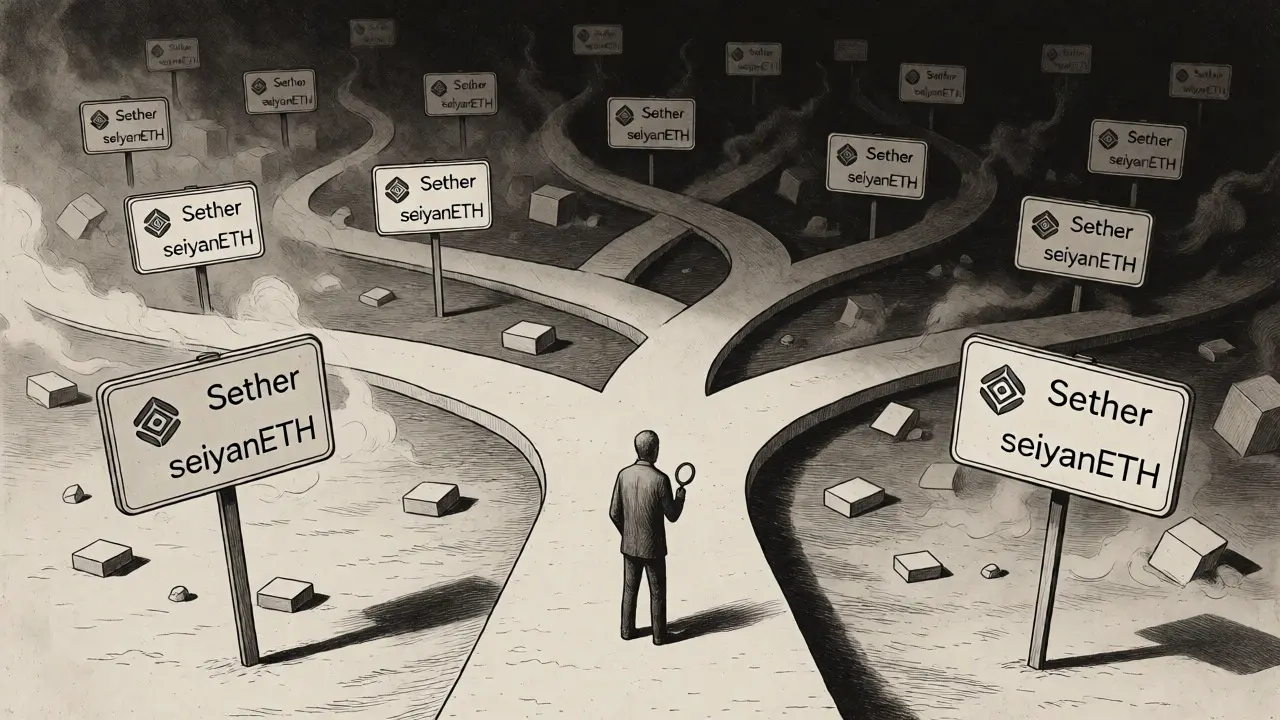
Here is the biggest pitfall for new researchers: the ticker "SETH" is reused. A quick search on Etherscan reveals several unrelated projects using this abbreviation. If you blindly buy "SETH," you might end up with the wrong asset entirely.
- Synthetix sETH: The subject of this article. Tracks ETH price via Chainlink. Traded on major exchanges like Kraken.
- Sether (SETH): A marketing analytics token. As of June 2026, it had about 15,880 holders but showed zero on-chain price activity on some explorers, indicating low liquidity or stale data. Its price history differs vastly from ETH.
- seiyanETH (SETH): Another derivative listed on CoinGecko, showing a price of $2,156 in early 2025 with zero volume. This suggests an illiquid or abandoned market.
- Staked ETH Harbour (SETH-H): An upcoming asset with minimal watchlist traction as of early 2026.
Always verify the contract address. For Synthetix sETH, ensure the token is issued by the official Synthetix contracts. Trading "Sether" thinking it’s "sETH" will result in significant losses due to the lack of correlation with Ethereum’s price.
Where to Buy and Trade sETH
Accessibility has improved significantly since sETH’s inception. You don’t need to be a DeFi power user to get involved anymore, though the best rates often require interacting with the protocol directly.
- Centralized Exchanges (CEX): Platforms like Kraken and Coinbase list sETH. This is the easiest route for beginners. You can buy sETH with USD or EUR using a standard bank transfer. Kraken reported a daily movement of -4.80% on April 28, 2026, showing that sETH reacts quickly to broader market volatility.
- Non-Custodial Wallets: Users with MetaMask can add sETH manually or via integrated price tools. MetaMask’s converter showed 1 SETH equaled 0.203704 ETH in late 2025, highlighting that parity isn’t always exact due to bridge effects or liquidity discounts.
- Automated Trading: Tools like 3Commas support sETH conversion, allowing bots to include it in complex portfolios. This is useful for strategies that seek ETH exposure without the tax implications of selling native ETH in certain jurisdictions.
Be cautious of exchange-specific data gaps. Bitget, for example, reported a $0.00 price for sETH in July 2025, likely due to delisting or integration issues rather than a true collapse in value. Always cross-reference prices across Kraken, Coinbase, and CoinGecko to get an accurate picture.
Risks and Considerations
Is sETH safer than holding ETH? Not necessarily. It introduces additional layers of complexity and risk.
- Oracle Risk: If Chainlink fails to update prices correctly, sETH could trade at a significant discount or premium to spot ETH.
- Protocol Risk: Bugs in Synthetix smart contracts could impact the ability to redeem or trade sETH.
- Liquidity Risk: With a market cap under $4 million, large sell-offs can move the price more dramatically than they would for ETH.
- Depegging: While sETH aims to mirror ETH, short-term deviations happen. In October 2025, the ratio wasn’t strictly 1:1 in terms of nominal ETH equivalence due to market mechanics.
For most casual investors, holding native ETH is simpler. sETH makes sense for those who want to stay within the DeFi ecosystem, use their assets as collateral elsewhere, or hedge positions without moving funds off-chain.
Frequently Asked Questions
Is sETH the same as Wrapped ETH (WETH)?
No. WETH is a wrapper that makes native ETH compatible with ERC-20 standards, typically held 1:1 with actual ETH. sETH is a synthetic derivative created by Synthetix, backed by SNX collateral and priced via Chainlink oracles. They serve different purposes and have different risk profiles.
Why does sETH sometimes trade below ETH?
sETH may trade at a discount due to lower liquidity compared to spot ETH, potential delays in oracle updates, or market sentiment favoring direct ownership over derivatives. Bridge effects between L2 networks and mainnet can also cause temporary price discrepancies.
Can I stake sETH to earn rewards?
Not directly in the same way you stake ETH. However, you can provide liquidity for sETH pairs on DEXs or participate in Synthetix staking programs depending on the specific protocol incentives available at the time. Staking native ETH through validators is a separate process.
Which contract address should I trust for sETH?
Always verify the address on the official Synthetix documentation or reputable aggregators like CoinGecko. Do not rely solely on the ticker "SETH," as other tokens like Sether use the same symbol. Check the issuer field in your wallet before confirming transactions.
Is sETH a good investment for long-term holding?
It depends on your strategy. For pure price appreciation mirroring ETH, native ETH is usually preferred due to higher liquidity and simplicity. sETH is better suited for active DeFi users who need synthetic exposure for hedging, yield farming, or portfolio diversification within the Synthetix ecosystem.