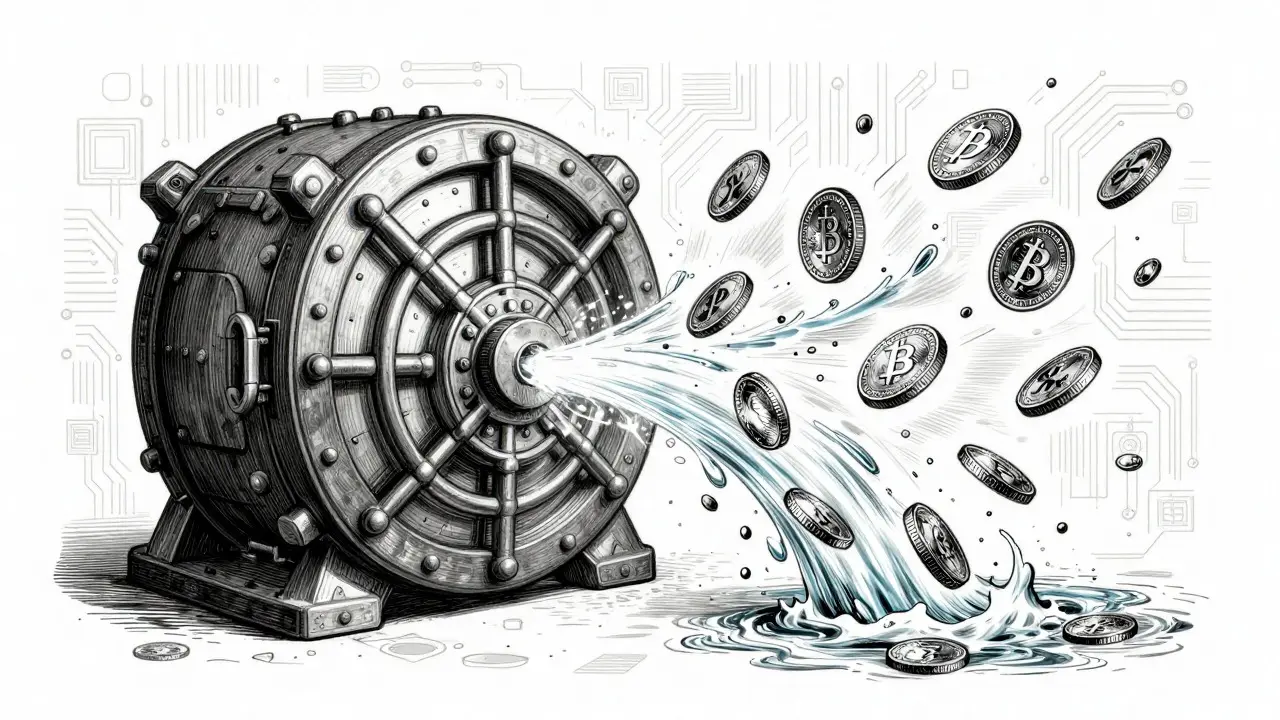
Imagine you have a savings account that pays interest, but the only way to earn it is to lock your money away for months. Now imagine someone offers you a receipt for that locked money, which you can spend at the grocery store while still earning the interest. That is essentially what Stride does for cryptocurrency. It solves a major headache in the world of proof-of-stake networks: the choice between keeping your assets safe and earning rewards, or using them to trade and invest elsewhere.
If you are holding tokens like ATOM or OSMO, you likely know the dilemma. Stake them to support the network and earn yield, or unstake them to use in decentralized finance (DeFi) apps? You usually had to pick one. Stride Protocol is a Cosmos-native multichain liquid staking platform that allows users to stake assets from any IBC-compatible chain and receive liquid staking derivatives called stTokens in return. Launched in June 2022, this protocol has become a key piece of infrastructure in the Cosmos ecosystem, helping move billions of dollars in value without sacrificing liquidity.
How Stride Solves the Liquidity Problem
The core innovation here is simple but powerful. When you deposit an asset into Stride, you don't just get a claim check; you get a new, tradable token known as an stToken. For example, if you stake ATOM, you receive stATOM.
These stTokens act like normal currency within the Cosmos ecosystem. You can swap them on exchanges, use them as collateral in lending markets, or deploy them in other DeFi protocols. Meanwhile, your original asset remains staked in the background, continuing to earn standard staking rewards. This dual benefit-earning yield while maintaining liquidity-is why institutions and retail investors alike look at Stride seriously. As of late 2023, the Total Locked Value (TVL) surpassed $80 million, supporting 16 different types of staked tokens including DYDX, ATOM, INJ, SAGA, and OSMO.
Understanding the STRD Token
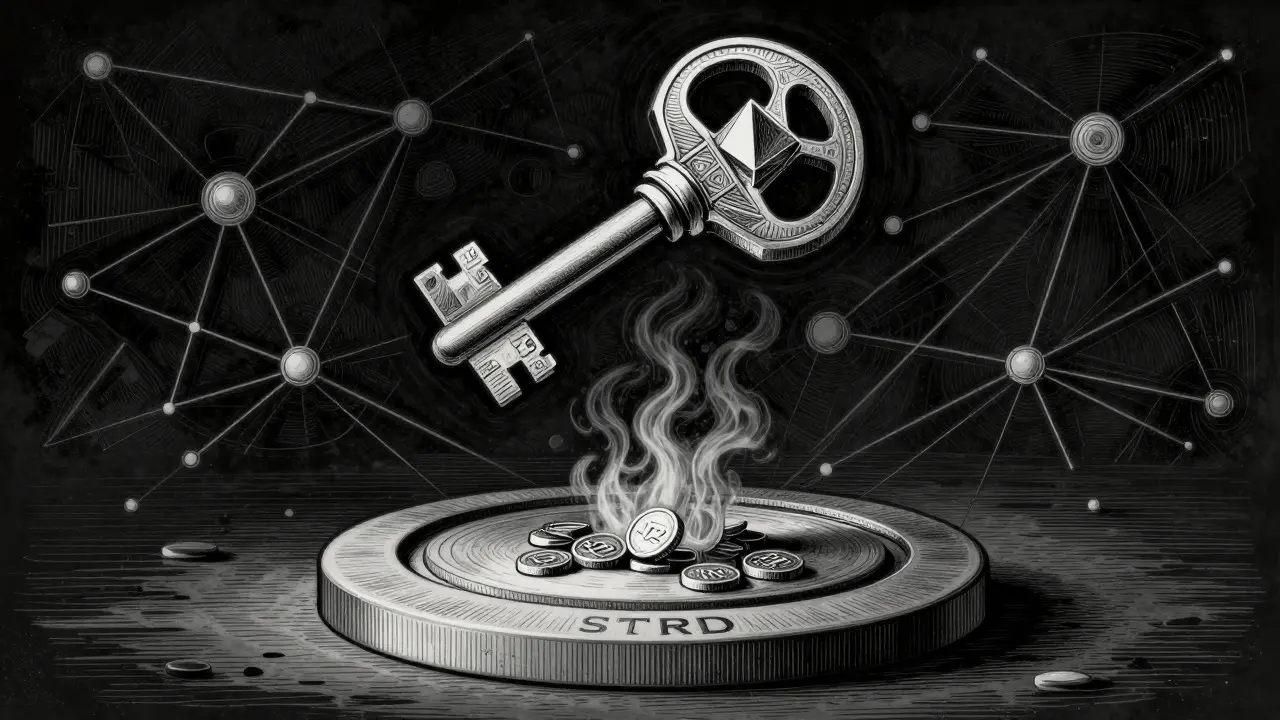
You might wonder why there is a separate token called STRD if you are just staking other coins. The STRD token is the governance token of the Stride blockchain, granting holders voting rights on protocol upgrades, validator selection, fee parameters, and other governance decisions. It is the lifeblood of the protocol's decision-making process.
Because Stride operates as a Decentralized Autonomous Organization (DAO), no significant changes to the protocol can happen without STRD holders voting in favor. If you hold STRD, you have a direct say in how the platform evolves. But it isn't just about voting. When you stake STRD within the network, you help secure the chain and earn two things: standard staking rewards paid in STRD, and a share of the revenue generated by the liquid staking fees. This creates a flywheel where active participation leads to financial compensation.
Tokenomics and Supply Mechanics
Let’s look at the numbers behind the token. The maximum supply of STRD is fixed at 100 million tokens. This cap is crucial because it prevents inflation from diluting the value of existing holdings indefinitely. As of mid-2025, the circulating supply was around 87.8 million STRD, with the price hovering near $0.49 per token. However, crypto markets are volatile. By April 2026, the price had adjusted to the $0.18-$0.19 range, reflecting broader market shifts. Despite the price fluctuation, the underlying mechanism remains focused on long-term scarcity.
The protocol uses a buy-back-and-burn model. Revenue generated from liquid staking fees and its associated decentralized exchange, Stride Swap, is used to purchase STRD (and a portion of ATOM) from the open market and burn it. Burning tokens removes them from circulation permanently. With a hard cap of 100 million, every burned token makes the remaining supply slightly more scarce, potentially supporting value over time.
| Attribute | Detail |
|---|---|
| Maximum Supply | 100,000,000 STRD |
| Circulating Supply (2026) | ~93,000,000 STRD |
| Primary Function | Governance and Security |
| Revenue Source | 10% of staking rewards + DEX fees |
| Distribution Mechanism | Buy-back and Burn |
Security and Interchain Integration
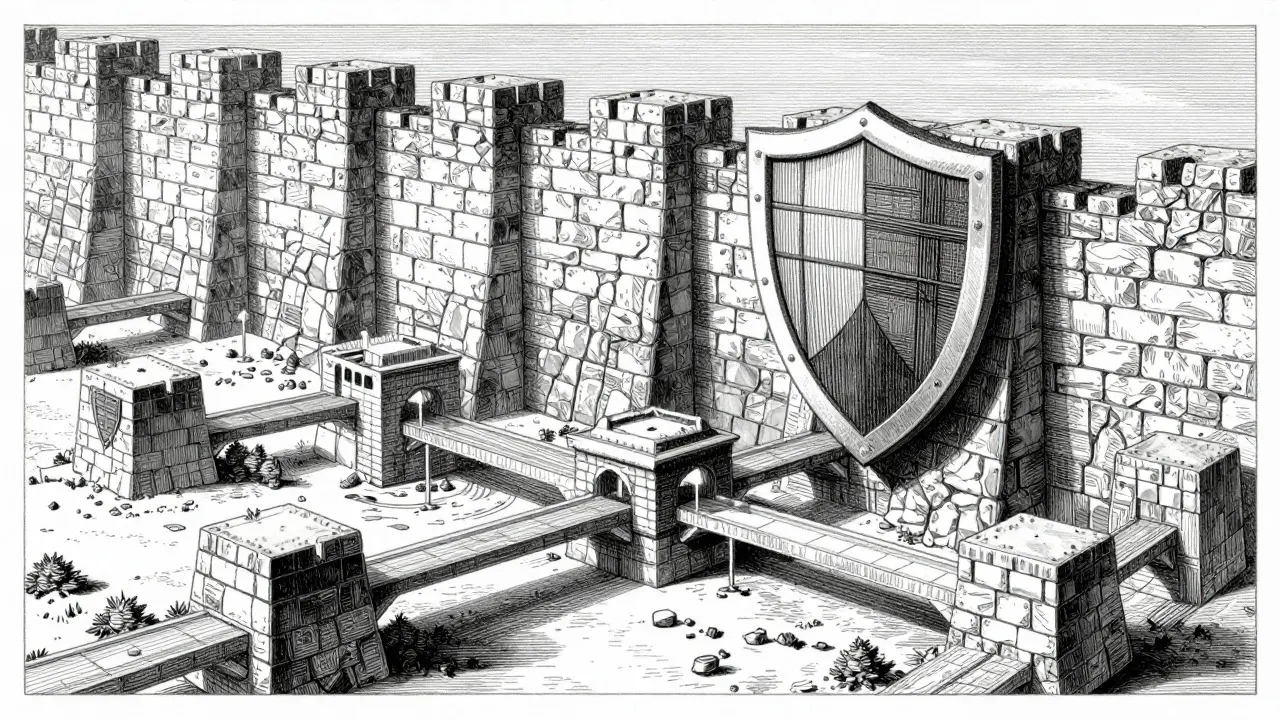
Security is often the first question people ask when dealing with new blockchain protocols. Stride takes a unique approach by leveraging Interchain Security, a feature of the Cosmos Hub. Instead of relying solely on its own validators, Stride borrows economic security from the Cosmos Hub. This gives Stride access to approximately $3 billion worth of economic security, placing it among the top 20 proof-of-stake chains globally by this metric.
This integration means that to attack the Stride chain, bad actors would need to compromise a massive portion of the Cosmos Hub's validator set, which is significantly harder than attacking a smaller, isolated chain. Additionally, the protocol has undergone audits by three different security firms, with continuous auditing for all new code updates. This layer of defense-in-depth provides peace of mind for users locking up significant capital.
Fee Structure and Value Accrual
Where does the money go? The Stride protocol takes a transparent cut of the action. It diverts 10% of the staking rewards earned by liquid-staked tokens. This fee covers sustainability, security costs, and operational needs. Here is how that 10% is split:
- 8.5% goes directly to staked STRD holders. This is your reward for participating in governance and securing the network.
- 1.5% is directed to staked ATOM on the Cosmos Hub. This reinforces the interchain security agreement and aligns incentives between Stride and the Cosmos Hub.
This structure ensures that the protocol generates real cash flow. Unlike many projects that rely on speculative trading volume, Stride earns fees based on actual staking activity. As more users stake through Stride, the absolute dollar amount of these fees grows, increasing the potential for buy-backs and burns of STRD.
Who Is Stride For?
Stride appeals to a specific type of crypto user. If you are a passive holder who wants to maximize yield without managing multiple wallets or bridging assets constantly, Stride simplifies the process. It acts as a hub where you can consolidate your staking positions across different Cosmos-based chains.
For active DeFi participants, Stride unlocks opportunities. You can take your stATOM and use it in lending markets on Osmosis or other platforms, effectively doubling your exposure to yield strategies. It is not necessarily a "get rich quick" coin, but rather infrastructure play. Its value is tied to the growth of the Cosmos ecosystem and the adoption of liquid staking as a standard practice in proof-of-stake networks.
Frequently Asked Questions
What is the main difference between Stride and traditional staking?
Traditional staking locks your assets for a unbonding period, making them illiquid. Stride issues stTokens that represent your staked position but remain fully liquid, allowing you to trade or use them in DeFi while still earning staking rewards.
Do I need to hold STRD to use Stride's liquid staking services?
No. You can stake assets like ATOM or OSMO through Stride without holding STRD. However, holding and staking STRD gives you governance rights and additional rewards from protocol fees.
How secure is the Stride blockchain?
Stride uses Interchain Security from the Cosmos Hub, providing roughly $3 billion in economic security. It also undergoes regular third-party audits, making it one of the more secure zones in the Cosmos ecosystem.
What happens when I want to exit my Stride position?
You have two options. You can redeem your stTokens 1:1 for the original asset after the unbonding period, or you can instantly sell your stTokens on a decentralized exchange like Osmosis. The instant sale price reflects current market conditions and accrued rewards.
Is STRD a good long-term investment?
That depends on your risk tolerance. STRD benefits from a fixed supply cap and a buy-back-and-burn mechanism driven by protocol revenue. Its success is tied to the growth of the Cosmos ecosystem and the adoption of liquid staking. Like all crypto assets, it carries volatility risks.

Another liquidity illusion. The math is simple: you are trading principal for yield, and the 'liquidity' they sell you is just a secondary market risk dressed up in a tuxedo. If the underlying asset dumps, your stToken follows, but with extra slippage fees that eat your soul. It's not innovation, it's just complex finance for people who can't read a whitepaper.
I think there is a valid point about the risks here, but I also appreciate how this breaks down the mechanics for those of us who aren't deep into DeFi yet. It’s nice to see the fee structure explained so clearly, especially the part about where the revenue actually goes. It helps separate the hype from the actual utility. Thanks for the detailed guide!
Kevin is being a bit harsh on the UX side, but let's look at the tech stack. Stride leveraging Interchain Security (ICS) is a massive win for TVL retention because it removes the single-point-of-failure risk associated with smaller PoS chains. The buy-back-and-burn mechanism creates a deflationary pressure that isn't just vaporware; it's tied directly to protocol revenue, which is rare. If you're holding ATOM or OSMO, the opportunity cost of illiquidity is real, and stTokens solve that delta effectively without introducing excessive smart contract risk compared to other LSTs.
Okay so I’ve been reading through all of this and honestly it feels like such a relief to finally understand why everyone keeps talking about liquid staking because before this I just thought it was another way for whales to manipulate the market but now seeing how the stTokens work as collateral in other DeFi apps makes me feel like I’m missing out on some serious yield opportunities that have been sitting right under my nose this whole time and I’m already thinking about whether I should swap some of my idle ATOM into stATOM just to test the waters and see if the rewards are actually worth the slight dip in value during the unbonding period or if I should wait for the next market uptick to maximize my entry price before committing any more capital to this ecosystem
They don't tell you that the "buyback" is mostly funded by inflating new emissions 🤔📉. Watch the circulating supply creep past 95M while the price craters. It's a Ponzi with a blockchain wrapper. The real money is made when you exit, not when you hold. Just my two cents from someone who got rugged by three other "secure" protocols last year. Stay safe out there folks 👀💸
It is very interesting to see how this works for people in our region where access to traditional banking yields is almost non existant. The security aspect borowing from Cosmos Hub sounds very strong to me, i trust big networks more than small ones. Also the fact that you can use the token in other places while earning interest is a game changer for my portfolio management. I am still learning the terminology but it feels much more transparent than the old staking methods we used to rely on back home. Great explanation overall.
Charming narrative, really. 'Receipt for locked money.' Sure, let's pretend the secondary market price doesn't decouple from the redemption value during a panic sell-off. We've seen this movie before. But I suppose if you believe in the long-term scarcity angle, the burn mechanism is a nice touch. Just don't mistake infrastructure for alpha. It's plumbing, not gold. 💅✨