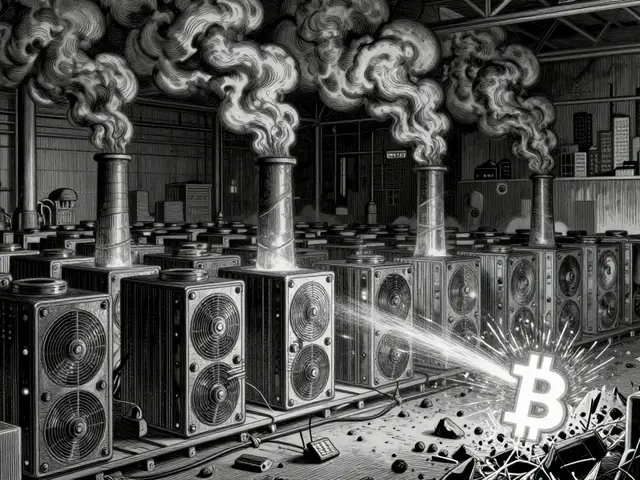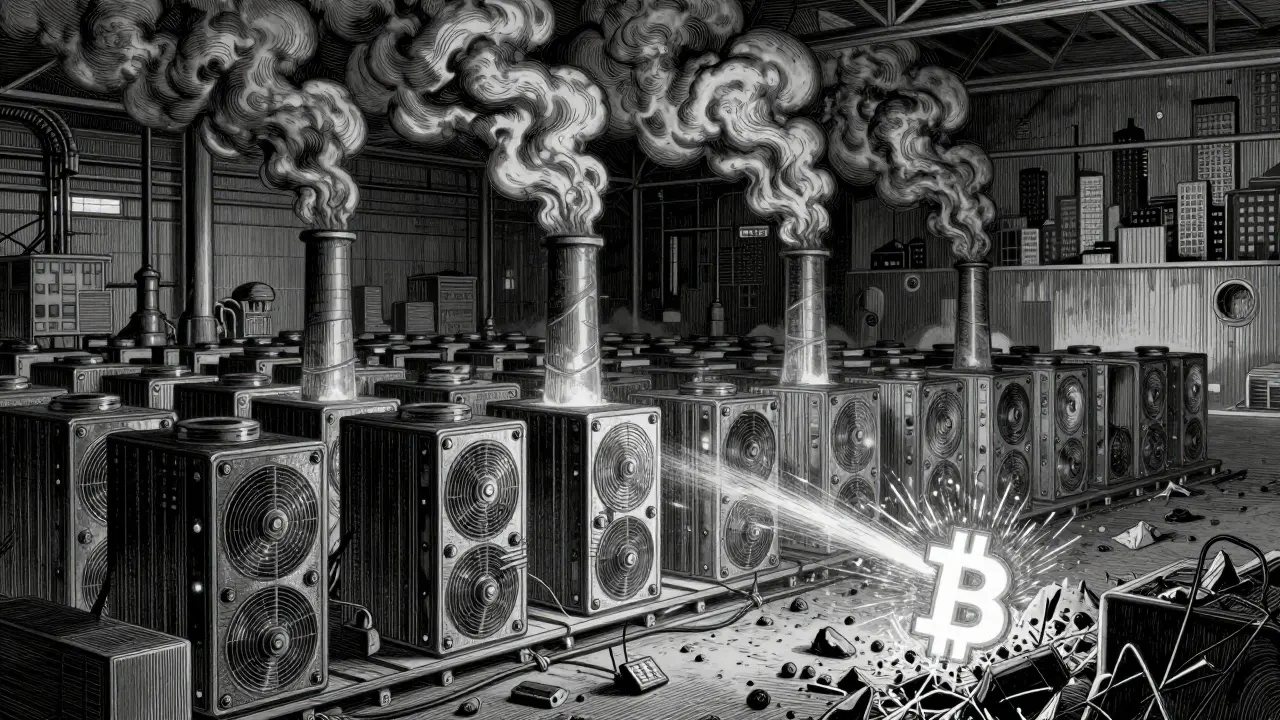
Imagine powering your entire home for a month just to process one single transaction. That is the reality of traditional cryptocurrency mining. For years, the industry has faced intense scrutiny over its massive carbon footprint and electronic waste. But the landscape shifted dramatically in late 2022, and it hasn't stopped changing since. Today, there is a clear winner when it comes to sustainability: staking. It offers a way to secure networks and earn rewards without burning through electricity like an industrial furnace.
If you are looking at blockchain technology through an eco-conscious lens, understanding the difference between Proof-of-Work (mining) and Proof-of-Stake (staking) is no longer optional-it is essential. This isn't just about saving the planet; it is about efficiency, cost, and future-proofing your investments against tightening global regulations.
The Core Difference: Hardware Hunger vs. Capital Lock-Up
To understand why staking is greener, we first need to look at how these two systems actually work. They solve the same problem-how to agree on who owns what in a decentralized network-but they use completely different fuel.
Proof-of-Work (PoW) is a consensus mechanism where miners compete to solve complex mathematical puzzles using specialized hardware. Think of Bitcoin. Miners buy expensive machines called ASICs (Application-Specific Integrated Circuits). These devices run 24/7, consuming vast amounts of electricity to guess a number. The first one to guess correctly gets to add the next block of transactions to the ledger and receives a reward. The rest of the miners? They wasted their energy for nothing. It is a lottery where the ticket price is kilowatt-hours of power.
Proof-of-Stake (PoS) is a consensus mechanism where validators lock up their own cryptocurrency as collateral to validate transactions. Instead of buying hardware that screams for electricity, you simply hold coins in a wallet. The network selects you to validate blocks based on how much you have staked and for how long. There is no competition to burn energy. There is no race to see who has the fastest chip. You are securing the network with capital, not coal or gas.
This fundamental shift changes everything. In PoW, security is bought with energy. In PoS, security is bought with economic stake. If a validator tries to cheat, they lose their staked coins. This "slashing" condition aligns incentives perfectly without requiring a power plant.
By the Numbers: The Energy Gap Is Massive
Let’s talk concrete data because the numbers tell a stark story. As of early 2026, the divide between these two models is wider than ever.
Bitcoin’s network, running on PoW, consumes approximately 150 terawatt-hours (TWh) of electricity annually. To put that in perspective, that rivals the annual energy consumption of entire nations like Argentina or the Netherlands. A single Bitcoin transaction requires about 830 kilowatt-hours (kWh) of energy. That is enough to power an average U.S. household for nearly a month.
Now look at the PoS side. After Ethereum completed "The Merge" in September 2022, transitioning from PoW to PoS, its energy consumption dropped by 99.95%. Post-Merge Ethereum uses roughly 50 kWh per transaction. Cardano goes even further, using just 0.5 kWh per transaction. Hedera Hashgraph is incredibly efficient, requiring only 0.001 kWh per transaction.
| Cryptocurrency | Consensus Type | Energy Per Transaction (kWh) | Annual Network Energy (TWh/GWh) |
|---|---|---|---|
| Bitcoin | Proof-of-Work | 830 kWh | 150 TWh |
| Ethereum (Post-Merge) | Proof-of-Stake | 50 kWh | 0.053 TWh |
| Cardano | Proof-of-Stake | 0.5 kWh | 6 GWh |
| Hedera Hashgraph | Hashgraph/PoS Hybrid | 0.001 kWh | Negligible |
The gap is not marginal; it is existential for climate goals. While Bitcoin miners argue that they increasingly use renewable energy (around 43% as of 2025), the absolute amount of energy consumed continues to grow by 12% annually. PoS networks, by contrast, maintain near-constant energy usage regardless of how many transactions occur. More users do not mean more pollution.
The Hidden Cost: Electronic Waste
Energy isn’t the only environmental sin of mining. There is the hardware itself. Bitcoin mining relies on ASICs, which are highly specialized chips designed for one task. These machines become obsolete incredibly fast. The average lifespan of a Bitcoin miner is just 1.3 years. When they slow down, they are thrown away.
This generates approximately 34 kilotons of e-waste every year. That is comparable to the electronic waste produced by small nations. E-waste contains toxic materials like lead and mercury, posing serious risks to soil and water if not disposed of properly.
Staking has almost zero e-waste footprint. Validators can run on standard consumer hardware-a laptop, a desktop PC, or even a Raspberry Pi. These devices last 3 to 5 years, often serving multiple purposes beyond staking. You aren’t throwing away a $3,000 machine after 18 months because a newer model came out. You are just running software on equipment you likely already own.

Carbon Footprint: From Millions of Tons to Negligible
When you combine energy source and volume, the carbon emissions tell the full picture. Bitcoin generates an estimated 62.51 million tons of CO2 annually. Even if all that energy came from renewables, the infrastructure strain is immense.
Ethereum’s PoS network produces only about 0.01 million tons of CO2 annually. That is a reduction of over 99%. Dr. Alex de Vries, founder of Digiconomist, noted in his 2025 research that Bitcoin’s e-waste generation has reached critical levels, while PoS networks generate negligible waste. The University of Cambridge Centre for Alternative Finance concluded in 2024 that PoS represents the only environmentally sustainable path forward for mainstream blockchain adoption.
Why This Matters for You and Your Wallet
You might be thinking, "Great for the planet, but does it matter to me?" Yes, it matters significantly, especially as we move into 2026. Here is why:
- Regulatory Pressure: Governments are waking up. The EU’s Markets in Crypto-Assets (MiCA) regulation imposes strict carbon footprint reporting requirements. The EU’s Digital Finance Package effectively restricts PoW cryptocurrencies from regulated financial products unless they prove carbon neutrality. PoS tokens are explicitly favored. If you want your crypto to be usable in traditional finance, PoS is the safer bet.
- Cost Efficiency: Running a mining operation costs $150-$300 monthly in electricity alone for a decent setup. Staking on a basic device costs $10-$14 monthly. For individuals and small businesses, staking is accessible; mining is an industrial venture.
- ESG Compliance: Major corporations are under pressure to meet Environmental, Social, and Governance (ESG) standards. Deloitte’s 2025 survey showed that 78 of the Fortune 100 companies now participate in staking networks, compared to just 12 using mining operations. They are choosing staking to keep their balance sheets green.
- Market Sentiment: Investors are voting with their wallets. A CryptoCompare survey found that 68% of new stakers chose staking specifically for environmental reasons. Platforms like Lido and Rocket Pool see high ratings partly because users feel good about supporting "eco-friendly" protocols.

Is Mining Completely Dead?
Not entirely, but its window is closing. Bitcoin remains the dominant PoW asset, backed by a massive community of "maximalists" who argue that energy consumption is justified by the security model. Some regions with extremely cheap electricity (below $0.03/kWh) still find mining profitable. However, even these operations face growing scrutiny. Carbon taxes in places like California and parts of Europe are making PoW less viable. The trend is clear: new projects are overwhelmingly choosing PoS. In 2025-2026, 87% of new blockchain launches used pure PoS or hybrid variants. Only 13% opted for PoW.
Getting Started with Sustainable Staking
If you want to join the greener side of crypto, the barrier to entry is low. You don’t need a warehouse full of noisy fans.
- Choose a PoS Network: Ethereum, Cardano, Solana, and Tezos are major options. Each has different technical requirements and reward structures.
- Decide on Validation Method: You can run your own validator node (requires some technical know-how and specific coin amounts, like 32 ETH for Ethereum) or use a staking service (like Coinbase, Binance, or Lido) where you delegate your coins to professional validators.
- Set Up Your Hardware: If self-validating, a simple Raspberry Pi or old laptop works. Tools like Wattum can help you monitor your actual energy usage, ensuring you stay efficient.
- Monitor Your Impact: Many modern wallets and platforms now display real-time sustainability metrics. Seeing your carbon footprint drop from tons to grams is a powerful motivator.
The transition to Proof-of-Stake is not just a technical upgrade; it is a philosophical shift toward sustainability. As Vitalik Buterin stated during Ethereum’s Merge, this was a monumental leap toward a platform that can scale while maintaining sustainability. With upcoming upgrades like Ethereum’s Prague update in Q3 2026 promising further efficiency gains, the gap will only widen. If you care about the future of both finance and the environment, staking is the logical choice.
How much energy does staking actually use compared to mining?
Staking uses a fraction of the energy required for mining. While Bitcoin mining uses about 830 kWh per transaction, Ethereum staking uses around 50 kWh, and Cardano uses just 0.5 kWh. Overall, PoS networks consume 99.9% less energy than PoW networks.
Does staking produce electronic waste?
Negligible amounts. Unlike mining, which requires specialized ASICs that become obsolete in 1-2 years, staking can run on standard consumer electronics like laptops or Raspberry Pis that last 3-5 years and serve other purposes.
Will mining disappear completely?
Mining will likely persist for legacy networks like Bitcoin, but it is becoming niche. Regulatory pressures and carbon taxes are pushing new projects and enterprises toward PoS. By 2026, 87% of new blockchain projects are launching with PoS.
Is staking safe for my coins?
Yes, but there are risks. In PoS, validators can be "slashed" (lose staked funds) if they act maliciously or go offline. Using reputable staking providers or running well-maintained nodes mitigates this risk. Always research the platform before delegating funds.
How do I start staking with minimal effort?
You can start by using a centralized exchange like Coinbase or Binance, which offer one-click staking for supported coins. Alternatively, use liquid staking protocols like Lido or Rocket Pool, which allow you to stake smaller amounts without running your own node.