
You might have seen the headlines: "Go to jail for 12 years just for buying Bitcoin in Bangladesh." It sounds terrifying, doesn't it? For many traders and investors, this warning has been enough to keep them far away from digital assets. But is it actually true that a simple trade could land you behind bars for over a decade? The reality is messier, more nuanced, and frankly, a lot less clear-cut than the scary headlines suggest.
Here’s the short answer: Bangladesh does not have a specific law that bans cryptocurrency outright with a fixed 12-year sentence for mere ownership or trading. Instead, the central bank uses existing financial laws to warn that crypto activities can be treated as illegal if they violate anti-money laundering or foreign exchange rules. The "12 years" figure comes from maximum penalties under these broader statutes, not a dedicated crypto crime code. Let’s break down what’s really happening, why the confusion exists, and what you actually need to worry about if you’re trading in or from Bangladesh.
Where Did the 12-Year Myth Come From?
The fear started back in September 2014. Bangladesh Bank, the country’s central bank, issued its first cautionary notice regarding Bitcoin. They stated clearly that Bitcoin is not legal tender and warned that any transaction involving it could be a punishable offense. Officials told news agencies that violations could lead to imprisonment of up to 12 years.
But where did that number come from? It wasn’t pulled out of thin air, but it wasn’t a new law either. It was an extrapolation from the Money Laundering Prevention Act 2012. Section 9(1) of this Act states that anyone committing money laundering faces rigorous imprisonment of at least one year, which can extend to 10 years, plus a fine. When officials added other potential charges or interpreted the upper limits aggressively, the "12 years" figure stuck in public memory.
Fast forward to December 2017, and Bangladesh Bank issued another notice. This time, they expanded the scope to include Ethereum, Ripple, and Litecoin. They also pointed to the Anti-Terrorism Act 2009 as another tool regulators could use. The message remained consistent: don’t touch crypto, or you might face severe penalties under these existing laws.
Is Cryptocurrency Actually Banned?
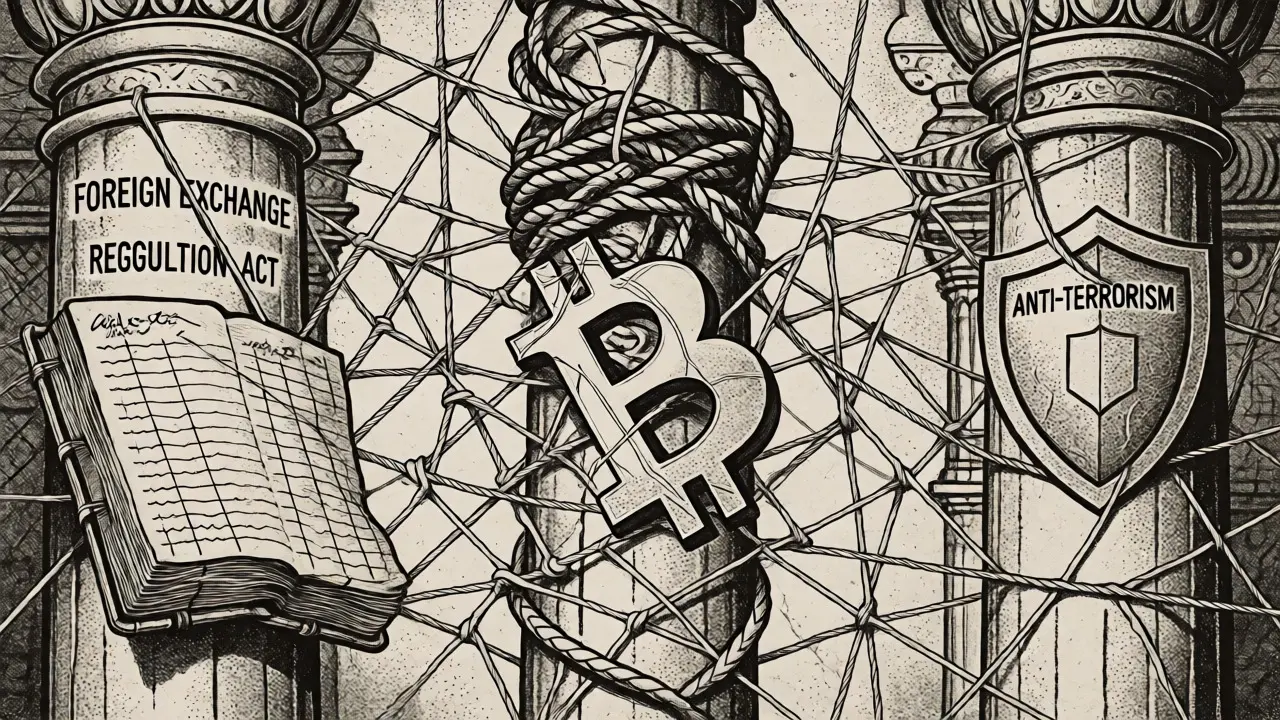
This is the million-dollar question. Technically, there is no single statute that says, "It is illegal to own Bitcoin in Bangladesh." What exists is a regulatory stance that treats crypto transactions as potential violations of three main laws:
- The Foreign Exchange Regulation Act 1947 (FERA): This old law controls all foreign currency transactions. Since crypto isn’t recognized as legal tender, buying it with local Taka or sending it abroad can be seen as an unauthorized foreign exchange deal. Violations here can carry prison terms, though usually shorter than 12 years.
- The Money Laundering Prevention Act 2012: As mentioned, this is the big stick. If your crypto trades look like you’re hiding money or moving it without proper documentation, you could be charged with money laundering. In 2015, this Act was amended to explicitly include "virtual assets," giving regulators more power to target crypto-related flows.
- The Anti-Terrorism Act 2009: Added in 2017, this allows authorities to freeze assets or prosecute if they suspect crypto is being used to fund terrorism or illicit activities.
Legal experts, including those at Mahbub & Company, have argued since 2018 that these notices are warnings, not bans. They point out that using regular cash for illegal purposes is also punishable under these acts. So, it’s not the Bitcoin itself that’s illegal; it’s how you use it. If you’re trading on a peer-to-peer platform and keeping clean records, are you really committing a crime? Regulators say yes, because the medium itself is unregulated. Lawyers often argue no, because the underlying action (buying/selling) isn’t inherently criminal unless linked to fraud or evasion.
The Gap Between Law and Reality
If the penalty is so severe, why do we see millions of Bangladeshis still trading? According to Statista data from late 2024, approximately 2.1 million people in Bangladesh owned cryptocurrency. That’s about 1.2% of the population. Furthermore, Chainalysis reported a massive 206% increase in crypto transaction volume between 2021 and 2022, placing Bangladesh 15th globally in adoption metrics.
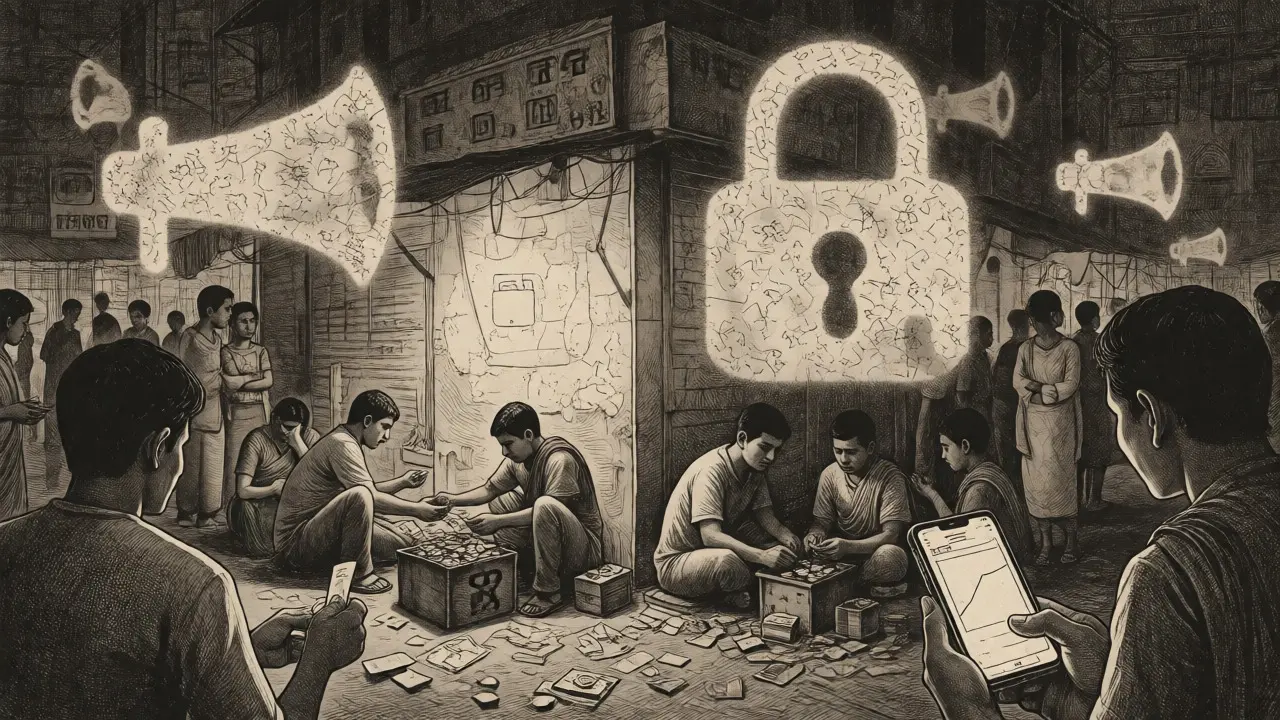
How does this happen in a country with such strict warnings? The answer lies in enforcement. There are very few documented cases of individuals serving 12-year sentences specifically for trading Bitcoin. Most enforcement actions focus on large-scale operations, illegal remittance channels, or obvious money laundering schemes. Small-time traders often operate in a gray area. They use P2P platforms like Binance or local exchanges, converting Taka to USDT or BTC, often bypassing formal banking channels to avoid scrutiny.
| Aspect | Official Stance | Practical Reality |
|---|---|---|
| Legality | Not legal tender; transactions potentially illegal under FERA/AML. | Widely traded via P2P; no specific "crypto ban" law. |
| Penalties | Up to 12 years imprisonment cited by officials. | Rarely applied to individual traders; mostly fines or asset freezes. |
| Banking | Banks prohibited from facilitating crypto transactions. | Accounts sometimes frozen if large crypto inflows detected. |
| Adoption | Discouraged; public warned against participation. | High growth; 2.1M+ owners; top 20 globally in adoption. |
What Happens If You Get Caught?
So, what’s the worst-case scenario? If the Cyber Security Division or the Anti-Money Laundering Department flags your activity, they won’t necessarily throw you in jail immediately. Here’s how it typically plays out:
- Account Freezing: Your bank account might be frozen if suspicious transactions related to crypto are detected. This is the most common immediate consequence.
- Investigation: Authorities may investigate whether the funds were involved in money laundering, illegal remittance, or tax evasion.
- Charges: If they find evidence of intent to evade laws, you could face charges under the Money Laundering Prevention Act or FERA.
- Sentencing: While the maximum penalty is high, actual sentences for non-violent financial crimes in Bangladesh tend to be lower, especially for first-time offenders who cooperate.
In 2024, the Cyber Security Division reported 17 crypto-related cases. None resulted in sentences anywhere near 12 years. This suggests that while the threat is real, it’s often used as a deterrent rather than a routine punishment for average users.
Why Does Bangladesh Take This Stance?
You might wonder why Bangladesh is so cautious when neighbors like India have moved toward taxation rather than prohibition. Several factors drive this policy:
- Foreign Reserve Management: Bangladesh closely guards its foreign currency reserves. Crypto outflows are hard to track and control, posing a risk to the national economy.
- Financial Stability: The central bank worries that unregulated assets could destabilize the banking sector if widely adopted without oversight.
- Prevention of Illicit Flows: With a history of informal remittance channels (Hundi), regulators fear crypto could become a new avenue for money laundering and terror financing.
Interestingly, Bangladesh isn’t anti-technology. The government published a National Blockchain Strategy in 2020, showing interest in blockchain tech for governance and supply chains. The resistance is specifically against decentralized cryptocurrencies acting as alternative currencies, not the underlying technology itself.
Can You Trade Safely?
If you’re in Bangladesh and want to trade, you’re operating in a de facto gray area. Here are some practical tips to minimize risk:
- Avoid Direct Bank Transfers: Don’t send money directly from your bank to a crypto exchange if possible. Use P2P methods carefully, ensuring counterparties are trustworthy.
- Keep Records: Document every trade. If questioned, show that your transactions were legitimate investments, not attempts to hide income.
- Stay Small: Large volumes attract attention. Frequent, high-value transactions are more likely to trigger AML alerts.
- Watch for Updates: Regulations can change quickly. Keep an eye on Bangladesh Bank circulars and global trends.
Remember, the law is evolving. While the 12-year scare persists, the actual risk for a casual trader is low compared to someone running an unlicensed exchange or moving millions in opaque ways.
Is Bitcoin completely banned in Bangladesh?
No, there is no explicit law banning the ownership of Bitcoin. However, Bangladesh Bank warns that trading it violates existing financial laws like the Foreign Exchange Regulation Act and the Money Laundering Prevention Act. This makes it legally risky but not technically "banned" in the same way China has banned it.
Will I really go to jail for 12 years for trading crypto?
Unlikely for a typical trader. The 12-year figure refers to the maximum penalty under money laundering laws, which apply if your crypto activity is deemed part of a larger financial crime. Most individual traders face fines, account freezes, or shorter sentences if prosecuted, rather than the maximum term.
Can I buy crypto with my Bangladeshi bank account?
Direct transfers from banks to crypto exchanges are discouraged and often blocked. Banks are instructed not to facilitate crypto transactions. Many users resort to Peer-to-Peer (P2P) trading, where they transfer Taka to another individual’s bank account in exchange for crypto, trying to disguise the nature of the transaction.
Does Bangladesh allow blockchain technology?
Yes. The government has shown interest in blockchain through its National Blockchain Strategy. The restriction is specifically on decentralized cryptocurrencies like Bitcoin and Ethereum being used as currency or investment vehicles outside regulated frameworks, not on the blockchain technology itself.
Are offshore crypto accounts legal for Bangladeshis?
This is a gray area. Owning assets offshore is generally permitted, but bringing profits back into Bangladesh or funding the initial purchase from domestic sources can violate foreign exchange regulations. Tax implications and reporting requirements add further complexity.

It is profoundly disheartening to witness the continued propagation of legal misinformation regarding financial sovereignty. The distinction between a regulatory warning and a statutory ban is not merely semantic; it represents the fundamental difference between a free market and an authoritarian overreach. When central banks issue cautionary notices without explicit legislative backing, they create a chilling effect that stifles innovation and individual liberty. One must adhere strictly to the letter of the law rather than succumb to the fear-mongering tactics employed by bureaucratic entities seeking to maintain control over foreign exchange reserves.
this is such a relief honestly!! i always thought my cousin in dhaka was gonna get arrested for buying some eth lol
its cool that its more about how u use it then just owning it. keeps hope alive for everyone trying to figure out their finances!
I found this breakdown incredibly helpful. It’s easy to panic when headlines scream "jail," but understanding the nuance between FERA violations and actual crypto bans makes all the difference.
The point about keeping clean records is vital advice for anyone operating in gray areas. It reminds me of similar situations in India where the government moved from outright prohibition to taxation and regulation. Perhaps Bangladesh will follow suit eventually? It feels like progress is inevitable, even if slow.
Typical Western media spin. You think because they don't arrest every single guy on Binance they are safe? Wrong.
The state controls the flow of money. If you try to move value out of the country without their permission you are stealing from the national reserve. Period. These laws exist to stop capital flight not to protect your little investment portfolio. Don't be naive thinking you can outsmart the regulator forever.
the philosophical underpinning here is fascinating isn't it
we see a clash between the old world concept of currency as a sovereign decree and the new world idea of currency as a consensus mechanism
bangladesh bank clings to the former while the people experiment with the latter
it creates a liminal space where legality becomes subjective based on intent and scale
is a trade illegal if no one is harmed or is it illegal simply because the gatekeeper says so
this tension defines our current era of digital transition
I appreciate the clarity here. It is important to remember that rules are there to protect us from scams and fraud. Just because you aren't going to jail doesn't mean you shouldn't be careful. Being responsible with your money is a moral duty we have to ourselves and our families. Let's support each other in making wise choices rather than taking unnecessary risks.
That sounds really stressful for the people living there though. I can imagine how scary it would be to buy something you like but feel like you might lose your freedom over it. It breaks my heart a bit to think about the anxiety involved just trying to participate in the modern economy. I hope things get clearer for them soon so they don't have to worry so much.
Oh wow, I am literally shaking reading this! Can you believe the sheer audacity of threatening twelve years for a digital asset transaction? It feels so personal, like they are coming after your very soul and your wallet at the same time. The emotional toll must be devastating for those traders who just want to secure their future. I feel such a deep connection to their struggle against these opaque systems. It is absolutely exhausting just thinking about the constant vigilance required to stay safe in such an environment. Truly heartbreaking yet inspiring resilience.
YES!!! finally someone said it
the fear factor is real but so is the opportunity
keep trading keep learning
you got this
Respectfully, I think we need to acknowledge that different countries have different needs. While the uncertainty is tough, the emphasis on anti-money laundering is valid. We should respect the local context while advocating for clearer guidelines. Everyone deserves safety and clarity.