Think about the last time you had to prove who you were online. Did you upload a blurry photo of your driver’s license? Fill out a form with your mother’s maiden name? Wait days for a bank to manually verify your address? It is frustrating, insecure, and inefficient. Now imagine a world where you hold your own identity data in your pocket, share only what is necessary, and never worry about a central database being hacked. This is not science fiction. It is the promise of blockchain-based identity verification, a system that puts control back in your hands.
For decades, we have relied on centralized authorities-governments, banks, tech giants-to manage our identities. These systems are like single points of failure. If one server goes down or gets breached, millions of records are exposed. Blockchain changes this dynamic by creating a distributed ledger where identity data is verified without being stored in one vulnerable location. By 2025, half of all major organizations began testing these decentralized solutions, according to Gartner. Today, in 2026, the technology is moving from pilot programs to real-world infrastructure.
How Decentralized Identity Actually Works
To understand how this works, you need to forget the idea of a blockchain as just a place to store Bitcoin transactions. In the context of identity, it acts as a trust layer. The core components are Decentralized Identifiers (DIDs) and Verifiable Credentials.
Here is the breakdown:
- The DID: Think of this as your unique username on the internet, but one that no one else can claim or change. It is a string of characters linked to your public key on the blockchain.
- The Verifiable Credential: This is the actual proof. Imagine a digital diploma from a university or a driver’s license issued by the state. Instead of storing the full document on the blockchain (which would be a privacy nightmare), the issuer creates a cryptographic signature. You store this credential in a digital wallet on your phone.
- The Verification: When you need to prove your age to buy alcohol online, you don’t send them your whole birth certificate. You use a zero-knowledge proof to show you are over 21 without revealing your exact birth date or name.
The blockchain itself often stores only a hash-a digital fingerprint-of the credential. This ensures that if the credential is tampered with, the hash won’t match, and the verification fails. The actual personal data stays off-chain, usually in secure storage like IPFS (InterPlanetary File System) or directly on your device.
Why Centralized Systems Are Failing Us
Let’s look at why we need this shift. Traditional identity management is built on silos. Your medical records are at the hospital. Your financial history is at the bank. Your educational transcripts are at the university. To get a loan, you might need to pull credit reports, pay fees, and wait weeks. Then, if you apply for another loan elsewhere, you do it all over again.
This fragmentation creates two massive problems:
- Data Breaches: Centralized databases are honey pots for hackers. When Equifax was breached in 2017, 147 million people were affected because their data was stored in one place. With decentralized identity, there is no central hive to attack. Hackers would have to breach your individual device, which is significantly harder.
- User Friction: We repeat ourselves constantly. Every new app asks for email, password, and sometimes more. Blockchain identity allows for seamless, one-click verification across different services, provided they support the same standards.
As Dr. Gavin Wood, co-founder of Ethereum, noted, decentralized identity returns control of personal data to individuals. It shifts the model from "trust me" to "verify me."
| Feature | Traditional Centralized ID | Blockchain-Based ID |
|---|---|---|
| Data Control | Held by corporations/government | Held by the user (Self-Sovereign) |
| Security Model | Perimeter defense (firewalls) | Cryptographic signatures + decentralization |
| Data Sharing | All-or-nothing (upload full doc) | Selective disclosure (share only needed info) |
| Failure Point | Single point of failure | Distributed network (no single point) |
| Verification Speed | Days to weeks (manual checks) | Seconds (automated smart contracts) |
The Role of Self-Sovereign Identity (SSI)
You will hear the term Self-Sovereign Identity (SSI) used interchangeably with blockchain identity. SSI is the philosophical framework; blockchain is the technical engine. SSI means you own your identity. You are not a row in a database owned by Facebook or Google. You are an independent entity with a portable reputation.
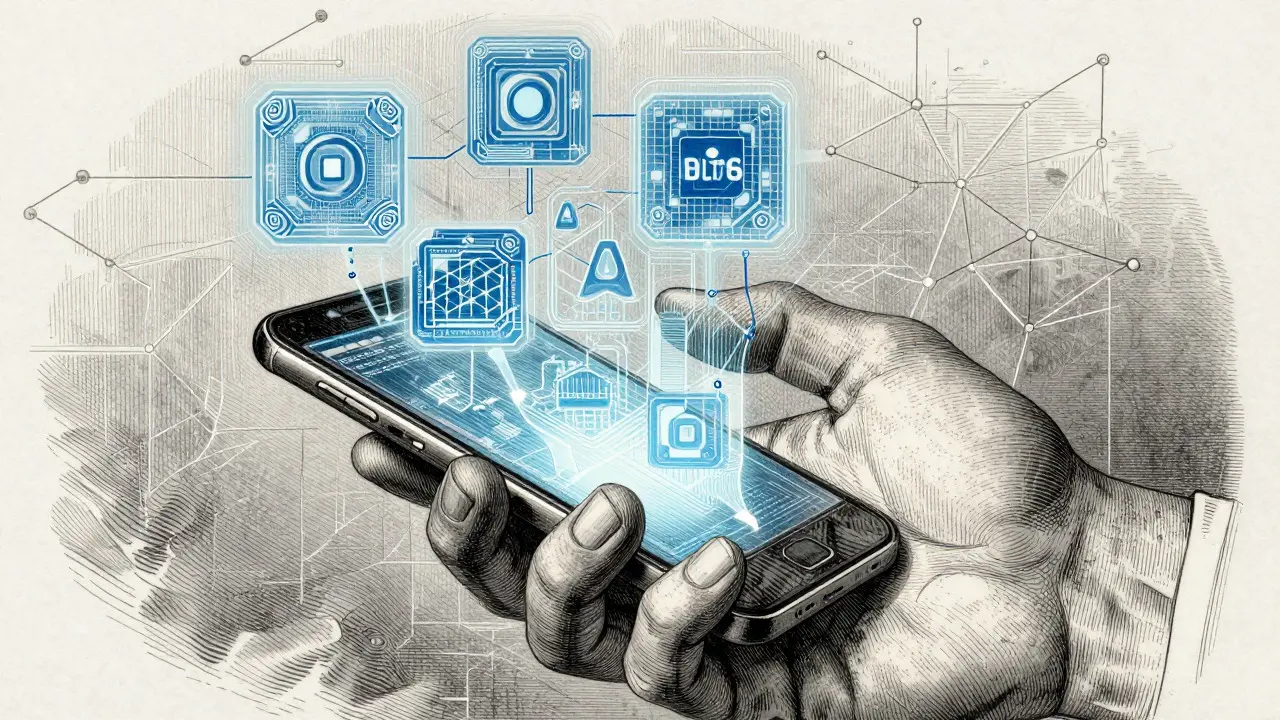
In practice, this looks like a digital wallet on your smartphone. Inside this wallet, you hold credentials from various issuers:
- A government-issued national ID.
- A professional certification from a coding bootcamp.
- A medical record summary from your doctor.
When a verifier (like a landlord or employer) requests proof, you grant permission. The transaction is recorded on the blockchain as an audit trail, proving that the verification happened at a specific time, without exposing the underlying sensitive data. This transparency builds trust between parties who may have never met before.
Real-World Use Cases in 2026
Is this just theory? No. Several sectors are already leveraging this technology to solve critical pain points.
Financial Services (DeFi and Banking): Know Your Customer (KYC) regulations require banks to verify every client. Traditionally, this is slow and expensive. With blockchain identity, a user completes KYC once with a trusted provider. They then receive a verifiable credential. When they join a new DeFi platform or open a bank account, they simply present that credential. The institution verifies the signature against the issuer’s public key on the blockchain. IBM reported that this process reduces onboarding time from days to seconds. This is crucial for the growing decentralized finance sector, where 78% of providers planned integrations by 2025.
Healthcare: Patient data is notoriously fragmented. A patient visiting a specialist might have to re-submit blood test results from their primary care physician. Using blockchain identity, patients can grant temporary access to their medical records. Dock.io case studies show patient onboarding time dropping from 45 minutes to under five minutes. This speed saves lives in emergencies and reduces administrative costs for hospitals.
Government and Civic Services: Estonia has been a pioneer here. Their e-Residency program uses blockchain to secure citizen identities. In a 2022 pilot, 87% of participants reported higher satisfaction with data control. As other nations adopt frameworks like the EU’s eIDAS 2.0, we will see more governments issuing digital IDs that citizens can use to vote, file taxes, or access social services securely.
Challenges and Limitations
It is not all smooth sailing. While the potential is huge, there are significant hurdles to widespread adoption.
Key Management Complexity: The biggest barrier for average users is managing private keys. In a centralized system, you click "forgot password." In a decentralized system, if you lose your private key, you might lose access to your identity forever. While recovery mechanisms are improving, the learning curve is steep. A PreciseHire survey found that 28% of enterprise users cited key management as their top challenge.
Regulatory Uncertainty: Laws lag behind technology. GDPR in Europe gives users the "right to be forgotten," but blockchain is immutable-you cannot delete data once written. Solutions involve keeping data off-chain and only deleting the pointer on the blockchain, but legal clarity is still evolving. 63% of enterprises reported GDPR compliance as a major hurdle during implementation.
Interoperability: There are many blockchain networks (Ethereum, Hyperledger, Solana) and many identity protocols. For SSI to work globally, these systems must talk to each other. The W3C Verifiable Credentials Data Model 2.0 standard, finalized in early 2023, is helping, but full interoperability is still a work in progress. Without it, you might end up with multiple wallets for different ecosystems, defeating the purpose of a unified identity.
The Future Roadmap: What Comes Next?
We are currently in the early growth phase. The market for blockchain identity verification is projected to hit $17.24 billion by 2030. Here is what to watch for in the coming years:
- Biometric-Bound Credentials: New features, like those launched by Dock.io in 2023, link credentials to biometrics (face scans, fingerprints). This ensures that the person presenting the digital credential is physically present, preventing identity theft even if a wallet is compromised.
- AI Integration: Look for AI-enhanced fraud detection. Companies like 1Kosmos are rolling out tools that analyze patterns in identity verification to spot anomalies in real-time.
- Cross-Chain Portability: Expect smoother movement of identity data between different blockchains. You should be able to use your Ethereum-based ID on a Polygon-based service without friction.
By 2027, analysts predict that blockchain-based identity will handle 30% of digital identity transactions in developed economies. It is becoming foundational infrastructure, much like HTTPS became for web browsing.
Getting Started: Practical Steps for Users and Businesses
If you are a business leader considering this technology, start small. Don’t try to replace your entire CRM overnight. Identify high-friction, high-security processes like customer onboarding or supplier verification. Pilot a solution using established platforms like IBM Blockchain or Consensys’ ION. Ensure your team understands the basics of cryptography and smart contracts.
If you are an individual, start exploring digital wallets that support W3C standards. Keep your private keys safe-use hardware wallets or reputable mobile apps with strong backup options. Be cautious about which credentials you issue and to whom. Remember, the power of self-sovereign identity lies in your ability to say "no" as easily as "yes."
Is my personal data stored on the blockchain?
Ideally, no. Best practices dictate that only hashes (digital fingerprints) or public keys are stored on the blockchain. Your actual personal data (name, address, photos) should remain in your private wallet or secure off-chain storage like IPFS. This preserves privacy while maintaining verifiability.
What happens if I lose my private key?
In a pure decentralized system, losing your private key can mean losing access to your identity. However, modern solutions include social recovery mechanisms where trusted contacts can help restore access, or multi-signature setups that distribute control among several devices.
How does this comply with GDPR?
GDPR requires the right to erasure. Since blockchains are immutable, developers keep personal data off-chain. On-chain, only non-personal identifiers or hashes exist. Deleting the off-chain data effectively removes the personal information, satisfying GDPR requirements while keeping the audit trail intact.
Can I use blockchain identity for everyday logins?
Yes. Many web3 browsers and wallets allow you to sign in to websites using your digital signature instead of a password. This is often called "Sign-In with Ethereum" or similar protocols. It is faster and eliminates password fatigue, though mainstream adoption is still growing.
Which industries are adopting this first?
Financial services lead with 42% of implementations, followed by government (28%) and healthcare (19%). These sectors benefit most from reduced fraud, faster KYC processes, and secure data sharing.