Crypto Custody License Cost Calculator
Calculate your minimum capital requirements and compliance costs for German crypto custody services under MiCAR and KWG regulations.
Germany has one of the most detailed and strict crypto custody frameworks in Europe - and if you're holding or managing digital assets there, you need to know exactly what it means for you. It’s not just about having a wallet. It’s about legal compliance, capital requirements, cybersecurity standards, and a licensing process that can take over half a year. This isn’t a suggestion. It’s the law. And since January 1, 2025, every crypto custody provider operating in Germany must follow the new rules under MiCAR and the updated German Banking Act (KWG).
Who Regulates Crypto Custody in Germany?
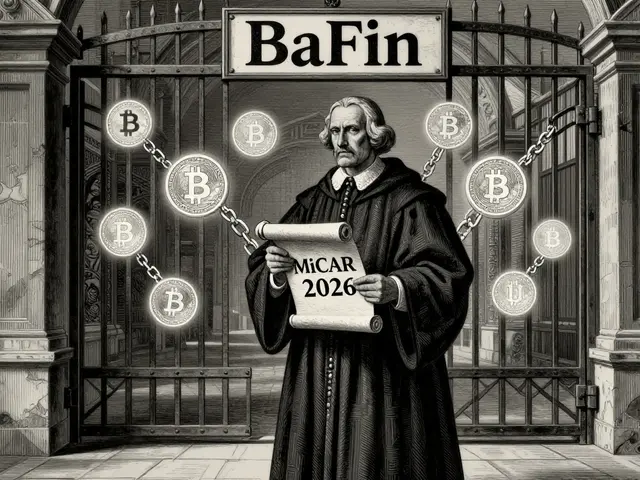
The Bundesanstalt für Finanzdienstleistungsaufsicht, better known as BaFin, is the only authority that can issue licenses for crypto custody services in Germany. Unlike some countries where registration is enough, Germany requires a full license - no exceptions. This applies whether you’re a bank, a startup, or a foreign company trying to serve German clients. BaFin doesn’t just review your paperwork. They audit your infrastructure, test your security protocols, and verify that your team has the right qualifications.
Since 2020, Germany has been ahead of most EU countries in regulating crypto custody. But now, with MiCAR (Markets in Crypto-Assets Regulation) fully in effect as of December 30, 2024, the rules are even tighter. Germany didn’t just adopt MiCAR - it layered it on top of its own strict KWG rules. That means you’re not just complying with EU standards. You’re complying with two overlapping systems.
What Counts as Crypto Custody?
It’s not just about storing private keys. Under German law, any service that involves safeguarding, administering, or holding crypto assets on behalf of others is considered custody - and requires a license. BaFin breaks it down into three types:
- Pure custody: Holding private keys securely (like a cold wallet provider).
- Administration: Managing transactions, signing, or executing trades on behalf of clients.
- Safeguarding: Protecting assets from theft, loss, or unauthorized access.
If you do any of these, even partially, you need a license. Even if you’re just offering a wallet app that holds keys for users, you’re regulated. There’s no loophole for “non-custodial” services if you’re handling keys for anyone else.
Licensing Requirements: Capital, Staff, and Infrastructure
Getting licensed isn’t cheap or fast. The minimum capital requirement is €125,000 for pure custody providers. If you offer more than one service - like custody plus trading or staking - you’ll need up to €730,000 in operational capital. That’s not a suggestion. It’s non-negotiable.
You also need at least two senior managers with BaFin’s “fitness and propriety” certification. These aren’t just executives. They’re people who’ve passed background checks, proven their financial integrity, and demonstrated deep knowledge of crypto regulations. As of mid-2025, there were only 312 certified compliance officers in the entire country - and 87 licensed providers. That’s a serious bottleneck.
Technically, you must meet these standards:
- Use multi-signature wallets with at least 3-of-5 key signatures.
- Store 95% of assets in cold storage - offline, air-gapped, physically secured.
- Implement biometric access controls for all physical vaults.
- Use hardware wallets certified to Common Criteria EAL 4+.
- Run quarterly penetration tests by independent third parties and submit results to BaFin.
- Keep transaction records for five years.
- Have a 72-hour business continuity plan that survives cyberattacks, power outages, or natural disasters.
And yes - your IT security must comply with DORA (Digital Operational Resilience Act), the EU’s new standard for critical financial infrastructure. This isn’t just about firewalls. It’s about resilience.
The Two-Track System: MiCAR vs. KWG
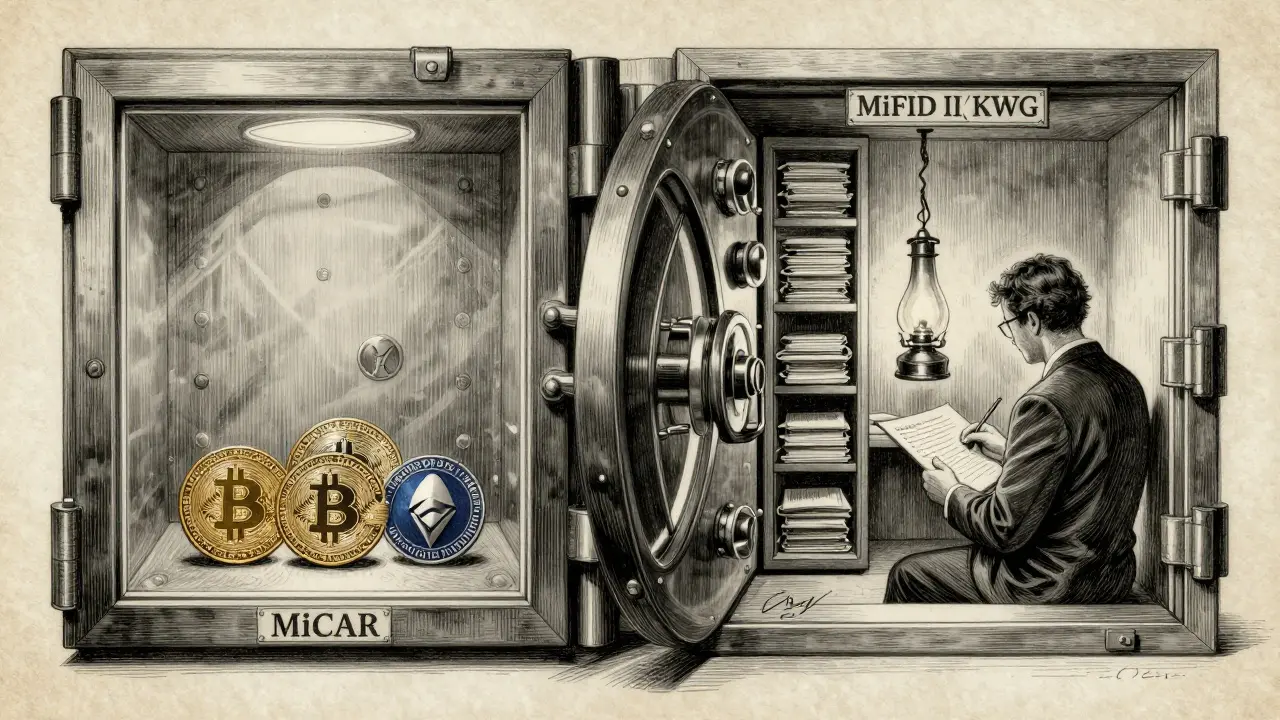
Here’s where it gets complicated. Germany treats different types of crypto assets differently:
- Bitcoin, Ether, and other utility tokens fall under MiCAR. They’re regulated as crypto-assets.
- Security tokens, tokenized stocks, or bonds are regulated under MiFID II and the KWG - the same rules that apply to traditional financial securities.
This means if you’re holding both Bitcoin and a tokenized share of a German company, you’re under two different regulatory regimes. One requires MiCAR compliance. The other requires full banking license standards. That’s why compliance costs in Germany are 25% higher than in other EU countries, according to the European Banking Authority.
Some firms - like Deutsche Bank - got a shortcut. Because they were already MiFID II licensed, they could use MiCAR’s Article 91(2) notification process and cut their licensing time from 8 months to just 3. But for startups without existing banking licenses? It’s a long, expensive road.
What Happened to the Smaller Players?
The regulatory bar is high - and many smaller firms couldn’t clear it. In June 2025, BaFin shut down Ethena GmbH, a crypto startup offering a stablecoin called USDe. The reason? It didn’t meet custody or AML requirements. BaFin ordered the company to wind down operations and gave users until August 6 to redeem their assets through a court-appointed representative.
Reddit threads from German crypto founders are full of frustration. One common complaint: the licensing process takes 7.2 months on average. That’s longer than in France, Switzerland, or the Netherlands. And it’s not just time - it’s money. A June 2025 survey by the Blockchain Bundesverband found that 54% of German crypto firms spent over €250,000 on compliance last year. The EU average? €175,000.
But here’s the flip side: users trust German custody providers. Trustpilot reviews show an average rating of 4.3 out of 5, with “exceptional asset security” cited as the #1 reason. Institutional clients like BlackRock say the clarity of the rules lets them build compliant products without guesswork.
Market Trends and Who’s Winning
Despite the hurdles, the market is growing fast. As of June 30, 2025, total crypto assets under custody in Germany hit €48.7 billion - up 28.3% from the year before. That’s more than any other EU country except France.
But the market isn’t dominated by crypto startups. It’s controlled by banks. Deutsche Bank, Commerzbank, and DZ Bank together hold 58% of all custody assets. Meanwhile, specialized providers like Coinbase Custody and Finoa hold 27%. The rest? Smaller players fighting for the remaining 15%.
Why? Because banks already have the capital, the compliance teams, and the existing BaFin relationships. For them, adding crypto custody is an extension of their business. For new entrants, it’s a whole new world of paperwork, audits, and technical infrastructure.

What’s Coming Next?
Germany isn’t done. Two major changes are coming:
- DAC 8 reporting: Starting January 1, 2026, custody providers must report all crypto transactions to German tax authorities. This follows the OECD’s Crypto-Asset Reporting Framework. Expect new software integrations and compliance costs to rise 15-20%.
- Revised civil securities law: By Q2 2026, Germany plans to update its civil code to define which crypto assets qualify as “securities under civil law.” If a token is classified this way, custody will require a full banking license - not just a financial services license. Industry analysts predict 70-80% of security tokens will fall into this category.
There’s also a new tax rule: active staking (like validating blocks on Ethereum) is now taxed as commercial income. Passive staking (like earning rewards from a DeFi protocol) is treated differently. The tax office expects custody providers to track and report this distinction.
Is Germany a Good Place for Crypto Custody?
It depends on who you are.
If you’re a bank, a hedge fund, or an institutional investor - Germany is one of the safest, most predictable places in Europe. The rules are clear. The enforcement is strong. And your assets are protected by law.
If you’re a small crypto startup with limited funding? It’s brutal. The cost, complexity, and time required to get licensed can be overwhelming. Many have walked away. Others are moving operations to Switzerland or Portugal.
But here’s the thing: Germany’s approach isn’t about stopping innovation. It’s about protecting investors. BaFin President Claudia Olafsson put it plainly: “The primary objective is ensuring that client assets remain protected even in insolvency scenarios.”
And in a market where hacks and collapses still make headlines, that kind of protection matters.
What Should You Do Now?
If you’re operating in Germany:
- Check if you’re licensed. If not, you’re breaking the law.
- Review your asset types. Are you holding security tokens? You’re under MiFID II now.
- Verify your cold storage. Is 95% of your assets offline? Are your keys in 3-of-5 multisig?
- Update your compliance budget. You’ll need at least €250,000 for the next year.
- Start preparing for DAC 8. The deadline is January 1, 2026 - and the software won’t build itself.
If you’re thinking of launching a custody service in Germany - don’t rush. Talk to a legal expert who’s handled BaFin applications before. The process is unforgiving. But if you get it right, you’re not just compliant. You’re trusted.
Do I need a license to hold crypto for my clients in Germany?
Yes. Any service that holds, manages, or safeguards crypto assets on behalf of others - even if you don’t control the keys directly - requires a license from BaFin. This includes wallet providers, staking platforms, and custodial exchanges. Operating without a license is illegal and can lead to fines, asset seizures, or criminal charges.
What’s the difference between MiCAR and KWG in Germany?
MiCAR is the EU-wide regulation for crypto-assets like Bitcoin and Ether. KWG is Germany’s national Banking Act, which governs traditional financial services. For crypto custody, you must comply with both. MiCAR applies to utility tokens; KWG and MiFID II apply to security tokens (like tokenized stocks). This dual system makes compliance more complex but offers clearer legal boundaries for different asset types.
How long does it take to get a crypto custody license in Germany?
On average, it takes 6 to 9 months for new applicants. Firms already licensed under MiFID II can use a faster notification process and get approved in about 3 months. The timeline depends on how complete your application is - missing documents or weak security plans can delay approval by months.
Can I use a foreign custody provider instead of a German one?
If you’re a German resident or business, you must use a BaFin-licensed provider to hold crypto assets legally. Foreign providers without a German license cannot offer custody services to German clients. Even if you use a Swiss or U.S. provider, your assets aren’t protected under German law - and you risk violating local regulations.
What happens if I don’t comply with German crypto custody rules?
Non-compliance can lead to fines, forced shutdowns, criminal charges, and asset freezes. BaFin has already shut down firms like Ethena GmbH for failing to meet custody standards. Clients may lose access to their assets, and founders can be personally liable. There’s no grace period after January 1, 2025 - full MiCAR compliance is mandatory.
Are staking rewards taxed in Germany?
Yes. As of January 1, 2026, active staking (like running a validator node) is taxed as commercial income. Passive staking (earning rewards through DeFi protocols) is treated as capital gains. Custody providers must now track and report the type of staking activity. Tax authorities expect detailed records of each transaction and reward source.